An hour before a customer meeting, Pavan Sondur discovered that his presentation was built on the wrong dataset. The customer had sent a second version. His team had used the first. The slides were meant to justify a six-figure contract. Every incorrect number now had a deadline.
He tried copying tables from Excel and typing figures in by hand. Formatting broke. Some numbers were fixed values; others depended on formulas. Soon he could barely tell which was which. They made it through the meeting, typos and all. It was a thoroughly ordinary business disaster, which may explain why it stayed with him.
Sondur recounted the episode in March 2026, while building Coreworks AI. He had already spent years selling software that helped retailers understand their customers. Yet here was the person explaining the return on that software, struggling to account for the numbers in his own explanation.
A spreadsheet has a particular gift for making accomplished people feel briefly unqualified. In Sondur’s case, the irritation became part of the case for another company. The ambition was specific: carry business data through to a usable presentation, with the calculations still attached.
First, help the shopper
Before the slides came search. Sondur studied at Sri Jayachamarajendra College of Engineering in Mysore, completing his engineering degree in 2008. His early career included NetApp and Gluster. Storage systems and engineering preceded the years of customer conversations, fundraising and explaining what, exactly, Unbxd did.
By April 2011, he and Prashant Kumar were working on a search interface for ecommerce sites. They called it Unbxd Human Search. The premise borrowed from an older retail habit: a useful salesperson listens to what a customer wants, understands a little context and points toward the right shelf.
Online shops could display enormous catalogues while still being poor at this exchange. Unbxd offered autocomplete and search that adapted to how people used it. Its analytics also helped retailers see buying patterns and decide which products deserved attention. The search box was small. The amount of work behind it was considerable.
The company’s spelling supplied a modest declaration of independence. Unbxd came from “unboxed”; Sondur explained that the name concerned a way of thinking beyond boundaries. The vowels were apparently optional. A merchant’s need to sell the right product was rather less negotiable.
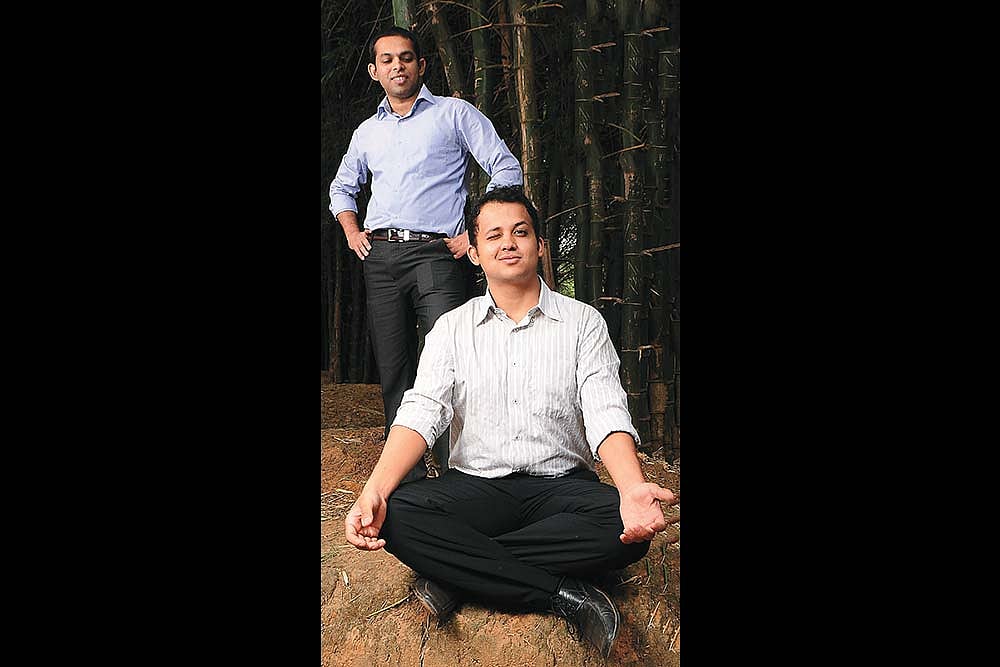
Lunch before the interview
The early company had its own approach to meeting people. Sondur and Kumar liked to take recommended job candidates out for food before assessing their technical skills. A meal gave everyone a chance to talk without immediately turning the table into an examination desk.
In 2013, the team numbered ten engineers. Working hours were flexible, and people could work from home. Sondur also spoke explicitly about honesty and ethical behaviour as requirements. The arrangement depended on people taking responsibility for what they had agreed to do.
He illustrated that responsibility with a customer outage. Much of the team was away when he spotted the problem. Colleagues connected from a wedding, a taxi and an airport. In his telling, they restored the site before the customer realised anything had happened.
The story explains what he valued in that small team: people who could be trusted to respond, even when no office chair was involved. His account of learning inside a startup was similarly practical. You encountered the small workings of the organisation as well as the engineering. There was no comfortably narrow job description to hide behind.
“We want to create a big dent through whatever we do”
Pavan Sondur · 2013
Taking the search abroad
Unbxd’s early customer list included IndiaPlaza and TravelGuru. In September 2012, Indian Angel Network invested, and Manav Garg was set to join the board. Sondur said the money would help expand the team and reach customers who needed search but could not afford bulky enterprise products.
The next change was organisational. With a $2 million Series A from IDG Ventures India and Inventus Capital Partners in 2013, the founders had to build the business around the product. Sondur described plans for a North America-focused sales and marketing team, alongside continued product development.
By June 2017, Unbxd had raised a $12.5 million Series C led by Eight Roads Ventures. Its plans included offices closer to customers in Chicago and New York. Ashley HomeStore, Express and FreshDirect were among its customers; the United States supplied most of its revenue.
That September, Sondur explained the engineering in unusually concrete terms. The system took in a retailer’s catalogue, shopper behaviour and information drawn from the web. Models combined those inputs to work out what someone was seeking. Search, browsing and product assortment could all pass through the engine.
He described North America as the company’s growth engine. It was a useful reversal of perspective for a Bengaluru startup: the business could be built in one place while the strongest commercial pull came from another. Being near customers was becoming part of the product’s development, too.
- 2011Unbxd Human Search is publicly profiled
- 2013$2m Series A backs the next stage
- 2017$12.5m Series C led by Eight Roads
- 2022Netcore announces its majority-stake investment
- 2026Coreworks announces a $5m seed round
The deal was a comma
On March 24, 2022, Netcore announced an investment of close to $100 million to acquire a majority stake in Unbxd, with additional funding intended to support growth. The distinction matters. A transaction of that size is a company milestone; it does not describe the money any individual founder took home.
At the time, Unbxd had a team of 120. Netcore named retailers in the United States, Britain and Australia among its customers. The attraction was the fit between product discovery and a broader marketing platform: understanding what a shopper wanted could inform more of the relationship than a single search result.
For Sondur, the announcement prompted a look back at leaving employment with Kumar, before they had either money or a product. His account treated the partnership as a way to strengthen what they had been building and take it into more markets.
The work continued under Netcore. In October 2023, Netcore Unbxd announced its recognition as a Leader in The Forrester Wave for Commerce Search and Product Discovery, Q3 2023. Sondur was still identified as founder and CEO.
He also appeared as the host of eCommerce Unfiltered, talking with Forrester analyst Emily Pfeiffer about 2025 predictions and with Velou founder Sadee Gamhewa about AI-powered search. The format placed him back in conversation about the problems behind the products. A deal had changed the company’s ownership. There were still questions to ask.
Netcore’s investment to acquire a majority stake in Unbxd.
A company transaction, with additional growth funding planned.The spreadsheet follows him home
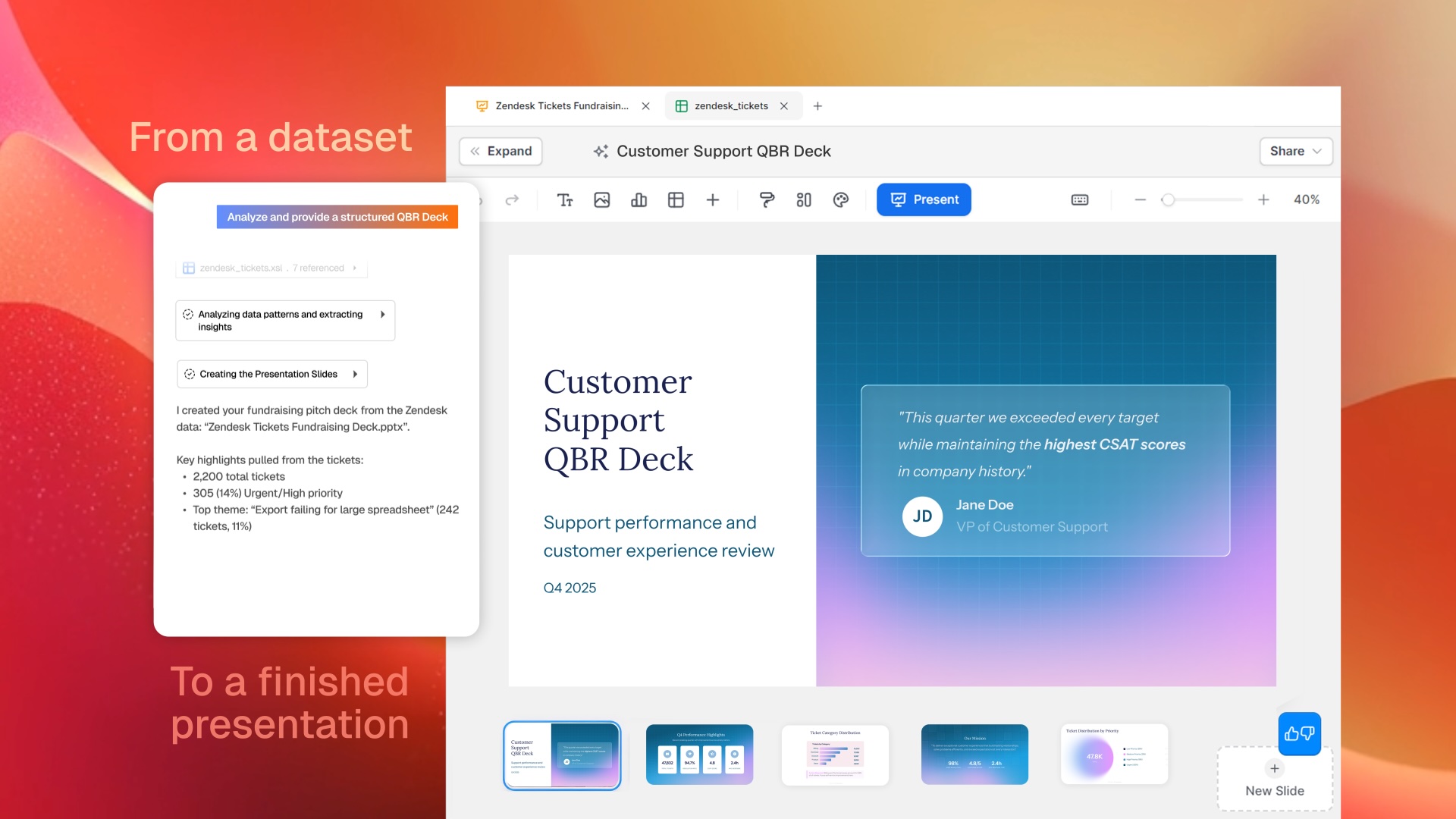
Coreworks brought Sondur and Kumar together again around another recurring task. One spur was close to home: Kumar’s wife worked in finance and repeatedly had to assemble reports and decks. Sondur described the opportunity as carrying raw data all the way to a finished output, reducing the handoffs along the way.
His own relationship with spreadsheets supplied another test. In January 2026, ahead of the private beta, he wrote about wanting to explore cash-flow and growth scenarios. The models lived in a complicated Excel file. When he changed cells, things broke, and another question went back to the finance team.
Using Coreworks himself let him try assumptions and inspect the consequences. That is a revealing use case for a founder with an engineering background. Technical experience had not made the existing workflow convenient. The difficulty lay in being able to explore a business question without disturbing the machinery underneath it.
The product’s stated design links each metric to the relevant formula, cell or row. Users can edit the presentation and inspect the calculation behind a figure. Its promise is easiest to understand by returning to that customer meeting: if a dataset changes, the presenter needs a way to follow the change through the argument.
A polished slide can conceal an astonishing amount of uncertainty. Coreworks puts its emphasis on making that uncertainty inspectable. Sondur’s ambitions for it include more reliable AI and wider enterprise uses. The requirement is demanding because an attractive chart and a defensible chart can occupy exactly the same amount of screen space.
A familiar name on the cheque
In March 2026, Coreworks announced a $5 million seed round led by Together Fund. Sondur singled out Manav Garg, who had written an early cheque at Unbxd. The reunion joins two periods of his career: the small search company seeking its first backing and the second venture trying to turn a familiar office chore into software.
The relationship also shows why the story extends beyond the technology. Kumar returned as co-founder. Garg returned as an investor. The product category changed, while some of the people with whom Sondur had learned to build remained in the room.
At TechSparks 2025, Sondur had appeared alongside Garg and fellow founder Dushyant Mishra in a discussion moderated by Shradha Sharma. The conversation concerned the pace of AI development and the demands on founders building for global markets. By the following spring, his next company had funding behind those ambitions.
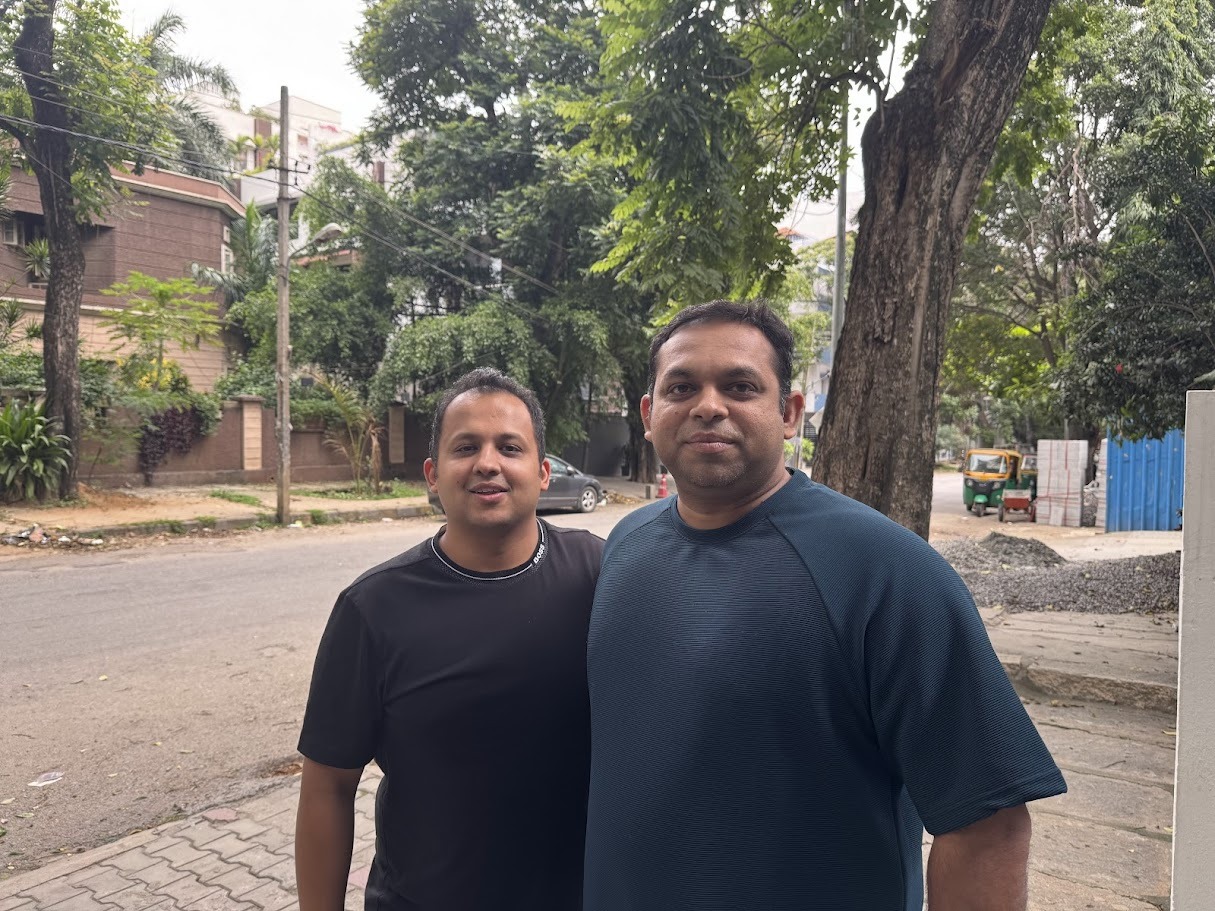
The next question is over coffee
Even with a second venture, Sondur’s public updates return to listening. He described speaking with more than 30 revenue leaders in a month and organising small breakfast conversations in downtown San Francisco for sales and revenue operations teams. Forecasts, pricing, pipeline reviews and the untidy working week were the subjects.
There is an echo of the early hiring lunches in that setting. Food lowers the temperature of a conversation. A person can explain what actually happens at work before anyone produces a polished description of what ought to happen.
The two ventures suggest a recurring interest in the gap between information and a useful decision. A retailer already has products; a shopper still needs help finding one. A business already has data; a colleague still needs to stand up in a meeting and explain it. Sondur keeps finding work inside that gap.
His next test arrives whenever someone clicks a number and asks how it was calculated. For a founder who once had sixty minutes to repair an entire argument, that is a very reasonable question to build around.