A shopper types a budget into a search box. Around $100, perhaps. Or under $100. To a person selling shoes, the difference is obvious. One phrase allows a little latitude; the other draws a line. Nilay Oza has spent a considerable part of his working life on what happens when software fails to notice.
The question he posed was disarmingly plain: “How do you make software understand?” Behind it sat Klevu, the company he co-founded in Finland in 2013. The work involved language, product catalogues and the clues people leave when they browse. The ambition fitted inside an ordinary rectangle at the top of a shop’s website. Its consequences extended rather further.
Oza’s route to that rectangle went through a doctorate, Finnish research institutions and the complicated business of people working together. By the time Klevu joined the combination that became Athos Commerce, its search technology was serving thousands of stores. A modest-looking box had kept quite a few people busy.
Before the shop, the relationship
His doctoral thesis at the University of Hertfordshire, dated 2006, concerned client-vendor relationships in Indian software outsourcing companies. The subject sounds far removed from a customer hunting for a jacket. Yet it dealt with something recognisable to anyone buying software: whether two parties understand one another well enough to make the arrangement work.
Oza examined the management of those relationships, including the role of trust. Software could travel across borders more readily than mutual understanding. The commercial relationship required attention of its own. His later career would put him on the other side of that question, asking retailers to let a young company handle an important part of their business.
Research posts followed in Finland, including work as a senior research scientist at VTT and as a project director at the University of Helsinki. In 2012, he also co-taught a Helsinki course on coaching and engagement in global agile software teams. Students worked on teamwork and development; the course dispensed with a final examination. The collaboration itself demanded their attention.

Three founders, one overlooked box
Klevu brought Oza together with Niraj Aswani and Jyrki Kontio. Between them, the founders had experience in computational linguistics, computer science and the business of software. Kontio had been a professor at Aalto University; Aswani had previously co-founded Square Analytics. Oza brought his research and software business background to the CEO role.
The company chose a problem that retailers could recognise without needing a lecture on artificial intelligence. A customer might describe an item differently from the person who entered it into the catalogue. Exact keyword matching could leave the two staring past one another. Somewhere in the inventory was a perfectly saleable product, enjoying an unnecessarily private existence.
Early Klevu worked with merchants’ existing product feeds, enriching information in the cloud and supplying search through integrations. The practical details mattered. A retailer needed something it could put to work, alongside the rest of its store. The founding year, 2013, placed this effort well before generative AI became a regular subject of boardroom conversation.
Partnerships helped make the technical work useful. When Klevu partnered with Vaimo in 2015, Oza credited the ecommerce agency’s understanding of search problems with helping shape a package around actual customer needs. Klevu already reported customers in 25 countries. Listening was becoming an international operation.
The doughnut test
There is a pleasingly edible episode in the company’s growth. At London’s eCommerce Expo in 2018, Klevu shared a stand with Nosto, another Finnish technology business. The arrangement included sofas, coffee and Cross Town doughnuts. Visitors remembered the doughnuts. Marketing occasionally benefits from having fewer syllables than the product.
Oza attended the event, where Klevu’s team talked with retailers about their needs. The conversations ranged from fashion to business equipment. The shared stand made commercial sense: Nosto worked on personalisation, Klevu on search, and shoppers had a habit of expecting an entire website to work together.
The scene offers a useful picture of the CEO’s work. A search company needs algorithms; it also needs people willing to stop, talk and explain why a customer cannot find something. At Olympia, that work happened among partners and prospective customers, with a sugar supply close to hand.
A catalogue that could listen
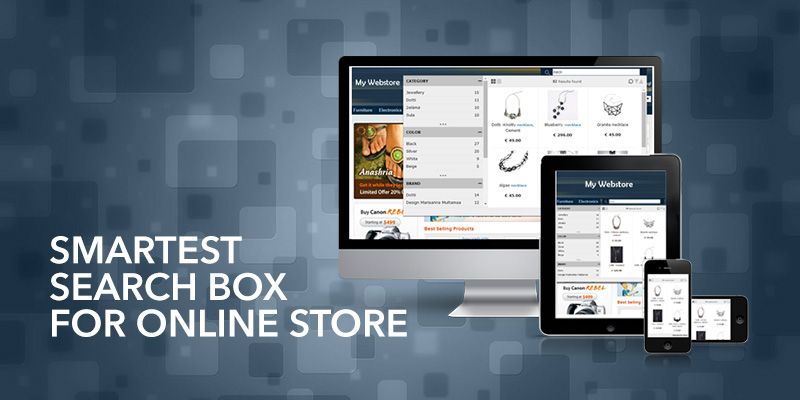
By 2016, Oza was urging ecommerce businesses to pay more attention to site search. Store owners had plenty to consider when building a website, and the search field could slip down the list. He argued that it deserved attention because it affected both sales and the quality of a customer’s interaction with the shop.
That argument became sharper in Klevu’s 2021 UK discovery report. The exercise assessed 50 retailers against 40 criteria. It asked what happened when shoppers used more complex language, rather than tidily reproducing a catalogue entry. Klevu’s accompanying findings said 78% of retailers failed to display exact matches for complex natural language search terms.
failed to display exact matches for complex natural language search terms.
For Oza, a retailer’s spending on attracting visitors made a poor discovery experience particularly wasteful. The customer had made it through the door. Now the shop needed to help. His ambition was to put advanced discovery within reach of retailers beyond the largest technology companies, making an everyday shopping interaction less dependent on a merchant’s resources.
His technical advice could be bracingly specific. In 2016, he recommended keeping application servers free of stored state so APIs could scale more easily. This is the less photogenic side of a good search experience. The shopper sees a relevant result; somebody else has worried about what happens when many shoppers ask at once.
“How do you make software understand?”
Nilay Oza, on the difference between human intent and a machine’s interpretation
The product expanded into recommendations and category merchandising. In 2022, Klevu announced compatibility with BigCommerce’s Multi-Storefront capability. The aim was to help brands present products appropriately across different storefronts, audiences and regions. Oza’s concern had grown beyond the individual query to how a retailer’s range met the people arriving to shop.
He kept returning to conversation. In 2023, he argued that rigid chatbot rules could strand customers in circular exchanges. Better systems should let people express an intention naturally and help them discover products. A customer should be able to ask a question without first learning the machine’s preferred manners.
The people between the milestones
The company’s human history appears in the people who worked with it. Paul Rogers began advising Oza and Aswani after meeting them during Klevu’s early years, helping with the UK market and product roadmap. His memories included Finland trips, conferences, retreats and planning sessions. An international company was assembled through a great many ordinary meetings.
When the Athos Commerce transaction arrived, Rogers praised the founders’ energy and work ethic, and their kindness toward their team. He also singled out colleagues whose careers he had watched develop. Among the names were Claudia Ditri, Mairaid Harte, Saumil Trivedi and Dhaivat Dave. The company had given people room to become more experienced versions of themselves.
Those recollections put something beside the conventional founder portrait. Oza’s achievement involved getting software into stores, certainly. It also involved keeping colleagues, advisers and partners engaged in the work long enough for a business to grow around it.
The company changes its name
In January 2025, Klevu joined forces with Searchspring to form Athos Commerce, backed by PSG Equity. The combination brought search and product discovery into a broader ecommerce platform. For Oza, it marked the closing of the independent Klevu chapter he had led as co-founder and CEO.
The business had become commercially sturdier along the way. During Alfvén & Didrikson’s ownership, Klevu more than doubled recurring revenue and reached profitability. These are quieter milestones than a product launch, but they explain why the company’s progress mattered beyond its software demonstrations. Retailers were paying for the service, and the business had learned to sustain itself.
The same small field that once needed explaining to prospective customers had acquired an organisation, partnerships and a place in a larger company. An exit announcement can compress that work into a few paragraphs. The preceding years took considerably longer to arrange.
Another company, another kind of understanding
Oza has continued building. He is now publicly listed as co-founder and CEO of Niro AI, and serves as an industrial advisor at Evli Growth Partners. He and Aswani became directors of Niro Intelligence Ltd in May 2026. The former Klevu collaborators were working together again.
Niro’s current focus is software engineering: giving AI tools context about a codebase, reviewing code and investigating production problems. Oza’s advisory work, meanwhile, includes AI and venture funds. The practical setting has changed from a retailer’s catalogue to the relationships inside software.
There is an appealing continuity here, although the businesses solve different problems. His doctorate examined relationships between organisations. Klevu tried to connect the shopper’s language with the shop’s inventory. The new venture works on giving software tools a better account of the systems they handle.
A question entered into a box looks simple from the outside. Oza’s career has repeatedly taken him into the work required to answer it.
Keep the conversation going
Explore Oza’s work and public conversations.
- Nilay Oza on LinkedIn ↗
- His advisory work at Evli Growth Partners ↗
- Niro AI: the next venture ↗
- Oza’s 2016 essay on the search bar ↗
- His 2023 argument for better chatbot conversations ↗
- Watch: AI and ecommerce with Youwe’s X:30 ↗
- Listen: Oza and Aswani on enterprise search ↗
- The announcement of Klevu’s Athos Commerce chapter ↗