The chief executive makes the desks. At HawkSoft, that detail belongs in the company description alongside insurance software and Canby, Oregon. Paul Hawkins is a woodworker as well as a programmer and former insurance agent. An employee’s place to put a keyboard can be something he has made himself. It is an unusually literal contribution to office culture. Most founders settle for choosing the chairs.
The furniture offers a way into Hawkins’s story. He has spent decades making things people can use, often beginning with a problem close enough to touch. Before there was an agency management company, there was a father learning to program with his son. Before there was a national customer base, there was an insurance desk with work that could be easier. The company took shape through those encounters.
A computer, with one condition
In 1984, a teacher named Dick Fanazick saw that Sean Hawkins needed more to occupy him. Sean was nine. Fanazick suggested that Paul buy his son a computer, then added the consequential condition: get a programming book instead of games. A machine could provide entertainment, certainly. It could also provide something to figure out together.
Paul bought a Tandy 1000 from Radio Shack. Father and son taught themselves to program, building a check register, a recipe book and a genealogy program. These were domestic tools, small enough to understand and useful enough to justify the trouble. There was no need to announce a technology strategy. There were recipes to organize.
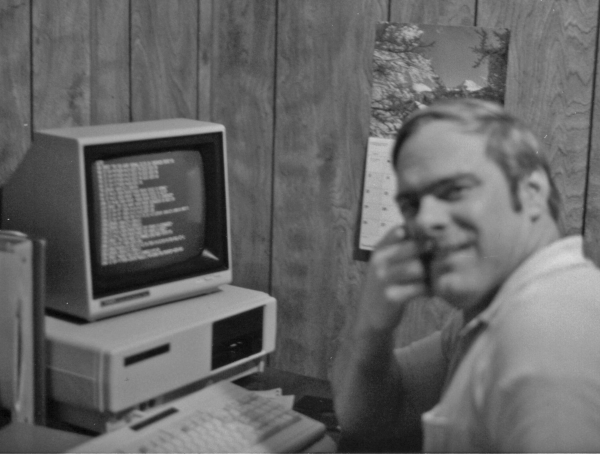
There is something appealing about the modesty of that beginning. Learning happened around ordinary tasks, with the result visible on a screen. A parent could participate without having all the answers. A child could contribute something that worked. The next piece of software grew from the same arrangement, although its subject was less homely than a recipe collection.
The Brie had a deadline
Paul worked for a business that imported cheese. Brie arrived from France with a short shelf life, and the warehouse was losing stock because it was being used in the wrong order. Expensive proposals for inventory software had failed to produce an acceptable purchase. Father and son wrote a program themselves, with Sean doing most of the programming.
Paul took it to his boss. The result was a substantial check, which he brought home to Sean. Here was evidence that their shared interest had value outside the house. The boy was in eighth grade when he proposed a future business together and supplied its name: HawkSoft. A warehouse problem had become a business rehearsal. The cheese, for once, had excellent timing.
The exchange matters because the company name preceded the company. Sean imagined a partnership with his father before they had an insurance software business to put it on. Paul’s role in that early success included recognizing an operational problem, bringing the solution to someone who needed it, and letting his son see what their work had earned.
Learning the job before writing the program
Insurance gave Hawkins another set of practical problems. He opened an agency in 1990, where an early program called PC-Client was developed. By 1993, while he was working at another independent agency in Portland, he and Sean were developing the HawkSoft Client Management System. In 1995, Paul committed to the software business.
That sequence put the work before the product. Hawkins had spent six years as an insurance agent, making tools he and colleagues could actually try. A cumbersome process was something happening during his own working day. The eventual customer was a person doing a familiar job, with interruptions, documents and policyholders competing for attention.
“Insurance agents know how to do their jobs better than software developers.”
Paul Hawkins
It is a compact statement of where authority belongs. The developer has technical knowledge. The agent understands the work. For Hawkins, making software involves taking that second kind of expertise seriously. His interest in meeting agents at conferences and user gatherings follows naturally: those conversations are opportunities to learn what the next improvement should do.
The physical setting was decidedly domestic. HawkSoft began in a rented two-bedroom apartment shared by Paul and his wife, Carol, their daughter, Heather, and son-in-law, Jason Hansen. Jason became a co-founder alongside Paul and Sean. The family relationship was part of the working arrangement from the beginning, with all the proximity an apartment implies.
Growing beyond the kitchen-table scale
Growth brought employees who had no place in that original family photograph. Darrin DeFouw arrived in May 2004 as employee number eight, without previous software-industry experience. His first assignment was to assemble his chair and connect his computer. Over fifteen years, he moved through six role changes, working across the business.
DeFouw’s account gives a useful view of Hawkins’s company from someone who had to show up each morning. By his departure in 2019, the business had moved from about 250 regional customers to users across all fifty states. He remembered the founders encouraging him to grow. A small employer had supplied room for a career to change shape.
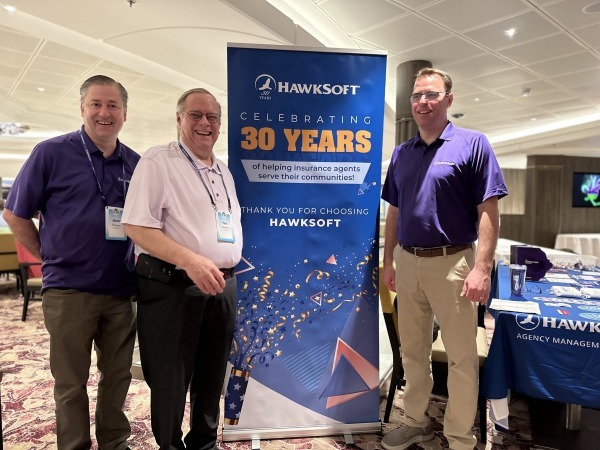
The offices changed too. A headquarters groundbreaking in Canby in 2011 marked a return to the city where the business had begun. At the time, HawkSoft had 42 full-time employees and ambitions to reach roughly 100 within a decade. Buildings make growth visible. So do the people who can move into them, and the additional responsibilities that arrive with them.
The workshop occasionally misses a deadline
A craftsman’s approach becomes more interesting when it costs something. In 2019, HawkSoft delayed a software version after test agencies identified a problem with the way personal information was masked. The company revised the feature to give agencies a choice. The calendar moved because the working experience needed attention.
The same period brought a reworking of the planned Partner API architecture. Testing exposed performance problems when too much activity depended on one pathway. The team changed the design to distribute services, postponing the release. Woodworking makes a convenient analogy, but the underlying decision was concrete: a promised feature had to function under the conditions customers would create.
Software also demands a different kind of patience from furniture. A finished desk may stay useful for years with little alteration. An agency’s tools change around it. Sean has described moving HawkSoft into the cloud as rebuilding an aircraft in flight. The people already using the product still have work to finish while the machinery changes.
Customer product suggestions implemented during 2024, from more than 700 submitted.
2024 figures, reported February 2025. Approximately one quarter implemented.In April 2025, Paul joined Sean and other leaders at the HUG at SEA conference to discuss how agency feedback reaches the product roadmap. Attendees got a look at the channels and internal review processes behind fixes and improvements. It is one thing to invite suggestions. Explaining how they are handled makes the invitation easier to use.
A teacher gets the return visit
The family eventually went back to the person who had started the programming experiment. In December 2018, HawkSoft brought Dick Fanazick and his wife from Spokane to Canby to surprise Sean. Jason found a Tandy 1000 on eBay, a replacement for the machine that had helped change the family’s direction. The teacher and the computer arrived for the same reunion.
The Dick Fanazick Award grew from that gratitude, inviting customers to recognize someone who had changed their lives. In 2020, Paul presented the first award to Patricia Meeks, a band teacher nominated by insurance agent Michael Ley. The connection crossed occupations: one teacher encouraged a future programmer; another helped a future agency owner develop determination.
Hawkins’s interest in the award supplies a different measure of success. A business can count customers and releases. It can also remember a useful intervention made before there was any business to help. Bringing the teacher back made that connection visible to the people now working at HawkSoft. The origin story acquired a guest who could answer back.
Still close enough to hear the customer
Recognition has followed Hawkins into the wider industry. He received The Brokers Insurance Group’s Legend Award in 2013. In December 2024, Ohio Insurance Agents presented him with its Eagle Award, an award for company achievement. The organization highlighted his direct conversations with agents and the client-focused culture he had helped build.
In a September 2025 conversation with Jason Cass, Hawkins described hiring as weighted eighty percent toward culture and twenty percent toward skill. The weighting was his explanation of an approach, rather than a hiring study. He also discussed artificial intelligence and the way tools such as texting have become everyday requirements. Familiar work keeps acquiring new parts.
Hawkins remains listed as HawkSoft’s CEO, with Sean as president and chief product officer and Jason as chief operating officer. His name also appeared on the speaker roster for an August 2026 user-group meeting in Orange County. The work still includes getting into a room with agents. After the Tandy, the warehouse and the apartment, there are still people with problems worth hearing about.