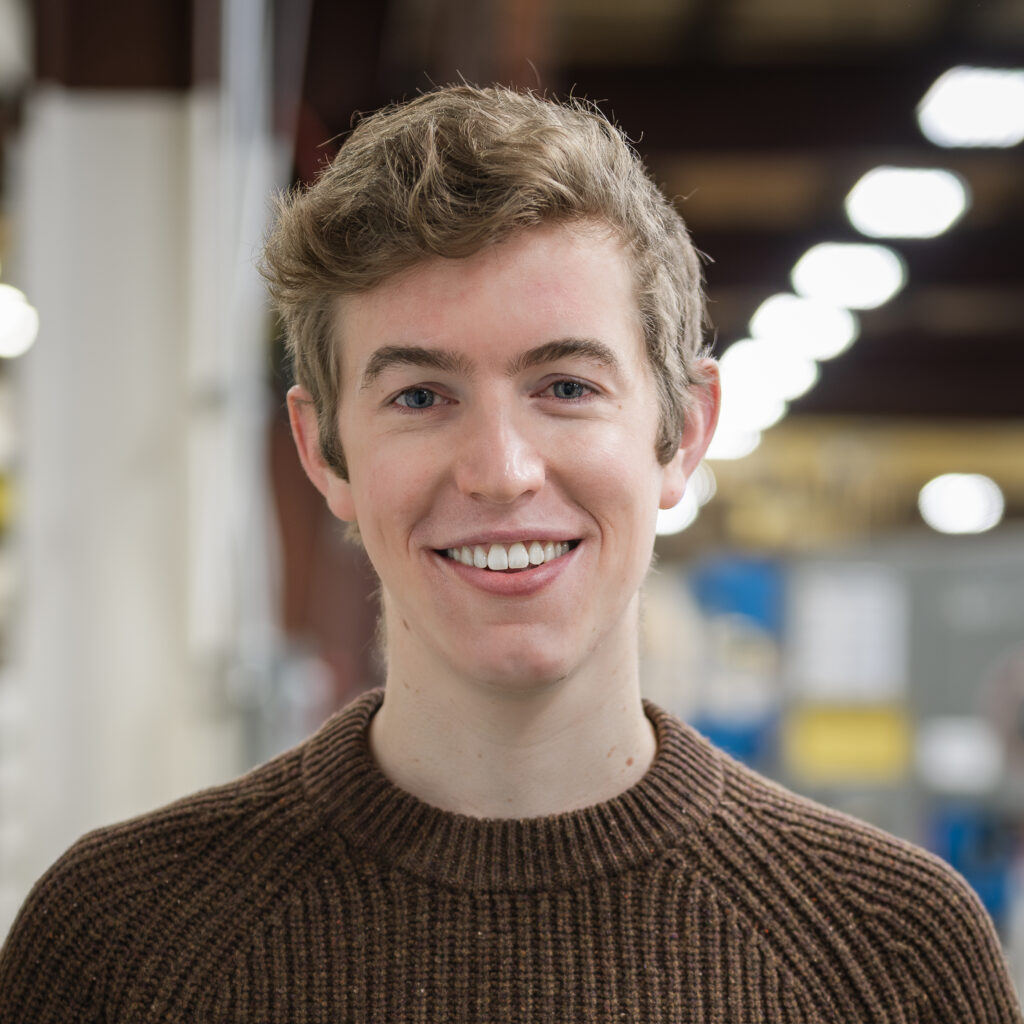
A statistics major read a stranger's PhD on a Tuesday and now bolts CO₂ catchers onto semi-trucks and locomotives - selling the captured exhaust to breweries. This is the Remora story.
Picture a diesel semi roaring down I-94, and a steel box strapped near the tailpipe quietly eating the carbon before it reaches the sky. The CO₂ that would have warmed the planet gets compressed, trucked off, and ends up putting the fizz in a craft beer. That box has a name - Remora - and the person who willed it into being studied statistics, not chemistry.
Paul Gross runs Remora as co-founder and co-CEO. The pitch is almost rude in its simplicity: there are roughly two million semi-trucks on American roads, every one of them is a smokestack on wheels, and nobody is going to swap them all for batteries fast enough. So instead of waiting for the fleet to turn over, Remora catches the carbon where it is born - at the pipe - and turns a cost center into a product. Captured exhaust becomes beverage-grade CO₂, the same gas greenhouses pump to grow tomatoes and breweries use to carbonate.
It is the kind of idea that sounds obvious only after someone has spent five years proving it works.
We don't have a couple of decades to wait.
The founding story is the part people remember, because it is the part that should not have worked. Gross was a senior at Yale, finishing a degree in Statistics and Data Science, when he went looking for whether anyone had ever captured carbon from a moving vehicle. He found a dissertation.
It belonged to Christina Reynolds, who had spent her entire PhD at the University of Michigan pioneering mobile carbon capture - bench testing, then vehicle testing, then real testing at the EPA's national vehicle and fuel emissions lab in Ann Arbor. She had the science. She also had a stable government job.
Gross read the dissertation, wrote her a business plan, and started a campaign of conversations. Eventually he convinced her to quit the EPA. Then he found Eric Harding, a mechanic-turned-engineer who had built hydrogen and electric semis for some of the largest automakers on earth, and convinced him too. A stats major with no hardware background had assembled a team that could actually build the thing.
The first prototype came together in a garage during Y Combinator's W21 batch. By the end of that year, Gross was on the Forbes 30 Under 30 list in the Energy category.
Paul Gross - the statistics major who read the paper and wrote the plan.
Christina Reynolds - the EPA scientist whose PhD was the seed of the whole company.
Eric Harding - the mechanic-turned-engineer who had already built hydrogen and electric trucks.
The unit retrofits onto an existing diesel truck or locomotive and connects to the tailpipe. No new fleet required.
Exhaust passes over adsorbent beads riddled with microscopic pores that trap the CO₂ and let the rest go.
At a depot, the captured carbon is released and compressed in about 15 minutes, then the truck rolls on.
It becomes beverage-grade CO₂ for breweries and greenhouses, or gets sequestered - turning pollution into revenue.
This is a moral obligation to anyone living in this moment.
Remora landed in metro Detroit, which is either obvious or contrarian depending on how you look at it. The talent that built the internal combustion engine is the talent you want to help end its emissions. The company leased a 70,000-square-foot factory in Wixom, northwest of the city, and started moving manufacturing out of its early R&D space and into something that could ship at volume.
The customer list tells you the bet is being taken seriously. On the road: Ryder, Werner, Cargill. On the rails: Union Pacific and Norfolk Southern. Freight does not sign pilots with science projects, and rail is famously slow to touch anything new. Gross got both.
His discipline is focus. While the keyword cloud around Remora touches everything from machine learning to off-grid CO₂ utilization, Gross keeps repeating a single idea: do one thing well first. Catch the carbon. Make the unit economics work. Then earn the right to do the next thing.
Fleet pilots putting devices on working diesel trucks, not lab mules.
Locomotive emissions are enormous and concentrated - a natural fit for capture.
Roughly $117M from investors who fund climate hardware that has to actually work.
Graduates Yale with a degree in Statistics and Data Science. His undergraduate research wins the Porter Prize.
Reads Christina Reynolds' dissertation, writes her a business plan, recruits her out of the EPA and Eric Harding into engineering. Remora is born.
Goes through Y Combinator (W21), builds the first prototype in a garage, and lands on the Forbes 30 Under 30 list in Energy.
Raises seed capital, leases the 70,000 sq ft Wixom factory, and kicks off fleet pilots with Ryder, Werner and Cargill.
Expands onto the rails with Union Pacific and Norfolk Southern; closes a Series B.
Total funding around $117M; manufacturing scale-up continues as Remora pushes from pilots toward fleets.
We want to stay laser-focused on doing one thing well first.
We can get these on hundreds of thousands of trucks over the next decade.
There are 2 million semi-trucks on the road in the U.S.
We don't have a couple of decades to wait.
Gross sat down for Y Combinator's conversation series to explain the whole thing - the cold email, the garage, why he thinks expertise is overrated for genuinely new problems, and the joy he finds in doing hard things.
▶YouTubeThe company is named after the remora fish - the one that latches onto a shark. The device latches onto a truck.
He founded a chemistry-heavy hardware company with a degree in statistics and data science, not engineering.
One equipped truck captures roughly 135-169 tonnes of CO₂ a year - about 6,200 trees' worth.
The captured carbon is sold beverage-grade - clean enough to carbonate the beer in your hand.
His pitch to skeptics: expertise is overrated when the problem has never been solved before.
The first working unit was built in a garage during a YC batch - then scaled to a factory floor.