A business can have customers, orders, a plan for expansion, and a financing problem all at once. Success has an awkward habit of sending the bill before the cash arrives. Paul Flynn’s professional life sits close to that awkward moment: when a business needs more than its existing lender can comfortably provide, and someone has to work out what happens next.
Flynn is president and chief executive officer of BDC Capital, the business development lender based in Wakefield, Massachusetts. Its territory is New England. Its specialty is the financing gap: the portion of a business’s needs that conventional lending leaves uncovered. The businesses arriving there may face insufficient collateral, temporary losses, or an already complicated debt load. Their circumstances require examination rather than a cheerful slogan.
That makes Flynn’s career interesting in a particular way. He spent years inside commercial banks before leading an institution designed to work alongside them. He knows the organizations on both sides of the conversation. His public working life also reaches into a university classroom, economic development planning, and community organizations. Follow those connections and the title on his business card starts to acquire some texture.
A career inside the credit decision
Flynn earned an undergraduate degree at Fairfield University and an MBA at Babson College. His banking career included senior positions at Bank Boston, formerly BayBank, and TD Bank, formerly Banknorth. Before BDC, he was a senior vice president at Berkshire Bank. Even the names trace a regional banking history: institutions changed identities while the practical business of lending continued.
In February 2017, BDC named him chief operating officer. His responsibilities encompassed strategy, business development, and daily operations. He was also president and COO of New England Certified Development Corp., BDC’s SBA 504 lending affiliate. The appointment placed him across both the organization’s operating machinery and its relationships with businesses.
“I am looking forward to taking on these new duties,” he said at the time. It is a restrained sentence for an expanded job. The responsibilities themselves supplied the drama: a regional lending operation, multiple offices, and a team of financing professionals whose decisions carried consequences for business owners.
By September 2019, he was identified as BDC’s president in its announcement of a partnership with LSQ. By February 2020, Connecticut legislative testimony identified him as president and CEO, alongside Kenneth Smith as executive vice chair. Smith had previously spent 36 years as president and CEO. Flynn was taking responsibility within an institution with a long memory.
There is a useful distinction between knowing credit and running a lender. The first asks whether a proposed transaction makes sense. The second also asks who will assess it, what products they can offer, and how their work reaches the right borrower. Flynn’s progression moved him toward that larger set of questions. A credit decision remained at the center, surrounded by an organization that had to function.
Keeping the banker in the conversation
BDC was established in 1953, decades before Flynn’s leadership. Banks and other financial institutions supply capital to support its work. The arrangement gives a bank somewhere to turn when a customer’s needs exceed its own lending capacity. BDC can participate in the financing or structure a transaction itself, while the referring institution retains the customer relationship.
In ordinary language, this means the banker who knows the company can remain involved. For the borrower, financing does not necessarily require abandoning an established relationship. For the bank, a limit on one transaction need not mean losing the customer’s deposits and treasury services. The model gives cooperation a specific commercial purpose.
The membership announcements make that arrangement visible. KeyBank joined in October 2025. MutualOne Bank’s membership followed in August 2026. Flynn’s comments describe bankers referring customers to extend what their institutions can provide. These announcements concern funding relationships, the infrastructure behind the loans, rather than a parade of borrowers.
Community Bank and OceanFirst also appeared in BDC’s 2026 membership announcements. Each addition is an institutional connection with work attached to it: referrals, participations, and the assessment of businesses that may need several financing tools. Reading them together suggests that maintaining the network is part of Flynn’s leadership job, as much as overseeing the transactions it supports.
The emphasis on working with existing lenders helps explain BDC’s place in the region. A small business owner usually experiences finance through a person and a particular need. The machinery behind that encounter can be extensive. Flynn leads one of the organizations that helps those parts meet, with the existing bank’s knowledge of its customer remaining useful.
The lesson beyond the product list
Flynn has taken the subject into Suffolk University’s SEED classroom. Kenneth Mooney described a visit in which Flynn discussed financing choices and used case studies to explain how funding decisions are made. SEED is a university consulting clinic serving small, underserved, and startup businesses. Students are preparing advice for actual clients, which gives the lesson a practical destination.
A list of products can make finance sound pleasantly orderly. A case study restores the complications. What is the money meant to accomplish? How does the business earn it back? Which assets support the borrowing? A student can memorize the name of a facility and still need to learn how to decide whether it belongs in a particular company’s plan.
Mooney’s accounts of Flynn’s visits cover working capital, equipment and real estate financing, SBA lending, and mezzanine debt. The range matters because these needs occur at different points in a business’s life. Bringing them into one discussion gives students a view of financing as a set of decisions shaped by circumstances.
Flynn has also participated in an XPX Greater Boston access-to-capital panel alongside Robert Menn of Gemini Investors, Lynn Schade of Middlesex Savings Bank, and Dan Corcoran of Mass Capital Resource Co. The panel brought banking, private equity, and mezzanine perspectives together. For an owner considering a next step, the useful question is often which combination fits the company.
A hiring brief with a future tense
One revealing account of Flynn’s leadership concerns recruitment. In a testimonial about KLR Executive Search Group, he recalled returning to the recruiters who had placed him as COO in 2013. This time, BDC needed a managing director of business lending. The brief included leading the lending operation, introducing a cash flow product, mentoring developing talent, and preparing for senior responsibility.
“We needed someone who could do it all.”
Paul Flynn, on hiring a business lending leader
That is a considerable amount of future tense for one vacancy. It ties a product launch to people who will have to deliver it and to colleagues who will need to learn. A lender can announce a service in a morning. Building the judgment and leadership behind it is a longer assignment.
In January 2025, BDC announced Al Barzykowski as managing director of BDC Business Lending. His previous experience included middle-market lending at Salem Five and credit finance work at State Street. Flynn described the appointment in terms of expanding asset-based lending and adding cash flow debt solutions. The hiring brief had acquired a name and an operating role.
The detail about mentoring deserves attention. It places the next generation of staff inside the same plan as the next financing product. Read alongside Flynn’s classroom visits, it suggests a recurring professional concern: expertise has to travel from someone who has made these decisions to someone preparing to make them. That is an interpretation of his public work, but a concrete one.
A region has more than one kind of capital
Flynn’s professional network includes the National Commercial Finance Association and the Association for Corporate Growth. He is a past president of the Turnaround Management Association’s Northeast chapter. In 2019, he also served on Massachusetts’ Economic Development Planning Council. These roles connect the individual lending transaction with a wider discussion about business conditions and regional development.
BDC’s administration of public programs supplies another connection. In 2024, Flynn highlighted North Easton Savings Bank’s participation in the Massachusetts Capital Access Program: more than 600 enrolled loans totaling over $73 million since 2010. Mass CAP uses a loan-loss reserve to help participating banks make business loans they might otherwise be unable to offer.
There is a different version of access in BDC Community Capital Corporation. It began operations in 2019 with an initial contribution and credit line from BDC Capital, then received Treasury CDFI certification in 2021. Its stated focus included African American and Hispanic American business owners and businesses in underserved Massachusetts areas.
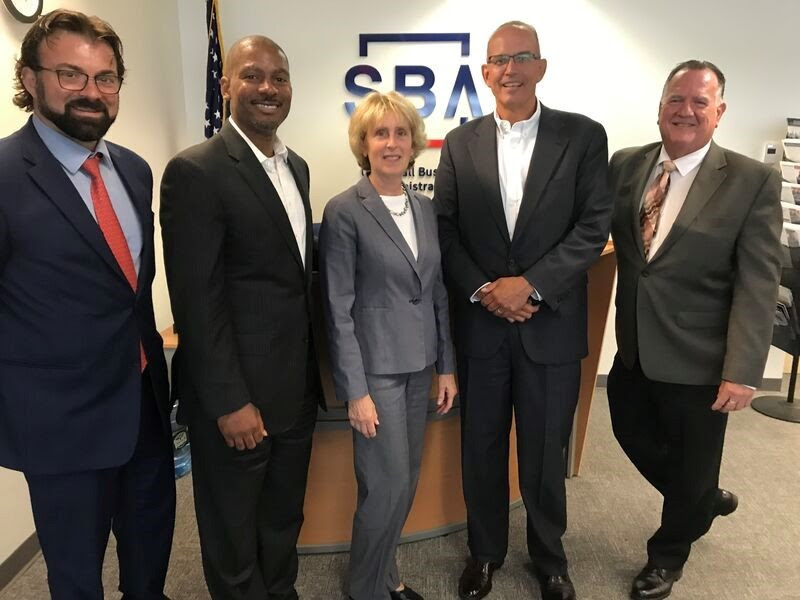
In June 2022, Flynn joined Carol Fleit, Karim Hill, and SBA officials at a meeting about the Community Advantage program. The photograph records a working connection between the parent lender, its community capital organization, and the SBA. It is a modest office scene, the sort that rarely becomes the public image of finance, though much of the work happens in rooms like it.
Another part of the record leads to Hubbardston, Massachusetts, and the Ron Burton Training Village. In 2023, Flynn described BDC’s longstanding monetary support and employees’ spring volunteer work preparing the village for summer programs. The village provides opportunities for young people whose circumstances can limit their prospects. Here, assistance included time as well as money.
These activities give Flynn’s career a regional scale that a loan portfolio alone cannot capture. A bank needs additional capacity. Students need a way into financial judgment. A lending team needs experience passed along. A youth organization needs support before its summer begins. The settings differ, but each requires someone to connect a need with people able to help.
That is where this portrait of Flynn comes to rest: in the connections, and in the work needed to keep them useful. The gap between a business plan and a workable financing arrangement can look small on paper. Filling it can require years of experience, several institutions, and a conversation that continues after the first answer.