For ten years, Paul Bergantino’s company left a conspicuous space on the map. Lifeway Mobility was based in Hartford, Connecticut. New York and New Jersey were nearby, populous, and full of potential customers. They were also places where an ambitious company could arrive before it was ready. So Lifeway waited.
When the business finally entered those markets in 2025, Bergantino described the obstacles plainly: difficult logistics, high costs, dense populations, strong competition. Geography had made the opportunity visible. It had not made the work simple. A short drive on a map can become a very long afternoon in an operating plan.
That decision offers a useful way into Bergantino’s career. He helped lead the 2013 combination that created Numotion, then cofounded Lifeway two years later. Across those chapters, the recurring question was how a business could acquire national reach while keeping the judgment of the people who knew each local market.
His answer has appeared in different forms: regional autonomy, investment in shared operations, familiar business partners, and a willingness to recruit before opening. The ambition is visible in the expansion. The more interesting part is the arrangement underneath it.
A merger large enough to need small teams
In January 2013, ATG Rehab and United Seating & Mobility came together. Bergantino had led ATG; he became president and CEO of the combined company. Bob Gouy, from United Seating & Mobility, became executive chairman. The Numotion name followed that June. A new brand had to turn two established organizations into something customers and employees could understand.
At the launch, Bergantino acknowledged that the larger organization would attract scrutiny. People would ask whether its size could coexist with attentive service. He offered a compact phrase for the intended approach: “stay small as you grow.” It was an appealing promise. An organization chart would have to do some of the explaining.
“stay small as you grow”
Paul Bergantino, at Numotion’s 2013 launch
By October 2013, Numotion had 125 locations in 41 states and about 2,000 employees. Its operations were divided into 14 regions, each with a vice president and management team. Local teams were given authority over customer-facing work, with the corporate office supporting regional leaders.
That structure supplied a practical interpretation of his growth philosophy. A national organization could provide resources while regional managers retained room to respond to their own circumstances. It also gave Bergantino a more precise way to talk about expansion: adding people and expertise, as well as geography.
The merger was only the beginning of the combining. In cities where both predecessors had offices, employees were brought under one roof. The new company also had to explain its identity and find workable efficiencies. The stationery could change quickly; working arrangements required considerably more attention.
Bergantino’s founding tenure ended the following year. Mike Swinford became Numotion’s CEO on July 28, 2014. Bergantino stayed as a consultant during the transition. The date matters to his story: Numotion was a consequential chapter, followed by another company and another chance to work through the same problem.
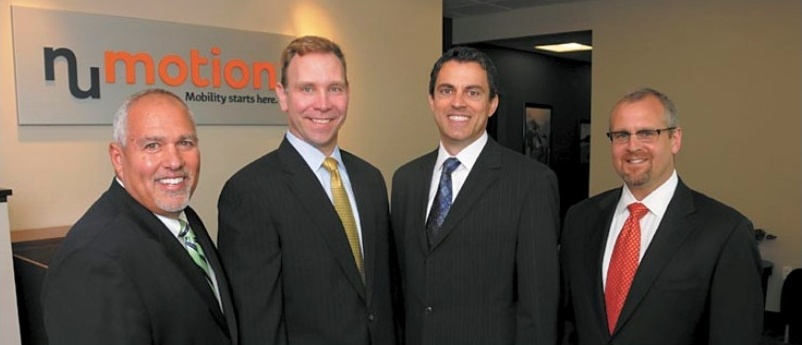
The second company, and the familiar faces
Lifeway Mobility was founded in 2015 by Bergantino, Tim Burfield, and Dave Hess. The connections are visible in the earlier chapter: Burfield was a Numotion director, and Hess its chief financial officer. The new undertaking brought established working relationships to a business focused on home accessibility.
Its work included ramps, stair lifts, elevators, and other changes to the built environment. For a business operator, that meant coordinating products, evaluations, installation, and follow-up service across different places. A national ambition would still have to find its way to an individual doorway.
There was also the ordinary work of introducing the new venture. The agency that developed Lifeway’s first website described working on its brand, logo, customer personas, and competitive position. Bergantino’s response was practical: people found the site easy to navigate. Before the acquisitions could become a national story, the business needed a clear way to introduce itself.
That small detail belongs alongside the investment announcements. A customer encountering the company for the first time needs to understand where to go and what happens next. Making that encounter straightforward was part of building the business too.
The early expansion was concrete. Ease, a Connecticut provider, joined Lifeway in September 2015. Freedom Lifts followed in 2016, with Lifeway becoming its majority shareholder. That company was to continue under its own brand. In 2017, Total Access of New England joined, adding another established team.
Those announcements give the first few years a particular texture. Growth came through businesses that already had skills, experience, and a place in their markets. Combining them offered a way to extend the company’s range. It also introduced the managerial task of helping different teams work together.
In 2018, Rockwood Equity Partners invested in Lifeway. Bergantino again emphasized retaining a local approach. The business then served all or parts of eight states, mainly in New England and the Midwest. He also described an investor transition as an opportunity to bring fresh ideas and experience into a company.
The first move after that investment was an investment in Chicago-based Extended Home Living Services. Its owners, Elizabeth and Stephen Crandall, remained executives and shareholders. The arrangement kept experienced operators involved as Lifeway strengthened its Midwest presence. Expansion could involve new ownership and continuing participation by the people who had built the local business.
Someone has to connect the offices
Rockwood’s account of its ownership period records sales rising from approximately $6 million to $30 million over two and a half years, through acquisitions and organic growth. It also records six add-on acquisitions and the development of shared functions in technology, human resources, and sales. Behind the revenue curve sat a considerable amount of organizational work.
An Acumatica account of Lifeway’s operating changes supplies a less glamorous view of expansion. Acquired offices arrived with different software and procedures. Gathering comparable information meant exporting data and reconciling systems that did not describe the business in the same way. A purchase could add customers and leave the reporting team with an entirely new puzzle.
Lifeway adopted a shared cloud platform to connect those operations. The account describes new acquisitions being integrated within 30 to 60 days, and field teams receiving job information on mobile devices. Local judgment still needed reliable information. Otherwise, independence risked becoming a collection of offices trying to locate the right document.
A further investment by Cressey & Company was announced in June 2021. Lifeway described a combination of acquisitions, regional hubs, and recruitment to open new locations. Capital and staffing appeared together in the plan. Bergantino later compressed his ingredients for growth into “3 Ps and C”: people, plan, process, and capital partner.
He also described a partnership with Lowe’s to develop its accessibility home initiative. That offered another route to customers alongside direct outreach and acquired businesses. The operating challenge continued to widen: more ways into the company meant more handoffs that had to work once a customer arrived.
The small-business voice
There was another side to Bergantino’s public role. In 2019, a Connecticut legislative committee recorded his testimony about a proposal to expand sales tax to home remodeling. He appeared as Lifeway’s president and a small-business owner concerned about what that change could mean for customers and legitimate contractors.
The committee’s summary recorded concerns that additional tax could encourage consumers to hire unregistered contractors working for cash. Those contractors did not contribute to the state’s Home Improvement Guaranty Fund, potentially leaving homeowners without that avenue of recourse. His argument concerned the practical consequences of how work was bought and who performed it.
It is a useful addition to the picture of an executive occupied with acquisitions and national growth. Here he was addressing the rules around a local transaction. The customer’s choice of contractor, and the protections attached to that choice, deserved attention too. A growing business still had reason to care about the conditions under which individual jobs were won.
The map needs a local name
The 2025 New York expansion put several of those ideas in one place. Lifeway acquired Center Span and Redispan, then appointed Frank Sacco to lead its Long Island operation. Bergantino’s comments stressed the local team and its knowledge. The purchase supplied people as well as a business presence.
His recollection of a town hall a few days after the Center Span deal closed adds a small human detail. He remembered the team’s energy, professionalism, and engagement. A transaction that could be summarized in a sentence had brought a roomful of colleagues into the organization. Those colleagues were central to what he said the company valued.
In June 2026, he described a pipeline of 20 prospective markets over the following 24 months. Those were plans, rather than completed openings. Lifeway would acquire when a suitable team was available and build around recruited talent elsewhere. The goal, he explained, was to reach strong demand rather than collect a location in every state.
The distinction fits the long pattern. Bergantino has repeatedly pursued larger businesses while arguing for decisions close to the customer. Each new market makes that argument practical again. Someone must know the place, someone must lead the team, and the larger company must be ready to help. After all the deals and dates, the next question still concerns a person.