Patrick O'Shaughnessy once described a simple pleasure: finding someone excellent before the crowd arrives. He likes to learn what that person is building, tell other people about it, and watch what happens next. It is an unusual confession from a professional investor. The trade he seems happiest to make is a trade in attention.
That appetite has taken several forms. He worked in the quantitative firm founded by his father, Jim O'Shaughnessy. He wrote a book for young investors. He started Invest Like the Best, a podcast built around long conversations with investors, founders and people who understand their particular corner of the world. He founded Colossus, which now publishes podcasts, digital stories and a quarterly print magazine. Through Positive Sum, he backs founders whose companies are the work they want to spend their lives doing. The settings change; the instinct does not.
The family business is a useful place to begin. Jim O'Shaughnessy made his name by studying large sets of market data, trying to identify durable patterns in stock returns. Patrick entered that world in 2008 as an intern. He eventually became CEO of O'Shaughnessy Asset Management in 2018. The route sounds tidy in retrospect: son joins father's firm, son takes the top job. But the interesting part is what he did with the platform once he had it. He kept looking outward.
“Look it up”
Patrick earned a degree in philosophy at the University of Notre Dame. He later became a CFA charterholder, worked as a portfolio manager and wrote about the stock market. His 2014 book, Millennial Money, argued for a young investor's long horizon and attention to behavior. On an earlier site called Millennial Invest, he wrote short pieces on value, momentum, investor mistakes and the unglamorous advantages of consistency. One post even announced his resistance to the word “blog.” Finance may have supplied his subject, but writing gave him a way to test whether he understood it.
In 2017, Jim came on his son's podcast. Patrick said he had hesitated to interview his father. They agreed on so much about investing that another conversation about factors seemed unlikely to surprise either of them. Instead, they discussed books, building businesses, premeditation and the older O'Shaughnessy's habit of telling his son to “look it up.” Patrick said he heard stories he had never heard before. A father and son who had worked together for years still had undiscovered territory between them. That is a good advertisement for a long interview.
“My favorite thing in the world is championing other people.”Patrick O'Shaughnessy, in conversation with David Senra
The lesson of that episode reaches beyond the family anecdote. Data can tell an investor which stocks have shared a trait; a person can tell you how a choice felt at the time. Patrick did not discard one kind of knowledge for the other. He built more ways to collect it. His interview questions often begin with a guest's origins, then travel through the work, the mistakes and the people who made the work possible. The most revealing answer may arrive well after the résumé has been covered.
A microphone beside the spreadsheet
Invest Like the Best began in 2016, while Patrick was still deep in asset management. Its early conversations were squarely about investing. Michael Mauboussin, for example, came on to discuss the state of active management and the stages of an investment process. But the range widened. The show became a place to ask how organizations are built, how unusual careers take shape and how people decide which problems deserve their time. The title still promises investing lessons. The curriculum has expanded to include judgment, craft and ambition.
There is something charmingly literal about his method. He asks a question, waits, and then asks another. The mechanism is so familiar that it can seem easy until one notices how hard it is to keep an interesting person talking past rehearsed answers. David Senra, host of Founders, has described how a recommendation from Patrick reached him when his podcast had a small audience. Their connection later deepened into friendship and work. Senra recalled a four-hour dinner with Daniel Ek that helped set a new direction for his show. Colossus now carries Founders alongside Invest Like the Best and Business Breakdowns. A network can begin with distribution software. This one also has a history of conversations over dinner.
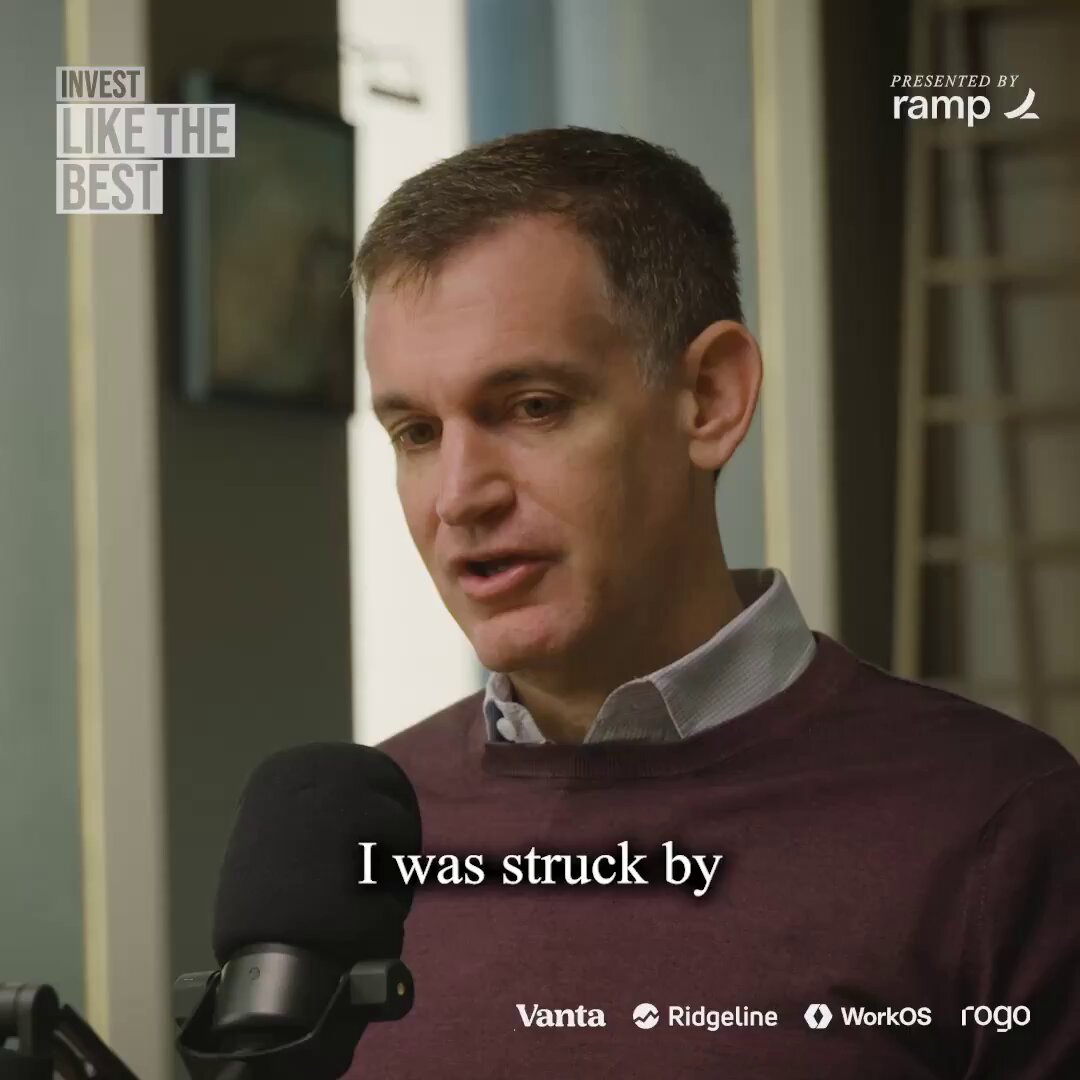
In 2020, Patrick founded Colossus to make room for more of that work. Its name comes from writer Tim Urban's “Human Colossus,” a picture of knowledge built across generations by many people adding their pieces. The metaphor fits an organization that collects explanations of companies and careers, one episode or story at a time. It also spares its founder the awkward task of pretending he can interview everyone himself. Editors and hosts can follow curiosities that a single person's calendar never could.
The company in the middle
Meanwhile, the original investment business was changing. O'Shaughnessy Asset Management introduced Canvas, a platform for customized investment portfolios, in late 2019. By August 2021, Franklin Templeton said Canvas accounted for $1.8 billion of OSAM's $6.4 billion in assets under management. That September, Franklin announced it would acquire the firm. Patrick was its CEO when the deal was announced. The transaction capped one chapter of building: research had become strategies, strategies had become software, and the software had become part of a much larger asset manager.
The numbers are worth noticing because they make the transition concrete. This was not a podcaster daydreaming about business from outside the room. He had helped run an operating investment firm through a product launch and an acquisition. At Colossus, the output is different, but the habit of building a system around an idea is familiar. A podcast gets an audience. An audience makes room for another show. A network can hire editors. Editors can commission stories that require months of reporting. Eventually someone says, with some nerve, that perhaps these stories ought to be printed.
Why make a magazine?
The first issue of Colossus Magazine appeared in November 2024. By June 2026, the publication had reached its sixth print issue. It is a patient format for an impatient industry. Patrick has explained his interest in reported profiles as another way to introduce the world to people he and his colleagues find compelling. An interview captures a mind in motion. A profile can walk around that mind, talk to others, inspect the setting and return with a fuller picture.
He told Senra that he had read a profile of Palmer Luckey by Jeremy Stern and reached out to the writer. Stern became Colossus's editor-in-chief. It is an almost embarrassingly neat example of Patrick's thesis: notice good work, contact the person behind it, and see whether a larger thing can be built together. In the same conversation, Patrick said he would welcome a future in which the profiles become bigger than the podcast. For someone who hosts the company's best-known show, that is a telling preference.
The move into print also gives Colossus a different rhythm. A podcast episode can be scheduled and released; a reported feature may take months, sometimes much longer. The payoff is a story someone can return to after the current news cycle has moved on. It asks writers to be as interested in their subjects as the subjects are in their own work. Patrick's job, increasingly, is to create the conditions in which that kind of attention can survive a deadline and find an audience.
A podcast can begin with a question. A magazine can spend months finding out whether the first answer was enough.
Backing the people he finds
Positive Sum brings the same preference for people into venture investing. Its public statement is brief: “We back founders pursuing their life's work.” Its portfolio highlights include Etched, Vanta, Ridgeline and other companies across technology. The phrasing matters. “Life's work” asks about the relationship between a person and a problem, the kind of persistence that might remain when fashion changes. Patrick has said he enjoys discovering people and putting resources behind them before their merits are widely agreed upon. Venture capital gives that conviction a financial form.
In a 2025 interview, he spoke about wanting to champion others more than he wanted to collect personal accolades. He also described opportunities arriving from unexpected directions and his reluctance to organize life around fixed goals. Those are his own accounts of his temperament, rather than a formula for anyone else's career. Still, they explain why a quant investor could become a podcast host, why a podcast host could build a magazine, and why a venture investor might find a writer's byline as interesting as a term sheet.
There is an amusing practical consequence. Patrick built an audience by putting his name on a show, then started making it easier for that audience to hear and read other people. His friends have joked about the intensity of his attention when it lands on a person or project. That intensity can be useful to a founder, a writer or a host. It can also be turned into an institution, where editors and colleagues do the discovering and the founder is one participant among many.
He has spent much of his adult life around models: investment factors, portfolio tools, business systems and media formats. Yet the decisive variable in his story keeps appearing in ordinary human form. A father says “look it up.” A host notices an unfamiliar podcast. A reader contacts the author of a profile. A dinner runs long. A founder describes the work they cannot stop doing. Patrick O'Shaughnessy has made a career of acting on those moments before they become obvious to everyone else. The next question, naturally, is whom he will notice next.