An oyster bar is an awkward place to practice being a technology executive. Ingredients have to arrive. Someone has to assemble them. The margin has to survive the evening. Pascal Gauthier, who helped create ISTR in Paris with two friends, has compared making hardware to making a dish. Both involve ordering components, putting them together and watching the economics. A restaurant, he says, teaches humility. There are less expensive business schools. Few offer oysters.
The restaurant belongs in his story because so much of his career concerns things that seem to have escaped the physical world. Advertising moved online. Market information became data feeds. Money became cryptographic entries. Gauthier followed each migration, first as an operator, then as a founder and investor. At Ledger, where he is chairman and CEO, his argument has acquired a physical form: if something digital matters enough, the final permission should rest in something you can hold.
It is a curious destination for someone who spent years helping internet businesses expand. His working life has taken him from comparing prices to measuring crypto markets to persuading people that ownership requires a little more effort than opening an account. The oyster bar supplies a useful footnote. However ambitious the pitch, eventually somebody must deliver the thing.
The useful business behind the excitement
Before crypto, there was commerce. Gauthier worked at Kelkoo, the shopping comparison service acquired by Yahoo in 2004. In 2008 he joined Criteo, spending five years as chief operating officer as the company developed its advertising business and expanded internationally. Those were jobs in turning a promising product into a functioning organization: the less photogenic part of technology, concerned with customers, commercial execution and growth.
He later worked in venture capital, including as a venture partner at Mosaic Ventures. By then, he had experience on both sides of the table. He could help run a company, or supply money and advice to someone running one. His subsequent relationship with Ledger would begin with the second arrangement and gradually become the first.
In 2014, he founded the business that became Kaiko. Its original name was Challenger Deep. The opportunity was almost disarmingly practical. A new financial market was developing, and reliable information about that market was still difficult to obtain. Prices were exciting; consistent, usable records were useful. Gauthier chose to build around the useful part.
That choice gives his crypto career continuity. Kaiko gathers and distributes market data. Ledger makes devices used to protect the keys that authorize transactions. One helps people understand a market; the other helps them participate without handing over control of their keys. Neither requires predicting tomorrow's bitcoin price to explain why the work exists.
Make the market legible.
Keep authority with the owner.
A founder hands over the keys
Kaiko also supplies an antidote to the familiar founder story in which staying in charge is the point of the exercise. Ambre Soubiran acquired the company from Gauthier in 2017. She brought experience in equity derivatives and financing at HSBC, and developed the business around institutional demand for dependable digital-asset data.
Gauthier's role in that history is precise: he was the original founder. Soubiran's is equally precise: she acquired the company and became its chief executive. Folding the two careers together would erase the decision that makes the episode interesting. The company could continue under someone else's direction while its founder pursued another problem.
Ledger had already caught his attention. He became a seed investor and non-executive board member in early 2015. By September 2017, he was joining as president. At that point, the company reported more than 300,000 hardware wallets sold across 165 countries and 62 employees. It had a product, customers and founders. Gauthier was arriving to help it scale.
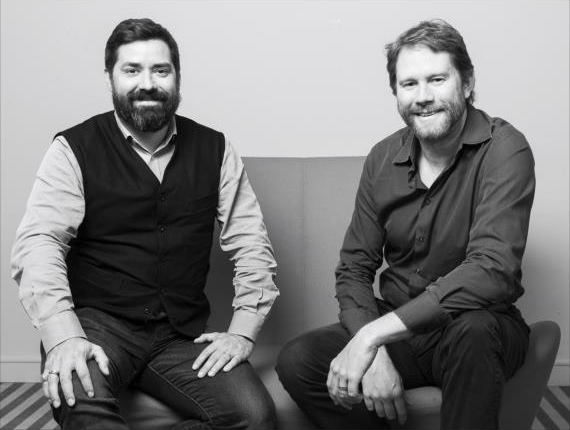
The chair becomes the day job
On April 24, 2019, Ledger announced Gauthier's appointment as CEO. Éric Larchevêque became executive chairman. The announcement described a company with 180 people across five sites, serving individual customers while developing an enterprise business for institutions.
That is an organizational change with a distinctly human problem underneath it. Larchevêque explained that daily execution had consumed time he wanted to spend on longer-term strategy. Gauthier, already president, took responsibility for running the company. The early investor had become the person responsible for the working week.
The distinction matters when looking at his achievements. Gauthier founded Kaiko; he helped finance Ledger and later led it. At Ledger, his task was to turn an existing security technology into a business capable of serving different kinds of customers. A person buying a device and an institution managing assets bring different requirements. Growth meant learning to accommodate both.
- 2014Founds Challenger Deep, later Kaiko
- 2015Invests in Ledger and joins its board
- 2017Becomes Ledger president
- 2019Takes over as Ledger CEO
Trust has more than one door
Leading a security company also means answering for failures around the product. In 2020, attackers stole information from Ledger's e-commerce and marketing database. In December, Gauthier disclosed that roughly 272,000 detailed customer records had been exposed, alongside approximately a million email addresses. The number of detailed records was much larger than the company had initially identified.
The database breach was distinct from a compromise of the hardware wallets. That distinction mattered technically. Customers nevertheless faced phishing attempts using information that had escaped from the company they had trusted. A device could protect a private key while a customer database exposed its owner's contact details. Both facts belonged in the same account.
Gauthier addressed customers publicly; Ledger subsequently set out changes to data handling and work with investigators. The episode put a limit on any tidy explanation of security. Responsibility extends beyond the component doing the cryptography. It includes the systems collecting an order, storing a customer record and communicating when something goes wrong.
Another confrontation arrived in May 2023 with Ledger Recover, an optional recovery service. Customers objected to the announcement and questioned its implications. Gauthier apologized for the communication and committed to accelerating the company's open-source roadmap before releasing the service. He continued to defend recovery as necessary for wider use.
“We never meant to surprise you.”
Pascal Gauthier, May 2023
That was a revealing collision between two demands: give people control, and make that control survivable when they lose something. Experienced users and newcomers do not necessarily want the same trade-offs. Explaining those trade-offs became part of the CEO's job, alongside building the product.
The screen that kept everyone waiting
Then there was the decidedly physical problem of manufacturing a screen. Ledger announced Stax in December 2022, with design work by Tony Fadell, known for the iPod. The device used a curved E Ink touchscreen. It promised a different way to interact with a hardware wallet, with more space to see what a person was approving.
Getting it into customers' hands took longer. When the first Stax orders began shipping on May 27, 2024, Gauthier and chief experience officer Ian Rogers explained that producing the screen at scale had delayed the device. The gap between announcement and shipment was a reminder that an object has obligations a presentation does not. A slide can have any curve you like.
The company was also navigating a difficult market. In October 2023, Gauthier told employees that Ledger would reduce roles by 12%, citing economic headwinds and constraints on revenue. Product development, staffing and demand had to be managed together. Belief in digital ownership did not remove the need to balance the business supporting it.
Oysters, basketball and the wider public
Outside Ledger, Gauthier's restaurant venture offers a smaller-scale account of partnership. ISTR was created with Philippe Morin and Pierre-Michaël Smague in Paris's Haut-Marais. Its own account describes a longstanding friendship behind the enterprise. The name means oysters in Breton; the concept combines French seafood with a taste for New York.
Gauthier has said the experience made him a better CEO. His comparison between assembling a device and preparing a dish is funny because it is specific. Components, assembly, margins: the language works at a restaurant table as well as in a hardware business. It is also a way of giving the restaurant credit as work, rather than treating it as an executive's decorative hobby.
At Ledger, reaching people outside crypto's established audience has taken other forms. In June 2025, the company agreed a jersey sponsorship with the San Antonio Spurs. The connection joined a Paris business to a basketball team with a longstanding French following. It put Ledger's name somewhere a discussion of private keys rarely starts: on a basketball jersey.
The next question is permission
By 2026, Gauthier was extending his argument beyond cryptocurrency. In his March essay, Revenge of the Atoms, he presented hardware as a means of protecting identity and governing actions by AI agents. At VivaTech in June, he discussed digital sovereignty with CNN's Melissa Bell. His concern was increasingly who can authorize an action when software is acting on somebody's behalf.
On October 15, Ledger announced Atom, a device intended to run everyday apps with a secure chip, a secure screen and Ledger OS. Its stated features include a physical switch for the camera and microphone. The company says delivery is estimated for the second quarter of 2027; it remains in development, with reservations rather than finished devices on sale.
The same day's Agent Intent announcement put the idea into a narrower workflow: an AI agent prepares a proposal, and the user reviews and physically approves it on a compatible Ledger signer. The service launched in beta. It is a practical expression of the boundary Gauthier wants to preserve between assistance and authority.
His ambition now reaches from market data to the permissions of everyday digital life. That is a considerable distance from a price-comparison website, though the operator's problem remains recognizable. Someone has to understand the customer, explain the arrangement and deliver what was promised. At ISTR, the evening eventually ends and the plates arrive. Gauthier's larger project will be judged with a similarly inconvenient test: what actually reaches the customer's hands.