The most consequential feature in Parse was not a feature at all. It was a way out. On January 28, 2016, Facebook told developers that the hosted backend they had built their apps around would close in a year. For a service designed to make server work disappear, that was an unusually rude way to make it reappear. Somebody had to move the databases, run the code, check the app, and explain to users why nothing had changed.
Facebook released Parse Server, a version of the backend developers could run themselves. The hosted Parse API ultimately went dark in January 2017. Parse Server did not. Today the project has a dashboard, client SDKs, a public forum, an open funding ledger and active releases. Its ownership story is messier than a product brochure, which makes it more useful.
The quick read
- Parse began in 2011 by handling the repetitive backend work behind mobile apps.
- Facebook acquired it in 2013, then closed the hosted service after a year-long migration period.
- Parse Server now gives teams an open-source backend they can deploy on infrastructure they choose.
- The code is free; running, securing and maintaining the deployment still costs money and attention.
A bargain struck at the phone’s edge
An early smartphone app needed more than a charming screen. It needed accounts, records, files, notifications and a place to execute logic that did not belong on a handset. In 2011, Parse offered these pieces behind SDKs so an app developer could make progress without first becoming a database operator. Tech writers called it a “Heroku for mobile,” a label that was both helpful and slightly unfair: the appeal was not merely hosting. It was the promise that a login and a stored object would behave like ordinary app building blocks.
The pitch found an audience. At its November 2011 Series A, Parse said 3,500 developers were building on the platform and traffic from their apps was growing 40 percent week over week. The company had raised roughly $1.5 million before Ignition Partners led a $5.5 million round. This was a small team selling relief from a problem almost every mobile team could recognise.
Historical figures refer to the original hosted company, not the current community project.
Parse’s founders - Ilya Sukhar, Kevin Lacker, James Yu and Tikhon Bernstam - had found a neat commercial position. The more apps relied on their API, the less often a developer had to think about infrastructure. There was a free tier, then paid plans; the lowest paid plan in 2013 was listed at $199 a month. Facebook acquired Parse that year in a deal reported at about $85 million. The precise terms were never publicly confirmed by the companies.
Then the bill came due
For Facebook, Parse put useful tools in the hands of mobile developers. For those developers, the relationship was simpler: Parse held a working part of their apps. When Facebook announced the end of its hosting service in 2016, roughly 600,000 apps had been built on Parse, according to contemporary reporting. The immediate failure was the managed service’s future, not the usefulness of its API. A platform can be sound software and still lose the business decision that keeps its servers on.
The public record does not establish one private reason Facebook changed course. What is visible is what it did next: publish Parse Server, supply migration guidance and give users a year to move. That decision turned an impending loss of access into a substantial engineering assignment. It also gave the project a second life beyond the company that had paid the hosting bill.
“Empower any developer with a state-of-the-art alternative backend, driven by an open-source community.”PARSE CORE TEAM MISSION PROPOSAL, 2021
Launch. Parse packages data, accounts and other backend tasks for mobile developers.
Acquisition. Facebook buys the hosted platform.
Notice. The hosted service gets a closing date; Parse Server is released.
Handoff. Facebook’s hosted API closes; self-hosted deployments continue.
Maintenance. The community continues to publish releases and security fixes.
What the second Parse actually ships
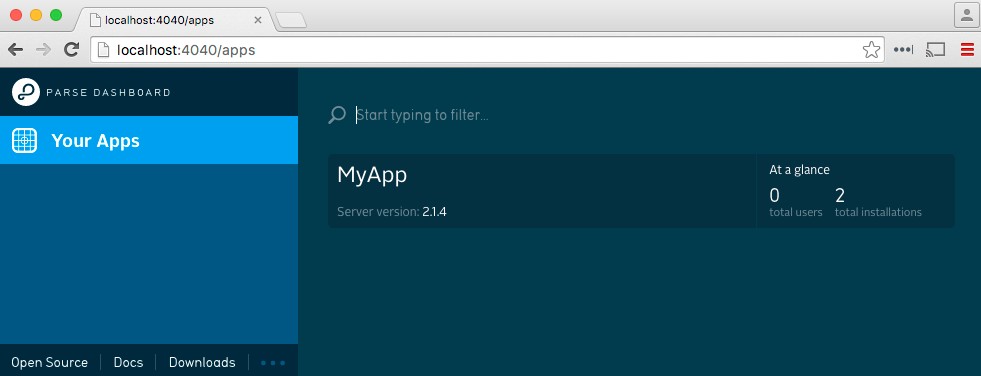
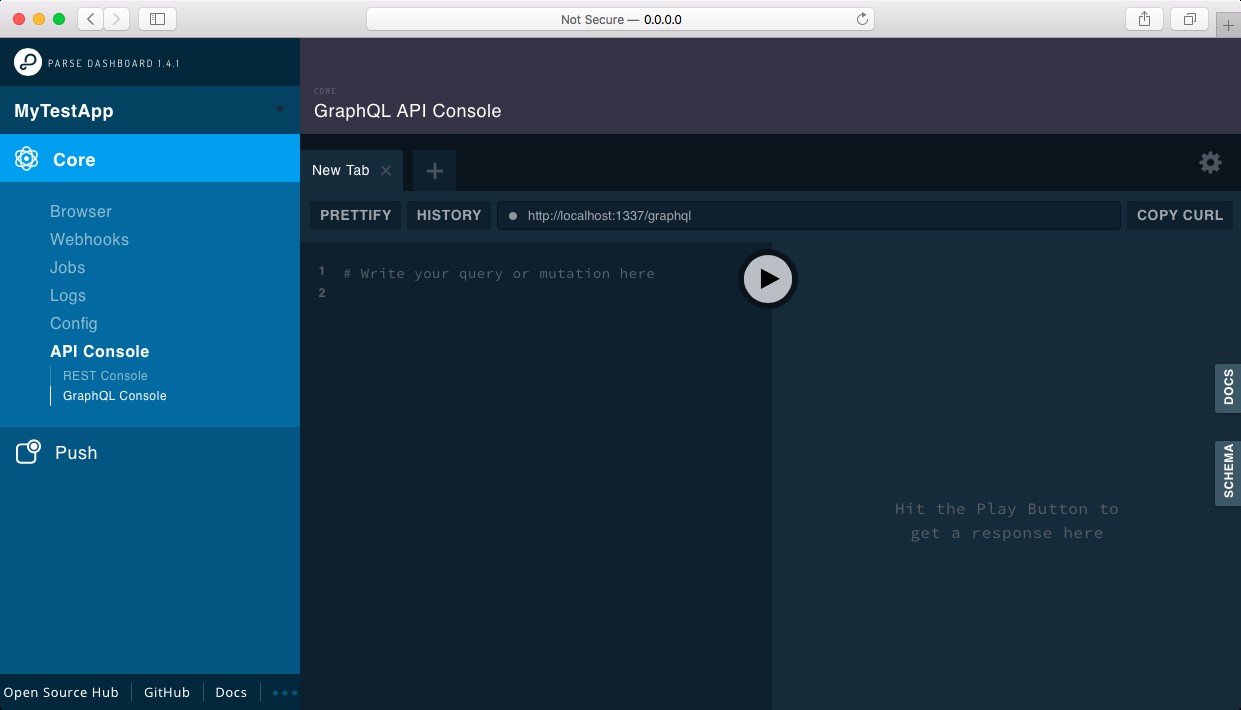
Parse Server is an open-source backend built for Node.js and Express. It can run on infrastructure capable of running Node.js, with MongoDB or PostgreSQL behind it. It offers data objects and files, user management, access controls, Cloud Code for server-side logic, push-notification integration and REST and GraphQL APIs. Client SDKs connect the backend to JavaScript, Apple, Android, Flutter and other app environments. Parse Dashboard supplies the browser interface for inspecting and managing an app.
The result is particularly attractive to a team that wants standard backend pieces without surrendering its deployment choice. A small product can begin with a local server and later move to a cloud provider. A team with data residency or custom integration needs can decide where the database sits and how the surrounding systems connect. Parse is not a magic layer that erases operations; it is a framework that lets developers start from a working stack instead of assembling each part from scratch.
The present-day stack
Alternatives include managed products such as Firebase, AWS Amplify and Supabase, or a custom backend built from separate components. Parse’s distinction is its combination of a familiar app API, multiple SDKs and source code a team can run itself. That is most useful when the team values control enough to accept the upkeep. A group with no appetite for database backups, security reviews and deployment work may be better served by managed hosting, including services that host Parse itself.
Free code, visible bills
The old Parse sold subscriptions. The current Parse community distributes open-source software. An adopter pays for its chosen cloud, database, storage and engineering time. The maintainers, meanwhile, use donations and sponsorships through Open Collective. The ledger shows contributors including hosting businesses and app companies; the project’s governance documents describe a paid contributor program. None of that is venture funding for a revived Parse, Inc. It is a way to keep maintenance work visible and paid for.
That maintenance is real. In July 2026, the Parse Server project published a security advisory about GraphQL error suggestions that could expose schema identifiers under certain settings, along with patched versions. The incident is an instructive counterweight to the romance of open source: possession of the code does not make a deployment secure by itself. It gives a team the ability, and responsibility, to patch it.
The transferable lesson is practical. If you sell developers a dependency, make an exit path part of the design while the product is healthy: portable data, documented APIs, migration tools and a credible story for who runs the service next. Parse got there under pressure. Developers can copy the architecture without copying the crisis. Its second act is not a tale of a dead company returning from the grave. It is a working example of software whose users were finally allowed to hold the keys.