The awkward thing about selling a frying pan online is that the advertising bill can arrive before the money from the frying pan. Buy more stock, buy more ads, sell more pans: each apparent success can deepen the cash shortage. Parker built a financial product around that interval. Give the merchant more time, its founders reasoned, and growth becomes easier to finance.
- Parker combined credit, banking services and financial analytics for online businesses.
- Its card advertised up to 90 days to repay individual purchases.
- A failed acquisition preceded its May 2026 shutdown and Chapter 7 filing.
That idea deserves attention even though the company failed. Parker’s story joins two problems that merchants usually consider separately: the timing of their bills and the durability of whoever pays those bills on their behalf. The first made Parker attractive. The second became impossible to ignore when its cards stopped working.
01 / The calendar was the product
Imagine two purchases, one made early in a billing cycle and another near its end. A statement-based card gathers them together, although the merchant has enjoyed very different amounts of time to turn each purchase into revenue. Parker’s rolling terms gave transactions their own repayment periods, advertised at up to 90 days. Eligibility and the terms actually offered mattered.
For a brand funding advertising and inventory, that changes the calculation. The relevant question becomes: will the cash from this spending arrive before repayment? If it does, a merchant can finance more activity with the same cash balance. If the goods sit unsold, an extra month merely postpones the same uncomfortable conversation.
Parker explicitly put credit duration ahead of rewards in its launch announcement. It targeted established internet-native retailers, including businesses with $5 million to $200 million in annual sales. Performance-based limits were another part of the pitch: assess what a merchant’s business is doing, then extend credit accordingly. That requires expertise in merchant cash flows, beyond a tidy expense-management interface.
02 / The detour back to banking
Yacine Sibous and Milan Ray met at coding school 42 in 2018. Parker joined Y Combinator’s Winter 2019 batch, but the route to its eventual product was untidy. Forbes described an e-commerce aggregator, a “Shopify for SaaS” concept and a consumer credit-card idea for immigrants among the founders’ attempted directions.
The team returned to its original notion of banking for e-commerce businesses. The attraction was practical: entrepreneurs already had tools for opening an online shop, but financing the shop remained awkward. The early ideas had not worked. Returning to a problem they understood gave the founders a more specific customer and a more specific job to do.

By November 2024, reported customers included Caraway, Rebag, Untuckit and Pathwater. These were businesses with physical goods, customer-acquisition costs and money tied up between buying and selling. Parker occupied a narrower corner of business finance than a general corporate card: the operational spending of brands selling online.
03 / The card wanted company
Credit was the entry point. Banking services, bill payments and financial analytics widened the relationship. Parker promoted real-time profit-and-loss visibility and contribution-margin tracking. The ambition was to connect the spending decision to the evidence of whether it had worked. More sales alone do not tell an owner which products leave money behind.
A $20 million Series B in November 2024, led by Valar Ventures, backed expansion into products, analytics and integrations. The direction was clear: become a financial platform merchants used throughout the working day. Against alternatives such as Brex, Ramp and American Express, Parker’s argument centred on the particular financial rhythm of internet businesses.
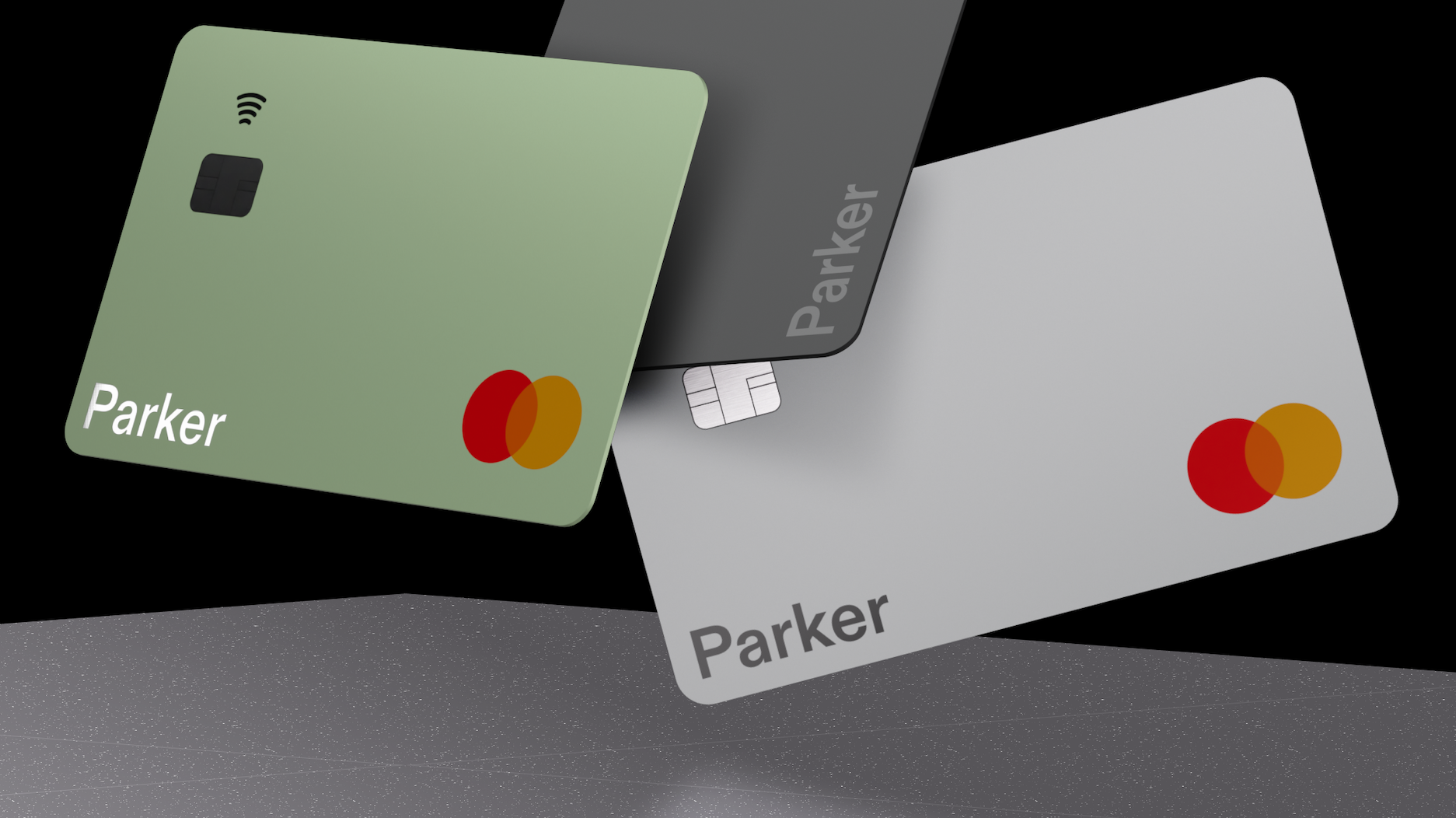
There was a business underneath the interface. Historical reporting identified interchange and transaction fees as revenue streams. Bank partners supplied essential infrastructure: Patriot Bank for commercial cards and Piermont Bank for deposit services. Parker was a fintech, with dependencies extending beyond its own software. A merchant’s relationship with the app was only part of the arrangement.
04 / A large number with two meanings
By September 2025, Parker promoted more than $200 million in financing, including an asset-backed lending arrangement of up to $125 million. Lending capacity finances customer credit. Equity supports the company itself. Adding those figures produces a big headline, but tells a reader little about how many months the company can keep operating.
Capacity to fund credit. This figure does not establish cash drawn or operating runway.
The revenue number needs similar care. Sibous publicly described roughly $65 million in revenue to date. Treating that as verified annual revenue changes its meaning. Volume, revenue, available credit and profit answer different questions. A merchant evaluating a financial provider has reason to keep all four apart.
05 / The clock behind the clock
In May 2026, the company’s own timing problem became public. Sibous described leadership turnover, a tougher market and slowing growth. Management pursued a sale; an anticipated acquisition worth nearly $90 million did not close. His subsequent reflection on the ending was blunt.
“And now it’s over.”
Yacine Sibous / May 2026
Parker Group filed Chapter 7 in Delaware on May 7. The petition recorded $50 million to $100 million each in assets and liabilities, with 100 to 199 creditors. By October, the bankruptcy docket included disputes and motions concerning customer remittances. The business that sold merchants breathing room had entered liquidation.
What can an operator copy? Map when each dollar leaves and returns. Judge financing against that interval. Keep contribution margins visible, and maintain another way to pay essential suppliers and advertising platforms. Longer terms help when profitable sales turn into cash before repayment. They cannot repair poor margins or guarantee that the provider will remain available. Parker understood the merchant’s calendar. Its ending asks merchants to study their financier’s calendar, too.
Keep reading
Company channels / historical context