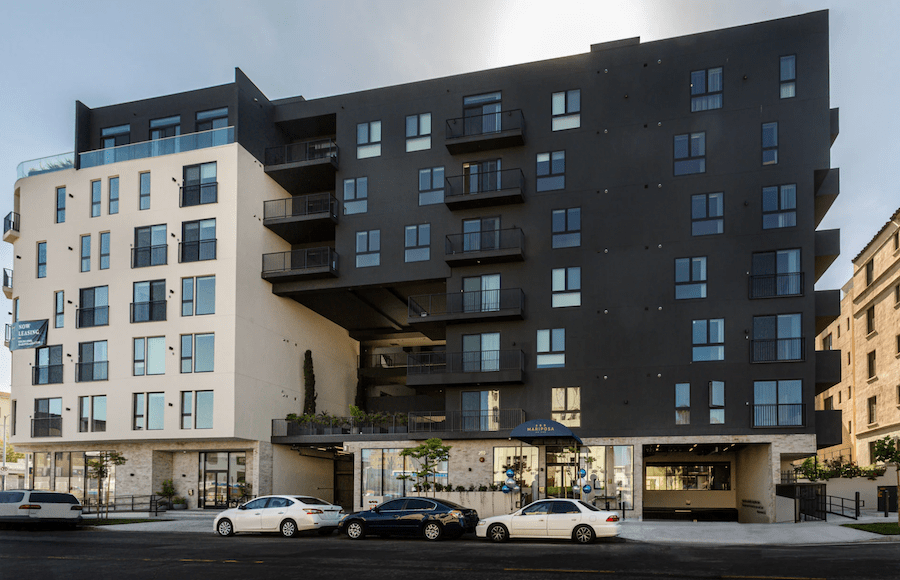
At Mariposa on 3rd, a Los Angeles apartment building, parking had acquired the peculiar qualities of a ghost story. The management team believed it was short of spaces. Residents wanted them. The garage, however, was keeping a different account. When Parkade audited the building’s records, it found 18 spaces that had been assigned incorrectly on paper. Eight more became usable as residents shared idle spaces or chose short stays instead of permanent leases. What had looked like a 15-space shortage became a 10-space surplus. No one had poured a new slab of concrete.
The quick version
- The product: software and 24/7 support for parking assignments, reservations, payments, pricing, gates and enforcement.
- The customer: owners and managers of apartment buildings, condos and other private properties; residents and guests use the app.
- The wager: a better record and a more flexible market can make existing parking behave like new supply.
- The caveat: this works best where spaces are scarce, underused, mispriced or badly documented.
The most expensive parking space is not always the one built underground. Sometimes it is the one you already built and cannot find. Parkade, founded in San Francisco in 2018, has made a business of that absurdity. Its software gives a property manager one view of who has a space, what it costs, who has paid, what the rules permit and which spot is free for a visitor tonight. On the other side, residents use an app to select a spot, book a guest space, open a gate, change an assignment or report a stranger’s car.
A side project in the Lyft lot
Evan Goldin came to parking through a company whose promise was to make car ownership less necessary. At Lyft in 2014, he volunteered to run the office lot. Employees had been offered free, first-come parking. As the company grew, so did the competition for a morning space. Goldin and colleague Curtis Rogers persuaded leadership to let them charge for it. The first price was too high and left spaces empty, so they lowered it. Goldin later recalled popcorn thrown at him and colleagues picketing the announcement. Once the price settled, driving alone fell and parking became more reliable. It also exposed a market for sharing unused spaces.
“Simply asking everyone to be nice and share parking wasn’t working.”Curtis Rogers, Parkade co-founder
A second lesson arrived at home. Goldin recalled his future wife circling his San Francisco block for roughly half an hour, unable to find a place to park, while his building garage contained dozens of empty spaces she could not book. Their first test was gloriously ordinary: a private Facebook group where people could post a spare spot. In 2019, Parkade launched its first app for condo buildings. The pitch was a small market inside a private garage: an owner away for the weekend could let a neighbor use the space. Goldin, Rogers and co-founder Ben Plowman had found a real transaction. They had also found the limit of a transaction-only product. Someone still had to know which spots existed, set the rules, collect money and settle the argument when a car was in the wrong place.
The ledger was the product
Property managers generally inherit parking the way families inherit a box of unlabeled keys. At Mariposa, the team billed parking in Yardi but tracked assignments and cars in a spreadsheet. Staff could not always tell who had assigned a space, whether a resident had moved out or whether a vacant space was truly vacant. Parkade audited the old list, verified leases with residents and moved the inventory into its system. Residents then confirmed their spaces and payment details in the app. The manager stopped acting as a human switchboard.
That sequence is what distinguishes Parkade from a parking search app. A search app helps a driver find somewhere to leave a car. Parkade chiefly sells to the building that owns or controls the spaces. Its buyers need a reliable inventory, integrations with property management systems such as Yardi, Entrata and RealPage, gate access, rule sets, payment collection and someone to answer a resident at midnight. The software is paired with a support team, because a misparked car does not wait politely for office hours.
Parkade says peak use at Mariposa rose from 48% to 61%, and parking revenue rose 159% after fees. Those are figures from one company case study, not a promise that every garage contains a hidden fortune. The mechanics matter more than the headline percentage. Accurate records released spaces. Short-term reservations let the same spot serve different people at different hours. Better enforcement made paying for a space meaningful. More precise prices accounted for distance, convenience and EV access.
Every empty hour has a price
A parking stall is fixed in space but flexible in time. At Park East, a Greystar-managed building near Dodger Stadium, Parkade says vacant spaces generated $50,000 in short-term revenue in the first year. One event parking arrangement with Netflix brought in $27,000. That is a rather more interesting use of an empty garage during lease-up than waiting for a future resident to arrive.
The company’s revenue tools assign different prices to different spaces, and its 2024 release included event-based pricing and integrations requested by property teams. A resident may prefer a cheaper space far from the lift; another may pay more for convenience. A visitor may need three hours, not a month. The manager sets the boundaries: one spot per apartment, a premium for a second car, a guest allowance, or public access only to selected spaces. Parkade handles the booking and payment flow inside those boundaries.
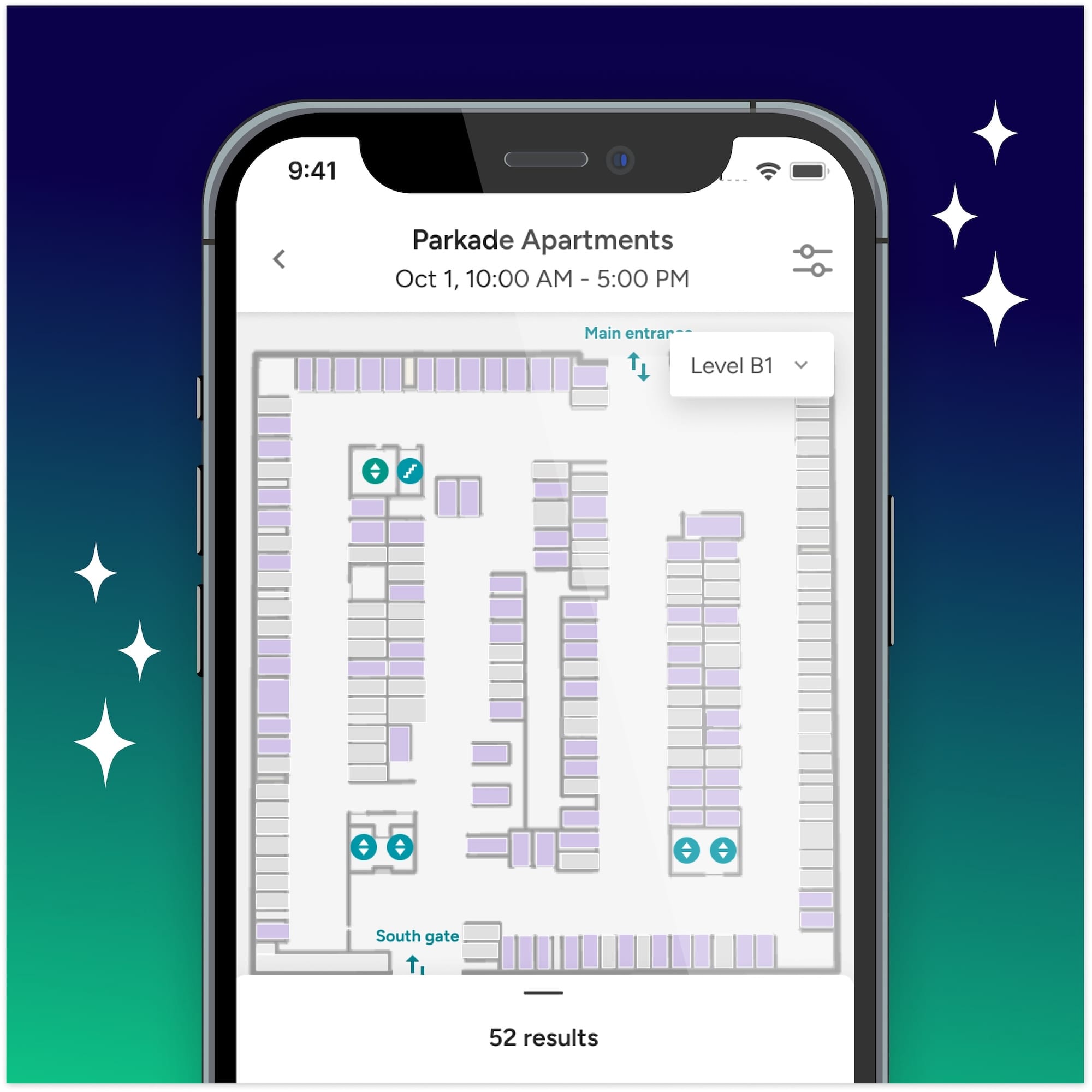
In November 2025, the company introduced interactive parking maps on web and mobile. A map is a modest thing until you have spent ten minutes circling a six-level garage looking for B-143. It also shifts the buying decision from a list of prices toward the character of each spot: near the gate, close to the lift, perhaps beside a charger. Parkade launched the feature across its properties in phases.
Old operating model
Spreadsheet assignments, separate billing, paper permits, manual guest exceptions and a manager called when a space is blocked.
Parkade model
A current inventory, self-service booking, integrated charges, app-based access and a support team to handle problems under building rules.
The price of a parking company
Parkade earns money from the property side of the market. Its older developer offer described a 10% to 20% commission on parking rentals with no upfront or monthly fee. Its current checkout describes a renewable monthly subscription after onboarding. That is evidence of a business model that broadened with the product; it is not a universal quote for a building today. The company does not publish one standard current rate. A buyer would need a proposal covering fees, payment processing, support and any revenue share.
The company raised a $10 million Series A announced in May 2025, led by Navitas Capital, with MassMutual Ventures and Nine Yards among the new investors. Goldin said Parkade had grown 21-fold since its 2022 seed round and served customers in 23 US states and three other countries. Crawford Hoying, an early customer, said it began using Parkade in 2021 across more than 10,000 spots. Greystar, Sentral, Waterton and Sares Regis Group appear among its named customers. Those names suggest a product built for real estate operators who care as much about the monthly close as the resident experience.
There is a larger ambition behind the tidy ledger. Parkade argues that when buildings know what parking they already have, they can stop treating every complaint as a demand for more concrete. In July 2026 it became a Champion Sponsor of the Parking Reform Network, pledging a portion of revenue to the group. The same month it was still publishing advice for property managers about parking complaints and missed revenue. In February it announced SOC 2 Type II compliance, a practical credential for a company entrusted with resident and payment data.
The idea has limits, and the limits are instructive. An empty space is only supply if the owner may rent it, the gate will admit the driver, the building’s rules allow the visit and someone can keep a reserved spot clear. Where parking is abundant and free, the urgency is lower. Where demand is weak, dynamic pricing cannot conjure customers. But where a waitlist coexists with blank pavement, the first sensible move may be to open the spreadsheet. The concrete can wait.