Pankaj Patel had already reached the sort of job that makes a career look complete. At Cisco, he became executive vice president and chief development officer, responsible for a product portfolio measured in tens of billions of dollars. Years later, the beginning of his next company would be considerably smaller. “Nile started in my living room,” he recalled. A room, a collaborator, an argument about what to call the thing. Even an experienced engineering executive must occasionally endure the meeting about the name.
The interesting part is what persuaded him to begin again. Patel had spent much of his working life helping companies connect. He now wanted to change the amount of effort those connections demanded. The network, in his telling, had accumulated too much operational work. Customers bought equipment, then inherited a continuing assignment: make it all behave.
At Nile, where he is co-founder and CEO, that assignment has become the business. The company delivers enterprise wired and wireless networking as a service. Patel’s ambition concerns the daily experience of running it: fewer manual tasks, security built into the architecture, and a provider accountable for performance. It is a second act with an unusually close relationship to the first. He knows the machinery he wants to simplify.
An engineer before the internet became ordinary
In 1975, Patel came to Wisconsin from India. He had completed his engineering degree at BITS Pilani; he would earn his electrical engineering master’s at the University of Wisconsin-Madison in 1977. He arrived without the resources to research Madison beforehand. For someone whose later work would concern access to information, the detail has a pleasing historical symmetry.
After graduate school came a decade at Digital Equipment Corporation in Boston. He then moved to California, founded a business making tools for chip design, sold it, and joined StrataCom. Cisco bought StrataCom in 1996. Patel’s career subsequently included leadership at Redback Networks and senior roles at Cisco. The route crossed computing, design tools and networking before reaching responsibility for a $38 billion portfolio.
In 2025, Wisconsin recognized him with a Distinguished Achievement Award. His career had stretched from a time when researching a distant university was difficult to an industry built around moving information almost everywhere. The progress was considerable. It also gave him a detailed view of the work still required behind the connection.
UW-Madison
A new service model
After years of development
The bill after the box
Patel’s diagnosis begins with the money spent after equipment arrives. In his account, customers could spend three to five dollars operating a network for every dollar spent on gear. That is his industry assessment, rather than a universal rule. But the ratio explains where he directs his attention. A purchase order closes. The operational workload keeps a diary.
He has described Nile’s founding aim as removing human dependence from network management. The wording is ambitious, and the practical question is quite specific: how much routine supervision can the system take on itself? His service model emphasizes three outcomes: availability, capacity and coverage. Each has a customer’s question behind it. Can I connect? Is there enough room for the work? Does the connection reach where I need it?
Patel sees cloud computing, connected devices, improving automation and the acceptance of subscription services as conditions that made this approach possible. Nile’s pitch asks an organization to buy a continuing result. The provider’s obligation extends beyond delivering a working box on the first day. That is a consequential promise for an engineer to make, because every subsequent working day becomes part of the product.
Availability
Can people connect when they need to?
Capacity
Can the network support the work?
Coverage
Does connectivity reach the right places?
The concern predates Nile. In December 2013, while at Cisco, Patel wrote about networking as a service, automation and the economics of delivering services. He wanted providers to shorten provisioning times from months to minutes. He also argued that virtual and physical infrastructure needed to work together, recognizing the investment customers had already made.
Read across the two periods, there is a continuity in the questions he asks. How quickly can a service arrive? What does it cost to operate? How much coordination is required? Nile would later give him a new setting in which to pursue them. The starting conditions changed; his interest in the customer’s operational burden remained recognizable.
A river, four founders, four years
The company’s name came from a lively disagreement with Suresh Katukam. Their early discussions concerned vision and strategy. When the subject became naming, they considered Latin and Greek words for cloud. Katukam, who had worked at Amazon, raised the example of a company named after a river. The conversation led to Nile.
Patel had visited the Nile River twice. He associated it with the civilizations it sustained and wanted the company’s ambitions to reach further. It is an unusually geographical origin for a networking name. The living-room debate also provides a welcome glimpse of the founder before the funding announcements: experienced, determined, and still unable to settle the name without a discussion.
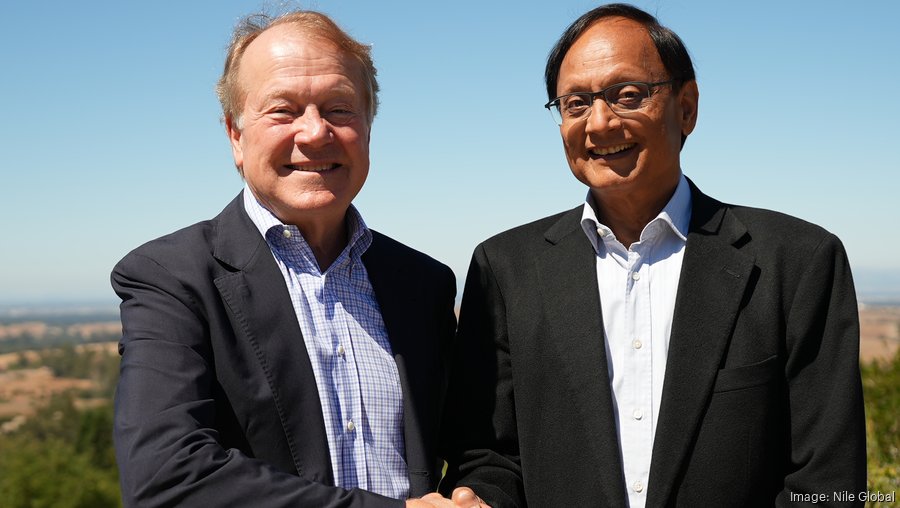
Nile was founded in 2018 by Patel, John Chambers, Katukam and Sri Hosakote. Chambers, Cisco’s former chief executive, was a familiar collaborator. Their later public conversation described years of working together and investing together before Nile. This was a startup assembled by people with substantial experience of the industry they intended to change.
The company emerged publicly in 2022 after years of development. In August 2023, it announced a $175 million Series C, co-led by March Capital and Sanabil Investments, bringing total funding to $300 million. By then it was expanding beyond North America, with customers including Stanford University, Pitney Bowes and Carta named in its funding announcement.
Capital gave the venture room to develop and expand. It did not answer the more personal question inside Patel’s argument. Would people who had spent years managing their own networks trust a provider to assume more of that responsibility? Knowing the technology was one part of the work. Understanding the people responsible for it was another.
Learning to hand over the keys
A network engineer’s control is valuable because the engineer is accountable when things go wrong. Asking that person to accept more automation requires a reason to trust the result. Patel has acknowledged the concern professionals may feel about surrendering control. His case for Nile depends on a service giving them useful visibility while reducing the chores they have to perform.
Security makes that question more pointed. In a 2024 discussion of campus networks, he described Nile’s approach to isolating users and devices individually. The intention is to limit the ability of a compromise to move through the network. An office connection must carry legitimate traffic; it should not casually introduce every connected device to every other one.
That attention to architecture helps explain why he describes simplicity as an engineering task. A cleaner experience for the customer requires decisions about what happens underneath. Automation, policy and monitoring have to work together. Otherwise, a simpler interface can leave the same operational burden waiting behind the screen.
“I’ve been an engineer for my whole career.”
Pankaj Patel
There is another clue in how Patel discussed Cisco’s 10,000th U.S. patent in 2013. His reflection on the milestone moved from the number to the effect on customers. A development organization naturally counts what it creates. The person buying its technology has reason to count what becomes easier. His later company brings that distinction into the purchasing arrangement itself.
In June 2026, Nile announced that Glean was using its service across campus locations. Nile reported download speeds rising from roughly 28 Mbps to nearly 100 Mbps and connectivity tickets falling to virtually zero. These are company-reported results from a particular deployment. They give Patel’s argument an everyday measure: a connection that finishes the download and attracts fewer complaints.
The Glean announcement describes an IT team seeking room to focus on strategic work instead of daily network management. That is the human consequence Patel keeps returning to. The time consumed by infrastructure is time unavailable for another task. Saving it would make the service meaningful well beyond its technical specifications.
The unfinished assignment
Patel’s advice to founders combines large ideas with careful execution. In a Montgomery Summit conversation, he encouraged challenging conventional wisdom while remaining disciplined about how a startup spends money. The combination suits a founder who has worked at both scales. An established company can distribute work across a large organization. A new one must decide, repeatedly, what earns its limited resources.
His next chapter still involves those decisions. On September 24, 2026, Nile appointed Srinivas Kavuri chief development officer, reporting to Patel and leading global engineering. Kavuri arrived from Zscaler. Patel framed the appointment as an investment in the technology and people needed to change how enterprise networks are built, secured and operated.
Patel has publicly described Nile as the unfulfilled mission of his career. The phrase gives this story its personal center. He had accumulated experience, seniority and responsibility. One problem remained persuasive enough to pull him back into the beginnings of a company.
There is something appealingly modest about the experience he wants to sell, even when the undertaking is large. Most people want their connection to work and their working day to continue. They have no particular wish to become connoisseurs of the infrastructure. After decades spent building networks, Patel is trying to make that lack of interest easier to afford. The founder gets a new chapter. The customer, if the service does its job, gets on with the day.