At Monterey Production, the oil was arriving a little at a time. The Tulsa-based operator’s mature Oklahoma wells produced roughly 40 to 50 barrels a day, according to PakEnergy’s customer account. Tanks were only partly full. Deciding which pickups to combine required an accurate picture of inventory. Unfortunately, the information could take days to arrive.
- PakEnergy sells software for the journey from land records and field readings to trucking, accounting, and owner payments.
- Its customers include independent operators, first purchasers, haulers, and investors.
- Its expansion follows the paperwork: acquire the tools at adjacent stages, then connect the work.
- The useful buying test: follow one real transaction through the entire proposed system.
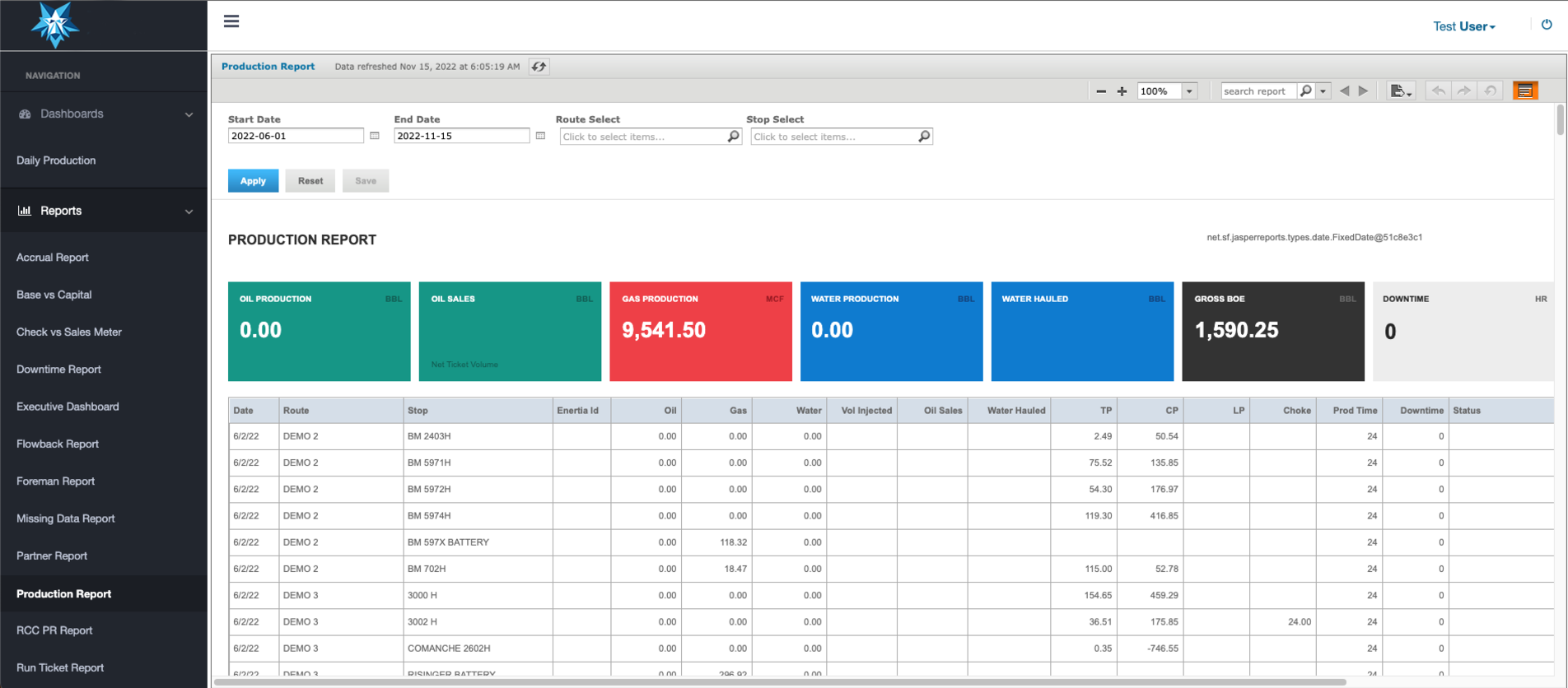
The old production system made routine work difficult. Pumpers navigated cumbersome screens; reporting was awkward. A new operations specialist, already familiar with PakEnergy, helped trigger the switch. The company-published case study says the team was using the replacement in less than a week. Inventory tools helped coordinate split loads into a single sales run.
There is an appealing modesty to this problem. Nobody needs to invent a new barrel of oil. The work is to make an existing barrel easier to account for. PakEnergy’s larger business rests on the proposition that energy companies lose useful time between knowing something in the field and being able to act on it in the office.
01 / The barrel has several owners
PakEnergy provides cloud-based business automation for independent upstream and midstream oil and gas companies. Upstream customers produce the hydrocarbons; midstream customers buy, move, and manage them. The company also serves investors, mineral owners, service businesses, and accounting firms. It reports more than 2,300 customers, primarily in North America.
The accounting is unusually particular. Joint interest billing divides operating costs among partners. Revenue distribution calculates payments to owners. A first purchaser needs to reconcile commodity purchases and sales with tickets, volumes, taxes, and settlements. A generic ledger can record a number. An energy-specific system must carry the relationships that explain whose number it is.
Pak Accounting supplies the financial backbone, including general ledger, payables, receivables, revenue distribution, and JIB. Pak Land tracks leases, ownership, and obligations. Pak Production collects and validates field information. Transportation manages dispatch, loads, ticketing, invoicing, and payroll workflows. Exchange and document tools carry approvals and records between the people involved.
That is the distinction to watch: the connections between jobs. A land deadline, a field reading, and an owner payment may live in different departments, but the departments do not live in different businesses. The software’s value depends on how well information survives those crossings.
02 / An accounting company follows the trail
The business began in Abilene in 1986 as WolfePak, founded by Charlie Wolfe. Its own chronology places oil and gas revenue/billing and production reporting in 1987, and its move into the first-purchaser market in 1995. This was a company learning an industry through its books.
Private equity helped expand the scope. Fort Point Capital owned the company from 2016 until Charlesbank’s Technology Opportunities Fund acquired it in October 2019. The announcement described new product modules, a larger management team, and acquisition support. Transaction terms were undisclosed. In February 2026, the technology strategy spun out as Eterna Growth Partners, which now lists PakEnergy among its investments.
DocVue
Documents enter the picture.
Welltrax + ScoutFDC
Transportation and field data.
LandVantage
Land management; the PakEnergy rebrand follows.
Plow + Petrosight
SCADA and wellsite operations.
The Plow acquisition in August 2024 brought OnPing, a cloud SCADA platform for monitoring and controlling equipment. It extended a relationship that PakEnergy said had lasted more than ten years; Pak Production and OnPing already integrated. Petrosight followed in January 2025, adding software for drilling, completions, facilities and pipelines, and environmental and reclamation work.
Read the acquisitions as a map. Accounting connects to documents; documents connect to loads; loads connect to production; production connects to equipment and the well’s lifecycle. The interpretation is straightforward: PakEnergy has expanded around information its customers already need, rather than asking those customers to develop an entirely new occupation.

03 / The invoice arrives before the insight
Clear Fork offers a different view of the same delay. The Permian operator had used PakEnergy accounting for more than twenty years. Its next problem was visibility: paper invoices took weeks to code, approve, and pay. Expenses in transit made accrual forecasting harder. Staff also spent time retrieving documents for engineers and partners.
Clear Fork connected Pak Production, Pak Accounting, and Pak Exchange. Field assessments fed reporting; invoices entered digital approval workflows; lease operating statements brought expenses and performance together. In PakEnergy’s account, more than 70% of vendors participated in digital invoicing. These are customer-specific results published by the seller, but the financial mechanism is intelligible: seeing expenses sooner helps a company plan its funding requests.
“With borrowing rates more than 9%, that’s real money right there in interest.”
Tyler Barnett / Clear Fork CFO, speaking in the published customer case study
Barnett was discussing borrowing when needed and borrowing only the required amount. His observation puts a price on waiting, without pretending every deployment produces the same savings. Software can improve the timing of a decision. The economics then depend on the customer’s invoices, controls, funding arrangements, and ability to use the information.
04 / Land files acquire a wider audience
At Nexus Energy Partners, the connection was between departments. The non-operated working-interest and royalty business had relied on spreadsheets, trackers, and operator-oriented tools. Its published case describes more than 15,000 net leasehold acres and 300 producing wells. It wanted working-interest and net-revenue-interest calculations alongside records accessible to accounting, engineering, and geology.
Nexus selected Pak Land after reviewing alternatives. Its experience illustrates a useful market distinction: software designed around an operator’s daily responsibilities may fit an investor’s land work imperfectly. A common database matters when several disciplines must make decisions about the same portfolio. A shared folder alone does not settle which ownership figures everyone should use.
PakEnergy’s expertise comes from these specific chores: lease obligations, owner relations, production reporting, commodity tickets, and industry accounting. Its public materials describe developers working alongside accounting, land, and production professionals. Customer stories also emphasize configuration and support. The people explaining a screen need to understand the work on either side of it.
05 / A photograph becomes a transaction
Recent releases extend that approach. In September 2025, PakEnergy introduced AI lease-provision functionality inside Pak Land. The company says it reduces provision processing from hours to seconds. That is a vendor claim about a particular task, not a measured promise for an entire land department.
In May 2026, PakCAPTURE brought AI receipt and ticket processing into Transportation. Drivers photograph paperwork in the mobile app; the system extracts data, populates pickup and drop-off fields, and associates documents with the load. The interesting part is where the extracted information goes. Recognition becomes useful when it enters the transaction people are already processing.
PakEnergy sells subscription software. Its operator accounting datasheet describes user-based pricing and optional modules, so a customer can begin with selected functions and expand. A practical budget should cover the chosen scope, implementation, data migration, training, and integrations. Ask for those items together; a subscription figure alone cannot describe the effort of changing an operating system.
06 / Follow one number before signing
PakEnergy occupies the specialist energy-software market alongside alternatives such as Quorum and W Energy. Both also offer accounting and land capabilities with integration into related workflows. Breadth is therefore a starting point for comparison. Buyers need to examine the particular products, controls, and connections their own operation requires.
A useful lesson from these cases is to test the handoff. Bring a real lease, a field reading, a load ticket, and an invoice to the demo. Correct a volume. Change an owner. Ask which reports and payments inherit the change, who approves it, and where the history remains. Have the person who performs the routine task try the screen.
The approach depends on disciplined records and agreed responsibilities. If departments maintain conflicting well identifiers or ownership data, faster movement can spread confusion faster. Remote teams need to test offline capture and subsequent synchronization; Clear Fork’s deployment used offline mode where coverage was limited. A small operation with simple books should also compare the cost of specialist workflows with the work it actually needs.
Monterey’s half-full tanks make a good place to end. They describe an ordinary operating problem with an ordinary financial consequence. PakEnergy’s proposition is to give the people responsible for that consequence information they can use while there is still time to do something with it.