"The kid from San Diego who learned VC on Twitter and turned a 40-page illustrated explainer into one of the sharpest pre-seed firms in the country."
The book has anime illustrations. Paige Finn Doherty's teenage brother drew them. The foreword is by Ann Miura-Ko of Floodgate. The book explains venture capital in 40 pages, uses farming metaphors, and was written during a pandemic for one audience: Paige's parents. From that act of translation came a Twitter following, a syndicate, and eventually a fund that now manages nearly $14 million.
That's the kind of origin story that sounds too tidy to be true. It isn't. What actually happened was grittier: Paige graduated SDSU into a locked-down world, joined WorkOS two days after commencement over Zoom, and spent the next year learning every VC term that wasn't in her CS curriculum by binge-watching YouTube and arguing on tech Twitter. She wrote cold DMs. She built audience. She tried things. She was rejected by every established VC firm she applied to.
Then she raised $60,000 from 17 strangers on the internet in two weeks to make her first investment - in a company called Pallet, which she also found on Twitter. The money came before the fund. The fund came before the office. The career followed the community, not the other way around.
Today, Paige is the founding partner of Behind Genius Ventures, a pre-seed and seed firm that invests in "technical storytellers" building "clipboard companies" - her term for verticalized AI applied to industries so legacy and overlooked that they still run on literal clipboards. Two funds. Cendana Capital as a cornerstone LP. A portfolio of more than 50 companies. And a 10-year mission she has written out explicitly: 1,000 first-time angel investors, 500 first syndicates, 100 emerging fund managers.
She was 22 when she started the fund. She was 24 when she closed Fund II. She is a surfer, a plant obsessive (specifically variegated varieties), a recovering music journalist, and someone who once managed rappers. That one didn't work out.
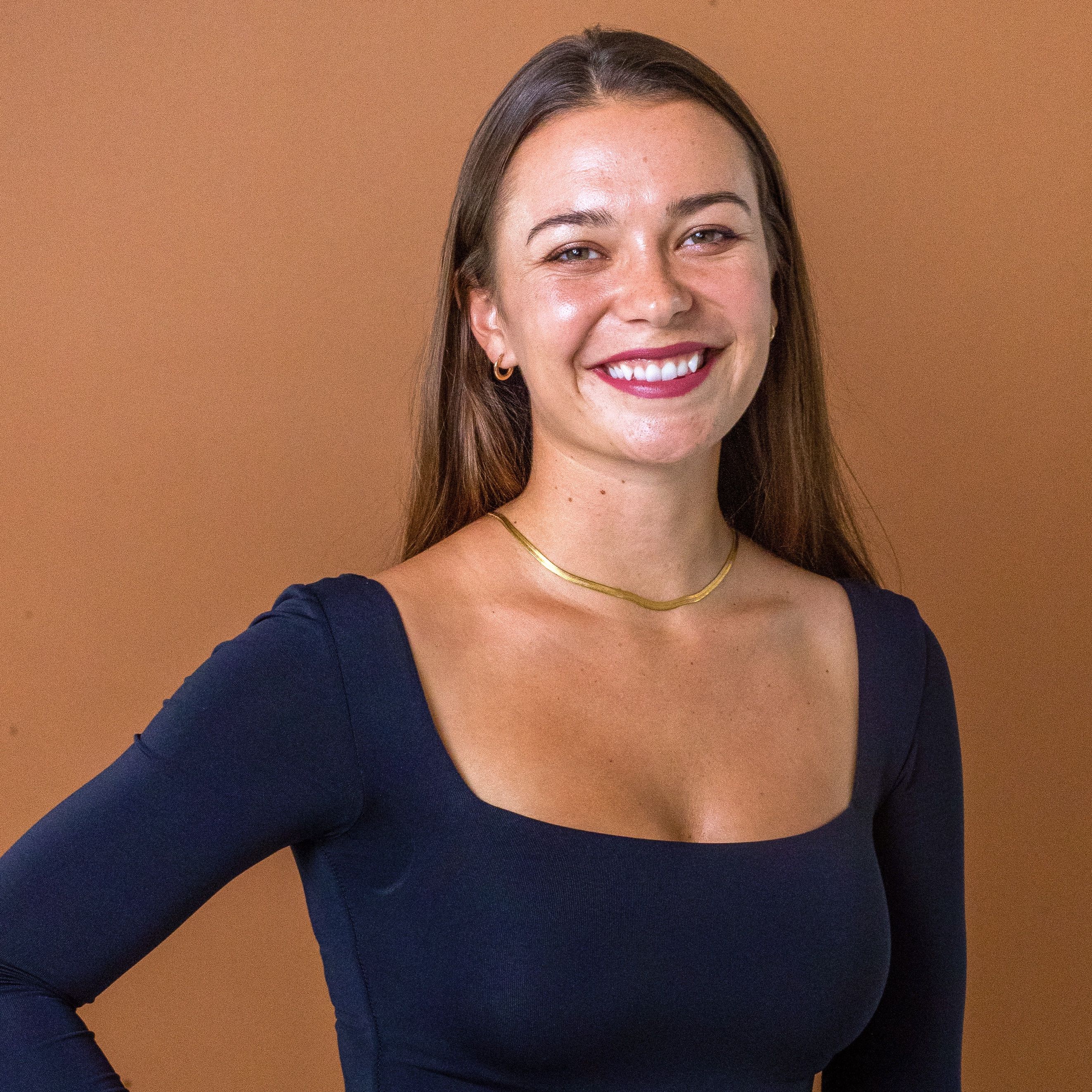
"I believe deeply in the business value of storytelling, and I prioritize founders who demonstrate those strong storytelling capabilities."
- Paige Finn Doherty, Behind Genius Ventures Fund II launch
Paige grew up in the Rancho Bernardo neighborhood of San Diego - not exactly the Bay Area feeder system for VC. She enrolled at SDSU as a mechanical engineering student, discovered it wasn't for her, and switched to computer science three semesters in. Smart move.
She earned a four-year scholarship (the John Jester Memorial) and won a spot in the Lavin Entrepreneur Fellowship - SDSU's invitation-only two-year program for 15 students who want to build actual things. She also did the Society of Women Engineers national conference, placed 2nd in a VC investment competition at Google's offices in Silicon Valley, and got selected as a Forbes Under 30 Scholar from 20,000+ applicants.
She also wrote music journalism. She also managed rappers (briefly). She also interned at Northrop Grumman in high school and won a scholarship there. The resume of someone who cannot sit still.
The pandemic closed everything the week Paige was supposed to graduate. Instead of a ceremony, she got a Zoom call from WorkOS, a developer tools startup. She joined two days after graduation as their first Developer Success Engineer. She and one colleague, Taylor, scaled the function from two to six. The company went from near-zero to hundreds of thousands in ARR. She interviewed customers, wrote case studies for Webflow, Hopin, and Patch. She left in July 2021 to go start a fund.
In between those milestones, she learned everything she could about venture capital from Twitter and YouTube, wrote a 40-page illustrated book about it (illustrated by her 18-year-old brother Owen in anime style), got Ann Miura-Ko of Floodgate to write the foreword, and sold 185 copies in five days.
The book created community. The community created deal flow. In November 2020, Paige saw a company called Pallet on Twitter. She wanted to invest. She had $0 of capital. So she raised $60,000 from 17 people on Twitter in two weeks and deployed it as her first SPV. Then she did it again. And again. Six deals. $300,000 deployed. All while working full-time at WorkOS.
She applied to established VC firms during this period. All of them passed. One offered her a partner-track role in Boston; she turned it down to stay near her family in San Diego. That turned out fine. When she co-founded Behind Genius Ventures with Joshua Schlisserman in 2021, she brought 30,000 Twitter followers, a track record, and an LP network built entirely through transparency rather than credentials.
Fund I: $5M. LPs included Andy Weissman from USV, Heather Hartnett from Human Ventures, and Jenny Lefcourt from Freestyle. Raised at age 23. Fund II: $8.9M, anchored by Cendana Capital - the fund-of-funds that backs the next generation of emerging managers. Raised at 24. Total AUM now sits around $14M across more than 50 portfolio companies.
Her checks run $150K to $250K at pre-seed and seed. She sits on no boards by design - she wants to be a text message, not a meeting. She runs a podcast called Seed to Harvest, has appeared on The Pitch for 21 episodes across four seasons, and publishes research like "What it Takes: The 2025 Report on the Last 100 $1B+ Exits."
Founders who have the technical depth to build it, the communication skills to sell it, and the execution velocity to ship it before the competition catches up. All three together. Not two.
Evaluation FrameworkVerticalized AI and technology applied to industries so overlooked, so legacy, they still run on actual clipboards. Logistics, manufacturing, healthcare workflows, agricultural operations. The boring stuff with enormous margins and zero competition from YC.
Investment ThesisWhat Paige looks for beyond the pitch deck: storytelling quality, mission clarity, and - crucially - whether the founder draws hard lines. A founder who won't move on terms they believe in? That's a signal, not a red flag.
Due Diligence$150K to $250K at pre-seed and seed. Small enough to be founder-friendly, large enough to matter. BGV aims to be a first check, not a follow-on strategy.
Fund MechanicsFuture of Work, Future of Play, Creator Economy, Developer Tools, Applied AI, Fintech, Healthcare, Media, Gaming, Entertainment, Logistics, Biotech, Consumer Hardware. Wide aperture, specific conviction.
Portfolio ConstructionNo board seats by design. Available as a collaborator and connector. Paige built her reputation being the VC who actually picks up the phone - and who was a founder's peer, not their manager, before she was ever their investor.
Portfolio Support"3/4 of my best friends are people I've never met in person. I met them through Twitter."
- Paige Finn Doherty, Angel Interview #21
High school internship at the aerospace giant. Won the Paul Marchisotto Memorial Scholarship - awarded to one NG intern demonstrating leadership. First hint of where ambition was going.
Switched from mechanical engineering to CS after three semesters. Joined the Lavin Entrepreneur Fellowship (15 students, rigorous lean-methodology program). Music journalist at the Aztec Music Group. Also briefly: managed rappers.
Selected from 20,000+ applications for the Forbes Under 30 Summit in Detroit. Placed 2nd in the VC Investment Competition Silicon Valley Regionals at Google HQ, judged by 20+ VC professionals. Landed an internship at TVC Capital on the strength of it.
Graduated SDSU. Joined WorkOS via Zoom two days later. Wrote the illustrated VC explainer during COVID. Got Ann Miura-Ko to write the foreword. Sold 185 copies in five days. Raised $60K from 17 Twitter strangers in two weeks for Pallet - her first deal.
While still at WorkOS: deployed $300K across six deals. Grew Twitter from 300 to 30,000+ followers through radical transparency. Turned down a partner-track Boston VC job to stay near family in San Diego. Best decision she made that year.
Left WorkOS. Co-founded BGV with Joshua Schlisserman. One of the youngest women globally to start a venture fund. The book community became the LP network. The Twitter audience became the deal flow.
Raised $5M Fund I at 23. LPs: Andy Weissman (USV), Heather Hartnett (Human Ventures), Jenny Lefcourt (Freestyle). Forbes 30 Under 30 cover in Venture Capital. The fund worked. The press followed.
Named one of Business Insider's top VCs funding the creator economy (investments in Beacons.AI, Capsule, FYPM). Appeared on The Pitch across Seasons 10-14 - 21 episodes of live-format investment decisions.
Closed Fund II at age 24 with Cendana Capital as cornerstone LP - the fund-of-funds that bets on emerging managers before the rest of the market does. Relocated from San Diego to San Francisco. Total AUM: ~$14M.
Named SDSU Rising Aztec - one of 10 outstanding alumni selected by the university. Managing 50+ portfolio companies. Still posting on Twitter. Still answering cold DMs from people who want to learn what she learned.
Companies solving real problems in overlooked industries - from creator infrastructure to autonomous rail to biotech. Here's a sample.
Written during COVID lockdown. Illustrated by Paige's then-18-year-old brother Owen in anime style. Foreword by Ann Miura-Ko of Floodgate. Sold 185 copies in five days. Featured in the Washington Post, Forbes, San Diego Union-Tribune, Business Insider, and CBS8.
The book was originally for Paige's parents, who didn't understand what she was trying to do. The community that formed around it became the infrastructure for Behind Genius Ventures. The Twitter followers who bought the book became the 17 investors in her first syndicate. The syndicate became the fund.
It is 40 pages long and uses farming metaphors. It democratizes a system that runs on who you know. That was the point all along.
I believe deeply in the business value of storytelling, and I prioritize founders who demonstrate those strong storytelling capabilities.
On her investment thesisYoung startup operators can be some of the most valuable capital allocators due to their boots-on-ground ecosystem networks.
On emerging managers - SydecarI spent time building trust with people in public.
On her fundraising strategyI love when a founder draws a hard line. That's a strong indicator.
On conviction - The PitchOnly 11% of VCs with check-writing power are women. Less than 5% are people of color.
On why the book mattered - Inquisitive VCWorking at a startup is like a dance troupe - everyone has their talents but it only works when we're all in the groove together.
On startup culture - WorkOS blogPaige has stated her decade-long goal explicitly. Here it is.
Help 1,000 people make their first angel investment - removing the mystique around who gets to participate in private markets.
Support 500 people organizing their first syndicate - the infrastructure layer for small checks with big reach.
Seed 100 emerging fund managers - building the next generation of capital allocators from outside the traditional networks.
Her brother Owen illustrated "Seed to Harvest" in anime style. He was 18. The book explains venture capital. It has a foreword from Ann Miura-Ko of Floodgate.
She grew her Twitter following from 300 to 30,000+ through a strategy she calls "learning in public." She posted every mistake and every question.
She switched from mechanical engineering to computer science 3 semesters into SDSU. Best pivot she ever made - and she's made a few since.
In college she was a music journalist. She also managed rappers for a brief period. That one, she admits, did not work out.
She is obsessed with variegated plants - the rare, patterned varieties that look like they were designed by someone who couldn't pick just one color.
She built a Python bot to grow her Instagram audience as a nano-influencer experiment. The engineer in her just couldn't resist automating it.
She helped raise $200K+ in 36 hours for Black-focused nonprofits via EyeMouthEye - which hit #1 on Product Hunt the day it launched.
Describes Gen Z meme culture as "context-dense communication." This is both accurate and deeply on brand for someone who learned VC from Twitter.
Cover feature. One of the youngest women to raise a VC fund.
Selected among 10 outstanding alumni by SDSU Alumni Association.
Recognized for investments in Beacons.AI, Capsule, and FYPM.
Selected from 20,000+ applicants for the Forbes Under 30 Summit, Detroit.
At Google HQ, judged by 20+ VC professionals. This is what got her the TVC Capital internship.
One of 10 undergraduate female CS students nationwide selected for the AMIA Symposium.
Awarded to one NG high school intern demonstrating leadership potential.
Four-year tuition scholarship for Greater San Diego students. Funded her SDSU education.