A bank can spend money persuading someone to apply for a loan, collect the application, examine the numbers, and then send the person away. The marketing worked. The customer arrived. The credit policy said no. Somewhere in that expensive little disappointment, Pagaya saw a business.
- Pagaya gives lending partners another way to assess and fund consumer loans.
- The lender keeps its brand relationship; institutional investors supply capital through the network.
- The hard part is keeping credit performance and funding healthy as the network grows.
Consider U.S. Bank. In February 2024, it described a new arrangement: personal-loan applicants outside its traditional requirements could receive a secondary review from Pagaya. If approved, the bank would originate the loan and service the customer. Within a few months, the bank said, more than 2,000 clients had been approved through the collaboration. For those borrowers, the second opinion came inside a relationship they already had.
The customer was already in the room
Pagaya’s flagship product has the wonderfully blunt name Decline Monetization. It connects to a lender’s loan origination system through an API and evaluates applications the partner would otherwise reject. The commercial appeal is straightforward: recover some value from acquisition spending already incurred, without asking the applicant to start again with an unfamiliar brand.
The company’s expertise spans machine learning, credit assessment, lender integration, and structured finance. Those capabilities belong together. A prediction about repayment is useful only if it produces an offer someone can accept and an asset someone will fund. Pagaya occupies that junction between a lender’s customer funnel and institutional investors’ demand for consumer credit.
- 01 / ApplyThe borrower approaches a partner lender.
- 02 / ReconsiderPagaya evaluates the application.
- 03 / FundInstitutional capital finances eligible loans.
This helps explain its position among financial technology companies. A lender can build its own decision models or use another AI lending platform, such as Upstart. Pagaya’s proposition bundles assessment with access to funding and existing distribution. Its partners can remain familiar names on the customer’s screen. The network works behind that screen. For a lending partner, this changes the sales conversation: it can evaluate the value of additional funded applications inside its own operation, rather than asking customers to adopt a separate financial service before seeing a benefit.
For a borrower, the practical benefit is another possible route to a personal loan, car finance, or purchase financing through a participating provider. Approval remains conditional. For a lender, the question is whether extra funded loans justify the integration and ongoing oversight. For investors, the product is exposure to consumer assets selected through the network. Each participant is buying a different part of the same process.
Three founders, two kinds of machinery
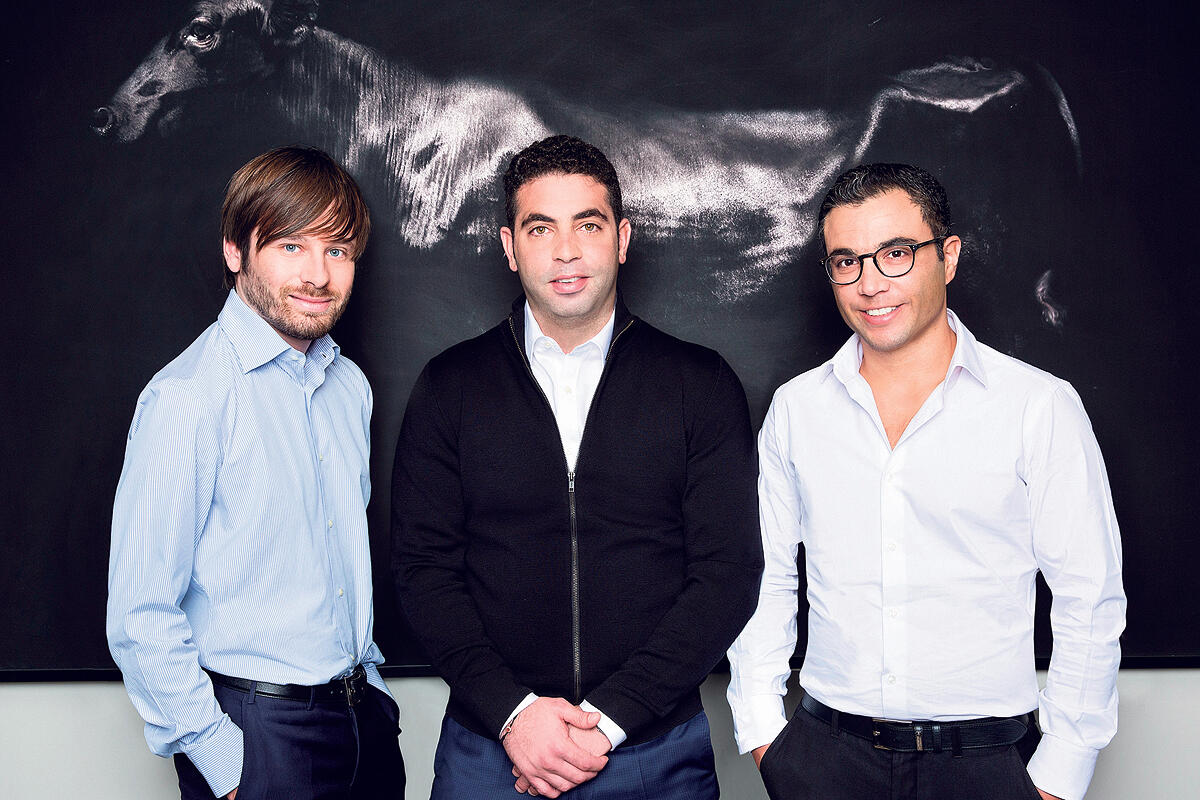
Gal Krubiner, Avital Pardo, and Yahav Yulzari founded Pagaya in 2016. Krubiner’s background included structured credit at UBS and Deutsche Bank. In a 2023 interview, he described looking for ways to introduce technology into those markets. The founding insight had a practical bias: improve the infrastructure through which financial institutions already operate.
“The opportunity was that the infrastructure was behind”Gal Krubiner / Talking Banking Matters, 2023
By June 2020, Pagaya had raised a $102 million Series D led by Singapore’s GIC. That financed the company. Its securitizations finance pools of loans. Keeping those two pots of money separate is essential to understanding the business. One pays for building the machinery; the other helps keep loans moving through it.
The money has to arrive, too
Pagaya’s capital-markets operation packages consumer assets into securities bought by institutional investors. Its shelves include PAID for personal loans, RPM for auto loans, and POSH for point-of-sale loans. For prefunded transactions, capital is raised before eligible loans are acquired during a purchasing window. That sequencing helps address the awkward gap between approving credit and finding a buyer.
On October 12, 2026, the company announced its hundredth securitization: a $650 million auto-loan transaction. Lifetime issuance exceeded $44 billion. A September facility with ATLAS SP Partners added nearly $700 million of personal-loan funding capacity through a revolving structure. Reusable capital gives the network another way to support originations between individual bond deals.
More than $44 billion in lifetime ABS issuance by October 12, 2026.
Pagaya primarily earns fees tied to activity enabled by this network. In the second quarter of 2026, it reported $387 million in total revenue and other income, alongside roughly $219 million in production costs. Fee revenue less production costs was $147 million. That measure still comes before other operating expenses; it is useful for following transaction economics, not interchangeable with profit.
A second look at the balance sheet
The difficult chapter is indispensable. In 2024, Pagaya recorded a $401.4 million net loss attributable to its shareholders. Its results were affected by noncash items, including investment valuation adjustments. The lesson is uncomfortable for a technology narrative: shifting loan funding to financial vehicles does not make credit exposure vanish. Pagaya holds investments in loans and securities, too.
In 2025, shareholder net income reached $81.4 million. Management also described cutting higher-risk volume late that year and broadening the products used by existing partners. These are observable decisions. They support a picture of tighter risk selection and a wider commercial offering. They do not tell us what any founder privately thought at the moment of change.
There is also a less photogenic requirement: governance. Pagaya describes fair lending monitoring, independent testing, employee training, and controls over data collection and retention. A lender considering the system needs to examine those arrangements alongside conversion. The company’s stated culture includes learning continuously and debating before committing. In lending, that ambition faces a recurring test: decisions made quickly still have consequences that emerge over years of payments.
Beyond the rejected application
The product range now reaches earlier into lending. First Look reviews designated applications before the partner does. Dual Look evaluates alongside it. Affiliate Optimizer Engine helps partners reach borrowers through marketplaces, while Direct Marketing Engine supports targeted offers. Fast Pass addresses verification friction. Each product tackles another place where a potential loan can stall.
Existing relationships provide room to expand. In June 2026, Upgrade extended its Pagaya collaboration beyond personal loans into Flex Pay purchase financing, initially concentrating on travel merchants. The transferable idea is to begin with a costly, measurable problem inside someone else’s established workflow, then earn the next assignment. A network without dependable funding, usable data, or consumer protection controls cannot repeat this approach safely. Better predictions must survive actual repayments. That is where the second look earns its keep.