Company / Travel Tech / Profile
The Company That Rebooks Your Flight After You Already Bought It
FairFly spent a decade turning airline fare volatility into corporate savings. Now rebranded as Oversee, it wants to run the parts of the travel business humans hate doing.
There is a small, permanent leak in the way companies buy travel, and almost nobody bothers to plug it. You book a flight on Tuesday. On Wednesday, the exact same seat on the exact same route drops forty dollars. The airline does not call to tell you. Your travel agent does not notice. The money is simply gone - unless a piece of software is watching. That watching is the entire business Oversee, the company formerly known as FairFly, has spent more than a decade building.
The pitch is almost annoyingly simple. Most travel technology tries to help you before you buy - comparison engines, fare predictors, "book now or wait" nudges. Oversee starts working the moment you stop. Its software re-shops a booked itinerary against live fares, and when the identical trip appears at a lower price, it rebooks it and captures the difference. Same flight, same times, same traveler. Just less money spent.
That idea now reaches an unusual share of corporate America. Oversee reports serving 29 of the Fortune 100, 86 of the Fortune 500, and 38 of the BTN Corporate Travel 100, across more than 60 countries. It says it monitors over $14 billion in annual booking volume. For a company most travelers have never heard of, it sits quietly inside a remarkable amount of the world's business trips.
01The idea hiding inside a receipt
FairFly was founded in 2014 by a team that came out of the Zell entrepreneurship program at Reichman University in Israel - among them Aviel Siman-Tov, now co-founder and CEO, and Ami Goldenberg, co-founder and CTO. The founders noticed what any frequent traveler half-notices and then forgets: airfares are volatile. Prices for the same seat move up and down constantly based on demand, inventory, and the airline's own pricing algorithms. Everyone treats the price at checkout as final. It is not.
The trick was turning that observation into something repeatable. Re-shopping a single ticket by hand is not worth anyone's time. Re-shopping millions of tickets, continuously, with automation that can rebook the moment a lower fare clears the math on change fees and fare rules - that becomes a savings engine. FairFly built the engine, tied it to the global distribution systems that airlines sell through, and pointed it at corporate travel programs, where the volume is large and the waste is invisible on any single trip.
- 1
A trip is booked as normal, through the usual agency or tool.
- 2
Oversee keeps re-checking the fare against live GDS prices.
- 3
A lower fare for the identical itinerary clears the rules and fees.
- 4
The trip is rebooked automatically; the savings are captured.
Because the value is measured in money actually recovered, the commercial model largely aligns with the customer: the product earns its keep against savings it can prove. That is a rare thing to be able to say in enterprise software, where most tools ask you to trust a dashboard. Here the dashboard is a ledger of trips rebooked and dollars returned.
"Oversee indicates how we build the future of Travel Spend Optimization while staying true to our roots."Aviel Siman-Tov, Co-Founder & CEO
02From flights to hotels to the whole program
A single trick, however clever, is a feature, not a company. The interesting part of the Oversee story is the widening. In 2021 it applied the same re-shopping logic to hotels - monitoring room rates after booking and rebooking at lower prices while preserving room type and cancellation terms. Hotels behave differently from flights, with messier rate structures and cancellation windows, which is exactly why doing it automatically is worth something.
From there the company pushed into travel sourcing optimization: benchmarking fares and rates, auditing airline and hotel contracts, flagging policy leakage, and surfacing where a program is quietly overpaying at the negotiation stage rather than the booking stage. The center of gravity moved from a bolt-on savings tool toward something closer to an operating layer for how an organization spends on travel.

03Why FairFly became Oversee
In July 2023, FairFly rebranded as Oversee. Rebrands are usually cosmetic; this one was a tell. The old name was a pun on airfare - fine when the whole product was flight price assurance, limiting when the ambition had grown to overseeing an entire travel spend. Alongside the new name, the company added Rapyd co-founder and CEO Arik Shtilman to its board. Waze co-founder Uri Levine already sat there - a useful signal, given that Waze's whole legacy is solving a problem people had learned to tolerate.
The rebrand also coincided with real commercial momentum. A strategic cooperation agreement with the global travel management company BCD Travel, reported to be worth $10-15 million a year, helped the company triple its customer base and open doors to dozens of other deals. Distribution through a large TMC is how travel-tech companies escape the trap of selling one program at a time.
"We take pride in seeing how our solutions generate invaluable savings and new heights of efficiency."Ami Goldenberg, Co-Founder & CTO
04AgentSee, and the boring work of a travel agency
The newest chapter is the most telling about where Oversee thinks travel is going. In 2024 it launched AgentSee, an agentic AI aimed not at travelers but at the travel agents who serve them. Anyone who has emailed a corporate travel desk knows the rhythm: a request comes in, an agent interprets it, checks the traveler's profile and the company's policy, queries the GDS, and drafts a reply. Most of that is repetitive, error-prone, and slow. It is also, conveniently, the kind of structured multi-step task current AI is genuinely good at.
AgentSee sits inside the agent's existing tools rather than replacing them. It reads the request, validates the details, checks profile and policy, queries the GDS, performs transactions a human has approved, and drafts the response for review. The company reports that it saves agents an average of 25 minutes per request and delivers productivity gains of up to 90% in selected processes. In May 2026, AgentSee was named "TravelTech AI Innovation of the Year" in the TravelTech Breakthrough Awards.
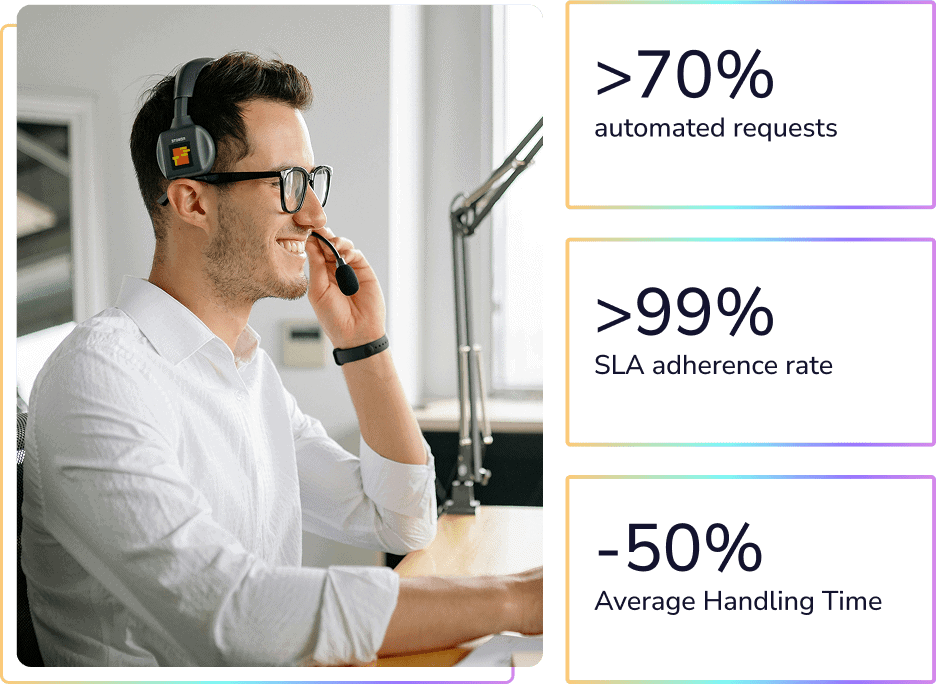
The distinction the company draws is worth borrowing: most travel AI, it argues, summarizes and hands off. It reads your email and writes a tidy note for a human to act on. AgentSee is built to actually do the step - query the system, execute the approved transaction - which is where the time savings live. Whether every deployment holds up to those numbers is the fair question to keep asking; the direction, though, is where a lot of enterprise AI is quietly heading.
05The scale under the hood
The reason any of this works is volume. A re-shopping engine is only as valuable as the number of trips it can watch and the speed at which it can act. Oversee's stack - built on cloud infrastructure with integrations into GDS systems like Amadeus and Sabre - exists to do one unglamorous thing at scale: keep checking prices, over and over, across a very large book of bookings, and pull the trigger the instant the math works.
Figures as reported by the company. Bars scaled for readability, not to a common axis.
06Where it sits in the market
Oversee lives in the crowded, unglamorous middle of travel technology - between the booking tools travelers touch and the expense systems finance teams live in. Its closest neighbors have historically been fare-tracking and re-shopping specialists like Yapta, which Coupa acquired, alongside broader travel-and-expense platforms such as Navan and the analytics baked into large TMCs and GDS providers. What keeps Oversee distinct is that it is not trying to own the booking. It is trying to own the audit of the booking - the after, not the before.
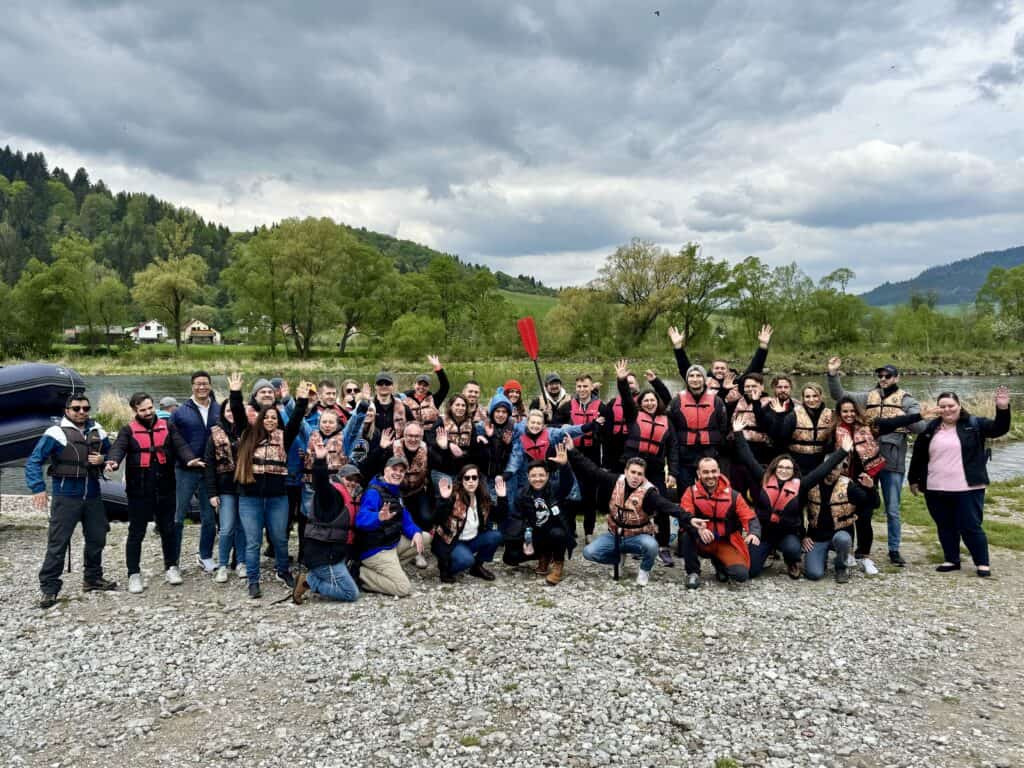
That is a defensible place to stand. Companies are reluctant to rip out the travel tools their employees already use, but they are happy to add a layer that quietly returns money and now, with AgentSee, quietly returns time. The team - around 75 people spread across Israel, the United States, the United Kingdom, and Poland - has raised somewhere in the range of $18-25 million over its life, depending on which source you trust, from investors including Blumberg Capital, Hanaco Ventures, and Corner Ventures.
"AgentSee takes care of repetitive, error-prone workflows so agents have time for higher-value work."Aviel Siman-Tov, Co-Founder & CEO
07What you can actually take from this
There is a portable lesson in here for anyone building a company, and it has nothing to do with travel. Oversee found a cost everyone had accepted as fixed and proved it was not - then built software patient enough to collect on that fact millions of times over. The value was never in a single dramatic saving. It was in doing a small, boring thing relentlessly, at a scale no human could match.
The conditions where it would not work are just as instructive. Re-shopping only pays when prices are volatile and change fees are low enough that rebooking clears the math - tighten fare rules or flatten prices and the edge shrinks. Automating agent work only helps where the work is genuinely repetitive and the systems are integrable; a bespoke, high-touch travel desk is a harder target. The model rewards volume, structure, and volatility. Oversee's bet is that corporate travel will keep supplying all three.