Airline tickets possess a mischievous quality: the moment you buy one, you stop checking the price. The number on the receipt acquires the moral authority of wet cement. Meanwhile, the fare itself keeps moving. Aviel Siman-Tov saw a business in that gap between what the customer considers finished and what the market continues to do.
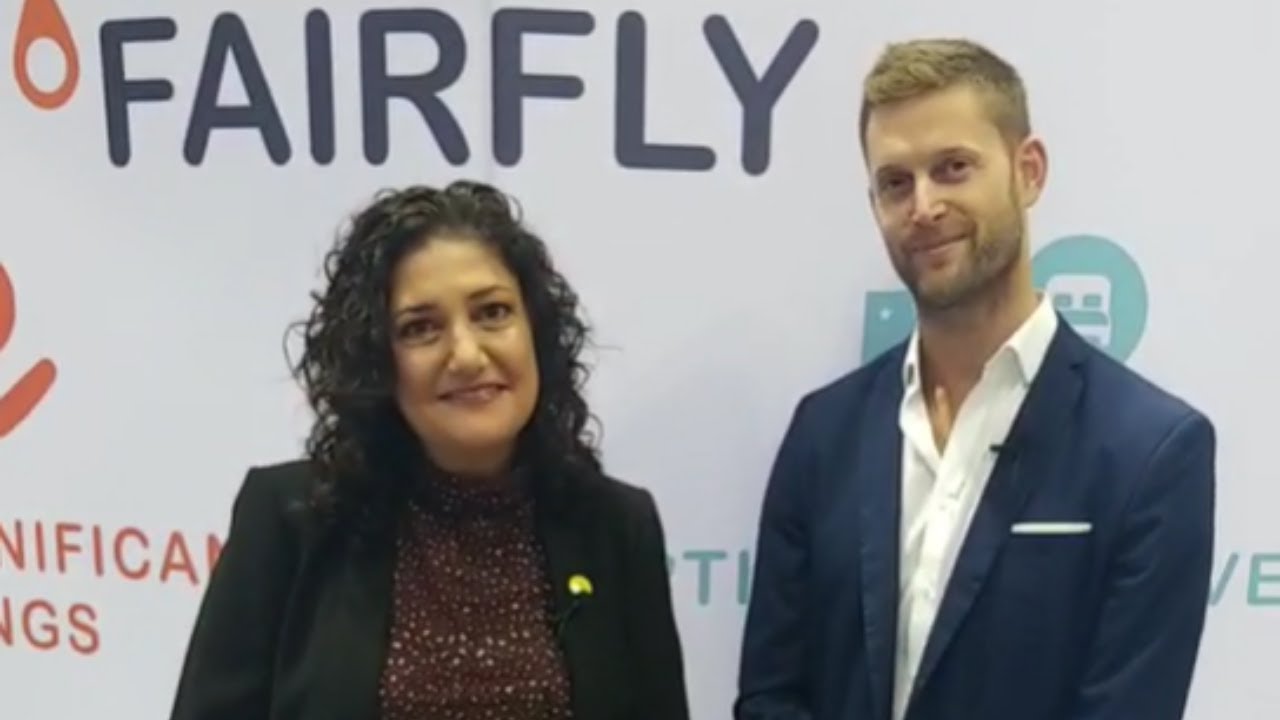
He co-founded FairFly in 2014 with Ami Goldenberg and Uri Levine, the Waze co-founder who had mentored the young team through the Zell Entrepreneurship Program at IDC Herzliya, now Reichman University. Their proposition was agreeably nosy. After a flight was booked, software would continue monitoring the fare. When a meaningful price drop appeared and the cancellation arithmetic worked, the system could identify a saving. Checkout, in this telling, was merely intermission.
The idea eventually grew into Oversee, a travel-technology company that now works across air and hotel price assurance, sourcing analytics and automation for travel-management companies. The brand changed in 2023 because the old name had become a rather tight suit. FairFly described the first trick. Oversee described the broader habit: watch the whole operation, notice what is drifting, and intervene before a small inefficiency becomes an expensive tradition.
Chapter oneThe useful life of unfinished business
Siman-Tov did not arrive through the usual corridor of computer science. He studied law and business, with entrepreneurship as the hinge between them. Before university, he spent seven years in the Israel Defense Forces and served as a company commander responsible for 120 soldiers. He later worked on projects in the Office of the Prime Minister of Israel. The public outline suggests a career trained first on responsibility and institutions, then redirected toward building.
At one point he was heading toward legal practice. Entrepreneurship proved more magnetic. The Zell program gathered the future FairFly team around a problem that was both ordinary and oddly neglected. People knew fares changed before purchase. Far fewer products treated the price after purchase as something still worth watching.
That distinction carried a fine early lesson in product design. FairFly did not ask travelers to become expert fare analysts or cultivate an unhealthy attachment to refresh buttons. The software did the vigil. By 2017, when the company appeared in an NFX accelerator cohort, it described a real-time travel data platform for corporate travel. It reported finding potential savings on as many as 26 percent of tracked flights, with an average potential saving of $254 per opportunity. The numbers belonged to the company, but the mechanism was plain: persistent attention can be packaged.
Money arrived in stages rather than with a brass band. A $2 million round announced in 2015 was intended to expand product development and overseas business. By the 2023 rebrand, the company said it had raised $18 million in total and employed 35 people across Israel, the United States, England and Poland. Its commercial relationships had also moved closer to the center of corporate travel. What began as a consumer-friendly observation about a cheaper ticket was becoming infrastructure sold to the people who manage thousands of trips.
“The objective is not automation for its own sake.”Aviel Siman-Tov
Persistence also matters when the market disappears. The pandemic delivered business travel a particularly brutal lesson in volatility. Siman-Tov later said his team adapted the product so clients could receive value even when trips were not actually taking place. The company worked on visibility into unused ticket credits and their expirations, then widened its view beyond air.
Hotel Price Assurance arrived in 2021. Hotels look similar to flights from a distance, in the way two filing cabinets look similar from the hallway. Up close, negotiated rates, amenities, cancellation rules and room types turn the comparison into clerical theatre. Oversee added auditing and benchmarking so travel programs could see whether promised rates were loaded correctly and whether agreements performed as expected.
The 2023 name change made that expansion legible. Siman-Tov said the company needed a name that could carry broader travel requirements, agency partnerships and products still to come. Oversee reported serving 29 of the Fortune 100 and 86 of the Fortune 500 at the time. Those figures are a snapshot, not a personality test, but they reveal the distance between a clever fare alert and a platform trusted inside corporate programs. Rebranding is often a new coat of paint applied to the same hallway. Here the hallway had acquired several new wings.
One observation, a widening field of view
Chapter twoThe inbox is the new fare drop
The next overlooked fluctuation was not a price. It was time. Travel consultants receive emails full of partial information, changing requests and routine servicing needs. A booking request may be missing a date. A seat request may require a profile check. An exchange can trigger a procession through systems that were never introduced properly and now refuse to make eye contact.
Oversee launched AgentAI in 2024 to automate parts of that procession. Its described use cases include reading and responding to traveler emails, identifying intent, gathering missing information, creating or updating passenger records, and handling routine bookings, exchanges and cancellations. The system connects with the global distribution systems and customer-service tools that agencies already use. This is less cinematic than asking a chatbot to plan a honeymoon in Tuscany. It is also closer to where the labor lives.
What reclaiming an hour looks like
Siman-Tov's public argument for AI is strikingly workmanlike. He measures success in time saved, accumulated across agents, bookings and days. He has written that travel teams face a flood of prices, availability, disruption, policies and traveler preferences arriving through disconnected systems. AI earns a place by reducing that noise and helping people act with greater confidence.
The emphasis on assistance is important because travel is built from exceptions. A lower fare is useless if it changes the airport, breaks policy or strips away something the traveler needs. A fast automated reply is not useful if it misunderstands why the trip matters. Oversee's stated approach keeps automation inside the existing rules and workflows of travel-management companies, with agents retaining oversight.
“We’re proving how AI can enhance - not replace - the human side of travel management.”Aviel Siman-Tov on Oversee's work with BCD Travel
The partnerships show where this thesis is being tested. In 2025, BCD Travel expanded a pilot with Oversee to bring agentic AI into operational workflows, including booking requests, exchanges and shell passenger-name records. The same year, Oversee and FCM Travel introduced a way to identify when moving an eligible itinerary from traditional EDIFACT distribution to newer NDC content could be beneficial, then automate the downstream rebooking steps.
These are deeply unromantic acronyms. They are also the plumbing of a large industry. Siman-Tov's company has spent more than a decade learning that a saving only counts if it survives contact with policy, service and operations. The clever algorithm gets the keynote. The integration gets used on Monday.
Chapter threeA founder who prefers motion
The available glimpses of Siman-Tov away from a conference stage fit the tempo. A published founder bio calls him a coffee lover and adrenaline enthusiast, and credits him with mastery in sleeping on flights. Another business profile notes that he once played professional handball and kept active with sprinting and snowboarding. The details form an appealing triangle: speed, impact and the capacity to sleep in economy.
His community work adds a different register. He founded the Israeli alumni association for Birthright Israel Excel and served as the first chairman of its Israeli leadership board, according to a public recommendation from the program's leadership. He has also listed volunteer service with the ELEM Friends Forum, which supports the organization's work with young people in distress. The same recommendation describes someone strategic, collaborative and willing to give his time.
Those traits help explain the long arc from a student venture to a company with offices and customers across multiple markets. Startups receive generous attention for beginning. Continuing is the rarer craft. It requires the patience to revise the product, survive a frozen market, rename the company when its purpose outgrows the sign, and make alliances with organizations larger than your own.
It also requires choosing what not to automate. Siman-Tov's writing returns to the traveler who is anxious, stranded or simply tired of repeating a preference already stored somewhere. A machine can retrieve the profile, check the policy and assemble the available choices. The agent can notice hesitation, negotiate an unusual exception or offer reassurance. The division is neither sentimental nor anti-technology. It is an operator's allocation of scarce attention.
In 2026, Siman-Tov sharpened his public case: the real question is what work humans should be doing. For travel agents, his answer includes complex cases, personal service and the decisions that cannot be flattened into a routine. Oversee's newest AgentSee chat interface gives consultants a conversational way to reach the platform's automation and reporting. The interface is new. The founding instinct is familiar. Something important is changing while everyone is busy elsewhere. Keep watching.
The most useful idea to steal from Siman-Tov is not about airfare. It is about the false finality of a completed action. Prices continue to move after purchase. Supplier agreements behave differently from the spreadsheet. An inbox keeps filling after a shift begins. Software can stay awake for those changes and bring a person back when judgment becomes valuable.
The boarding pass, then, is not only a document. In Siman-Tov's career it is a small philosophy: printed, official-looking and already out of date.