At Sims Crane, the travel problem arrived wearing the modest disguise of a receipt. Employees booked their own hotel rooms, claimed reimbursement and left different departments to process the paperwork. The company could move enormous machinery. Seeing exactly what it spent on somewhere to sleep was another matter.
In Engine’s account of the customer, finance director Amy M. helped introduce designated bookers, centralized billing and department coding. Bills were reconciled every two weeks. Engine reports more than $40,000 in avoided hotel modification fees and bookings made five times faster. Those are customer-story results, rather than a promise to the next crane company. The interesting part is the sequence: organize the work, then count the savings.
- Engine books hotels, flights and rental cars for businesses.
- Its crew-travel roots explain the emphasis on billing, job codes and changing stays.
- The core platform is free; hotel commissions fund it, and flexibility upgrades cost extra.
- It now supplies booking technology to other platforms, including Navan.
The receipt was the first thing to get lost
Hotel Engine, now called Engine, belongs to a corner of travel where the destination is often a job. A construction crew needs to reach a site. A restoration team needs beds near a disaster. A driver needs somewhere with room for a truck. The traveler’s itinerary follows the work, which has a regrettable habit of ignoring the itinerary.
The company’s origins are appropriately practical. Elia Wallen built Travelers Haven, a corporate housing business. Hotel Engine emerged within that operation and became an independent company in 2018. Wallen committed to it full time in 2020. The business grew around people whose employers needed to arrange lodging repeatedly, without creating a miniature travel agency in the accounts department.
Consider AD&C, a construction company involved in disaster restoration. Its administrative burden included calling hotels, tracking invoices and changing bookings as sites wrapped up. In its Engine customer story, executive assistant Alicia S. describes the relief of handing coordination to someone else. A stay could last days or a month; the system had to tolerate both.
“It was nice to have somebody else do it for me.”
Alicia S. · AD&C customer story
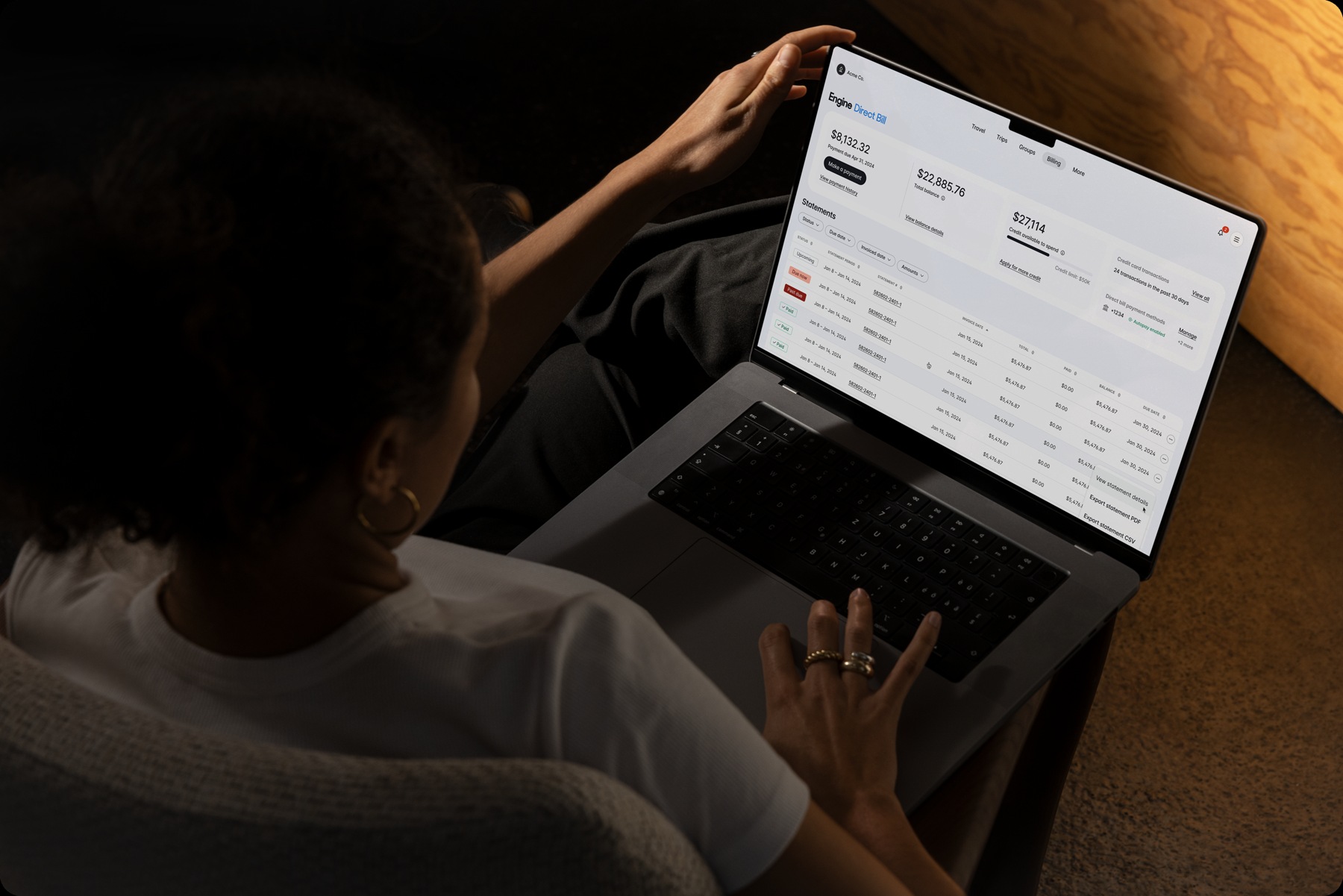
Engine brings reservations, spending rules and reporting into one web and mobile platform. The expertise is in connecting the booking to the job: who can travel, what they may spend, which project gets the bill and what happens when the dates change. A pleasant search screen is the beginning of that service.
Why a hotel might pay to give you a discount
Engine’s core platform has no membership fee, required contract or minimum spend. Hotels pay it commissions for bringing bookings. The room still costs money. Optional protection still costs money. “Free” describes access to the software, a distinction worth preserving when the invoice arrives.
Why should a hotel cooperate? A bed that remains empty tonight cannot be sold twice tomorrow. Recurring business demand is useful inventory management. Permira, an Engine investor, describes the customer base as leaning toward weekday, multi-night work in smaller towns and midsize cities. These travelers can fill a different slice of the calendar from a weekend holidaymaker.
One reservation connects two customers with different problems.
There is also software on the hotel side. Partner Hub helps properties manage reservations, communicate with travelers and market to business customers. Insights+, introduced in May 2025, adds analytics for pricing and booking performance. Engine has to make the channel useful at both ends; a marketplace cannot survive on grateful accountants alone.
For buyers, the sensible comparison is the same room, dates, taxes and cancellation terms. Engine advertises average hotel savings of 26%, based on its 2025 bookings. That is its reported average, not an entitlement attached to every search. A lower room rate loses some charm if it comes with the wrong terms.
A small check, followed by a large headache
The funding history grew quickly: a $16 million Series A in 2019, a $65 million Series B announced in 2021 and a $140 million Series C in September 2024. Telescope Partners, Blackstone and Permira appear across those rounds. The last financing valued the company at $2.1 billion.
Wallen’s own retrospective supplies the complication. Demand eventually forced him to accept outside funding. After the Series B, hiring ran ahead of what the company’s systems could support. His lesson was to strengthen the foundation before adding more scale. In his account, the constraint changed his mind about raising capital; the aftermath changed how he thought about using it.
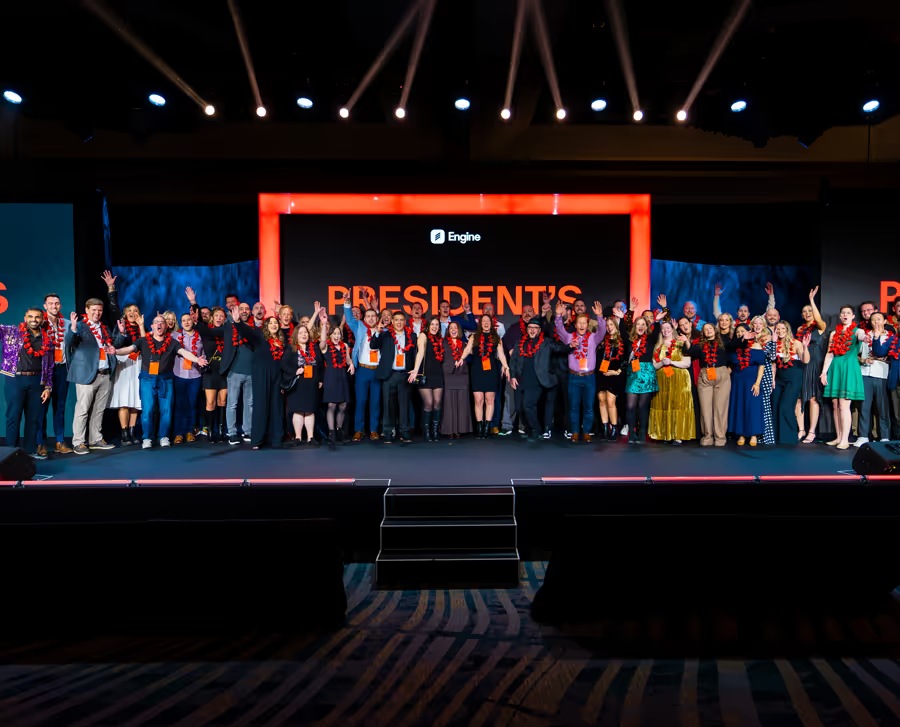
Engine’s public culture language is brisk: ownership, urgency, high standards and debate grounded in reasons. It lists employee equity and family leave among its benefits. These are the employer’s declarations. They describe the organization it wants to build, and the demands it expects people to accept.
The room is booked. The job isn’t.
The most revealing product question is what happens when a ten-night job finishes after six. Flex adds paid protection to an eligible booking. FlexPro is a paid subscription covering company hotel bookings. Subject to the program terms, travelers can cancel or shorten stays despite the underlying hotel’s restrictive policy.
Deadlines matter. Engine’s current offer requires hotel shortening requests by noon, local time, on the new checkout date, with checkout at reception that day. FlexPro covers hotels; rental cars and group bookings are excluded. Flight Flex has different rules and provides travel credit. A buyer should read the actual product terms before treating flexibility as a blank cheque.
A ten-night booking. A shorter job.
Illustration only: at $150 a night, what is the value of the nights no longer needed?
This is arithmetic, not a refund quote. Actual recovery depends on the booking, protection costs and applicable terms.
Check-in produces its own surprises. Incidentals Coverage handles hotel holds so participating travelers do not have to present a personal card for that purpose. The company still needs to understand what it has agreed to pay. For a crew arriving together, sorting that arrangement before arrival is considerably more civilized than arguing at the desk.
The WEX partnership offers an unusually concrete clue to Engine’s audience. Eligible fleets can pay for lodging with Fleet One and EFS fuel cards, and search for properties with big-rig parking. An expense product becomes more useful when it acknowledges that the vehicle outside may be rather larger than a rental sedan.
The competitor using its plumbing
In October 2024, Hotel Engine shortened its name and added flights and rental cars. In 2026, Engine Spaces introduced meeting-room discovery, estimated prices and direct inquiries to hotels. Engine X added a business charge card with physical and virtual cards and spending controls. Each expands the number of decisions a company can manage in the same orbit.
Then came a more interesting expansion. In July 2026, Engine announced its acquisition of Options Travel and group-flight product TempoTrip. After working with the agency for nine months, Wallen described agents wrestling with disconnected tools. Buying the business brought those workflows inside the company as it developed an agency-focused booking tool.
In September, Engine announced a technology partnership with Navan, a competing business travel platform. Navan would integrate Omni, Engine’s booking infrastructure. Initial capabilities were scheduled to begin rolling out that month, with group booking and self-service changes to follow. The distinction between announcements and delivered features matters.
The market position is now wider than crew lodging. Engine competes with managed travel platforms and workforce lodging services, as well as a company’s habit of booking directly. Through Omni, it can also provide the machinery beneath somebody else’s booking screen. The September joint announcement put its scale at more than 38,000 customers and nearly two million travelers.
Steal the filing system
For a travel manager, the useful experiment is small: one project, designated bookers, a spending policy and a consistent job code. Compare total costs, time spent collecting receipts and the handling of a real itinerary change. Decide whether the workflow earns its place before spreading it across the company.
The benefit will be smaller when trips are rare, schedules are stable or a company already has strong direct rates and an effective travel program. Paid flexibility needs enough recoverable losses to justify its cost. A group trip needs its own terms. Software cannot supply room availability where none exists, or persuade people to follow a policy nobody enforces.
The thing to copy is the attention to the second half of the transaction. Put the information on the reservation before somebody has to reconstruct it. Arrange payment before the crew reaches reception. Decide how changes will work before the job changes. The room may be the cheapest part of the confusion.