The second donor was already dead. For a 14-year-old boy with acute myeloid leukemia, that was the useful part. His first stem cell transplant, from a living donor, had failed to engraft. Doctors at Riley Children’s Health needed another graft, fast. A conventional search might consume the very weeks he did not have. In March 2026, they used marrow that Ossium Health had recovered from a deceased organ donor, processed, frozen and kept ready in Indianapolis. The cells engrafted. By July, the hospital reported that the boy was in remission.
The short version
- Ossium banks bone marrow recovered from the vertebrae of consented deceased organ donors.
- Its matched grafts can be shipped to transplant centers within days, according to the company.
- The bank also supplies research cells and viable bone matrix for orthopedic repair.
- By July 2026, Ossium reported 28 marrow recipients with neutrophil engraftment. Longer-term evidence is still developing.
The failed first transplant is the detail that makes the case more than a clever logistics story. The problem was not that medicine lacked a theory of blood-forming cells. The problem was the calendar. A patient can be a suitable transplant candidate while a donor cannot be found, scheduled, collected and delivered before the disease changes its mind.
“Because these stem cells are banked and ready to use, we were able to act in days instead of months.”Dr. Jodi Skiles, Riley Children’s Health
Put the donor before the patient
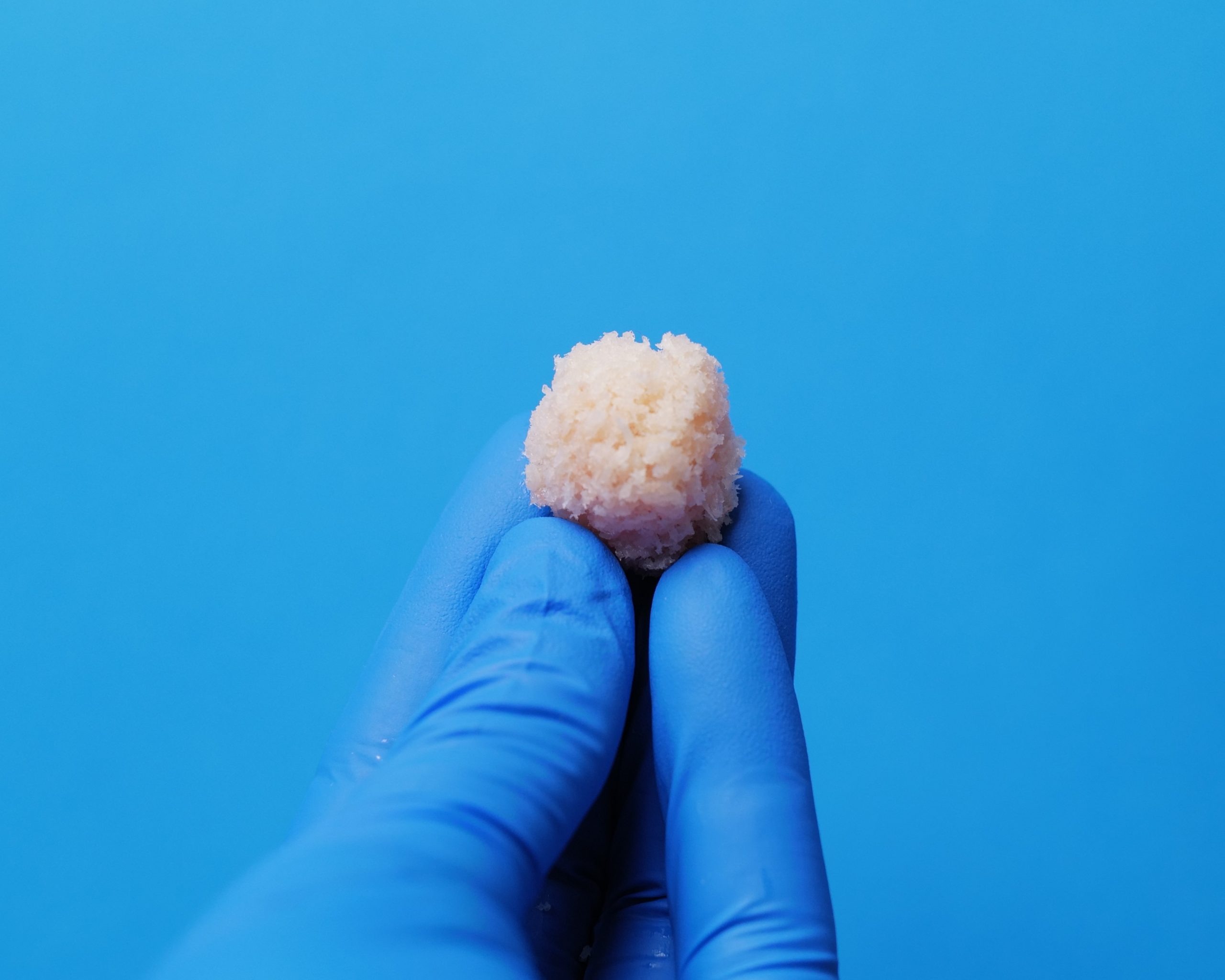
Most unrelated donor searches begin when a patient needs a transplant. A registry locates a possible HLA match, then a living donor must be contacted, cleared and collected. Ossium reverses the order. It starts with people who have consented to organ donation, recovers marrow-rich vertebral bodies through organ procurement partners, and processes the tissue before a future recipient is known. The resulting grafts are tested, cryopreserved and stored.
This is a manufacturing company as much as a biotech company. Its San Francisco headquarters designs the business; its Indianapolis operation does the work a freezer alone cannot do. Recovery protocols, transport, cleanrooms, donor qualification, cell counts, release testing and cryogenic storage all have to line up. The bank gives a physician an inventory to search rather than another person to call.
The distinction has a clinical edge. In allogeneic transplantation, the new cells must take hold and start making blood. A match alone is not a treatment; the graft must arrive in the right dose, at the right time, and survive thawing. That is why Ossium’s selling point is not merely access to tissue. It is controlled access to viable, banked tissue.
Two founders, one neglected source
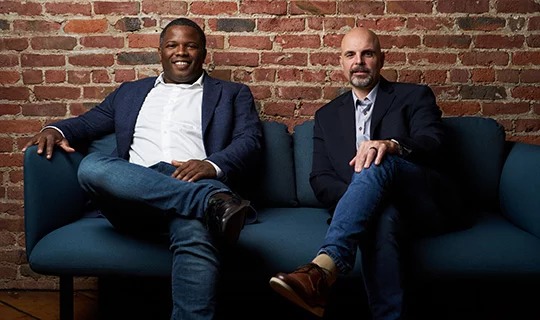
Kevin Caldwell and Erik Woods met at a San Francisco conference in 2015. Caldwell had worked in biotech strategy at McKinsey; Woods had spent years on cell selection, culture and cryopreservation, including a commercial cryobank. They incorporated Ossium in February 2016. The pairing made sense: one saw a supply problem, the other knew how delicate living cells become when someone promises to store them for later.
The company accepted its first vertebral body donors in 2017. A first clinical-grade donor was banked in 2020. That three-year gap is instructive. What looked like an overlooked source of marrow still needed a repeatable route from organ donor to transplant product. Ossium then raised $63 million in a Series B in 2020 and $52 million in a Series C in 2023. Those are public fundraising amounts, not a price tag for a transplant or a disclosure of what one graft costs to make.
The first reported bone marrow transplant using Ossium’s HPC, Marrow product took place at Henry Ford Health in June 2024. Before that, a patient had received Ossium’s selected CD34+ cells in a Columbia University multivisceral transplant study in 2021. These are different uses of related cells, and they should not be counted as the same therapy. By July 2026, Ossium said 28 people had received its organ donor marrow and all had achieved neutrophil engraftment. That is a meaningful early signal; it is not proof of long-term survival or a guarantee for every future patient.
One bank, several uses
The urgent transplant graft is the most arresting product, but it is not the whole company. Ossium offers selected CD34+ cells, mesenchymal stromal cells and research-use human cells to labs and therapy developers. Its OssiGraft and OssiGraft Prime products are viable bone matrix allografts for surgeons repairing defects in the spine, pelvis or extremities. Different customers buy different parts of the same donor-derived platform.
That variety explains the business model better than a single “stem cell company” label. A transplant physician wants a qualified graft at a workable time. A cell therapy developer wants consistent human starting material. An orthopedic surgeon wants a graft that handles properly in the operating room. Ossium sells products and capabilities to those professional customers while relying on organ procurement organizations for lawful, consented supply. It has also partnered with the U.S. biomedical preparedness agency BARDA to study marrow for radiological and nuclear emergencies.
For patients in its HOPE expanded access program, Ossium says the marrow itself is provided at no cost. The transplant procedure is a separate medical expense, handled by the center and the patient’s coverage. The company has not published a standard commercial price for a graft. The honest answer to “what did it cost?” is therefore two answers: more than $125 million in disclosed Series A, B and C financing to build the operation, and no public list price for the clinical product.
For patients and physicians: HOPE is an expanded access pathway for urgent or unmet allogeneic transplant needs. A transplant physician requests an HLA match and determines whether the graft and clinical situation fit. A patient cannot simply order marrow from the bank.
The useful thing to copy
The standard alternatives remain essential: matched relatives, living unrelated donors, peripheral blood stem cells and cord blood. Each can be right for a different patient. Ossium’s distinctive move is to remove donor scheduling from the critical path when a stored match exists. It matters most when a donor disappears, a graft fails, or cancer leaves little time for another search. It is less useful when the bank has no suitable HLA match, when a different graft source is medically preferable, or when access rules and clinical evidence do not support its use.
There is a broader lesson here for anyone building a medical product. Ossium did not start by asking physicians to wait for a new science. It found a neglected input, built a consented supply network, standardized the hard middle steps, and made the result searchable before the emergency. The company’s future will be judged by larger clinical studies and the reliability of that chain. For one teenager in Indiana, the chain was ready on the day it mattered.