The engineers wanted more software. That was the visible problem at a major commodities company: people were being denied access to technical applications at busy moments. Buying more licenses seemed reasonable. Yet the IT team lacked a basic piece of evidence. It could not reliably say who was using the licenses already purchased, or whether those licenses were doing useful work.
Open iT’s account of that customer begins in 2006. Usage reporting helped the team test requests for additional capacity. Later, automated recovery of inactive licenses became part of the response. The company reports an estimated $639,000 saving on one pay-per-use product. The revealing detail is the order of operations. First came the complaint. Then came the measurement.
- Open iT measures engineering software use, including the gap between open and active.
- IT and procurement teams use the findings to reclaim capacity and negotiate renewals.
- The practical lesson: investigate a shortage before buying your way out.
A checkout is a surprisingly weak alibi
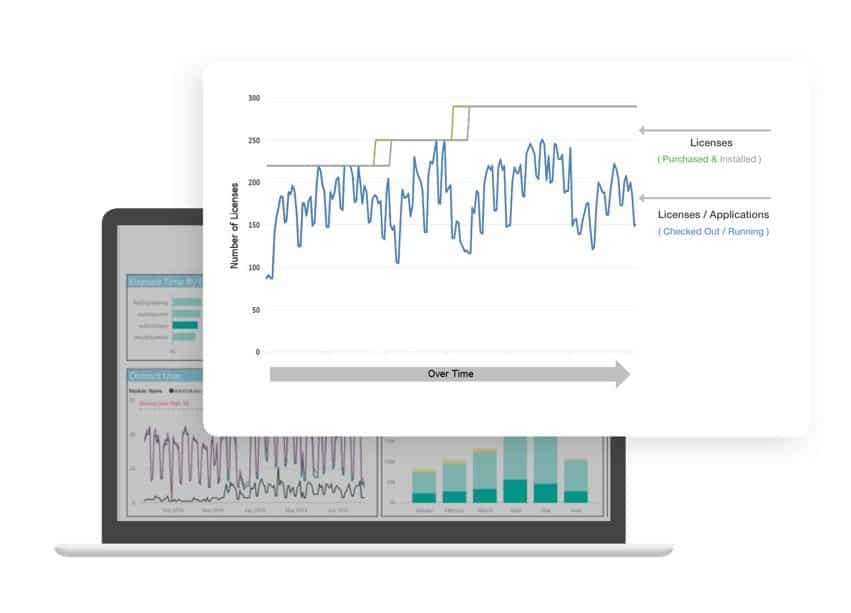
Shared engineering licenses circulate through pools. An application checks one out when someone starts working. Keeping the application open can keep the license occupied. A colleague sees a denial, even while the original user is elsewhere. The dashboard says busy. The workstation may tell a different story.
This is Open iT’s territory within software asset management. It sells enterprises the ability to observe consumption closely enough to make purchasing and operational decisions. Its customers work in energy, manufacturing, construction, aerospace and other fields where design, simulation and specialist technical software matter. The question is how much of that purchased capacity becomes work.
The company behind the counter
Founder and CEO Eistein Fosli started Open iT in 1999. The company traces its beginnings to Oslo and operates internationally, with major offices in Houston, Oslo and Lucena City. Fosli’s background includes informatics and consulting for companies such as Equinor, Shell and GE. The business grew around a concrete problem: investment decisions made with too little knowledge of actual usage.
Its stated values include integrity, service, strong teams and servant leadership. Those are recruiting promises, rather than proof of everyday culture. They do, however, fit a business that includes implementation and interpretation alongside software. Collecting the evidence is one job; helping a customer decide what to change is another.

One application. A smaller bill.
Consider Maersk Oil, now part of TotalEnergies. Open iT’s published case study says the customer needed a global view of expensive exploration and production applications. Dashboards and detailed reports helped managers renegotiate vendor agreements. Automated harvesting returned inactive licenses to circulation.
The reported result was a 39% reduction within one year on the customer’s most expensive application. That scope matters. It describes a particular application at a particular company. It gives a prospective buyer a mechanism to investigate: identify unused capacity, alter its circulation, and take better evidence into the next negotiation.
Burlington Resources supplies a second example. Its teams divided applications into categories, including widely used core tools and specialist products needed briefly each year. Open iT reports a 57% reduction in software expenses over two years after license agreements changed. A seasonal application invites a different purchasing decision from an everyday tool. Headcount alone misses that distinction.
Another published case, an unnamed energy supermajor, describes a portfolio worth more than $50 million managed through outdated spreadsheets. Application ownership was scattered across teams. A dedicated business analytics team became part of the response. The breakdown was organizational as well as technical: nobody had a dependable view across the whole portfolio. Better metering gave that team a common record to work from.
Measure, then decide what moves
LicenseAnalyzer organizes the work into three levels: runtime reporting, analysis of active use, and managed usage. That progression is the product’s argument in miniature. A record of checkouts comes before a judgment about inactivity; intervention follows the judgment.
Other products address the decisions around that record. LicensePredictor uses historical data to forecast demand. LicensePlanner connects usage to contracts, budgets and chargeback, including costs allocated by project. ComputeAnalyzer meters CPU, memory and input/output in high-performance computing environments. StorageAnalyzer examines files, disks and backups. Together, the tools connect software spending to the resources consuming it.
The business model is enterprise software with services, resellers and a managed SaaS subscription option. A buyer is also choosing how much deployment and ongoing interpretation to handle internally. Open iT’s ServiceNow integration puts engineering usage into SAM Pro, allowing the specialist to sit beside an existing asset management platform.
Alternatives include OpenLM, Flexera’s engineering license tools, TeamEDA and X-Formation. Monitoring and reclamation exist elsewhere in this market. Open iT’s case rests on detailed engineering usage analysis and the surrounding planning tools. Buyers should compare support for their actual applications and license managers, since a broad coverage claim cannot answer every compatibility question.
The cost calculation should include implementation, ongoing analysis and the applications eligible for intervention. A saving in a customer story supplies a question to test against your own estate. It cannot price the deployment or establish what your renewal terms will allow. An unused seat only becomes a lower bill when the contract and the operating decision permit it.
“We empower our workforce to be excellent in all that they do.”
Eistein Fosli / Founder and CEO
The product continues to follow changing licensing arrangements. Version 10.2 expanded cloud support in September 2024 to services including Bentley Cloud and Tekla Online. In November 2025, Open iT announced Leader placement in QKS Group’s software asset management assessment. Its more recent harvesting articles return to the operational detail: when to act, and whose work to protect.
Start with the next renewal
The approach is copyable. Choose an expensive application facing renewal. Measure checkouts and denials across representative working periods. Establish whether apparently occupied licenses are active. Discuss the findings with the engineers before changing access. Then test allocation rules and take the evidence into purchasing discussions.
Open iT’s October 2026 guidance makes the constraint explicit: a quiet keyboard may accompany a busy simulation. Rules need to recognize CPU and input/output activity, warn users and protect critical workloads. Its guidance also says CATIA on DSLS can be measured but does not support its Level 3 suspension approach. Measurement and automatic intervention have different boundaries.
That is the useful idea to carry away. A denial establishes that someone could not get a license. The next question is why. Before the budget grows, find out what the existing software was doing.