The difficult part of a prosthetic fitting can arrive after the patient goes home. In December 2022, the Minnesota-based Protez Foundation described a familiar predicament with an unfamiliar distance: Ukrainian patients received prosthetics in the United States, then returned across an ocean. Their clinicians had treatment plans, good intentions and little visibility into what happened next.
OneStep supplied a way to keep watching movement. Patients could walk with a smartphone in their pocket; clinicians could follow gait measurements remotely. The foundation put the average treatment cost at $15,000 per patient. That figure covered its treatment program, rather than the app. The question was how to preserve the value of that care once the patient disappeared from the consulting room.
- Smartphone sensors measure how someone walks, without an extra wearable.
- Care teams use the results for rehabilitation, prosthetics and mobility monitoring.
- Repeated measurements help reveal change. The circumstances of each walk still matter.
Thirty seconds, then a pattern
A step counter answers a modest question: how many? OneStep asks about the shape of movement. Walking speed, cadence, stride length, asymmetry and variability can help a clinician understand whether someone is moving differently, and whether recovery is progressing.
The company describes a typical assessment as a 30-second walk with a phone in a pocket. Built-in sensors supply the signals; software turns them into gait parameters. Measurements can be initiated deliberately or collected in the background while the person carries the phone. The distinction becomes rather consequential later.
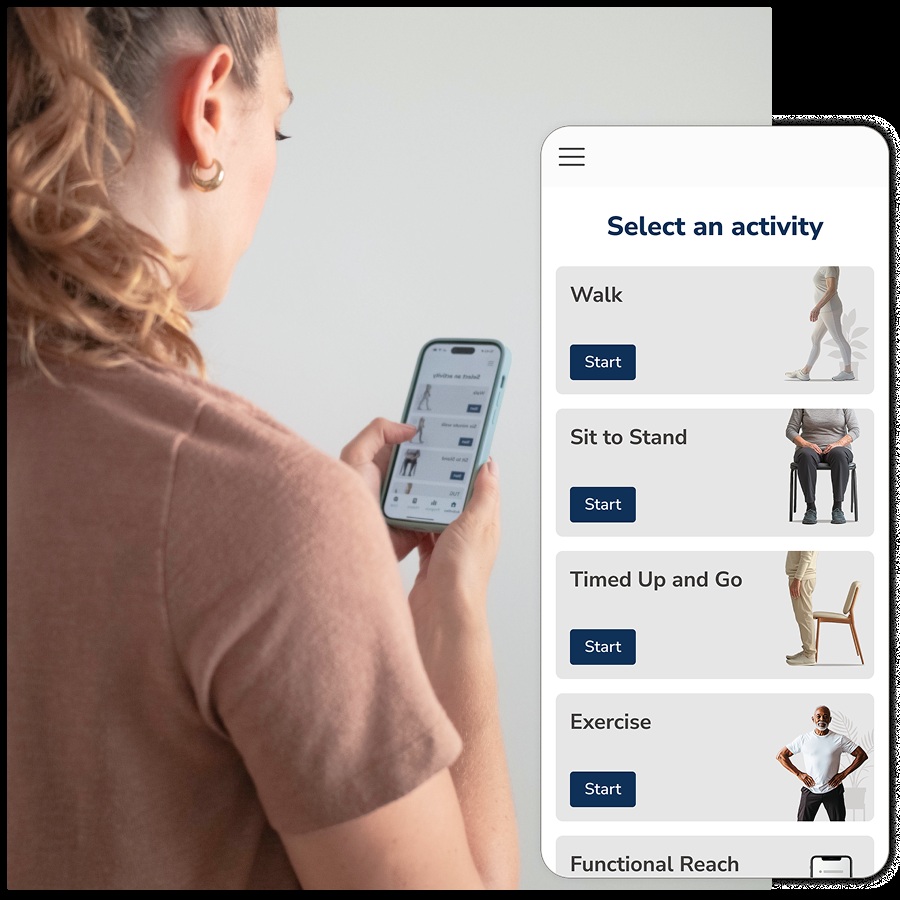
There is more than an app here. Patients get feedback, including a Walk Score. Clinicians get a web portal with trends and notifications. Organizations get an admin center. OneStep also offers a Motion SDK and API so other applications can incorporate its analysis. Its expertise sits at the intersection of sensor processing, gait science and the decidedly unglamorous work of fitting information into healthcare routines.
The pocket has a price advantage
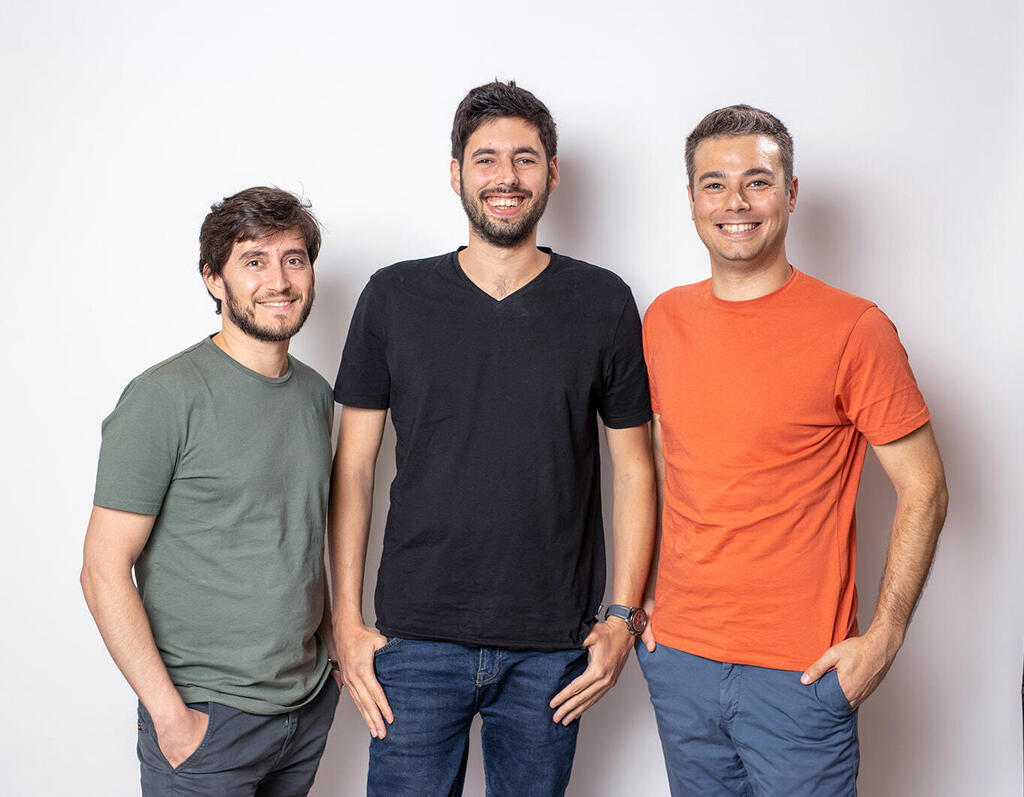
Founded in late 2019, OneStep brought together Tomer Shussman, Yuval Naveh, Shahar Davidson and Amir Milo, graduates of Israel’s Talpiot program. By October 2024, it had raised a $36 million Series B co-led by Team8 and Vintage Investment Partners. Its central economic bet was straightforward: people already owned the sensing hardware.
Traditional motion laboratories offer detailed assessment using equipment such as cameras, force plates and instrumented walkways. They also require a place, an appointment and specialist operation. Wearable systems offer another route, with hardware to distribute and manage. A phone changes that practical calculation, particularly when the useful question concerns a person’s movement over weeks.
OneStep sells to healthcare organizations and works with medical device partners. Rehabilitation providers, senior living operators, health systems and orthotic and prosthetic practices are its audience. Remote monitoring, documentation and integration tools give those buyers reasons to use the measurements within existing care. Commercial value depends on staff actually reviewing the information and responding to it. For a prosthetist, the useful comparison may be before and after an adjustment. For a surgical team, it may be a patient’s pre-operative baseline against the weeks that follow. The same sensor serves different questions.
“Our vision is for gait measurement to become a daily activity”Tomer Shussman, CEO, speaking to CTech in 2024
A test walk has manners
Here is the complication that makes this company interesting. In a 2022 study, researchers Gabriela Rozanski and David Putrino examined 7,227 walking bouts from 25 physical therapy patients. They compared consciously initiated walks with spontaneous walks recorded in the background. The background walks showed a less favorable pattern in several measures, including velocity and stride length.
Different recording contexts produced different gait measurements. These are sample counts, not an accuracy score.
The authors disclosed financial support from Celloscope, OneStep’s legal company name. Their findings do not establish that passive monitoring improves recovery. They do suggest that a clinic-style performance and an everyday performance deserve separate attention. A person asked to demonstrate walking may produce a different picture from the same person simply going about the day.
Other published validation work compared OneStep with reference systems. A 2024 rehabilitation study found encouraging agreement, but used one smartphone model and level treadmill walking at constant speeds. Those conditions matter. A validated measurement is an answer to a defined question, rather than a passport to every patient and every pavement.
The device gets a witness
Prosthetics make the application particularly concrete. A practitioner adjusts a device, measures walking, and measures again. NovaCare Prosthetics & Orthotics partnered with OneStep in 2024. A separate partnership with the Limb Loss and Preservation Registry aimed to add gait information to evidence about functional outcomes.
In September 2026, Bioness announced another route into care: OneStep access would accompany every new L300 Go or PoNS purchase in the collaboration’s first phase. Rehabilitation technology gains a measurement companion. The partners reported early findings from more than 300 patients; those company-reported results should be read as early evidence, rather than a universal promise.
A reason to take walk number forty
Measurement also has to offer something to the person doing the walking. In an October 2026 blog, OneStep reported that, in one deployment, 45% of patients who recorded an initial walk recorded at least 40. The company explicitly avoided claiming that its feedback caused their return. Still, the product question is useful: what does the patient receive for participating?
The lesson other businesses can borrow is practical. Use something people already have. Establish a baseline. Give them intelligible feedback. Assign someone to act when the pattern changes. A phone left on a table cannot describe its owner’s walk; a dashboard nobody reads cannot adjust care. OneStep’s proposition becomes useful when measurement survives both tests: people keep supplying it, and clinicians have a reason to listen.