BREAKING   Soheil Saadat builds his fourth company - and isn't selling this one GENIEMD   Frost & Sullivan names it 2024 Company of the Year TRACK RECORD   Companies bought by HP, Agilent and Microsoft STANFORD   Ph.D. engineer treating the doctor's office like a latency problem BREAKING   Soheil Saadat builds his fourth company - and isn't selling this one GENIEMD   Frost & Sullivan names it 2024 Company of the Year TRACK RECORD   Companies bought by HP, Agilent and Microsoft STANFORD   Ph.D. engineer treating the doctor's office like a latency problem
Founder · Engineer · Four-Time Builder

Soheil Saadat

He sold companies to HP, Agilent and Microsoft. Then he decided healthcare was the harder problem.

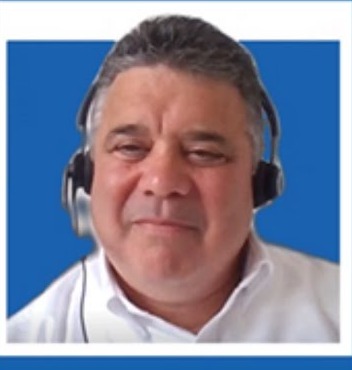
ON AIR · THE VIRTUAL SHIFT Soheil Saadat, founder and CEO of GenieMD

Headphones on, mid-podcast. The engineer who would rather resolve your doctor visit in two minutes than watch you sit on a video call for twenty.

4
Companies Founded
3
Acquisitions
2 min
Target Visit Time
1982
First Startup
The Story

Still founding companies, four decades in

Most founders get one good exit and spend the rest of their lives talking about it. Soheil Saadat got three, and kept showing up to build the next thing.

Today that thing is GenieMD, a global virtual care platform he describes in plain terms: telehealth, remote patient monitoring, remote therapeutic monitoring and chronic care management, stitched into one modular system that runs on any device, at any hour. The company's stated mission is unfussy to the point of being a slogan you'd actually remember - democratize healthcare globally and help all patients get better faster.

What makes Saadat interesting is not that he runs a health company. It is that he is an electrical engineer, not a clinician, and he treats the clinic like a system with a bottleneck. The bottleneck, in his telling, is the live video call. He noticed something most telehealth evangelists skipped past: patients are not particularly in a presentable condition and do not wish to be on a live screen. Providers, meanwhile, spend roughly office-visit time on those calls and get paid much less for it. Both sides lose. So he built around the call instead of through it.

GenieMD's platform lets a patient report more than fifty common symptoms by answering a short, guided questionnaire about their chief complaint. The system assembles that into a clinical report a physician can review and act on. The pitch is a number: a provider can address a virtual visit in under two minutes, instead of the twenty a typical video call eats. It is a small claim with a big consequence - it changes the math of who can be seen, and how fast.

"Patients are not particularly in a presentable condition and do not wish to be on a live screen."

Saadat's founding observation - the quiet truth that most telehealth pitch decks pretend isn't there.

virtual caretelehealthremote monitoringchronic careai-assistedhealthtech
The Pivot

From spreadsheets to symptoms

Before GenieMD, Saadat spent twenty-five years in the unglamorous middle of enterprise technology. Microsensor Technology was hardware. Scientific Software served labs and instruments. Prodiance built compliance and risk controls for the kind of spreadsheets that quietly run banks and pharmaceutical companies. None of it made headlines. All of it got acquired.

That is the part of his story worth sitting with. The skills that let you sell a compliance company to Microsoft are not obviously the skills that fix healthcare. But Saadat seems to have carried one thing across every venture: a belief that messy human processes are really just systems waiting to be re-architected. A risk assessment in a spreadsheet and a symptom report at a clinic are, to an engineer, the same shape of problem - too much manual work, too little structure, too many people doing slow things by hand.

So when he turned to medicine around 2010, he did not start by hiring doctors and asking them what software they wanted. He started with the bottleneck. Connecting patients to providers efficiently, he decided, was the whole game. Everything else - the AI, the questionnaires, the device integrations - is in service of that single idea. Get the right information to the right clinician with the least possible friction, and the cost of care falls on its own.

It is a founder's discipline that shows up again and again in how he talks. He does not describe GenieMD in the language of empathy or disruption. He describes it in the language of throughput. A provider who can clear a case in two minutes instead of twenty can see ten times as many patients, or charge a tenth as much, or some combination that finally makes virtual care pencil out for the people who need it most.

Our system works like Uber. A case comes in from a patient, and it is automatically sent to a pool of participating physicians.
- Soheil Saadat, Founder & CEO, GenieMD
The Receipts

Three companies, three buyers, three decades

There is a pattern in Saadat's resume that is hard to fake. He keeps building things that bigger companies decide they need to own. Different industries, different decades, same outcome.

1980s
Microsensor Technology
acquired by ↓
Hewlett-Packard
2005
Scientific Software
acquired by ↓
Agilent Technologies
2011
Prodiance
acquired by ↓
Microsoft

Prodiance didn't just get bought and shelved. Its compliance and risk technology was folded into Microsoft Office and SharePoint. That is the engineer's version of a platinum record.

The Timeline

A working life, in order

1976-82

Stanford University

Earns an M.S. and a Ph.D. in Electrical Engineering. The credential that would let him talk to machines for the next forty years.

1982-85

Co-founds Microsensor Technology EXIT → HP

His first company, started essentially as he finishes his doctorate. Acquired by Hewlett-Packard.

1985-90

Director of Software, Tencor Instruments

Runs software at the semiconductor instrument maker later merged into KLA. The corporate chapter between the startups.

1990-05

Founder & CEO, Scientific Software EXIT → AGILENT

Fifteen years building scientific software, ending in an acquisition by Agilent Technologies.

2005-11

Founder & CEO, Prodiance EXIT → MICROSOFT

Enterprise compliance and risk software. Acquired by Microsoft in 2011, woven into Office and SharePoint.

2010-12

Founds GenieMD

Pivots from enterprise software to healthcare. Builds a unified virtual care platform from the ground up.

2024

Frost & Sullivan Company of the Year

GenieMD wins the 2024 award for virtual chronic disease management. Validation from the analyst class.

2025

Tenovi Partnership

GenieMD teams with device maker Tenovi to widen remote care access and improve medication adherence.

How It Works

The two-minute visit, explained

Saadat's core trick is to do the slow part before the doctor ever shows up. By the time a physician opens a case, the work of describing the problem is already done.

STEP 01

Patient reports

Answers a short, guided questionnaire on one of 50+ common symptoms.

STEP 02

System assembles

The platform turns answers into a structured clinical report.

STEP 03

Case routes

Like Uber, it's pushed to a pool of participating physicians.

STEP 04

Doctor resolves

Reviews and acts in under two minutes, not twenty.

Typical video call
~20 minutes
GenieMD visit
< 2 minutes

Provider time per virtual visit, as described by Saadat. Shorter is the whole point.

The Operator

An engineer's read on medicine

01

Contrarian by default

While the industry chased the video call, he built around it - betting that nobody wants to be on camera looking sick.

02

Serial restarter

Three exits is a comfortable retirement for most. He treated each one as a clearing of the deck, not a finish line.

03

Efficiency obsessed

The two-minute visit isn't a marketing number to him. It's the design constraint the whole platform is built to hit.

04

Outsider's advantage

No medical degree, no incumbency to defend. He looks at the clinic the way an engineer looks at a slow system.

05

Platform thinker

Telehealth, RPM, RTM, chronic care - not four products, one modular system. The same instinct that built enterprise software.

06

Mission as math

"Democratize healthcare" sounds soft until you realize he means it as a unit-economics problem to solve at scale.

Worth Knowing

Things that don't fit on a resume

His first company launched in 1982 - around the same window he finished his Stanford Ph.D. He was a founder before he'd fully stopped being a student.

Three different giants - HP, Agilent and Microsoft - each bought a company he built, across three different decades.

Prodiance's compliance tech lives on inside Microsoft Office and SharePoint. Millions use a piece of his work without knowing his name.

He pitches GenieMD as "Uber for doctors" - a routing problem dressed up as a healthcare company.

He runs a healthcare business with an electrical engineering doctorate and zero clinical training. That's the feature, not the bug.

GenieMD's platform spans telehealth, remote patient monitoring, remote therapeutic monitoring and chronic care - all under one roof.

The Bet

Why he isn't selling this one

A founder with three exits has nothing left to prove. Which is exactly why GenieMD reads less like a startup and more like a thesis.

The earlier companies were tools for industries that already had money. GenieMD aims at something larger and harder - the people and places that conventional care has priced out. The platform is built to be enterprise-grade, scalable and modular, the same vocabulary Saadat used in his software years, but the target is different. He talks about reducing emergency room visits, cutting hospitalizations, supporting chronic conditions and behavioral health, and reaching multi-state physician networks and multiple payors at once.

The recognition has started to arrive. CIOReview named GenieMD a Top 50 Healthcare Solution Company in 2018. In 2024, Frost & Sullivan handed it Company of the Year for virtual chronic disease management - an award that goes to the firm an analyst house judges best at turning innovation into market position. In 2025, a partnership with the device maker Tenovi widened the platform's reach into remote monitoring hardware and medication adherence, the unglamorous discipline of getting patients to actually take their pills.

None of this guarantees the ending. Healthcare is the graveyard of clever technologists who underestimated how stubbornly the system resists efficiency. But Saadat has spent forty years building things that began as outsider bets and ended as acquisitions. The difference this time is that he seems to want the bet itself - the slow, structural fix - more than the exit. That is a strange thing for a serial seller to want. It might also be the most interesting thing about him.

The thesis, in one line

Healthcare isn't a compassion problem to him. It's an efficiency problem - and efficiency problems have engineering answers.

"GenieMD's mission is to democratize healthcare globally and help all patients get better faster."

The company line - and, by all evidence, the actual reason he keeps showing up.

Being recognized as Company of the Year reflects our dedication to democratizing healthcare.
- Soheil Saadat, on GenieMD's 2024 Frost & Sullivan award
Spread The Word

Share this profile