Jeff Dachis had helped build Razorfish, a business concerned with making the internet useful. Then, in 2013, he was diagnosed with type 1 diabetes. After a run, he passed out alone in an elevator during a hypoglycemic episode. In a 2015 interview, he called it a rookie mistake. Here was an experienced technology entrepreneur discovering that his new daily assignment involved calculations with consequences.
- One Drop joined glucose tracking, supplies and human coaching.
- Premium launched at $39.95 a month or less, with hardware priced separately.
- Bayer backed an expansion beyond diabetes.
- The app closed in November 2024; a separate sensor venture followed.
The elevator problem
Dachis described diabetes as “math all day.” The problem he saw was partly informational and partly practical: readings, food, medication and exercise belonged together, but managing them could feel like several jobs. One Drop’s proposition was to put those jobs closer together. A phone would hold the record; a connected meter would supply readings; a person could help interpret the routine.
He began the company in 2014, spending hundreds of hours interviewing people with diabetes before building. The app launched in April 2015. Convenience, price and support were product requirements drawn from those conversations. That is a useful detail for anyone tempted to begin a health business by adding a dashboard. The chore came first. The screen followed.
A meter you did not have to hide
The Chrome meter looked unusually considered for something destined to share a bag with keys and receipts. One Drop worked with design studio PENSA on the device, packaging and carrying kit. Chrome, rounded edges and a fitted case addressed the emotional experience of carrying medical equipment. Design could make a familiar obligation feel less like an announcement of illness.
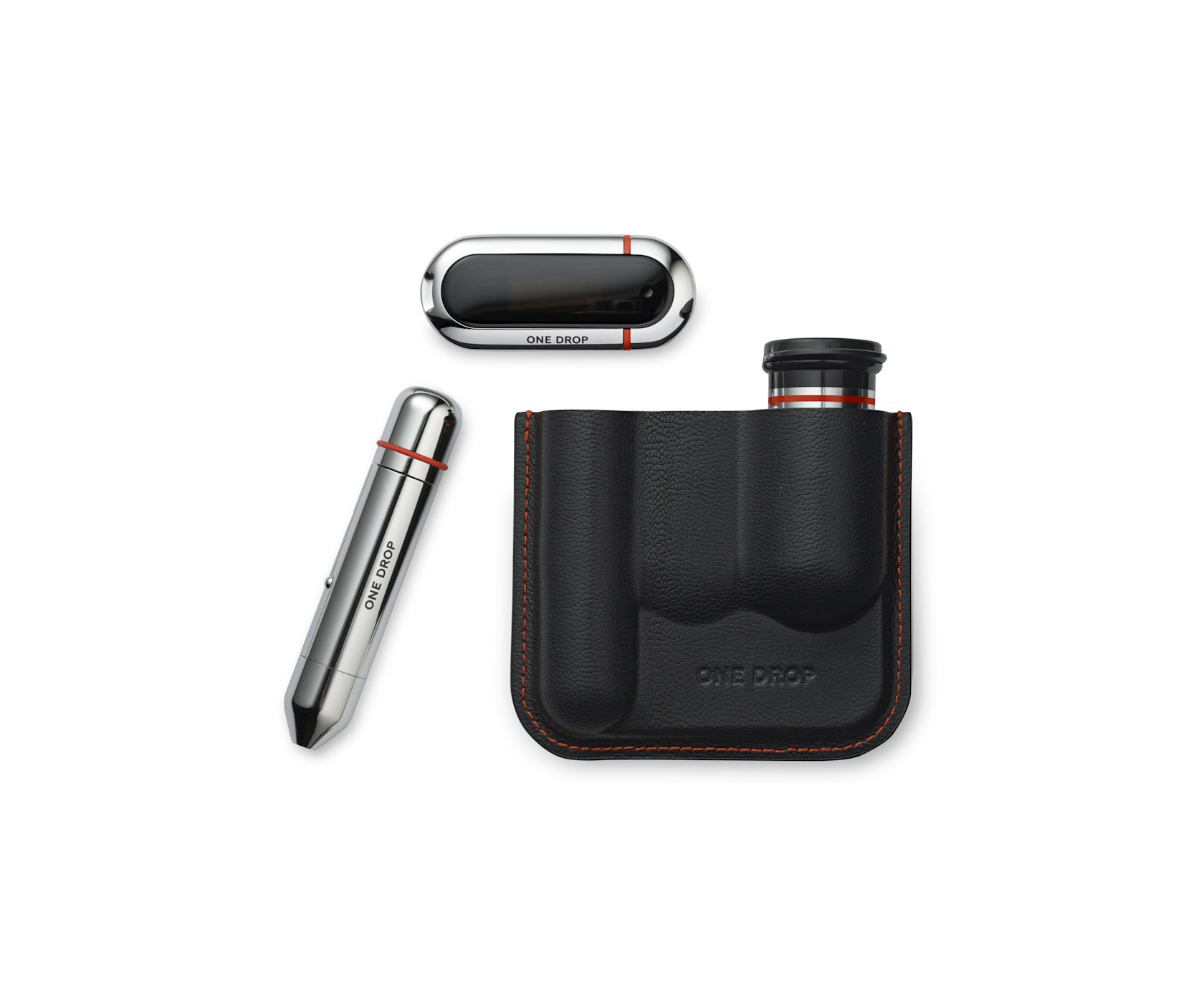
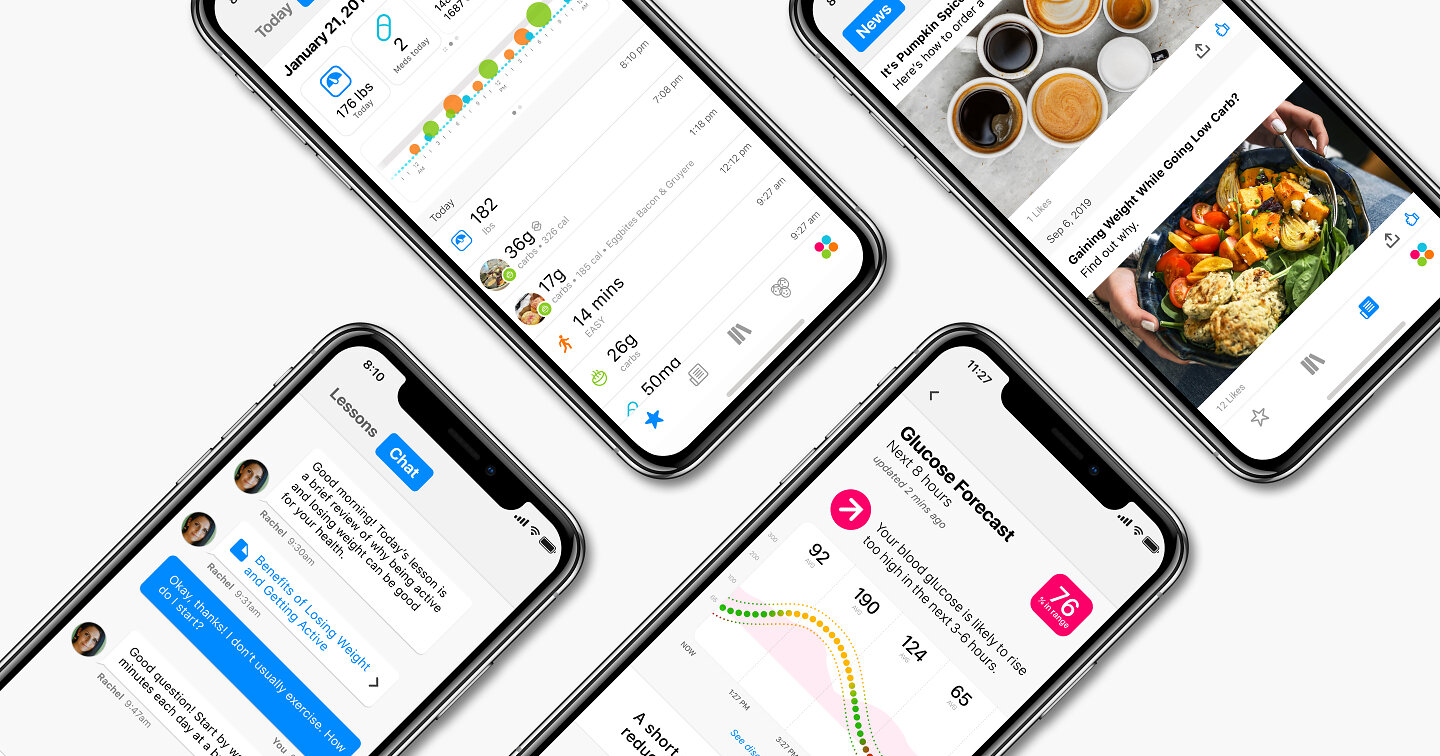
The device remained a finger-stick glucose meter. Its 2016 FDA clearance covered home monitoring, rather than diagnosis or diabetes screening. Bluetooth moved readings into the app. Users could also record meals, activity and medication, and connected services brought other device data into the same record. The attraction was fewer loose pieces to reconcile.
Premium supplies and coaching.
Meter: $79.95 with a qualifying subscription, or $99.95 alone.
The launch offer bundled unlimited strips and in-app support from certified diabetes educators. Annual prepayment reduced the monthly equivalent to $33.33. Customers paid directly, without insurance. For frequent testers, a predictable supplies bill had an obvious appeal. For someone with generous coverage or little need for strips, the arithmetic could be different. Affordability always has a denominator.
When Bayer bought the bigger idea
One Drop occupied the connected diabetes-care market alongside services such as mySugr, DarioHealth and Livongo. Its particular mix combined consumer design, direct purchasing, coaching and predictive analytics. It later supported prediabetes, high blood pressure and high cholesterol. The intended customer widened from an individual with a smartphone to employers, insurers and healthcare providers.
Bayer made that widening explicit. It led a $40 million Series B in 2019 and licensed the platform for work in other therapeutic areas. One Drop was becoming more than a retail bundle: its software and data capabilities could be ingredients in someone else’s health products. Pharmaceutical licensing introduced a different buyer, budget and development timetable.
The 2020 announcement paired a $34.7 million Series C with $64 million in development fees and potential commercial milestone payments. Calling the entire $98.7 million a funding round would flatten a meaningful distinction. Equity had closed; the other figure included commitments and conditional payments. The same announcement reported more than three million app downloaders. That measured reach, without establishing how many people paid or stayed.
Read the comparison, not just the result
One Drop published research, a welcome habit in a market full of reassuring interfaces. A 2017 observational study linked app use with lower self-reported A1c, a measure of longer-term glucose control. But people choosing to log their health may differ from people who do not. Improvement alongside an app cannot, by itself, establish what the app caused.
A randomized trial published in 2020 tested One Drop plus an activity tracker against One Drop alone in adults with type 1 diabetes. Among 95 participants analyzed, three-month adjusted mean A1c was 7.9% with the tracker and 8.4% without it. Both groups received One Drop. The result supported that particular combination, rather than proving the whole platform superior to usual care.
The sample was predominantly White and female, and follow-up lasted three months. Several authors had company affiliations. Those details determine how far a reader should carry the finding. Coaching and connected devices may help; a small, specific trial cannot settle every question about a broad chronic-care business.
The chore came first. The screen followed.
The app ends. The sensing bet continues.
In its 2024 member announcement, One Drop said its app and related services would end on November 30. A separate communication said it would not retain user health data beyond that date. For customers, the transition concerned records as well as software. A health log can become part of a person’s routine long before it becomes part of a company’s strategy.
Dachis identified continuous glucose monitoring as the next opportunity. SEC-filed statements document One Health Biosensing’s acquisition of certain One Drop assets in March 2024. At Frontiers Health in 2025, he presented FlexCGM, with FDA submission planned for 2026. The separate venture’s website still describes the sensor as investigational, without established performance characteristics or FDA clearance or approval.
What can another builder copy? Begin with the recurring burden, make the bill intelligible, and connect information to useful support. One Drop made those choices tangible. Its closure adds another requirement: the service that holds a daily routine must endure, or give that routine somewhere else to go.