The medicine is ready. The instructions are clear. And still, the person does not take it. For anyone designing healthcare around the tidy exchange of information, this is an awkward development. A prescription has arrived at its destination; the behavior has declined to follow. Atlantis Health has built its business in that gap, where a clinical plan meets a working day, a private worry, or a person’s wish to feel like themselves again.
- What it sells: patient support programs, behavioral strategy and configurable digital tools.
- Who buys: pharmaceutical, biotech and healthcare organizations.
- The distinctive move: understand the reason behind a behavior before choosing the intervention.
- What to copy: ask better questions, design with users, measure what happens over time.
The reminder has an alibi
Consider the difference between forgetting a tablet and deciding against it. Both can leave the same empty square on a medication tracker. Only one is necessarily a problem a notification can solve. The other may involve doubts about treatment, disruption to daily life, or a struggle over identity and control.
Those were the three themes Atlantis reported in its 2024 oncology survey. The online study included 126 adults in the United States, Europe and Asia Pacific who were taking cancer medication at home. Fifty-six percent reported some nonadherence. Half the sample had breast cancer. These are findings from a particular survey, rather than a census of everyone living with cancer, but they give the design problem a useful shape.
The practical implication is disarmingly simple: a message can arrive at precisely the right time and answer precisely the wrong question. The reader worrying about what a medicine means for their body needs something different from the reader struggling to fit it into Tuesday. Atlantis’s work starts by investigating that difference.
“We see the person beyond the patient”Atlantis Health’s description of its approach
A phone call with a different brief
SmartSight makes the approach easier to picture. The program supported people with neovascular age-related macular degeneration, a condition affecting central vision. Atlantis used validated questionnaires about illness and medicines to assess the risk of stopping treatment. That assessment helped shape the support, including the content nurses used in their calls.
The details are pleasingly practical. Materials were adapted for people with impaired vision. Patients could involve an elected caregiver. Welcome packs, booklets and inbound and outbound calls formed a program lasting 24 months. More than 4,000 patients enrolled between 2012 and 2020. A treatment journey here included someone answering the phone and someone making the booklet readable.
The published comparison reported 88% persistence after two years in the support program and 64% in a 10% sample from Australia’s Pharmaceutical Benefits Scheme dataset. Persistence means remaining on treatment; it does not establish that every dose was taken correctly. Nor were these randomly assigned groups. People enrolling in support may differ from other patients in ways that also affect continuation.
That distinction matters to a buyer. An attractive percentage should begin a conversation about evaluation design, patient selection and the outcome being counted. It should never end the conversation. The useful achievement is that the company has put a concrete behavior, over a concrete period, under examination.
Psychology, delivered through the plumbing
Atlantis sits between healthcare consulting, patient services and digital health. An organization can use it to investigate a patient experience, design a support program, or deliver the resulting service. Its capabilities also extend to clinical trial recruitment and retention. The commercial relationship is with healthcare and life sciences organizations; the person receiving a call or a check-in is the end user.
The service mix includes web, mobile, email and SMS, contact center coaching, reporting dashboards and nurse support. Its Patient Engagement Platform organizes personalized journeys. A Patient Support App provides medication information, reminders and check-ins. The choice of channel follows the person’s needs and the program’s purpose. A phone call has a job to do; so does a screen.
One particularly revealing product is its platform app for Salesforce. Atlantis describes it as a security-reviewed approved application, with prebuilt behavioral content and workflows under the name Behavior Change as a Service. It is designed to help nurse navigators and case managers choose an appropriate next action and prepare for a patient conversation using call guides.
This is where expertise becomes operational. An insight that stays in a presentation cannot assist a nurse halfway through a busy shift. Putting prompts and guidance into the existing work system gives that insight somewhere to go. It also explains why Atlantis can complement a client’s current patient-service team rather than require a wholesale replacement.
- 01UnderstandBeliefs, circumstances and practical barriers
- 02Co-designPatients, caregivers and care professionals
- 03DeliverContent, calls and digital workflows
- 04EvaluateBehavior, experience and sustained engagement
Auckland learns to travel
Atlantis began in Auckland in 1996. Its intellectual foundation includes health psychology research about the beliefs people hold regarding illness and treatment. Professor John Weinman’s work at King’s College London helped underpin its programs. An academic impact case study records the company applying this research across conditions and describes an AbbVie rheumatoid arthritis workbook that won a writing award in 2013.
The combination is unusual enough to be interesting: questionnaires and communication craft, academic models and everyday conversations. The company’s behavioral science leadership includes Weinman, Professor Keith Petrie and Dr. Kate Perry. Perry was its first psychologist and helped develop its approach to applying psychological theory in pharmaceutical support programs.
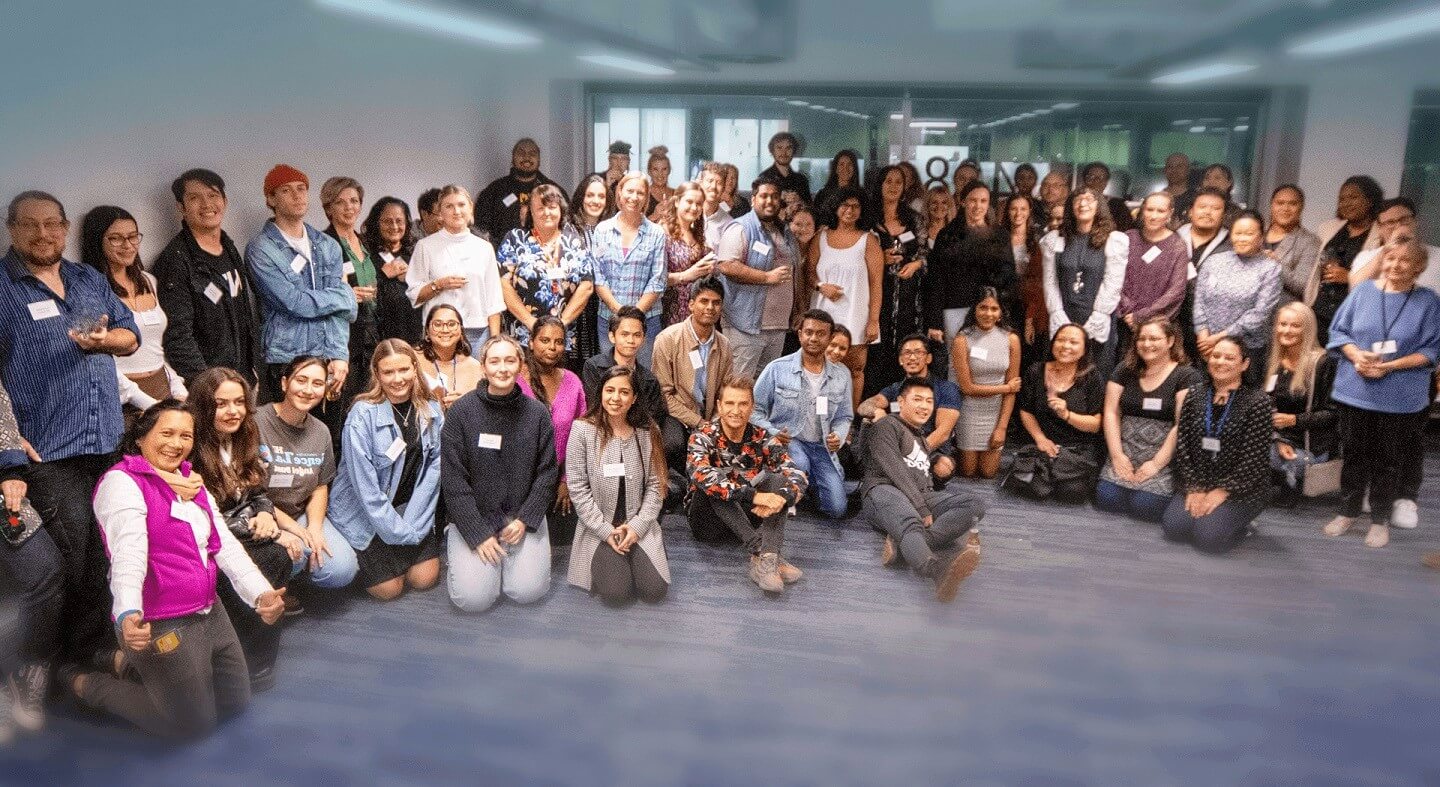
International expansion also needed money and connections. Contemporary New Zealand reporting described White Cloud Capital buying a 50% stake for NZ$20 million in July 2010. The rationale was access to an international network as well as capital. That is a useful reminder for founders selling specialized services: exporting expertise also requires relationships through which to deliver it.
Today the company lists teams in the United States, United Kingdom, Germany, Australia and New Zealand. Its careers material emphasizes collaboration and diverse perspectives. That organizational choice fits the work: a program crossing markets must understand the people, care arrangements and communication habits in each place.

The patient gets a seat at the table
The X-TEND program offers a specific example of collaboration. Atlantis worked with Antengene’s Australian business, Myeloma Australia and healthcare professionals on support for people with relapsed or refractory multiple myeloma receiving an XPO-1 inhibitor. Presented at scientific meetings in 2023, the program offered personalized support at key treatment points alongside the hospital team’s care.
More recent work shows the same method in different settings. An April 2026 psoriatic disease case study describes nurse calls, emails and opportunities for patients to report their experiences. It reports 83% persistence at 12 months against a 64% published benchmark. An external literature benchmark deserves the same careful reading as any comparison between separately assembled groups.
In September 2026, Atlantis published a rare blood cancer case involving myeloproliferative neoplasms. Literature and existing research informed tools co-created with patient groups and experts. The company reports rollout of localized toolkits in more than 30 countries and over 35,000 annual unique visitors to the global website. Reach shows that material is being encountered; clinical benefit requires a different measure.
Copy the question before the software
The transferable lesson is a sequence. Investigate the obstacle. Let the people experiencing it help design the response. Put that response into a usable interaction. Then evaluate the behavior it was meant to support. For a pharma team, that sequence can guide a new launch or an audit of an existing program. For any service designer, it challenges the habit of selecting technology before understanding the problem.
Atlantis’s digital coach, introduced as Ria, adds another possible interaction. Current AI material describes approved non-clinical content, support for enrollment and escalation to human teams. Those boundaries are part of the product’s usefulness. A system handling a routine question needs a clear route when the question becomes clinical or a potential drug-safety issue appears.
There are also obstacles that better communication cannot remove by itself. An unaffordable medicine needs an access solution. A treatment concern may require a clinician. Someone unable to use a digital channel needs another way in. The promise of personalization depends on recognizing those differences. A patient support program earns its place when it makes the next step possible in the life the person actually has.