Panafoto already had a website. That was the problem. The Panamanian electronics retailer had taken the apparently obvious step of putting a store online, only to discover that the result disappointed its own team. The analytics were discouraging. Expectations went unmet. A storefront existed; the business it was supposed to become did not.
- OMNI.PRO connects commerce, marketing and the systems behind them.
- Its customer work spans retailers, fuel ordering and automotive experiences.
- Globant acquired the consultancy in 2025 and expanded its Adobe Studio with its expertise.
The second storefront
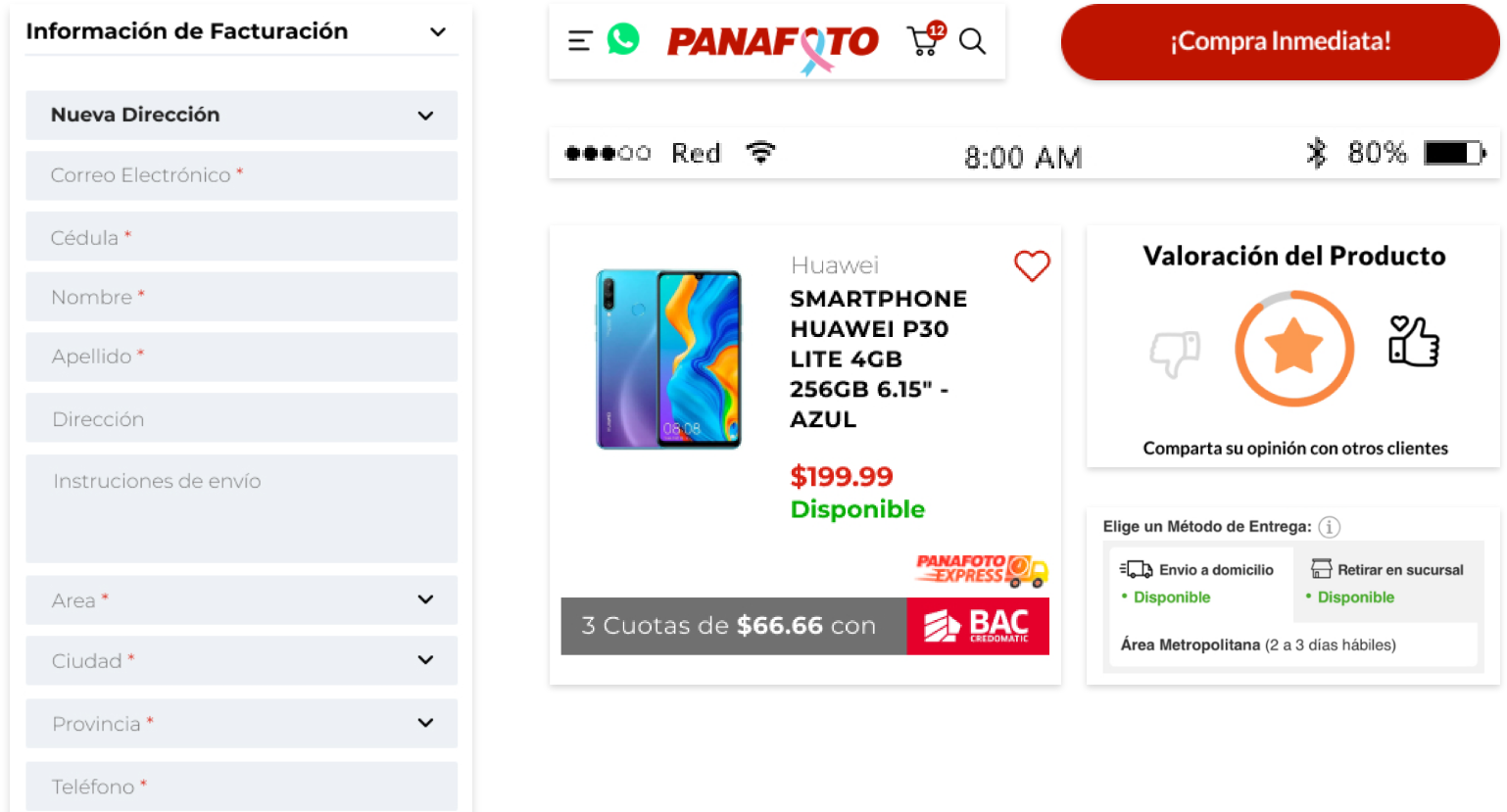
The e-commerce team, led by Sheren Chatlani, investigated other technology. OMNI.PRO helped with the migration to Adobe’s commerce ecosystem, and Panafoto’s replacement site went live in mid-2018. Yet changing platforms was only part of the assignment. The retailer had to account for shoppers accustomed to seeing merchandise before buying and a market where credit-card use presented a challenge.
One especially telling detail: the new experience accommodated price negotiation. Bargaining, a familiar retail behavior, needed a place online. The work also connected inventory, enterprise resource planning and customer relationship management. Page Builder let the marketing team change the storefront without calling a developer for every adjustment. The interesting achievement was how much of the existing business the website could finally express.
A price tag on the plumbing
This is OMNI.PRO’s territory. Founded in 2016, it works between a company’s customer-facing ambitions and its collection of business systems. It combines consulting, engineering, marketing and operations. Its commercial offering is professional services around enterprise software: designing the experience, implementing the tools and connecting them to the machinery already running the company.
Adobe supplies much of that toolkit. Commerce handles buying; Experience Manager handles content; Analytics helps interpret behavior; Target supports testing and personalization. Marketo Engage and Journey Optimizer address marketing engagement and coordinated customer journeys. OMNI.PRO’s value depends on making those capabilities useful inside a particular organization. Buying software creates the possibility. Implementation determines what people can actually do with it.
Globant put a concrete price on the company. Its SEC filing records the April 25, 2025 acquisition of the OMNI.PRO group, spanning entities in seven countries, for consideration of $63.057 million. In December, Globant announced an expanded Adobe Studio powered by OMNI.PRO. Managing directors Rubén García and Jose Fabrega described the combined ambition in a joint statement:
“a one-stop shop for enterprise clients”Rubén García and Jose Fabrega / December 2025
That number is acquisition consideration, rather than a customer’s implementation bill. The distinction matters: buying a consultancy and commissioning a connected commerce operation are different transactions.
The store is still in the story
Consider Stevens, the Panamanian department-store business. Its account of the pandemic begins with a change in priorities: online commerce had not previously been central. Restrictions made serving customers remotely urgent. The challenge then became getting departments to cooperate quickly enough to establish a new business unit.
The surprising part comes afterward. Stevens reported that its digital catalog helped bring shoppers into physical stores. Information online gave people reasons to visit. In that account, the website became another way into the shop, even when the transaction happened elsewhere.

The published case reports a 20 percent increase in conversion rate and a 25 percent increase in average order value. Those are useful signals, though they describe one customer’s project. The more portable lesson is about measurement: judging a website solely by its own checkout misses the customer who researches there and buys in person.
Five applications, one operating decision
Grupo Monge’s case makes the organizational point clearer. Its rollout used five Adobe solutions, including Commerce, Analytics, Audience Manager, Campaign and Target. More revealingly, the retailer established a regional business unit to support country marketing teams. Software came with a way of working across borders.
Previously, customer information entered through more traditional processes. Centralized data made profiles and segmentation more practical. The company could approach customers sooner with more relevant communication. OMNI.PRO’s published account reports campaign creation volume tripling and audience creation quadrupling. These are production measures, rather than a direct statement about profit.
- 01Customer intent
- 02Commerce + content
- 03Shared customer data
- 04Store + fulfillment
Each handoff needs an owner.
The distinction is valuable for buyers. Adding applications increases the number of things a team could do. Shared ownership determines whether those things happen consistently. Monge’s regional team offers a more useful idea to copy than an indiscriminate shopping list of marketing tools.
Fuel, cars and the same old handoff
OMNI.PRO’s work reaches beyond department stores. At Terpel, Canal Aliado uses Adobe Commerce to let service-station partners manage purchases, payments and fuel or lubricant orders. The practical benefit is self-service around the clock, with information available through mobile devices. Enterprise commerce can mean a station owner ordering supplies.
Indumotora’s automotive project addressed another kind of complexity: organizing content and making digital experiences easier to manage. Its published account describes more than 200 classified digital assets and over 30 new metrics, alongside automated publishing processes. Different merchandise, similar coordination problem. The experience improves when the information behind it becomes usable.
Copy the question before the software
These cases place OMNI.PRO in the market for enterprise implementation and digital experience consulting. A buyer can choose another implementation partner or build internally. OMNI.PRO’s particular proposition combines Adobe specialization with experience in Latin American commerce and, now, Globant’s broader operation.
My reading of the cases suggests a practical starting point: follow one customer request across departments before commissioning a redesign. Who owns the inventory answer? Who can change the page? Who knows whether an online visitor bought in a store? For a simple shop, this much integration may be unnecessary. For an organization unwilling to share data or responsibility, more applications could add more handoffs. Panafoto’s first website supplies the useful reminder: putting the shop online is the beginning of the assignment.