The structural engineer who walks through the rubble so insurers don't have to guess.
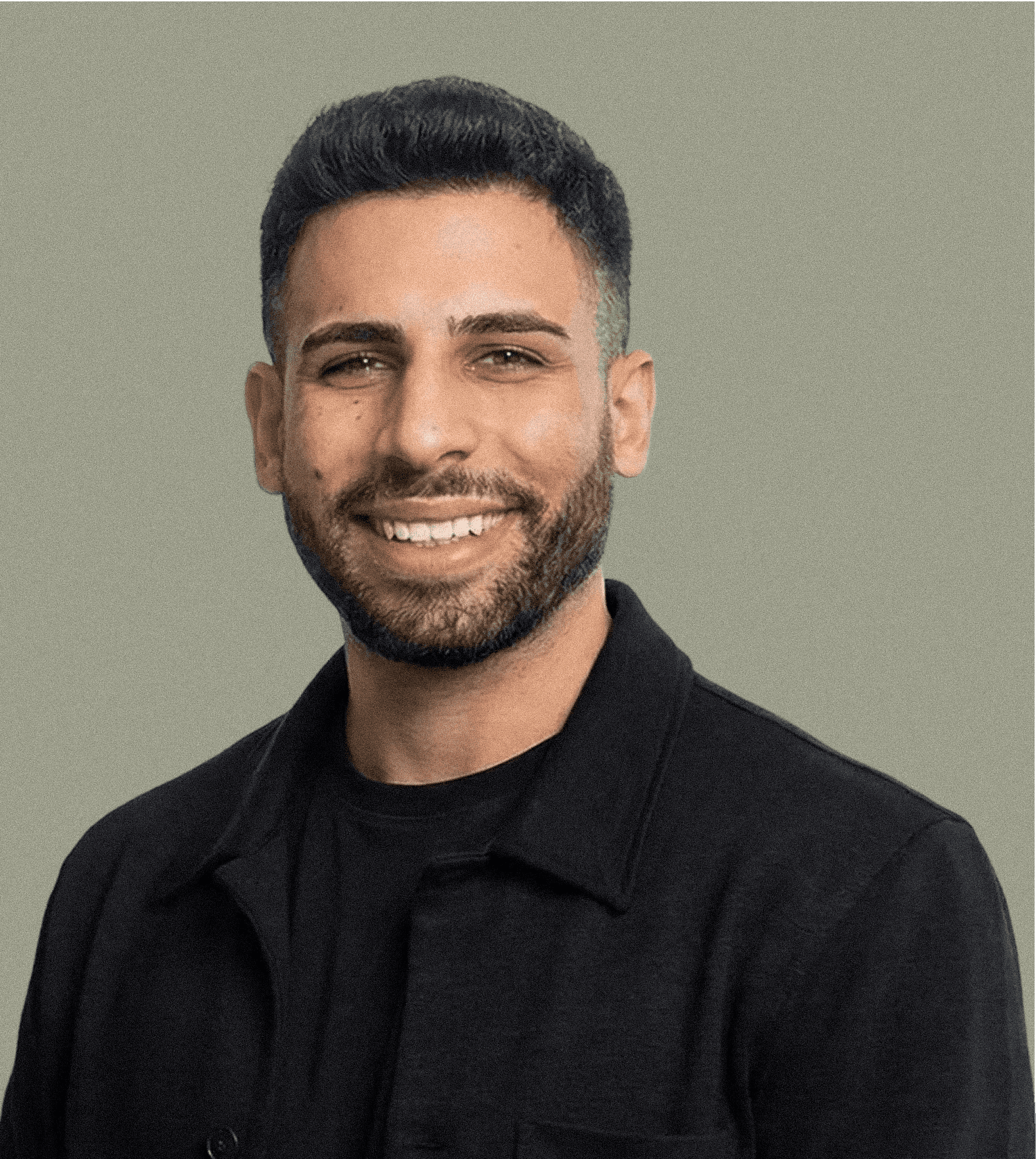
A building stands on a street. Next to it, an identical-looking neighbor. An earthquake hits, and one is rubble while the other is fine. Omar Issa has spent his career on that exact question - why one and not the other - and he has turned the answer into a company.
That company is ResiQuant, where Issa is co-founder and CEO. It calls itself an autonomous property intelligence platform built for an era of unprecedented risk, which is a careful way of saying it reads buildings for a living. The platform points specialized AI agents at site-inspection photos, aerial imagery, and publicly available visuals, then does what a structural engineer would do on a walk-through: it finds the hidden vulnerabilities that decide whether a structure survives a disaster.
The customers are property and casualty insurers - the carriers who write coverage in places that shake, burn, and flood. For years those carriers have made enormous bets with thin information. Issa's pitch is blunt about it. The data underneath billion-dollar decisions, he argues, has been dangerously incomplete. ResiQuant's job is to replace the guesswork with engineering-grade analysis, building by building.
It is a strange place for an earthquake scientist to end up - inside the underwriting department of an insurance company. But that is exactly where Issa decided the leverage was. Predicting the next quake is a crowded, well-funded field. Knowing how a specific roof, frame, or foundation will behave when the ground moves is not. He went where the gap was.
Headquartered at 535 Mission Street in San Francisco, ResiQuant currently scores earthquake risk across commercial, multi-family, and single-family property. The roadmap runs straight into wildfire and windstorm - the full menu of catastrophes that now define the American property map.
What ResiQuant sells, stripped of the jargon, is sight. An underwriter sitting in an office hundreds of miles from a building has never seen it, never walked its perimeter, never noticed the soft first story or the unreinforced masonry. ResiQuant's AI agents do that looking at scale, turning a handful of photographs and an aerial view into the kind of vulnerability assessment that used to require a licensed engineer on a ladder. The output is not a vibe or a zip-code average. It is property-specific, building-specific, and meant to survive an audit.
The context that makes Issa's work urgent is not subtle. In region after region exposed to climate and seismic shocks, carriers have been pulling back, raising prices, or walking away entirely. When the math on catastrophe risk looks unknowable, the rational move for an insurer is to stop writing coverage - which is exactly the outcome that leaves homeowners and businesses stranded.
Issa's argument is that the math is not actually unknowable. It only looks that way because the inputs are crude. Carriers have leaned on broad hazard maps and portfolio-level averages, which are fine for a continent and useless for a single address. Two buildings on the same block can carry wildly different risk depending on how they were built, retrofitted, and maintained. Treating them the same is how you both overprice the safe building and underprice the dangerous one.
ResiQuant's bet is that engineering-grade, property-level intelligence changes the calculus. If a carrier can actually see which buildings will perform and which won't, it can keep writing coverage profitably in markets everyone else is fleeing. The resilience story and the business story turn out to be the same story: better data lets insurance stay in the room.
That framing is why investors describe the company in terms of turning catastrophe risk into resilience rather than simply pricing it. The goal is not to flee the hard markets. It is to make them legible enough that capital is willing to stay.
"Property carriers make billion-dollar exposure and capital allocation decisions with dangerously incomplete data."
- Omar Issa, on why ResiQuant existsIn 2020, two PhD students crossed paths at Stanford's John A. Blume Earthquake Engineering Center. One was Omar Issa, a Bay Area kid and second-generation structural engineer who had already done earthquake research at UCLA under Professor Henry Burton. The other was Francisco Galvis, a forensic engineer from earthquake-prone Colombia who knew steel frames intimately.
Issa's specialty was machine learning for disaster recovery - using data to model what happens to a community after the shaking stops. Galvis was buried in the structural vulnerabilities of pre-Northridge steel buildings in San Francisco. Together they had a complete picture: how buildings break, and how to teach a computer to see it coming.
In their final year they kept circling the same frustration. The risk on real property was climbing fast, and almost nobody was doing the unglamorous engineering work of measuring it building by building. A Stanford Lean Launch Pad class - Sunday working sessions, a mentor who told them to think objectively and not emotionally about the real problem - did the rest. It pushed them out of a real-estate idea and into insurance, once they realized the people who needed their work most were underwriters flying blind.
ResiQuant started with earthquakes because that is what its founders know in their bones. The ambition is a single multi-hazard tool - so a carrier can underwrite a building against everything the climate and the fault lines can throw at it.
Issa runs ResiQuant as CEO; Francisco Galvis runs the technology as CTO. The division is clean and it is real. Galvis is a structural and forensic engineer from Colombia, a country that knows earthquakes the way California does, and his doctoral work centered on the structural vulnerabilities of older steel-frame buildings. Issa brings the machine-learning side - the recovery modeling, the data instincts, the pattern-finding.
The pairing matters because the product lives at the seam between two hard disciplines. You cannot teach a model to assess a building if you do not understand, at an engineering level, what makes that building weak. And you cannot scale a structural engineer's judgment to thousands of properties without serious machine learning. Most teams have one half of that equation. ResiQuant was built on both, by two people who spent years in the same lab learning to trust each other's expertise.
They did not jump straight to a polished idea, either. The early concept pointed at real estate. It was a mentor in a Stanford entrepreneurship class - pushing them to be skeptical of their own assumptions and to find the real problem rather than the one they were emotionally attached to - who nudged them toward insurance. The insight that survived the pivot was simple and durable: the people making the biggest property decisions were the ones with the least information.
Backing them is a deliberate roster. The $4M seed was led by LDV Capital, with Foothill Ventures, Pear VC, Alumni Ventures, and angels joining. The advisory bench reaches back into the academic world the founders came from, including earthquake-resilience figures who have shaped how the field thinks about loss and recovery. It is a cap table that understands both the engineering and the market.
Most insurtech founders learned risk from a spreadsheet. Issa learned it standing in earthquake debris and hurricane wreckage, asking why one building held and the next one didn't. The company is that question, productized.
Second-generation structural engineer. The family business was always buildings that don't fall down. ResiQuant takes that instinct and hands it to AI agents that can assess thousands of structures at once.
Plenty of money chases earthquake prediction. Issa went the other way - toward the unglamorous, building-by-building engineering that underwriters actually lacked. The name says it: resilience, meet quant.
Issa has been explicit about where the seed money goes: extend the platform's capabilities and grow the engineering and AI teams so ResiQuant can support carriers across every major US property market. Earthquake is the beachhead. Wildfire and windstorm are the obvious next fronts, and together they point at a single multi-hazard product rather than a stack of one-off tools.
By 2025 he was making that case on the conference circuit too, sharing stages at ITC Vegas and an Insurtech Insights panel alongside leaders from Palomar and Milliman. The throughline of those conversations is the same line he keeps returning to: the industry has gotten good at forecasting events and is still bad at forecasting performance. Knowing a hurricane is coming is not the same as knowing which roof will hold. ResiQuant is a bet that the second question is the one worth answering - and that an engineer who has stood in the debris is the right person to answer it.