An experienced driver moves to Britain. The luggage arrives; the driving history has a harder journey. Years spent behind the wheel elsewhere can become strangely faint when an insurance company examines a short British record. Oliver Kent-Braham found a business in that gap between the person and the paperwork. There is something almost comic about having to become a beginner again, until the quote arrives.
He co-founded Marshmallow with his identical twin, Alexander, and software engineer David Goaté. The company’s starting point was people moving to the UK who were paying heavily for being difficult to assess. Insurance depends on understanding someone’s past. Here was a market in which part of that past was going unread. The founders thought a closer look could produce a different price.
The result eventually became a company valued above $2 billion. But the number is less revealing than one ordinary feature of the product: Marshmallow accepts proof of claim-free driving from insurers in any country, in any language, without requiring a translation. A document that might have been an obstacle becomes evidence. Kent-Braham’s career has come to revolve around making that sort of recognition pay.
An office with a steam room
The early office was a Virgin Active gym lobby. Kent-Braham recalled an £80 membership, a desk and the incidental pleasure of a sauna and steam room. The founders worked there for months while keeping costs down. “It was just the cheapest office space.” Commercial property rarely supplies such a good punchline. For a young company, somewhere to sit could be enough.
Marshmallow was also a deliberate departure from the reassuringly interchangeable names of insurance. The founders liked the thought of a fluffy marshmallow and wanted something people would remember. A soft name for a business concerned with hard arithmetic: the joke is useful because it makes the company easier to recall. Nobody needs another insurer whose name sounds like a filing cabinet.
Kent-Braham had already spent time inside more conventional institutions. After a short stint in leveraged finance at Investec, he worked at digital identity company Yoti. Alexander and Goaté also worked there before Marshmallow. Their shared experience meant the new venture brought together people who had already encountered one another at work, rather than three biographies assembled for an investor presentation.
A first office is a practical decision that becomes a personality test in the retelling. In Marshmallow’s case, the modest setting sits neatly beside its original purpose. The founders were trying to understand an unnecessary expense while avoiding one of their own. The story is amusing precisely because a gym lobby seems an improbable place to contemplate the workings of an insurance company.
The legal company record begins in November 2016; Marshmallow dates its founding to 2017. Seed investors included Passion Capital and Investec. These are distinct steps in an untidy process that later becomes a neat company timeline. The gym story survives because it gives that process a location. Before the funding rounds had names, the business needed a table.
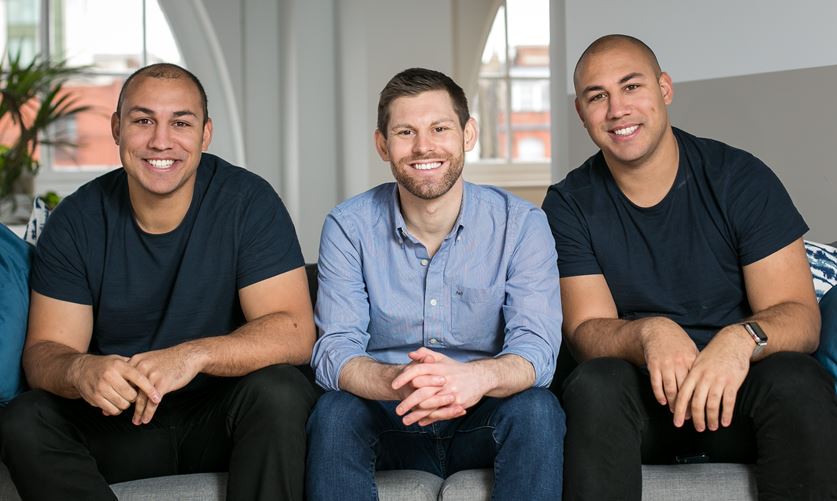
The doubles partnership
The brothers’ partnership had started much earlier. They grew up in south-west London, attended Reed’s School and represented Great Britain in junior tennis. Both later went to the University of the West of England in Bristol. Oliver studied Entrepreneurship at Bristol Business School. The route from competitive sport through business education and early jobs gave him several kinds of preparation, even if none amounted to a manual for starting an insurer.
Running a company with an identical twin provides opportunities for confusion. The practical benefit is less theatrical. Oliver has described deep trust and a shared belief in what they are building. In an early division of responsibilities, he concentrated on external matters, including fundraising, while Alexander focused on culture and products. The shared title of co-CEO contained different jobs.
Sport supplies another part of his explanation for persistence. Tennis means losing, returning to training and facing another opponent. The useful lesson continues after a bad result. By August 2025, Oliver was enjoying padel, while Alexander still played tennis. The racquets had changed for one brother; the habit of turning up remained part of how he described working life.
“We found that we were able to use data that other insurers aren’t using.”
Oliver Kent-Braham · 2021
A company has to learn to disagree
The first customer gave the founders a result more tangible than a theory about data. Kent-Braham said a Canadian immigrant saved around £1,500 by coming to Marshmallow. One saving does not describe everyone’s policy, but it explains why the original problem mattered. Money spent unnecessarily on insurance is money unavailable for the other costs of establishing a life somewhere new.
As the company grew, Kent-Braham talked about an internal job that could easily be obscured by the customer numbers. Processes, structure and the experience of working at Marshmallow had to develop alongside the business. Hiring more people changes who needs to know what, how decisions travel and how long a founder can remain involved in every question. Growth creates its own administrative appetite.
His contribution to the State of European Tech report in 2022 set out a preference for an open, deeply honest culture with challenge and support. He described culture as daily work, including a willingness to hear feedback. That is a demanding combination. Challenge is easy to advertise; support has to be present when someone actually disagrees. The useful measure is what happens in the conversation.
Recruitment supplied some concrete changes. In 2021, Marshmallow brought in Caroline Gillard as chief people officer and Sam Knott as vice president of marketing. Knott came from Dyson. Kent-Braham spoke of culture as a strategic advantage when welcoming them. An expanding business was borrowing experience from people who had worked at a different scale, while asking them to help shape its own.
He has also acknowledged the role of networks outside the office. His Investec experience brought a connection with the bank’s co-founder Bernard Kantor. Talking about access to capital, he observed how education can place founders closer to investors. Those relationships belong in the story alongside the ingenuity. A gym membership can lower the cost of a desk; it cannot, by itself, supply an introduction.
A welcome written on a billboard
In 2024, Marshmallow put its customer focus into public view with a campaign carrying the words “Immigrants wanted”. Developed with Uncommon Experience Studio, it celebrated what newcomers bring to Britain. For an insurer, this was an unusually direct way to describe a desirable customer. It gave a commercial welcome to people who might be more accustomed to having their circumstances treated as a complication.
Kent-Braham explained that moving country can be exciting and daunting, then become harder when credit and insurance are difficult to access. The campaign connected those experiences to a wider question about whether newcomers feel wanted. A billboard cannot settle that question. It can make a company’s position legible in a few words, which is rather more than many financial advertisements manage.
The twins’ own visibility carries another meaning. Marshmallow became the UK’s second Black-founded startup to reach a billion-dollar valuation in 2021, following WorldRemit. Oliver has welcomed the possibility of giving other founders role models while keeping the customer proposition central. The achievement gives people a reference point; the business still has to explain why someone should buy its cover.
The next border
September 2021 brought an $85 million Series B and a $1.25 billion valuation. Marshmallow then had more than 100,000 users. It had also become a licensed insurance carrier, taking responsibility for underwriting its own policies. That changed the substance beneath the app. The founders were building an insurance operation as well as a more approachable way to buy a policy.
By April 2025, the scale was different. A $90 million financing involving Portage, BlackRock and Columbia Lake Partners put the valuation above $2 billion. The money included both debt and equity. Marshmallow had by then insured more than one million drivers and reported a turnover run rate above $500 million. That last figure describes the pace of business, rather than a full year’s audited revenue.
The figures describe different things, and keeping them separate makes the story clearer. A financing provides capital. A valuation records the price attached to the company at that transaction. Drivers insured describe its reach over time. For the individual buying cover, the test remains closer to home: whether this business can understand a particular history and offer a policy worth taking. Large numbers cannot do that work on their own.
The ambition had widened too. “Our ambition is to become a one-stop-financial-shop for newcomers,” Kent-Braham said. Someone who has just moved may need several financial products in quick succession. Recognising the customer in one setting creates an invitation to understand the next need. It also creates more work: being useful once is a beginning, and each additional product has to earn its place.
The company’s timeline records car finance launching in 2025 and home insurance in 2026. International expansion remains an ambition he has described, rather than a completed itinerary. Meanwhile, Oliver and Alexander appeared jointly at number 36 in the Insurance Post Power List 2026. Recognition now arrives from an industry the founders once approached from the lobby of a gym.
The journey makes the early question more interesting with every additional product. How much of a person’s history should remain useful after a move? Kent-Braham has built his working life around customers whose experience is easy to misread at a distance. The company’s next chapter depends on getting closer. A newcomer already has enough unfamiliar things to learn; proving that a previous life counts should be one task fewer.