The keyboard came before the computer. Oleksandr Kosovan was a student with a salary and an expensive interest in Apple. A keyboard consumed roughly a month’s pay. For most people, that would have been a purchase to explain. For him, it became a standard to work toward: an ordinary object could be made with enough care that someone would save for it.
He went on to write CleanMyMac, establish MacPaw in Kyiv in 2008, and build a business around making other people’s computers less troublesome. There is a pleasing mismatch between the romance of that first purchase and the domestic practicality of the work it inspired. Falling in love with a keyboard led to a career helping strangers take out the digital rubbish.
His attachment to Apple has survived the more complicated experience of building a company inside its ecosystem. He has collected its old machines, created an alternative route for selling applications, and begun working on software that could change how people use those applications altogether. The admirer has acquired opinions of his own.
Good design arrived from somewhere else
Kosovan was born in Nadvirna, in western Ukraine. His father, an engineer and entrepreneur, went to France for work during the difficult years after the Soviet Union’s collapse. Visits to Paris gave the younger Kosovan an education beyond the classroom: museums, exhibitions, public transport and everyday systems that had visibly been designed.
He remembers being struck by the thought put into French products and infrastructure. The attraction was practical as well as visual. Someone had considered how a person would move through a station or read a display. That attention made an impression on a boy already interested in computers.
At Kyiv Polytechnic Institute, the interest became more specific. Apple’s hardware drew him toward its software, and using a Mac gave him reasons to understand the operating system underneath. His student experiments included an idea for controlling a computer through gestures captured by its camera. Making the machine behave differently was already part of the pleasure.
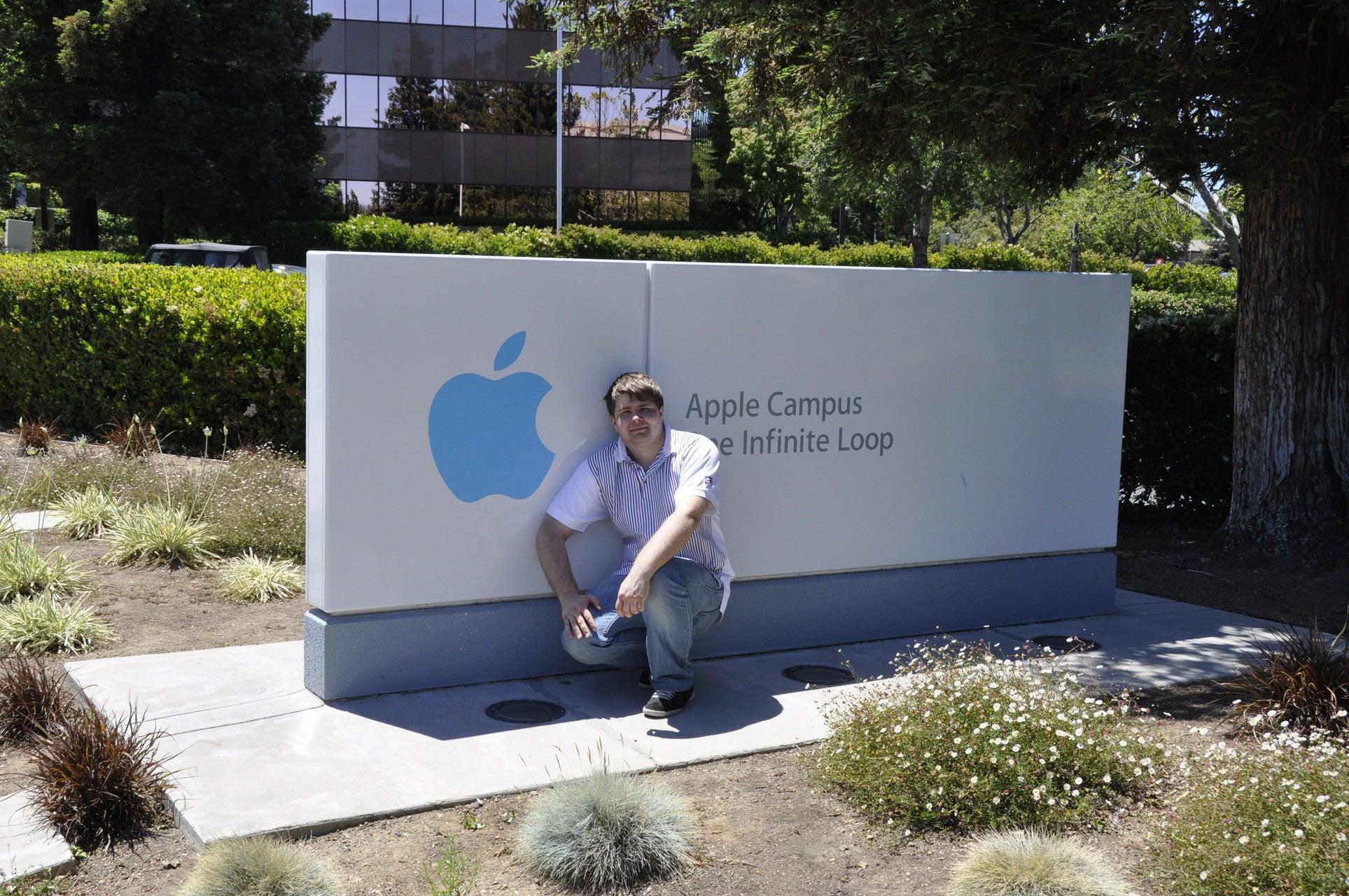
A dorm room with paying customers
MacPaw began while Kosovan was still a student. He wrote the first version of CleanMyMac himself, turning his familiarity with the Mac into a utility people could buy. The company was bootstrapped. Its early education in business came through releasing software and finding out whether anyone wanted enough of it to pay.
That sequence matters. A useful application could reach customers far beyond Ukraine without first requiring the company to resemble an established international business. A student’s room was sufficient for the writing. Distribution made the room’s location less decisive.
“I just knew a business needed to make a profit,” Kosovan recalled in 2019. It is a modest sentence for a technology founder, which gives it some charm. The ambition was large; the first financial principle would have fitted comfortably on a shopkeeper’s counter.
“I just knew a business needed to make a profit.”
Oleksandr Kosovan, 2019
His early collaborators included fellow student Vira Tkachenko, designer Dmytro Novikov and Sofia Dvoinos, who became his wife. These were people he knew, with abilities he could judge directly. The familiar founding-room image of a solitary programmer therefore needs a little company. Kosovan wrote the code; other people helped turn the code into something customers could encounter, understand and use.
Over time, the job expanded from making one application to deciding which other applications ought to exist. MacPaw’s history records a team of 50 by 2014. Setapp arrived in 2017, offering access to a collection of applications through a subscription. That moved the business into distribution as well as development. It also gave Kosovan a new relationship with other software makers: their work could become part of his company’s proposition.
CleanMyMac turns a student project into a business.
Setapp brings other developers’ apps into a subscription.
On-device AI becomes a focus of the next product chapter.
Forty computers, bought as a set
Success gave Kosovan room for a different kind of acquisition. When New York’s Tekserve closed, its collection of historic Apple computers went to auction. In 2016, he bought the collection together. Breaking it into individual purchases would have scattered a history that he wanted to keep in one place.
Nearly 40 machines made their way to MacPaw’s Ukrainian office. Among them was a Macintosh signed by Steve Wozniak. An office full of people building software for current Macs now had older generations nearby, offering a rather physical reminder that today’s familiar interface was once somebody’s experiment.
The collecting continued. In a 2021 announcement, Kosovan described plans for a public Apple Museum at MacPaw Space, with 323 exhibits. The proposed displays included QuickTake cameras and the Twentieth Anniversary Macintosh. These objects gave the history a useful texture: Apple’s past contains detours as well as products everyone remembers.
Exhibits announced for the Apple Museum collection in 2021. A historical count, with considerably more shelf space than that first keyboard.
His colleagues understood the hobby. For his thirtieth birthday, they assembled iPhone models spanning the device’s first decade and presented the collection as a surprise. Buying a present for a collector can be hazardous. They had the advantage of knowing precisely which gap needed filling.
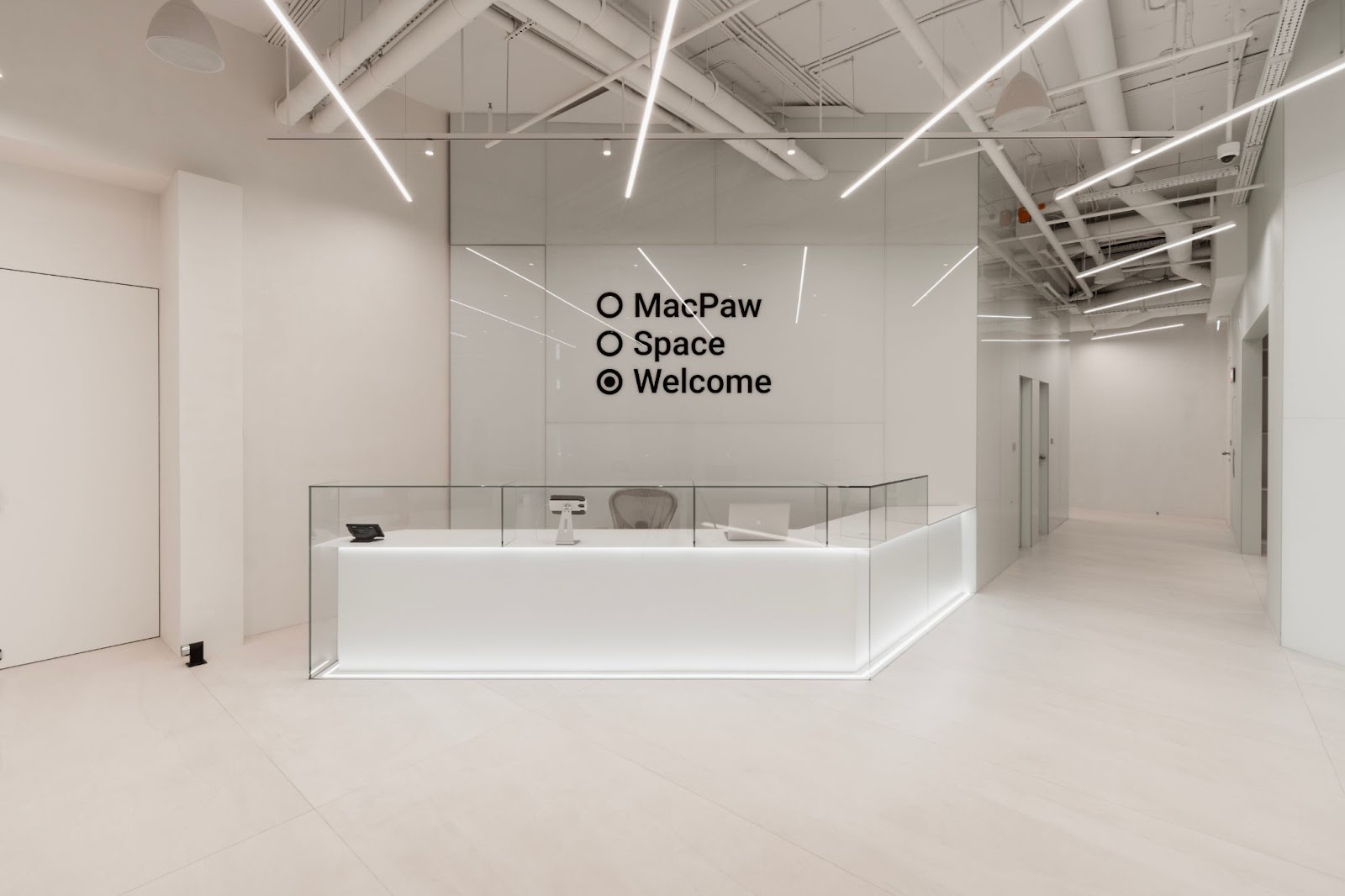
The company, and the country around it
Kosovan’s interests spread beyond his own products. In 2013, he co-founded SMRK with Andriy Dovzhenko. The venture fund backs technology businesses at early stages, including seed and Series A. Its portfolio includes Ajax Systems, Preply and Deus Robotics, a range that reaches well beyond software for Apple computers.
The fund’s stated preference is for products with a clear value to their users. That sounds close to the problem a young application developer faces: can someone understand why this thing should exist? Investing lets Kosovan participate in answers he and his own company would never build themselves.
SMRK describes itself as looking for teams that understand their products and can explain the value to a customer. Its stated interests include tools for business and everyday use, aimed at a global market. There is a useful restraint in that brief. A fund cannot make every idea work, and the people writing the cheque still need to understand what they are being asked to support.
His public roles have also included the presidency of Diia.City United, the Ukrainian technology business association, and co-ownership of CEO Club Ukraine. These commitments put him in conversations about the conditions in which companies operate. A founder can make decisions inside an office; investment rules and relationships with the state require a larger table.
Russia’s full-scale invasion in 2022 changed the practical work of running MacPaw. The company released Together App to help teams check on colleagues and SpyBuster to identify software and connections linked to Russia and Belarus. Familiar engineering skills were being applied to an unfamiliar daily problem. The company’s work on behalf of Ukraine also continued through MacPaw Foundation.
The years that resist a tidy growth chart
A company history written entirely through launches would miss important decisions. In November 2024, Kosovan announced that MacPaw would reduce its team by 20 percent, citing financial challenges and the need to protect the business’s long-term sustainability. It was a substantial reversal for an organisation accustomed to describing its expansion.
On December 20 that year, a Russian missile strike damaged MacPaw’s Kyiv office. Kosovan described a damaged roof and shattered windows, while saying operations remained unaffected. The distinction between maintaining a software service and maintaining the building around its makers had become painfully concrete.
MacPaw Space subsequently paused operations. In October 2025, Kosovan announced its return, with a charity fair planned for November and further events on technology, design and social responsibility. The sequence complicates the museum’s cheerful origin story. Creating a place is one commitment; finding a way to keep bringing people together there is another.
That same month brought an announcement of an AI lab at Kyiv Polytechnic Institute, in the restored Bilka Space. Students, teachers and researchers would have somewhere to experiment, with workshops and collaboration planned. For a founder whose business began at university, returning with a place for other people to try things has an understandable symmetry.
Another way to talk to a computer
By 2026, Kosovan was describing a broader transformation at MacPaw. The company was developing AI products and changing its internal workflows. He also acknowledged the commercial uncertainty: if a conversational assistant can complete a task, a user may have less reason to search for a separate application.
That is an awkward possibility for someone who sells applications. It makes the direction of Eney, MacPaw’s assistant, particularly revealing. The aim is to help people perform tasks on their Macs through natural language. The old question of how to make a computer less troublesome has acquired a different interface.
In August 2026, MacPaw announced a partnership with Liquid AI. The plan combines Liquid Foundation Models with MacPaw’s Elix inference technology and Mnemos memory layer, beginning with Eney. Initial results were expected later in the year. Those are announced ambitions, rather than a completed demonstration of everything the partnership promises.
“We believe intelligence should live where people work.”
Oleksandr Kosovan, August 2026
The emphasis on running more work on the device follows a concern for privacy and responsiveness. It also returns the story to the object on the desk. Kosovan’s first attraction was to a piece of hardware someone had thought about carefully. His present wager is that the experience inside that hardware can still be improved.
There is no need to pretend a student buying a keyboard could have foreseen the museum, the investment fund or an AI partnership. He liked the thing enough to spend the money. Then he learned how it worked, made something of his own and kept going. The receipt, in retrospect, makes an unusually good first page.
Follow the next chapter
- MACPAWOleksandr Kosovan’s company profile
- PERSONAL PROFILESOleksandr on LinkedIn
- Oleksandr on X
- Oleksandr on Facebook
- INVESTINGSMRK VC Fund
- WATCH / 2026MacPaw’s post-WWDC conversation
- WATCH / 2023 / UKRAINIANThe DOU interview at MacPaw Village
- INTERVIEW / MARCH 2026From Mac utilities to an AI ecosystem
- FROM KOSOVAN’S BLOG / 2021The Apple Museum announcement
- ANNOUNCEMENT / AUGUST 2026MacPaw’s plans with Liquid AI
- EDUCATION / OCTOBER 2025The AI lab planned at Kyiv Polytechnic