The first job MacPaw found was almost comically unromantic: remove junk from a Mac. In 2008, Oleksandr Kosovan was 21, working from a university dorm room in Kyiv and annoyed by the debris that accumulated on his computer. He built CleanMyMac, charged for it and discovered a durable truth about consumer software. People will pay to avoid chores that make them nervous, especially when the chore involves deleting files they do not understand.
That narrow utility financed a much wider company. MacPaw now builds maintenance tools, duplicate finders, a VPN, antivirus software and an AI assistant. It also runs Setapp, a curated marketplace for third-party Mac and iPhone apps. The company says its software reaches 30 million people and sits on one in five Macs. MacPaw remains privately held and describes itself as bootstrapped, which means the broom paid for the laboratory.
01 / The cash machineA broom with a very good interface
CleanMyMac bundles tasks that macOS scatters across settings panels and Finder windows: identifying storage hogs, uninstalling applications and leftovers, running maintenance routines, managing background items and checking for malware. Its customer is not a systems administrator. It is the person who sees a nearly full disk, hears a fan spin up and wants a confident green button.
That distinction is MacPaw's main competitive argument. CCleaner, MacKeeper, OnyX, Cleaner One Pro and smaller specialist utilities can cover overlapping jobs, sometimes more cheaply and sometimes with deeper controls. MacPaw has generally competed on packaging: plain language, animated feedback and guardrails that make a technical intervention feel reversible. The product is less a wrench than a mechanic who explains which bolt it plans to turn.
Subscriptions now sit beside one-time licenses and free tools. Setapp adds a two-sided model: membership revenue is shared with participating developers according to usage, while selected apps can be sold individually. For customers, that means one bill and full versions without ads. For developers, Setapp handles discovery, billing, taxes, activation and support. The exchange is distribution for a cut of revenue and less control over the customer relationship.
One company, four jobs
02 / The changed mindThe Netflix-for-apps pitch gets an edit
Setapp launched in 2017 with a tidy proposition: stop buying Mac apps one by one and subscribe to a handpicked collection. By 2026 it advertised more than 270 apps, with users concentrated in Europe and North America. But MacPaw changed the model. In February it began letting customers buy selected apps individually, through monthly, annual or lifetime offers. The membership stayed; the doctrine softened.
That is a useful correction. Bundles work when customers use enough of the catalog to feel clever every month. They work less well for someone who wants one indispensable app, dislikes another subscription or expects to keep software after canceling. Developers, too, may prefer a direct-looking sale to a pool allocated by usage. Setapp now offers both: a 70/30 membership split and an 85/15 single-app split. It resembles a curated department store more than Netflix.
“AI has rewritten the math of what a small team can build.”Oleksandr Tatarchuk, head of product management
03 / Pressure testThe morning the continuity plan became real
MacPaw's Kyiv roots are not an origin-story garnish. When Russia began its full-scale invasion in February 2022, employees were dealing with air raids, relocation and family safety while customers expected licenses, updates and support to keep working. MacPaw had prepared for that collision. It hosted infrastructure and user data on Amazon Web Services outside Ukraine, used UK-based Paddle for payments, established alternative communications and prepared a “red button” that could move support into an automated offline mode.
A small on-duty group kept essential operations running while colleagues moved. Some employees had already relocated temporarily to western Ukraine. Products continued without a reported interruption. The company also stopped sales in Russia and Belarus, gave Ukrainians access to ClearVPN and directed money and logistics toward medical supplies, protective equipment and humanitarian aid. By 2026 it said direct corporate support for Ukraine had exceeded $5.3 million.
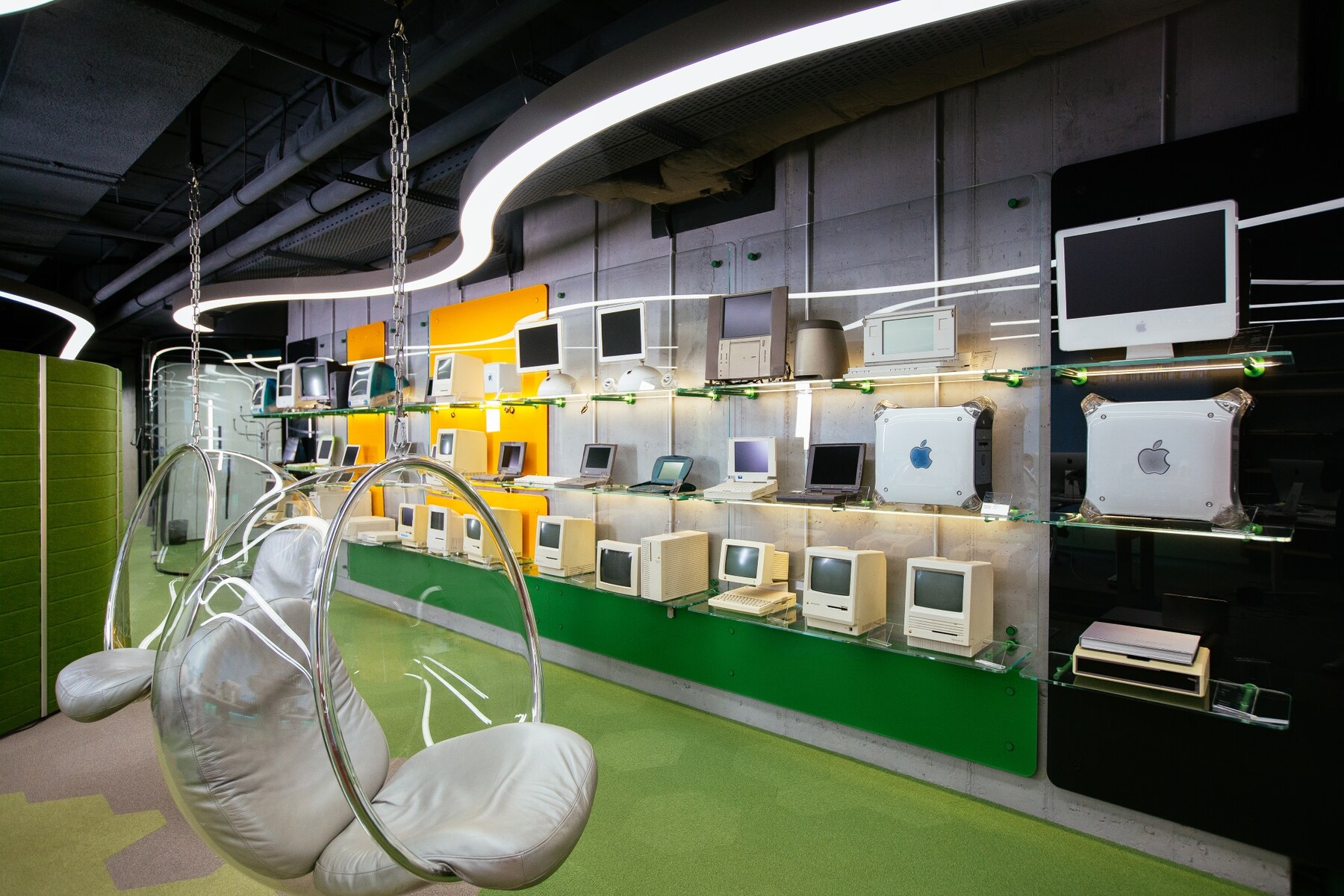
The office museum makes the company's obsession visible. Nearly 40 vintage Apple devices share space with modern product teams and two resident cats. MacPaw's culture language - make impact, create experience, stay human - can sound like polished employer copy. The operational record gives it sharper edges: about a third of employees now work remotely across more than 30 countries, yet the company still calls Kyiv its headquarters.
04 / What failed firstThree exits, one lesson in concentration
Expansion has produced casualties. CleanMy PC was discontinued in 2025. Setapp Mobile, an alternative iOS marketplace for the European Union, closed in February 2026 after changing and complex business terms stopped fitting its model. CleanMyMac Business is scheduled to sunset in July 2026. SpyBuster, rushed out during the invasion to identify connections to Russian and Belarusian services, ended as a standalone product the same month, with its functions absorbed by Moonlock and CleanMyMac.
The pattern is not random. MacPaw had moved from a focused consumer Mac business into Windows, enterprise administration, regulated mobile distribution and stand-alone security tools. Those markets require different sales motions, policies and support structures. The retreat points toward a tighter thesis: stay close to Apple users, fold overlapping features into fewer products and make Setapp the distribution surface.
This is also the central risk. Historical interviews placed roughly four-fifths of revenue in CleanMyMac. A broad portfolio looks diversified on a product page; it is less diversified if one app funds most of it. MacPaw's new ecosystem has to create fresh habits and revenue without making the dependable utility feel bloated.
05 / The rehearsal402 people stop working normally for two weeks
In March 2026, MacPaw made its AI strategy unusually concrete. For two weeks, most of the company stepped away from normal routines for an Agent Practice Sprint. The prompt was disciplined: find repetitive work, build an AI-driven replacement and demonstrate a before-and-after result in time saved, errors reduced or steps removed. An on-duty team protected customer-facing operations.
About 402 people participated. They proposed 355 projects and completed 247, according to MacPaw. Engineers orchestrated teams of coding agents. Legal built a Slack intake that turned requests into Jira tickets and a bot that checked open-source licenses. Finance automated the narrative around budget variances. Support made diagnostics easier to update. The data team built a Slack analyst that could answer some questions in about 30 minutes instead of hours.
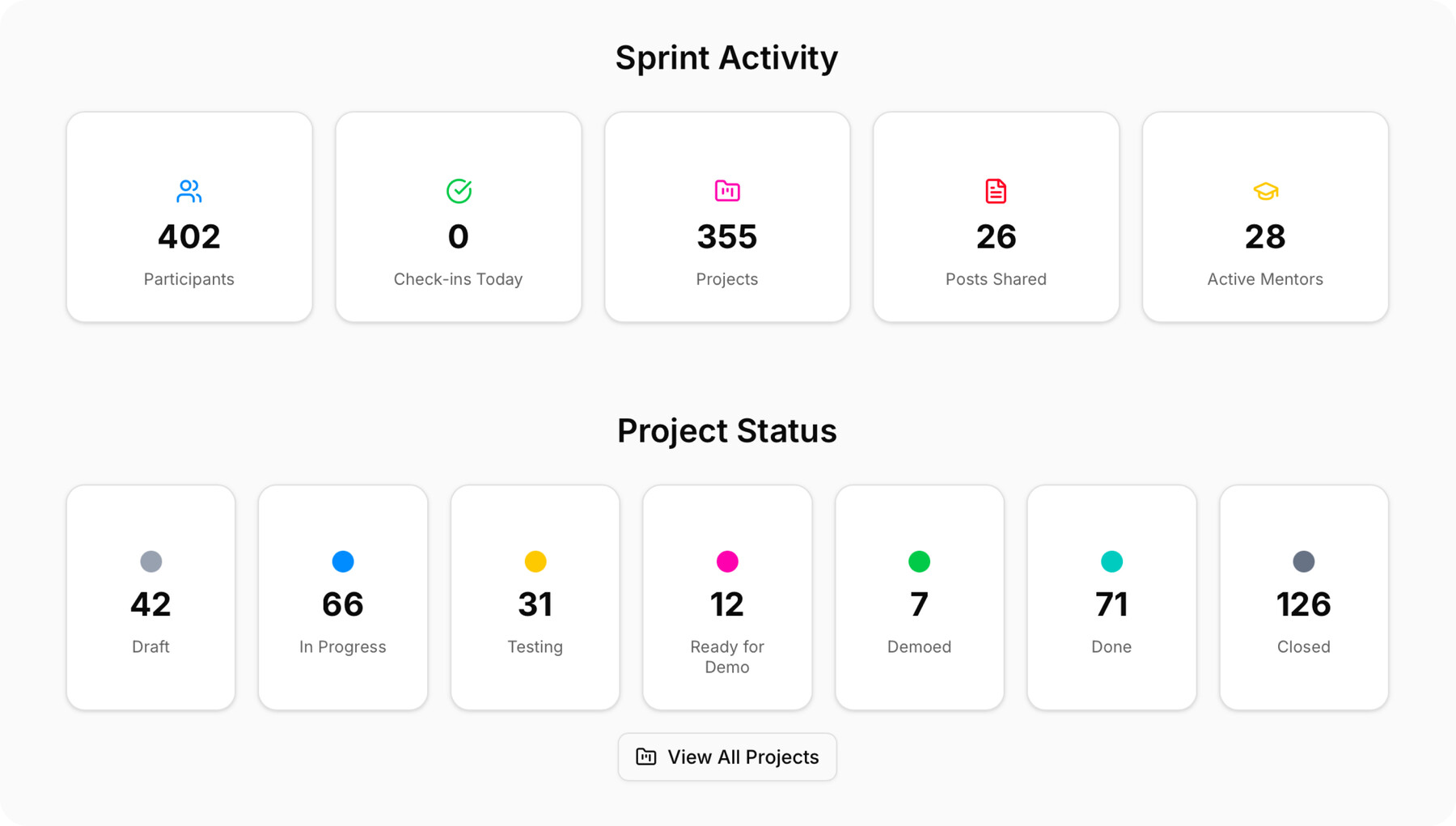
The number 355 is lively but not the outcome. A prototype can impress on demo day and become an expensive orphan by June. MacPaw itself identified the next work: consolidate duplicates, strengthen security and maintenance rules, and measure actual effectiveness. The sprint's transferable idea is not “give everyone an agent.” It is to start with a disliked recurring task, provide tools and mentors, preserve an operations crew, and require evidence of improvement.
06 / The next interfaceEney wants to act, not chat
Eney is where the portfolio is supposed to cohere. The preview-stage assistant can manage files, transform text, work with calendars and call skills across applications. A classifier routes simpler tasks to models on the Mac while harder, multi-step jobs can use cloud systems. Mnemos, MacPaw's context layer, indexes permitted local information so the assistant can retrieve relevant files, images and calendar data. The user controls access, but the trust requirement is higher than for a disk cleaner.
In August 2026 MacPaw partnered with Liquid AI to adapt efficient foundation models for Apple silicon. The plan is to combine those models with MacPaw's Elix inference framework and Mnemos memory, beginning in Eney and potentially reaching developers through Setapp. This is a credible point of difference from a browser chatbot: native execution, persistent local context and offline capability. It is also a large technical and behavioral bet. Apple owns the operating system, controls permissions and ships its own intelligence. ChatGPT, Claude and other assistants already own attention.
What another company can copy
- Start with one frequent, anxious chore and make the result inspectable.
- Use revenue from the proven product to test adjacent jobs, not to excuse them.
- Run AI experiments against measured before-and-after workflows.
- Keep a small operating crew outside the experiment so customers never join the hackathon.
- Close products when their market demands a different company than the one you are good at running.
The model travels poorly when the original product has weak margins, infrequent use or no reservoir of customer trust. A marketplace also needs enough buyers to attract good developers and enough good software to retain buyers. Local-first AI needs modern hardware, careful permissions and tasks that genuinely benefit from context. Without those conditions, the MacPaw playbook becomes an expensive collection of adjacent nouns.
MacPaw's advantage is not that it invented cleaning, antivirus, app stores or assistants. It has spent 18 years making technical chores legible to ordinary Mac owners, then distributing the result directly. The next act asks those owners for something more valuable than disk space: permission to let one company coordinate the software around their work. That is a harder sale. It is also the first MacPaw problem big enough to make the broom look small.