A financial statement is an odd place to look for pleasure. The type is small. The language is bloodless. Even the more alarming numbers sit politely in their columns. Okky Pratama reads them for fun. The habit sounds eccentric until you notice that his company, Delegasi, was built for people who would rather spend their evenings doing almost anything else.
Those people are the owners of Indonesia's small businesses, particularly restaurants and cafés. Their days are crowded with purchasing, staffing, marketing, delivery apps and whatever fresh emergency has appeared behind the counter. Accounting competes for the last scraps of attention. Plenty have tried software. The founders heard a revealing pattern in their customer conversations: business owners would buy a year-long subscription, then stop using the product after one or two months. A tool had been purchased. The work remained.
Delegasi's answer was deliberately practical. Connect the point-of-sale system. Upload receipts, bank statements and stock-count data. Receive financial statements and analysis. The service did not ask a restaurant owner to become a part-time accountant. It tried to turn their existing administrative exhaust into something legible enough to guide a decision.
The useful problem hiding behind the first idea
Delegasi did not begin with accounting. In early 2021, Okky and his longtime friend Ans Syuhada started exploring staff-hiring problems for restaurants and cafés. They pitched businesses and listened. The prospective customers kept bringing up their books. Accounting was slow, specialized and easy to postpone. The complaint followed the founders from conversation to conversation until it became impossible to treat as a digression.
So they changed direction. They helped friends with their businesses, shaped early products and tested the service for several months. Positive responses gave the pair enough confidence to commit. This is the sort of pivot that looks obvious in a paragraph and feels much less tidy while it is happening. Founders have to release the idea they rehearsed in order to follow the problem customers actually repeat.
“We have known each other for more than twelve years since college.”Okky Pratama and Ans Syuhada, on their founder backstory
The long friendship mattered. Okky and Ans had met at Institut Teknologi Bandung. Ans brought experience in product development, data systems and analytics. Okky carried a blend of technology, business and operations. Their shared history gave them a store of trust before the product had a name, and trust is useful when the original plan is being dismantled in public.
The Delegasi proposition
A career spent between the system and the business
Okky's route to Delegasi reads like a sequence of translations. He studied informatics at ITB, where code and systems provided the first vocabulary. He later worked in management consulting at Skha Consulting, then moved to Traveloka as a product manager. His responsibility there was an affiliation product that sold flights and hotels through travel agents and ecommerce partners. It required market assessment, negotiation, product requirements, launches, technical integrations and the delicate sport of getting several internal teams to move at once.
That work lived in the seam between a product and the organizations expected to use it. It is a good place to learn that elegant software can still fail when the surrounding process is awkward. Delegasi would eventually make the process itself the product: the customer supplies familiar records, while the service carries much of the accounting burden.
In 2019, Okky left for MIT Sloan. He completed an MBA, earned a Business Analytics Certificate and became a Legatum Fellow, a program centered on entrepreneurship in developing markets. During the degree he spent a summer in the Seattle area as a senior product manager tech intern at Amazon. The combination sharpened both halves of his later proposition: sophisticated analysis on one side, an obsessively simplified customer experience on the other.
Back in Indonesia, he joined Modal Rakyat, part of Fazz Financial Group, as Senior Vice President of Business & Operations. His announcement carried a characteristically open invitation: “I'm very keen to discuss and explore.” The role put him close to SME lending, partnerships, product, data and the operational machinery of finance. Ten months later, he left to start Delegasi.
An old sentence with a long shadow
The founder ambition had appeared much earlier. In December 2011, while campaigning to lead ITB's Informatics Student Association, Okky wrote on his personal blog that he wanted to become an entrepreneur and hoped to begin before graduation. He was uncertain about taking on the student leadership race. Friends and seniors offered advice. His parents supplied the sentence that settled the matter: “pilih jalan yang paling banyak manfaatnya” - choose the path with the most benefit.
“Choose the path with the most benefit.”A family principle Okky shared as an ITB student
He ran. The post is revealing less as prophecy than as a record of how he made a difficult choice. The decision was not framed around prestige or certainty. He looked for usefulness. Another post from the same period described hopes for an association its members could be proud of. Years later, a long-form podcast about his journey returned to a similar theme: continuing to develop himself while creating benefit for others.
That instinct also appears in his writing about Malang, the city he came from. In an open letter to candidates for mayor, he argued for quality education, better public services, cleanliness and safety, and policies serving ordinary residents. The prose is earnest and civic-minded. It comes from a young technologist already suspicious of progress measured only by taller buildings.
The old coursework supplies a more playful preview of the adult operator. One paper applied graph theory to real-time strategy games, where resources and dependencies decide what a player can build next. Another examined a greedy algorithm through the card game Hearts, where winning requires collecting as few points as possible. The subjects are wonderfully student-like, but the questions endured: how does a system behave, where is the constraint, and which move produces the best available outcome?
He was experimenting with commerce, too. In the 2012-2013 academic year, an ITB student entrepreneurship project bearing his name proposed JUYO, a fruit-yogurt drink. It is a small archival trace, far removed from venture capital and financial automation. It also makes his claim that he wanted to start before graduation feel less like diary bravado. He was already trying ideas in the world, where ingredients, customers and arithmetic are less forgiving than a manifesto.
The early blog moved easily among software engineering notes, campus politics, entrepreneurship and civic life. That range helps explain a career that never settled entirely inside one discipline. Okky could work with technical systems, but he kept returning to what institutions and products were for. At Traveloka, that meant partners and indirect distribution. At Modal Rakyat, it meant the operating questions around financing smaller enterprises. At Delegasi, it meant turning records into a decision an owner could make before opening the shop again.
The operator's useful test
Does the product remove a burden, or merely rearrange it? Delegasi's customer research exposed a gap between owning accounting software and maintaining reliable accounts. The company's design followed the work, not the category label.
When clean books change the conversation
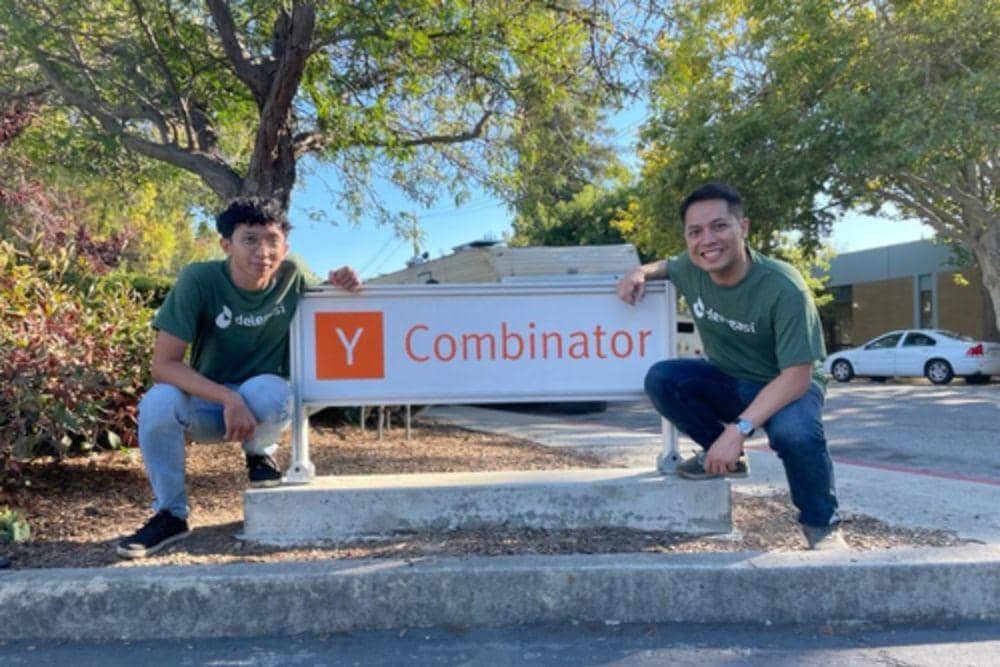
Delegasi entered Y Combinator's Summer 2022 batch and received backing from YC and Beenext. Its early focus was the food-and-beverage trade, where a crowded stack of POS systems, delivery platforms, receipts, inventory counts and bank transactions can make a simple question surprisingly expensive: are we actually making money?
The outputs were familiar - profit-and-loss statements, cash-flow reports and balance sheets - but the intended consequence was action. Businesses used cleaner records to spot costs, prepare for large future expenses and present credible numbers when seeking debt or equity. The financial statement was not the finish line. It was the instrument panel.
There is an important modesty in that proposition. Delegasi did not need every owner to love finance as much as Okky does. It needed to make his fluency available to someone who had a restaurant to open in the morning. Expertise earns its keep when it reduces the amount of expertise demanded from everyone else.
Okky's public career now spans the clean abstractions of computer science, the negotiated reality of partnerships, the scale of large technology companies and the stubborn details of small-business operations. Delegasi gathered those experiences into a service concerned with mundane evidence: a receipt, a bank line, a sale. Individually, each looks trivial. Together, properly arranged, they can tell an owner whether to expand, cut a hidden cost, build a cash reserve or wait.
A founder who reads statements for pleasure may still be a rare creature. The more useful quality is the one visible much earlier, in that student blog: a preference for paths that create benefit. Numbers happen to be where Okky learned to look for it.