A grocery aisle is an excellent place to hide an industrial mystery. The boxes are square, the labels are glossy, and everything appears to have arrived by immaculate conception. Pick up a protein bar and the brand on the wrapper may not own the factory that mixed it, shaped it or sealed it. Somewhere behind the cheerful typography sits a co-manufacturer with the right line, the right certification and enough capacity. Finding that factory, Oisin Hanrahan learned, could still involve brokers, trade shows, long email chains and a heroic dependence on memory.
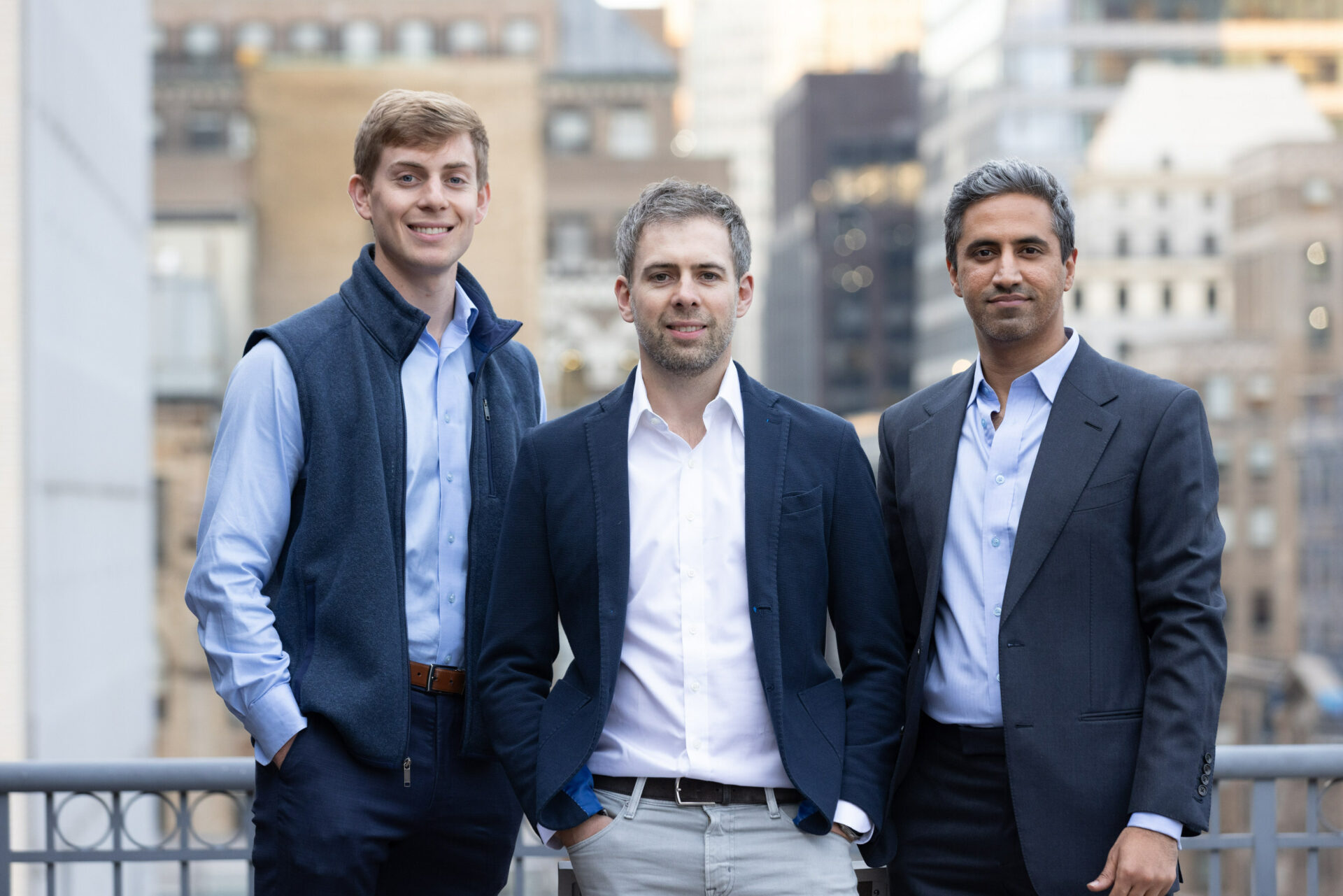
Hanrahan has a taste for this kind of untidiness. He is drawn to enormous markets that function perfectly well until one asks a simple question. Who can do the job? How can they be found? Which information would make a stranger trustworthy? His first famous answer became Handy, the home-services marketplace he co-founded in 2012. His latest is Keychain, the New York company he runs with co-founders Umang Dua and Jordan Weitz. It maps consumer-product manufacturing and is moving deeper into the software factories use to run themselves.
The products could hardly look less alike. One begins with a leaking tap, the other with a low-sugar snack. Yet Hanrahan's career has a stubborn internal rhyme: fragmented supply, patchy data, expensive trust. He does not so much chase industries as notice where the Internet stopped at reception.
The hotel kitchen comes first
Long before the CEO titles, Hanrahan scrubbed dishes in a hotel kitchen in Saggart while he was in secondary school. He later called it memorable rather than miserable, a distinction that says something about his appetite for work. Born in Rathcoole near Dublin, he studied business, economics and social studies at Trinity College Dublin. He also spent time in Budapest, where he started a property-development business and worked in real estate and construction.
The early ventures accumulated quickly. He founded MiCandidate, which supplied election information to media companies around Europe, and co-founded The Undergraduate Awards, a program for recognizing undergraduate scholarship. He earned a master's degree in finance from the London School of Economics, then went to Harvard Business School. Boston supplied the next irritation.
Hanrahan and Dua were trying to find someone reliable to clean their college-style apartment. The search involved reviews, price negotiations and considerably more ceremony than the state of the apartment deserved. They began asking why a household could summon so many goods from a phone but not easily book a cleaner or repair professional. Between the first and second years of business school, they left to build the answer.
“Focus on the people.”Oisin Hanrahan on the most useful advice he received
The day the software volunteered everyone
Handy, initially called Handybook, promised something disarmingly clean: choose a time, book a service, pay through the app. Delivering that tidy interaction required distinctly untidy operations. During the company's first year, a software glitch accepted 50 percent more jobs than Handy had people available to complete.
The team did not solve this with a sternly worded status page. Engineers, designers, Hanrahan, Dua and anyone else who could help went out and did the jobs. Imagine the bug report: expected behavior, booking limit; actual behavior, founder now cleaning your kitchen. It was an absurd day and a useful education. A marketplace is not a diagram of supply and demand. It is a promise made to two groups of people, and software cannot shrug when the promise walks to someone's front door.
Handy expanded across cities in the United States, Canada and Britain. Angi Homeservices acquired it in 2018. Hanrahan stayed, first adding responsibility for product strategy across Angi's portfolio and then becoming CEO of the public company in February 2021. The boy who had scrubbed hotel dishes was now running a collection of home-services brands connecting millions of projects with hundreds of thousands of professionals.
Hanrahan stepped down from Angi in October 2022. The conventional founder narrative would have ended neatly there, acquisition completed and corporate summit reached. He went back to research instead. He toured factories, spoke with brands and retailers, and examined a supply chain whose public face was a supermarket shelf and whose private machinery was a maze.
The secret life of a protein bar
Consumer preferences had multiplied. Products needed to be plant-based, allergen-free, high-protein, low-sugar or packed in a particular format. Each adjective could imply different ingredients, machinery, certifications and facilities. But the search for a suitable manufacturer remained constrained by an existing contact list, a broker's network or the hope of meeting the right person while wandering a convention hall.
Hanrahan has a crisp verdict on that last method: trade shows are excellent for deepening relationships and poor at solving a structured-data problem. A buyer looking for someone able to make a low-sugar, high-protein bar should not have to patrol a Las Vegas exhibition floor in a state of nutritional despair. The meeting is valuable. The random search is not.
+ attributes
+ certification data
manufacturer
Keychain began by assembling the map. Its system analyzes products and tags them by ingredients, process and packaging, then connects those requirements to manufacturing capabilities. A brand can search for a trail-mix co-packer, filter by location or certification, and approach a relevant factory. The company's early business model kept search free for brands and retailers while charging manufacturers for premium presentation, verification and analytics.
The company launched its first product in early 2024 and moved quickly. By August 2025, Keychain said tens of thousands of brands and retailers used the platform. The company announced a $30 million Series B led by Wellington Management and BoxGroup, bringing reported funding at the time to roughly $68 million. Alongside the round came KeychainOS, an AI-based operating system designed for manufacturers, covering more of the production cycle than discovery alone.
AI, with the volume turned down
The fashionable description for Keychain is an AI company. Hanrahan's more useful description is an information company whose market happens to need AI. He argues that the technology's important contribution is visibility. Manufacturing knowledge sits in incompatible systems, inboxes, product pages and human recollection. Structuring that complexity can reveal connections that were previously difficult to see.
This view is less theatrical than the common promise that automation will sweep away work. It is also more attentive to how businesses change. In early 2026, after a discussion at Davos, Hanrahan wrote that return on investment, data privacy and the consequences for employees and consumers would shape the next phase of AI adoption. The technology might be the easier part, he suggested; managing the organizational and social change could be harder.
There is a revealing consistency here. Handy did not remove the cleaner, plumber or carpenter. It made the relationship discoverable and bookable. Keychain does not eliminate the factory visit or trade-show conversation. It tries to make sure the right participants find each other before the conversation begins. Software organizes the room. People still have to enter it.
“Set the standard yourself. If you want focus, be focused. If you want preparation, be prepared.”Oisin Hanrahan on leadership
A founder's favorite recurring problem
Hanrahan's operating advice is similarly plain. Describe the pain clearly. Know who feels it. Consider every participant touched by the product. Lead through visible behavior. Accept mistakes as tuition, but pay attention in class. His insistence that founders cannot become good without making mistakes sounds less like permission for chaos than a demand to metabolize it quickly.
His own record includes enough changes of scale to test the proposition: property developer, election-data founder, marketplace chief executive, product leader, public-company CEO, startup founder again. Through it all, relationships remain a repeated theme. He has connected that instinct to growing up in Dublin, and his oldest public maxim is still the shortest: focus on the people.
In 2026, Keychain brought 80 American partners to Dublin for two days of conversation. Hanrahan celebrated the sort of exchanges that do not happen on video calls or in conference rooms. It was an amusingly human gesture from a founder paid to digitize introductions. The map earns its keep when it leads to a real table.
The ambition now is larger than matching a brand with a factory. Keychain wants to become an operating layer for consumer packaged goods, joining research, development, sourcing and manufacturing. That expansion carries the usual risk of turning a sharp tool into a crowded toolbox. It also follows the logic of the original discovery: once the hidden network becomes visible, its daily work comes into view.
Hanrahan's career offers founders a practical way to look for ideas. Find an industry where capable people are hard to locate, essential facts are scattered, and trust depends too heavily on prior acquaintance. Do not mistake an old workflow for a permanent law. Spend time with the participants until the problem can be said without jargon. Then build the map before promising the moon.
As a child, Hanrahan wanted to be an astronaut. He ended up exploring less photogenic territory: messy apartments, local trades, factory databases and the administrative hinterland of a protein bar. Space may have better posters. Fragmented markets, however, contain more unanswered emails - and for Oisin Hanrahan, those have proved gravitational enough.