A conversation aboard an aircraft is a small act of optimism. Someone speaks into a device and expects a voice to return, while the aircraft, the network and the available bandwidth carry on with their own complicated affairs. Noor A. Chowdhury’s work occupies the space between that expectation and the machinery required to honour it. The passenger gets a call. The engineer gets a rather longer list of things to consider.
Chowdhury is Brotecs’ co-founder, chairman and CEO. He is also identified professionally as the founder and CEO of Stitel Networks, the Tempe, Arizona, communications business. Those titles establish his place in the boardroom. Five US patents bearing his name, alongside Nahid Hossain’s, take us into a more revealing room: the one where somebody must decide how all the equipment will actually talk.
The grants run from February 2018 to July 2025. Their shared title, Converged data communications in satellite networks, has the romance of a filing cabinet. Their subject is considerably more human. They concern the arrangements that let communications travel between an aircraft and the ground, and the adjustments that help those communications survive changing network conditions.
A career with communications running through it
Chowdhury worked in software engineering at Standard Cable and Telephone - ITT in 1980, followed by Idea Courier in 1982. By 1992, he had become vice president of software engineering at Hypercom. In 1999 came another change in responsibility: senior vice president and chief technology officer at Cirilium.
These are the outlines of a career moving from writing software towards responsibility for the people and decisions behind it. The distinction matters. A technical leader has to understand what a system should do while also arranging the work that gets it there. A sensible architecture is pleasant company; it still requires a team, a schedule and decisions about what happens next.
His education spans both sides of that work: postgraduate computer-engineering studies at Brunel University London from 1979 to 1981, and executive management in international management at Thunderbird School of Global Management from 1999 to 2001. The latter period overlaps his move into Cirilium’s senior technology leadership.
In 2005, he founded Stitel Networks and became its CEO. That gave his communications career a company of his own. Today, Stitel describes its work in aviation satellite networking, with services that include embedded software, IP telephony and avionics software. Its business sits among the connections between devices, service providers and aircraft equipment.
Software leadership
SVP & CTO
Founder & CEO
Two names, a continuing piece of work
Hossain is an important presence in this story. Brotecs identifies him as co-founder, managing director and CTO. Its leadership team also includes Nawaz Chowdhury as co-founder and executive vice president. Noor’s responsibilities encompass the company’s strategic direction; Nahid’s encompass technology and operations; Nawaz’s include business development and partnerships.
The division of responsibilities gives the business a recognizable working shape. There are technologies to develop, operations to run and relationships to maintain. In the patent record, Noor and Nahid appear together again, this time as named inventors. Their collaboration therefore has a technical expression as well as an organizational one.
The first of the five verified grants, US9900082B1, was issued on February 20, 2018. US10225000B1 followed on March 5, 2019; US11038585B1 on June 15, 2021; US11791890B1 on October 17, 2023; and US12362820B1 on July 15, 2025. Stitel Networks is listed as the original assignee.
The relationship between those numbers is part of the story. They belong to a continuing patent family with a shared priority date in June 2016. Reading them together reveals sustained attention to a connected set of problems. The chronology gives Chowdhury’s technical work a visible duration: an idea described, claimed and developed through successive filings over several years.
Five related US grants. Named inventors: Noor A. Chowdhury and Nahid Hossain. Shared priority: June 13, 2016.
The difficulty is getting the pieces to agree
The technology describes an air segment and a ground segment. On the aircraft, a passenger’s device connects through cabin equipment, including a router and modem. On the ground, communication and network-operation systems help provide and monitor the service. Satellite connectivity joins the two. The neatness of a diagram is a courtesy to the reader; making the arrangement behave is the work.
One central idea is to bring components into a common software framework, so information about the network can inform what the system does next. Monitoring becomes part of the operation itself. A connection request, an available access point and changing conditions become related decisions rather than isolated events.
That is a useful way to understand the word “converged.” Here it involves components exchanging information within an arrangement designed to respond. The user experiences a service. Underneath, devices and systems must coordinate access, traffic and the information needed to manage them.
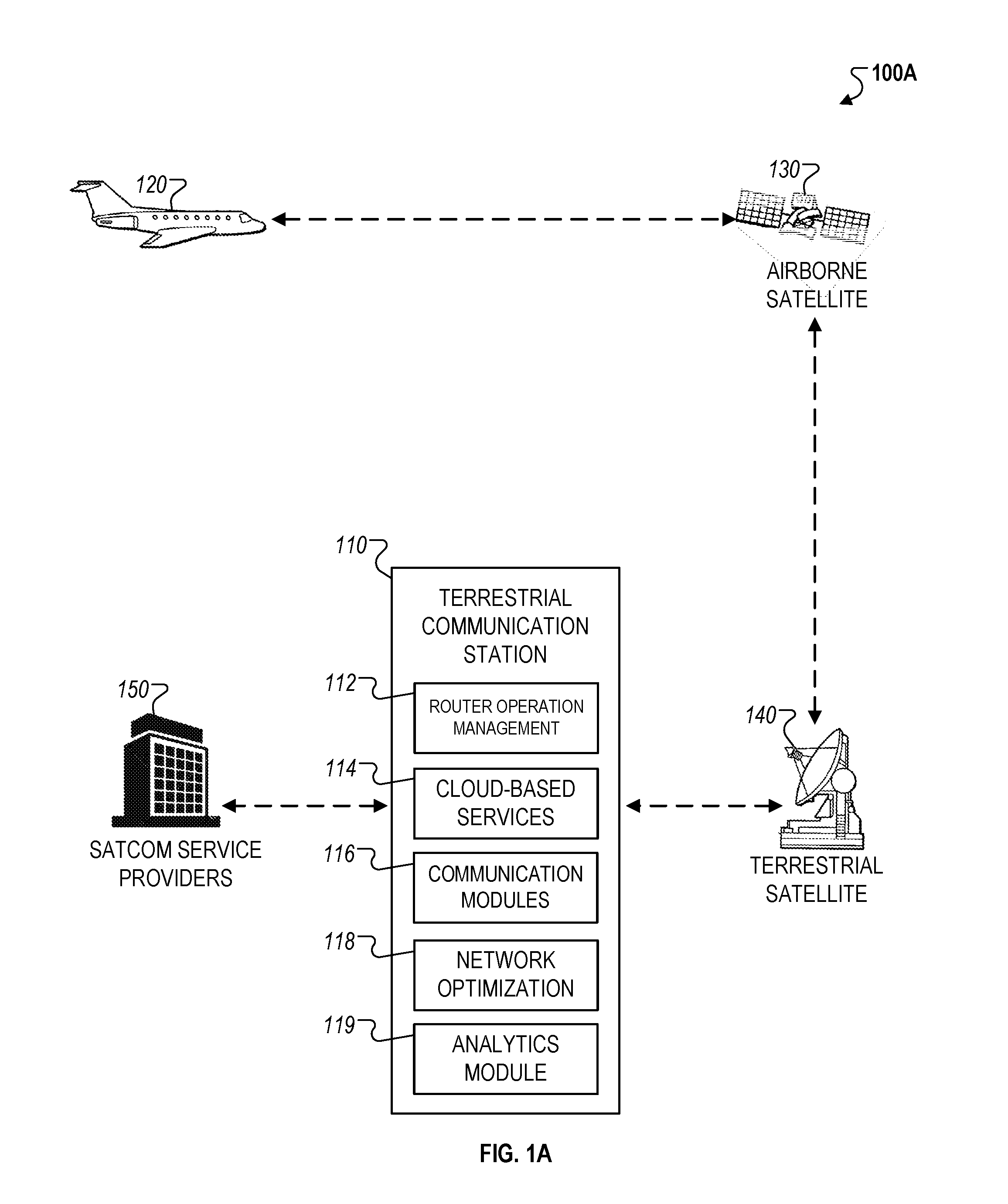
There is a business consideration here as well. Stitel describes its approach in terms of integrating communications and simplifying costs. The attraction is understandable: a customer buying a communications service wants the overall arrangement to work. Passing responsibility elegantly between incompatible components would make for a fine meeting and an unsatisfactory telephone call.
Making room for equipment already aboard
Another detail in the 2019 patent is the treatment of older airborne communication interfaces. It describes a gateway arrangement that lets legacy interfaces communicate with IP systems. The approach includes drivers and hardware adapters to translate between those environments.
This is the sort of engineering detail that gives a founder’s story texture. New systems enter a world already occupied by other systems. Aircraft equipment has interfaces, conventions and existing responsibilities. A proposed improvement has to deal with those surroundings. There is little advantage in a brilliant new conversation if none of the other equipment speaks the language.
The design also includes monitoring views that help operators examine connectivity. An operator can look at parts of the system and identify where a difficulty may lie. That changes the practical question from whether a user is having trouble to which component deserves attention.
For Chowdhury, these inventions place technical integration alongside executive leadership. The same professional record contains both responsibility for a company and named participation in the details of its field. The patent diagrams make those details tangible: interfaces, devices and the paths between them. A chairman’s title occupies one line. The connections below it require rather more paper.
A voice call has to live within its means
The 2021 grant brings audio processing into focus. Its described codec can adjust aspects of encoding in response to network conditions, including sampling rate, bit rate and packet handling. In everyday language, the system changes how it packages a voice for the connection available.
The distinction between different kinds of packet loss matters. Congestion and other causes can call for different responses. The design describes adjusting packet duration accordingly, rather than treating every interrupted transmission as the same event. A symptom becomes a question to investigate.
Network information feeds the next transmission decision. Conceptual illustration; no measured performance is implied.
The July 2025 grant continues the family’s work with claims involving monitoring data and a compression module that adapts bandwidth usage. Its examples connect the response to considerations including usage cost and call quality. There is a practical negotiation inside the software: what conditions allow, what the service needs and what adjustment to make.
Seen across the filings, the ambition is concrete. Coordinate the components. Observe the connection. Respond to its condition. For a passenger, the desirable result would feel wonderfully uneventful: the sentence continues, and the person at the other end hears it.
Calm has its uses in software development
A professional recommendation from Tom Salamone supplies a glimpse of Chowdhury as a colleague. Salamone called him an “unflappable” executive and engineer. He recalled a network-software team dealing with existing projects, new projects and recurring feature upgrades, with continuing pressure on engineering resources.
“unflappable”
Tom Salamone, describing Noor Chowdhury in a professional recommendation
It is a compact compliment with a specific setting. Software work can accumulate demands faster than a calendar accumulates days. Salamone’s recollection emphasizes analysis, direction and the ability to manage through that pressure. It gives the executive titles a human context: other people needed him to make decisions while the work kept arriving.
That recollection sits comfortably beside the engineering record, though neither needs to serve as proof of the other. Teams require coordination; communication systems require coordination too. In both settings, the interesting work often happens among the parts, where one decision affects several others.
Chowdhury’s story can be followed through those connections: software roles, senior technology management, Stitel Networks, Brotecs and the continuing inventions with Hossain. The result is a career whose subject remains recognizable across changing responsibilities. People want to communicate. Equipment introduces conditions. Someone has to bring the two to terms.
There is wit, whether intended or otherwise, in spending so much engineering effort on an experience people appreciate most when they barely notice it. A working connection rarely receives a standing ovation. Usually, it receives the next sentence. For the kind of work described in Chowdhury’s patents, that is a perfectly respectable review.
Follow the connections
Explore Brotecs, Stitel Networks and Noor Chowdhury on LinkedIn. The five linked patent numbers above open the individual technical records.