The first joke is the name. NO AFFILIATION sounds like the sentence a lawyer adds when two companies have been mistaken for one another. Then you reach the agency’s contact page, which announces: “GET AFFILIATED.” A firm devoted to connecting people has named itself after the absence of a connection. It is a small, pleasing contradiction. It also gives you a fairly good idea of what the business sells.
Consider a piece of work in its portfolio: Caroline Vreeland’s lingerie collaboration with Kiki de Montparnasse. Farfetch celebrated the collection at The Box in New York, where Vreeland performed. A singer, a fashion label, a retailer, and a stage occupied the same evening. The agency includes coverage of the collaboration and the party among its selected work. That selection supplies the premise for this profile: a public personality can bring several different businesses into conversation.
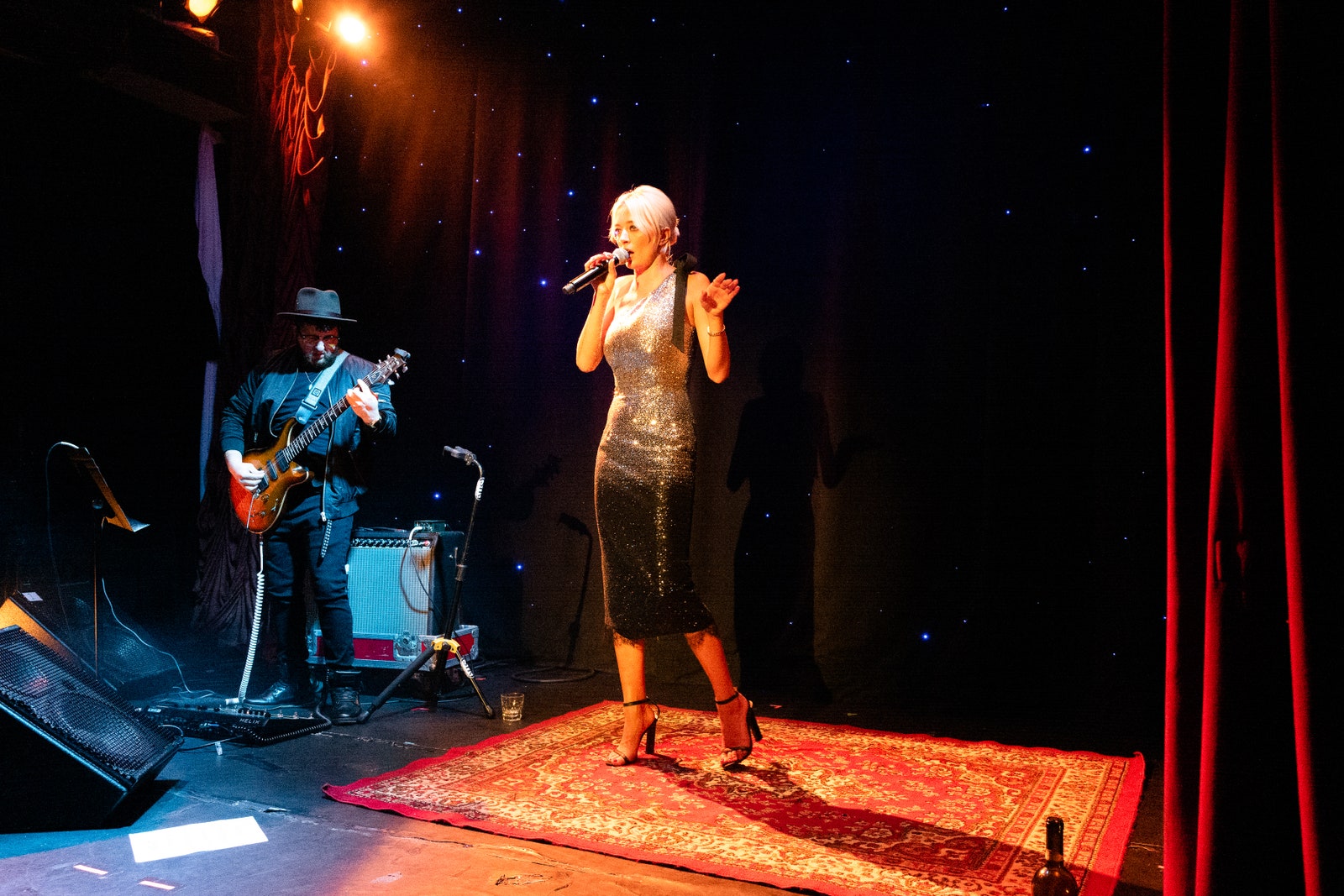
A career that won’t fit on a business card
NO AFFILIATION describes its offering as branding, public relations, talent strategy, and management. Its intended clientele includes entertainers, social personalities, and tastemakers. Beauty, fashion, and technology appear in its stated remit, although the published work gives fashion and entertainment the most visible roles. These are useful distinctions for a prospective customer. You are approaching a service agency with a particular cultural focus, and the work on display tells you more than the breadth of its vocabulary.
The commercial problem becomes clearer when a person has several professional identities. A musician can be interesting to a designer. A model can also perform as a DJ. A brand may want that person’s audience, while a publication wants an angle its readers will enjoy. Each participant arrives with a different question. Someone has to make the answers compatible before an attractive photograph can do much useful work.
Combining management and publicity offers a plausible way to coordinate those questions. Career strategy considers where the person is going; branding considers how other people understand them; publicity considers what deserves attention now. This is an interpretation of NO AFFILIATION’s service mix, rather than a claim about a proprietary method. The appeal is practical: fewer separate conversations about the same person’s public identity.
Start with the fit. Then choose the format.
Editorial interpretation of the agency’s service mix.The apprenticeship behind the introductions
Founder Wayne Rogers also appears professionally as Wayne Wess Rogers. The agency dates its founding to 2017. There is a more revealing biographical detail in the Council of Fashion Designers of America’s interview with publicist Kevin McIntosh Jr.: Rogers is among the people McIntosh names as having worked under him.
McIntosh discusses that experience while describing his support for Black interns, assistants, and colleagues. The connection places NO AFFILIATION’s founder within a specific professional community. It suggests an apprenticeship in a business where judgment and introductions can matter together. It does not tell us which introduction produced which account, but it does make the founder’s background more concrete than an interchangeable paragraph about passion.
“I’ve always looked out for my community”
Kevin McIntosh Jr., speaking to CFDA about a network that includes Wayne Wess Rogers
That distinction is worth keeping. An address book alone says little about the quality of someone’s advice. A useful publicist needs to recognize what might interest the person at the other end of an introduction. The founder’s documented professional connection is a starting point for understanding the business, without turning proximity into proof of every subsequent success.
The portfolio has a taste in people
Look across the agency’s selected work and the same movement between fields recurs. Caroline Vreeland appears in music coverage as well as fashion coverage. Myles O’Neal appears in a StockX interview. Brandon Thomas Lee appears in a GQ story about the Met Gala. NO AFFILIATION has chosen to show people whose public lives extend across more than one setting.
Another entry features Snoh Aalegra with Pyer Moss designer Kerby Jean-Raymond at the 2019 CFDA/Vogue Fashion Fund awards. Her pink pleated gown makes the photograph memorable. The singer and designer had expressed mutual appreciation for each other’s work. The agency showcases the coverage; the example illustrates the kind of cultural overlap it wants visitors to notice.

Read this collection as an agency’s selection of work. A portfolio entry establishes what the firm presents as relevant experience. It is a narrower piece of evidence than a current representation agreement, a sales report, or a complete account of who arranged a collaboration. For a buyer, that makes it an invitation to a specific conversation: which parts of a comparable assignment would this team handle?
Its market position follows from that selection. NO AFFILIATION sits among boutique providers of fashion publicity, talent management, and influencer partnerships. A customer could also divide those responsibilities among separate specialists or an internal team. The choice concerns coordination and fit. The agency’s combined offering is relevant when the publicity question and the talent question are difficult to separate.
When the setting changed, the interview moved home
The StockX interview offers a useful change of scenery. Published in April 2020, it finds Myles O’Neal spending time with family in Orlando during social distancing. He describes himself as a model and fashion influencer who had recently started DJing, and discusses an upcoming virtual festival set. The material is domestic and conversational, far removed from a fashion-party photograph.
It is also a reminder to distinguish a changed format from a documented agency pivot. What the portfolio shows is an interview suited to its moment. O’Neal talks about interrupted working routines and new interests. The person remains interesting while the setting changes. For anyone planning publicity, that is a more useful observation than assuming an audience needs the same kind of occasion every time.
Write the brief before the guest list
The business model is a client-service relationship: customers engage expertise in representation, positioning, publicity, and partnerships. A sensible buying conversation should separate the assignment from the surrounding production. Who handles talent? Who develops the press angle? Who produces the event or content? Which expenses and deliverables belong in the proposal? Those questions make a creative idea something a buyer can evaluate.
The cost question belongs in that conversation too. Ask for a scoped proposal that distinguishes agency work, talent compensation, production, and any distribution spending that applies. These are buying questions, not a description of NO AFFILIATION’s billing arrangements. A memorable launch photograph should never be asked to stand in for a budget or an agreed measure of success.
The part a reader can copy is straightforward: write one sentence explaining why this person belongs with this brand, then another explaining why someone outside the arrangement would care. If both sentences depend entirely on fame, keep working. An agency with this service mix is most relevant when a credible public identity and a partnership objective already exist. A brief concerned only with immediate sales needs a different test of success from one concerned with publicity.
Return to that contact-page invitation. “GET AFFILIATED” is funny because it reverses the name. As a business proposition, it asks a more exacting question: affiliated with whom, to do what? NO AFFILIATION’s portfolio is most interesting when it gives that question a person, a product, and a public occasion. The connection has to be worth somebody else’s attention.