A career can turn on something as small as an elective. For Nitin Salunke, it was a graduate-school class in biomechanics. Until then, mechanical engineering offered familiar destinations: automobiles, aerospace, machines that could be sketched in cross-section and tested without asking permission from biology. The class introduced a less obedient system. Engineering could meet medicine. Materials, flow and force could become questions about what a clinician might do through a catheter. Salunke later recalled that the connection simply clicked. After graduation, he entered the medical-device industry and never really left.
Three decades later, the classroom detour has become a career running through W. L. Gore & Associates, Cordis, Altura Medical, Medtronic Neurovascular and, since February 2020, Supira Medical. The titles widened from development and engineering to R&D leadership, boardroom responsibility and the CEO seat. The subject remained stubbornly physical: how to move useful devices through narrow vessels, how to turn technical invention into repeatable performance, and how to build an organization capable of surviving the distance between an idea and a regulated product.
Supira is now testing an investigational percutaneous ventricular assist device, or pVAD. In plain English, it is a temporary pump delivered by catheter to support circulation during certain complex procedures. The company’s engineering proposition can be summarized without a thesaurus: high continuous flow through a low-profile system. The simplicity of that sentence is misleading. Small devices do not grant large performance for free. Every millimeter carries an argument among fluid mechanics, materials, sensors, manufacturability and clinical use.
01 · The first translationEngineering grows a wider vocabulary
Salunke’s formal education tracks the expansion of the job. He earned a master’s in mechanical engineering from the University of Oklahoma and a PhD in the same field from the University of Maryland Baltimore County, where his research focused on cardiovascular biomechanics. His public record includes patents and publications, among them work on self-expanding defect-closure devices and a scholarly review of the biomechanics of atherosclerotic plaques. The engineer began by studying how things behave under load. The executive would eventually ask the same question of teams and companies.
After more than a decade in the industry, he noticed the gap in his own toolkit. Technical training had taught him how to investigate and build. It had not fully prepared him to lead large departments. He entered the executive MBA program at San Jose State University and graduated in 2010. The attraction was not merely finance with evening homework. He wanted exposure to peers outside medical devices, people bringing the logic of other Silicon Valley industries into the room. Case discussions allowed the boundaries to come down.
That instinct for cross-pollination appears in the way he has described hiring. Technical depth comes first, but not alone. Teamwork, people skills and leadership potential matter because regulated products are collective acts. A catheter may be invented at a bench. It reaches a clinical study only after engineers, physicians, operators, quality specialists, regulatory professionals and investors agree on enough of reality to keep going. Solitary genius makes handsome cinema and dreadful design controls.
“There’s huge satisfaction in the ability to make an impact on someone else’s life.”Nitin Salunke, San Jose State University alumni interview
02 · The apprenticeshipProducts, portfolios and the view from the middle
Early at Gore, Salunke worked across new product development, engineering operations and marketing as the company expanded its endovascular business. At Cordis, then part of Johnson & Johnson, he became a director of R&D engineering. He moved to Altura Medical as vice president of R&D, then to Medtronic Neurovascular, where he led global product development and sat on the management board. A later interview credits him with an instrumental role as the stroke portfolio reached a $1 billion revenue milestone.
The sequence matters. Big organizations teach scale, quality systems and the consequence of a delayed decision spreading across a portfolio. Smaller ones expose the naked dependency between this month’s experiment and next year’s financing. Salunke wanted the startup CEO role, but his route was patient. Each position added another part of the system: engineering, operations, marketing, acquisitions, portfolio strategy and people leadership. By the time he arrived at Supira, he knew both how products are built and why technically elegant products sometimes fail to become businesses.
03 · February 2020The worst month for a neat plan
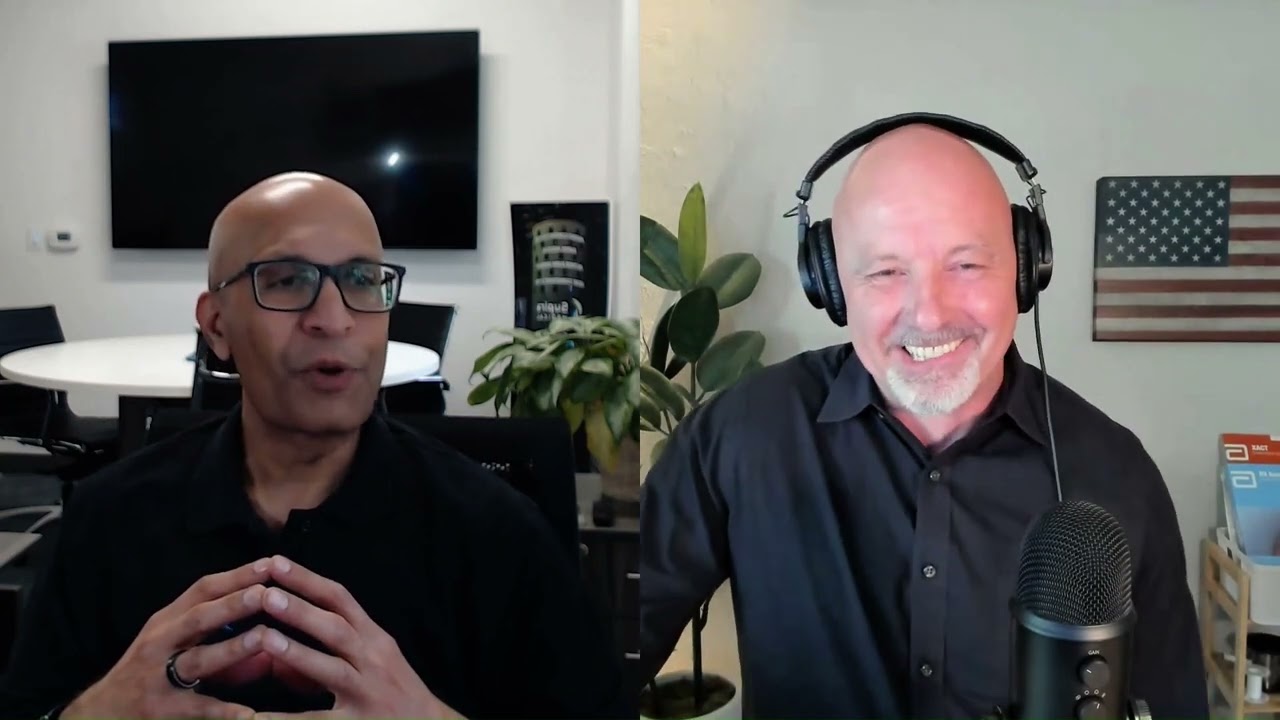
Salunke joined Supira as president and CEO in February 2020. The company, incubated inside the Shifamed innovation hub, announced his appointment alongside a $35 million Series B. One month later, COVID-19 lockdowns rearranged nearly every assumption about laboratories, suppliers, travel and clinical work. It was an absurdly efficient orientation program: meet the team, learn the technology, discard the calendar.
His account of that period avoids chest-thumping. Confidence and optimism were useful, he told Medsider, provided neither became excessive. The practical response was to maintain options. Supira pursued clinical experience in South America while preparing a U.S. regulatory path. One stream could test whether the product behaved as expected in people. The other could establish what the FDA would require next. Parallel paths cost attention, but they also prevent one outside event from turning the entire company into a waiting room.
The operating loop: reduce uncertainty in a useful order
This is the center of Salunke’s playbook. A completely new therapy often carries clinical risk: will the medical idea work? A next-generation product in an established therapy can shift the harder question toward technical and commercial risk: can it deliver a meaningful improvement, and will the market care? Trying to conquer every category simultaneously produces heroic slide decks and exhausted companies. His preference, when choice exists, is to take on one major risk at a time.
It is a distinctly engineering way to manage a venture. Break the uncertainty into legible pieces. Do not confuse activity with evidence. And choose experiments that create options rather than merely confirm enthusiasm. In medical devices, a milestone has several audiences. Physicians need a useful clinical proposition. Regulators need credible evidence. Investors need to see that capital is buying down uncertainty. The CEO’s work is to make one sequence of proof meaningful to all three.
“Once you are a clinical-stage company, your currency is the clinical data.”Nitin Salunke, Medsider interview
04 · The evidence ladderMilestones that change the next conversation
Supira’s public chronology reads like that sequence made visible. A $30 million Series C in 2022 supported final product development and first-in-human work. That study began in Paraguay later that year. In 2023, the FDA granted Breakthrough Device Designation to the Supira System as the company closed a $40 million Series D. In 2024, the U.S. SUPPORT I early feasibility study started enrolling. By March 2025, all 15 participants across four U.S. sites had been enrolled.
The same month, Supira announced an oversubscribed $120 million Series E led by Novo Holdings and the Qatar Investment Authority, with existing and strategic investors also participating. The money was earmarked for expanded clinical programs and the SUPPORT II pivotal study. Four rounds from Series B through E brought in $225 million. That figure is less interesting as a trophy than as a measure of the road. Clinical-stage hardware consumes capital because evidence is the product before a product can be sold.
Salunke joins as president and CEO; Supira closes a $35 million Series B.
A $30 million Series C is followed by the company’s first-in-human study.
FDA Breakthrough Device Designation arrives alongside a $40 million Series D.
SUPPORT I completes enrollment; a $120 million Series E funds the next stage.
FDA clears initiation of SUPPORT II, and U.S. clinical sites begin enrolling.
In April 2026, Supira announced FDA approval to initiate SUPPORT II, designed to support a future premarket approval submission. By summer, sites including UC Davis Health, CentraCare Heart & Vascular, Columbia University Irving Medical Center, Hillcrest HealthCare System and Oklahoma Heart Institute were participating or enrolling. The study compares the investigational Supira System with commercially available Impella systems in high-risk PCI. The device remains investigational and is not approved for sale.
Salunke’s latest public updates retain the engineer’s habit of pointing toward the work. One celebrated an early SUPPORT II enrollment by thanking the clinical site and company team. Another highlighted initial experience using Supira technology through axillary access. At a 2026 Innovator’s Day, he joined clinicians and industry peers for a panel discussion. The network around a device is visible in such moments: the CEO is one node among investigators, designers, trial staff, board members and financiers.
05 · The reusable partA CEO who kept the engineer
The tempting version of an engineer-to-CEO story treats management as an escape from technical work. Salunke’s version looks more like a widening boundary. He still thinks in risks, constraints, evidence and trade-offs. The unit under examination is simply larger. A company has inputs, failure modes and feedback loops. Culture is one. Capital is another. The clinical program is where theory meets the least forgiving test environment.
Three ideas travel beyond medtech. First, name the dominant uncertainty before spending heavily against it. Second, communicate with strategic partners and investors before the moment of need; nobody becomes a priority simply because a company emerges from stealth. Third, preserve more than one path until evidence justifies narrowing. Optionality is not indecision when each option is designed to teach.
There is also a quieter lesson in the arc from that biomechanics elective to a pivotal trial. Careers compound when curiosity is followed by preparation. Salunke found a field that joined engineering to a human purpose. He learned product development, then operations and marketing, then formal management. He watched devices move through large companies before accepting responsibility for a small one. Becoming CEO enlarged the system he needed to understand.
SUPPORT II will generate its own answer, as trials must. Salunke cannot manage that answer into existence. He can help build the device, the organization and the evidence plan capable of asking the question properly. Thirty years after a class changed his direction, that remains the job: choose the next uncertainty worth reducing, then let the data speak with its wonderfully inconvenient accent.