In 2005, Niklas Zennström had a small problem with his telephone revolution. His voice was too faint. The interview stopped, the call restarted, and the co-founder of Skype explained that he was using a new computer. Even the future occasionally needed someone to check the microphone.
The detail gets better. Skype’s London office had one conventional landline, reserved for faxes. Here was a company proposing to change the economics of conversation, while keeping a little shrine to the previous office century. Zennström came across as soft-spoken and cool-headed. The machinery was making rather more fuss than he was.
There is something useful about beginning there, before the acquisition prices arrive and flatten everything into a business-school diagram. Skype offered an ordinary pleasure: talking to someone far away without calculating what another minute would cost. The software had to work. When it did, distance lost a particularly irritating tax.
An inconvenient moment to resign
Zennström was born in Järfälla, Sweden, in 1966. At Uppsala University, he earned degrees in engineering physics and business administration. The combination seems appropriate for someone whose career would keep returning to both how a system works and who pays for it. He also spent a year at the University of Michigan in Ann Arbor.
His working life began at Tele2 in 1991. This was an education in challenging established telephone businesses from inside another telephone business. It also brought him together with Janus Friis, the Danish colleague who became his co-founder. The partnership would travel through file sharing, internet calling and online television. Their ventures made a habit of arriving where existing industries already had strong opinions.
Leaving a salary behind supplied a less glamorous education. Around the turn of the millennium, Zennström set out to build his own company, just as the dotcom boom collapsed. He later recalled how difficult it became to find an investor. Freedom had arrived with inconvenient timing. There was room to make decisions, and rather less money available to finance them.
Kazaa emerged from that period. Its peer-to-peer file-sharing technology attracted enormous use and copyright litigation. Popularity and a workable business were uncomfortable companions. This part of his history matters because the polished Skype story can make the route look inevitable. It involved a previous venture whose commercial and legal problems were substantial.
There was another possibility in the underlying approach: connect people’s computers so that they could communicate directly. Broadband connections and increasingly capable machines were spreading. Zennström and Friis saw an opening for voice. A network associated with moving files could help move a conversation instead.
A very European phone call
Skype launched in 2003, with Zennström as its original chief executive. Friis was his co-founder; Estonian engineers were central to building the service. By November 2004, Zennström described a team of 70 people spread mainly between London and Tallinn, with some staff in Luxembourg. A globally minded company could begin with a distinctly European working arrangement.
At first, the proposition was voice calling between people who had installed Skype. Video came later. That distinction is easy to forget now that a face in a laptop window feels almost as ordinary as a doorbell. The early attraction was already sufficient: call another Skype user over the internet, anywhere in the world, for free.
“We realized that being small and nimble is an advantage compared to existing telecoms companies.”
Niklas Zennström · 2010 interview
The business also offered SkypeOut, a paid way to call conventional telephone numbers. Free conversation had a commercial neighbour. That arrangement gave users an easy entrance while leaving a reason for some of them to pay. The appeal did not require a lecture about network design. It required another person who wanted to talk.
Zennström’s view of geography helped. He later explained that coming from a small country meant looking beyond success at home. Sweden could produce a company without being its entire market. Skype’s users did not have to share a country, a carrier or a reason for calling. They needed the same application and a connection.
In 2005, eBay agreed to buy Skype for $2.6 billion upfront, with further contingent payments. In 2009, an investor group that included Zennström bought a majority stake from eBay. Microsoft acquired Skype for $8.5 billion in 2011. These were transactions involving companies and groups of owners, rather than cheques made out for the full amount to one founder.
The familiar account ends with the sale. Zennström’s became more interesting after it. Money gave him the means to invest in other founders, pursue philanthropy and return to sailing. An exit had bought several entrances.
The investor he wanted to meet
He founded Atomico in 2006. Its twentieth-anniversary reflections return to a personal explanation: “I was trying to build the investor I wished we had when I was a founder.” The sentence is unusually practical for a venture firm’s origin story. It identifies a customer with a memory.
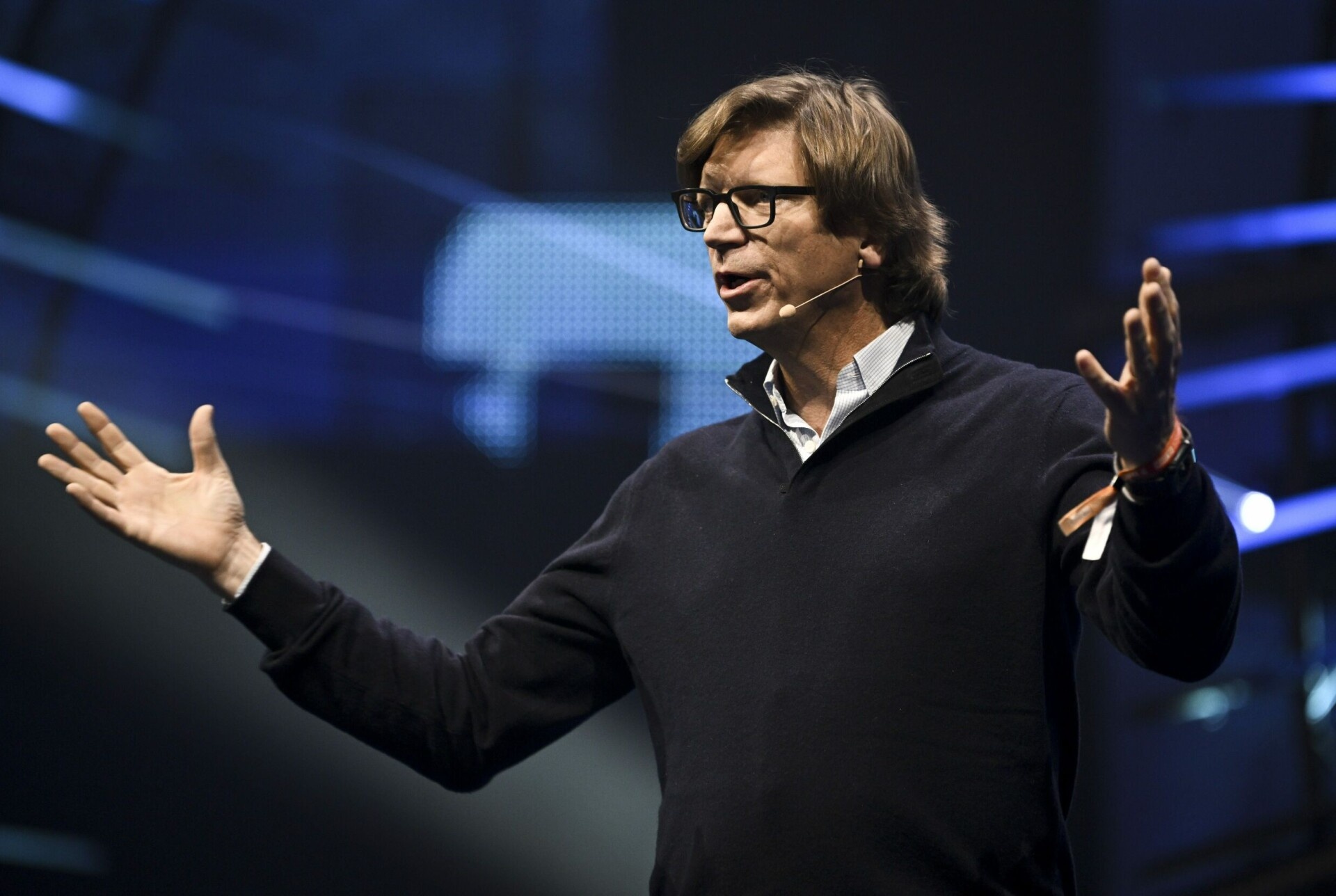
His experience could be useful beyond the moment a cheque cleared. Hiring, expanding into unfamiliar markets and handling the pressures of growth are operating problems. Atomico built support around those tasks, bringing people with company-building experience into its work with founders. There is an implied criticism of advice delivered from a comfortable distance: a company still has to do the work after the meeting.
In September 2024, Atomico announced $1.24 billion across two funds. Venture VI accounted for $485 million, focused predominantly on Series A, with some seed investments. Growth VI supplied $754 million for Series B through to the period before a public listing. The rounded total conceals two distinct stages of the same difficulty: getting started and getting large.
The firm’s portfolio has included companies such as Supercell, Klarna and DeepL. Their businesses differ considerably. What connects them in his public argument is the possibility of building technology companies from Europe for customers elsewhere. The continent can be the place a company grows up, rather than a waiting room for its eventual departure.
There is a quieter manner behind that ambition. A colleague’s description of Zennström stressed his analytical approach and willingness to listen. His guarded attitude to his private life also stood out. He has given plenty of interviews about building companies while resisting the assumption that building one obliges a person to turn every room of his life into a visitor attraction.
The sea gets a vote
Sailing supplies a public exception. Zennström had enjoyed it growing up, then lacked the time and resources while building businesses. After Skype, he could return. His racing programme became serious: Rán won the Rolex Fastnet Race overall in 2009 and 2011. The second victory made the yacht the first consecutive overall winner since Carina II in 1955 and 1957.
These were handicap victories, a distinction worth keeping when boats of different sizes race together. The achievement belonged to a crew, a design and a campaign. It is tempting to recruit every sporting result as a metaphor for business. The sea is entitled to remain the sea. It provides quite enough difficulty of its own.
Another connection to the water is more personal. Zennström learned to swim, sail and fish in the Baltic. Environmental deterioration there became a subject for his philanthropy. In 2013, he established Race for the Baltic, bringing businesses, science, public authorities and civil society into work on the sea’s restoration.
The work extends into matters less photogenic than a racing yacht: agricultural nutrients, wastewater, municipal decisions. A better sensor or a different farming practice needs people willing to use it. His approach has emphasised connecting participants and developing viable projects. The enthusiasm for networks survives, although the connections now include cities and fields.
He and his wife, Catherine, established Zennström Philanthropies in 2007, focusing on human rights and the environment. The partnership matters. This is a shared undertaking, with Catherine playing an active role, rather than a decorative foundation attached to a founder’s name.
Uppsala supplies another route for that work. Zennström supported a ten-year visiting professorship in climate leadership, connecting research with teaching. The university named him its Alumnus of the Year in 2015. His support has also reached Textile Studies, a pleasing reminder that a technology entrepreneur’s interests need not all arrive with a charging cable.
The next conversation
Microsoft retired consumer Skype on May 5, 2025, directing users towards Teams Free. A service that helped change expectations about communication had reached the end of its own operating life. The expectation remained. People still wanted to see and hear each other across distance without treating every extra minute as a financial decision.
In October 2026, Zennström was still making an argument about what Europe could build next. In an interview published on October 5, he described founders pursuing original innovations and called attention to missing growth capital and the need for larger European funds. Twenty years into Atomico, his subject was still the conditions around the entrepreneur.
That persistence gives the life a shape without requiring every project to be the same story. Skype changed a familiar bill. Atomico tries to improve a founder’s chances. The philanthropy addresses problems a successful business can leave untouched. On the water, meanwhile, a crew must still find its way round the course. Another acquisition will not persuade the wind.
Keep the conversation going
Interviews, projects and places to follow.