Nick Lynes went to meet a filmmaker with a script he had written. He came away interested in a different kind of production. Scott Mann showed him an early demonstration of AI visual translation: a way to make the face on screen fit words spoken in another language. For a film fan with a commercial technology career, it was an unusually convenient meeting of interests. The screenplay had opened a door. Behind it was a problem with an audience.
Today, Lynes is chairman and co-founder of Flawless, the filmmaking technology business he built with Mann. A film usually asks us to believe in things that never happened. Their company works on a quieter illusion: persuading us that the words we hear belong to the mouth we see. A viewer may notice the mismatch for only a second. A second is quite enough to remember that one is watching a movie.
The business before the picture
Long before that demonstration, Lynes was explaining another unfamiliar proposition. In a 2012 interview about Topjack Games, he described working with business partner Stan Stallone on insured jackpots. Operators could offer large prizes without first building them up through player contributions. The idea connected gaming software with insurance, and making the connection work required people in both businesses to understand what they were being asked to do.
The pair worked on the plan in 2008, raised capital during the credit crunch and began the project in earnest in October 2009. A beta followed in July 2011; the full white-label product arrived in March 2012. Lynes said negotiating the insurance arrangement took two years. That is a useful corrective to the romantic picture of entrepreneurship as an afternoon’s inspiration followed by a celebratory lunch.
His advice was correspondingly practical: allow far more time and money than the first estimate suggests. Ideas were a small part of success, in his account. Getting them to work consumed the rest.
The later move into cinema was a change of industry, but the earlier work helps explain the experience he brought to it. There were counterparties to persuade, commercial arrangements to establish and a product to deliver. A novel mechanism still needed a functioning business around it. Hollywood would add its own complications, and rather better lighting.
A director, a laboratory, a shared undertaking
Mann’s frustration was rooted in his own films. He had seen what happened to performances when they passed through conventional dubbing. The actor’s face remained, but some of the timing and expression no longer belonged comfortably to the replacement dialogue. The difficulty was particularly apparent to someone who had directed the original performance and knew the choices that had gone into it.
The research offered a possible route forward. Mann contacted scientists Christian Theobalt and Hyeongwoo Kim and travelled to their laboratory in Germany to discuss connecting their work with filmmaking. The partnership that emerged joined scientific research to a director’s understanding of shots, performances and distribution. Lynes brought the commercial technology side of that undertaking.
There was also an argument about the company itself. Mann has described conversations with Lynes about sharing its rewards more fairly among the people building it. In his telling, they wanted a business whose value reached beyond its founders. The practical work of creating such a company would sit alongside the practical work of getting an altered face to look convincing on a cinema screen.
Company timeline
in Fall
in Parliament
reaches US cinemas
The swear jar gets a software upgrade
One early application had the agreeable lack of grandeur that often accompanies a useful invention. Mann’s thriller Fall contained enough strong language to present a ratings problem. Flawless technology allowed replacement words to fit the actors’ visible performances, helping the film obtain a PG-13 rating. Artificial intelligence had found employment tidying up the dialogue.
The actors recorded alternative phrases. The system changed the corresponding mouth movements. The film could retain scenes that otherwise presented an awkward choice between a costly return to production and an edit that damaged the moment. A technology associated with making things up was being used to make a very specific adjustment to something already made.
That distinction is essential to understanding the business Lynes helped build. A shot carries the work of many people: writing, acting, direction, camera, sound and editing. A tool that changes the dialogue enters an existing arrangement of choices. Its usefulness depends on whether the altered result can live comfortably among them.
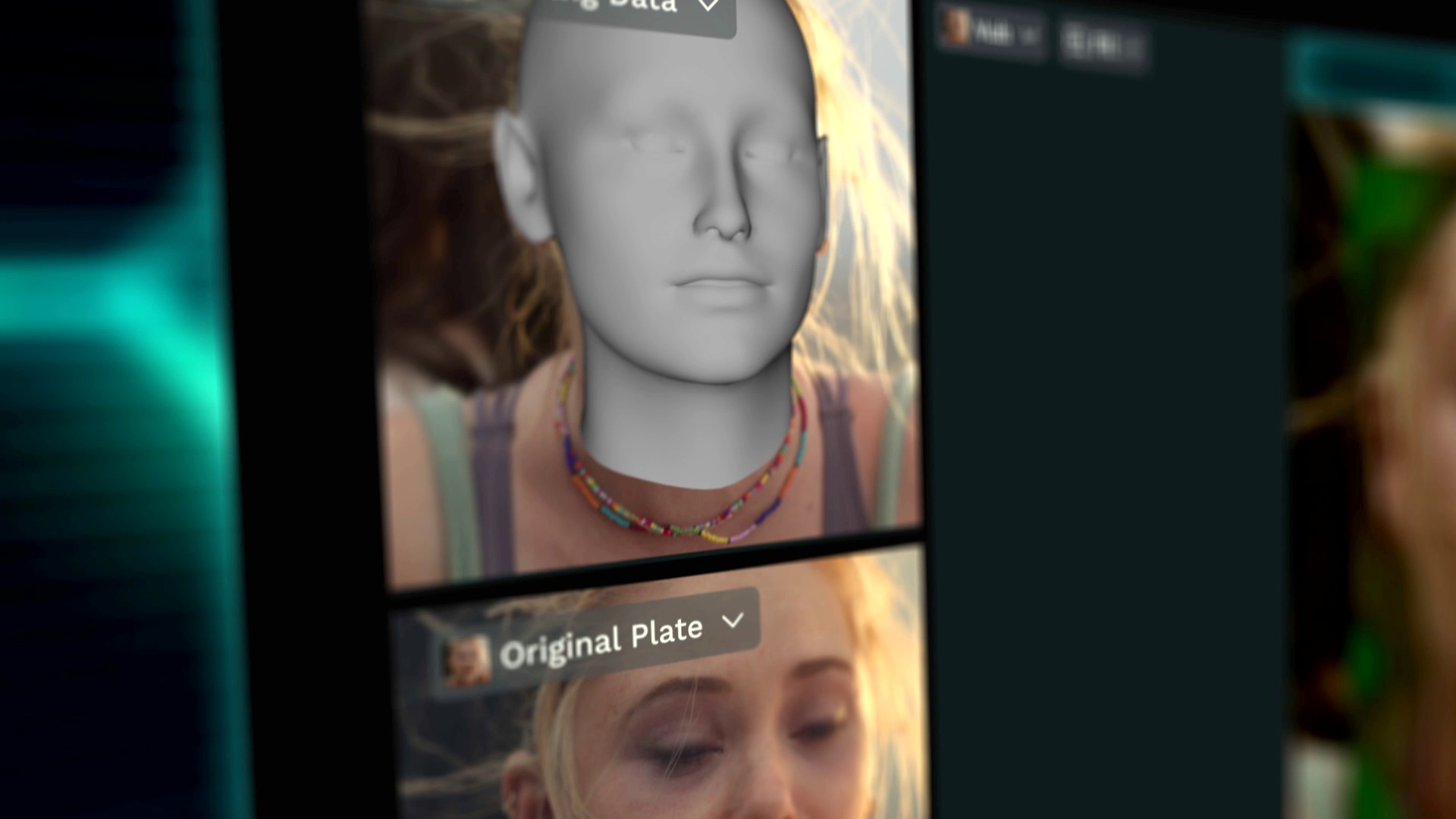
For Lynes, the wider ambition includes giving storytellers more freedom to refine their work. In his 2024 account of Flawless, he described tools for visual translation, performance changes and artistic rights management. Their attraction is easy to understand from the editing room: a useful new option can save a scene that would otherwise resist repair.
Same actors, another language
In May 2025, the Swedish science-fiction film UFO Sweden reached American cinemas as Watch the Skies. Its original cast supplied English dialogue, and Flawless aligned the visible lip movements with that recording. The release gave the company’s proposition a feature-length test in front of paying audiences. The cast remained the cast. The language changed.
The company was included in TIME’s 2025 list of influential businesses. For a founder, recognition is useful; for an audience, the more relevant question is whether the film holds their attention. Visual translation succeeds on an unusually discreet measure. The less a viewer thinks about the mechanism, the more room remains for the story.
Lynes’s ambition for this work is cultural as well as commercial. More stories moving between languages could mean more opportunities to encounter the people and places those stories describe. That remains an aspiration, rather than an automatic consequence of a better dub. Distribution, audience taste and the film itself still have jobs to do.
The face belongs to somebody
On 11 December 2024, Lynes appeared before the UK Culture, Media and Sport Committee to discuss AI in film and high-end television. Alongside him were Metaphysic co-founder Martin Adams and producer Benjamin Field of Deep Fusion Films. The inquiry considered both creative opportunities and the effects on the people whose work makes those opportunities possible.
Lynes described informed consent as one of Flawless’s starting principles. He also made a concrete point about compensation: when a scanned performance is used in place of bringing an actor back for a reshoot, the actor should be paid on the basis of having been there. Avoiding the travel and scheduling difficulty need not mean treating the performance as free.
That argument gives his public position a practical edge. Permission has to survive the move from a reassuring conversation to an actual production decision. A face is simultaneously part of an image, part of a performance and part of someone’s working life. Software has to operate inside that crowded relationship.
“I’m more scared of regret than failure.”
Nick Lynes, on taking risks
A founder with company
Another view of the partnership comes from Amit Kapur, now Flawless’s co-CEO alongside Mann. Looking back in April 2026, Kapur recalled first seeing what Lynes and Mann were building in 2023. He described a demanding combination of numerous models, clean data, security requirements and a team spanning science, engineering and film.
Kapur began as an adviser, then joined the board before taking an executive role. He credits the founders with treating guilds as partners and refusing shortcuts. That is his assessment as a colleague, and it reveals what persuaded a technology executive to become more deeply involved: the work around the output mattered alongside the output itself.
The current leadership arrangement lists Lynes as chairman and co-founder. It places him within a wider cast of decision-makers, rather than making the company’s story depend on a single heroic inventor. In this business, the film partnership, scientific work and commercial judgement have always had to meet somewhere.
Even the future needs colleagues
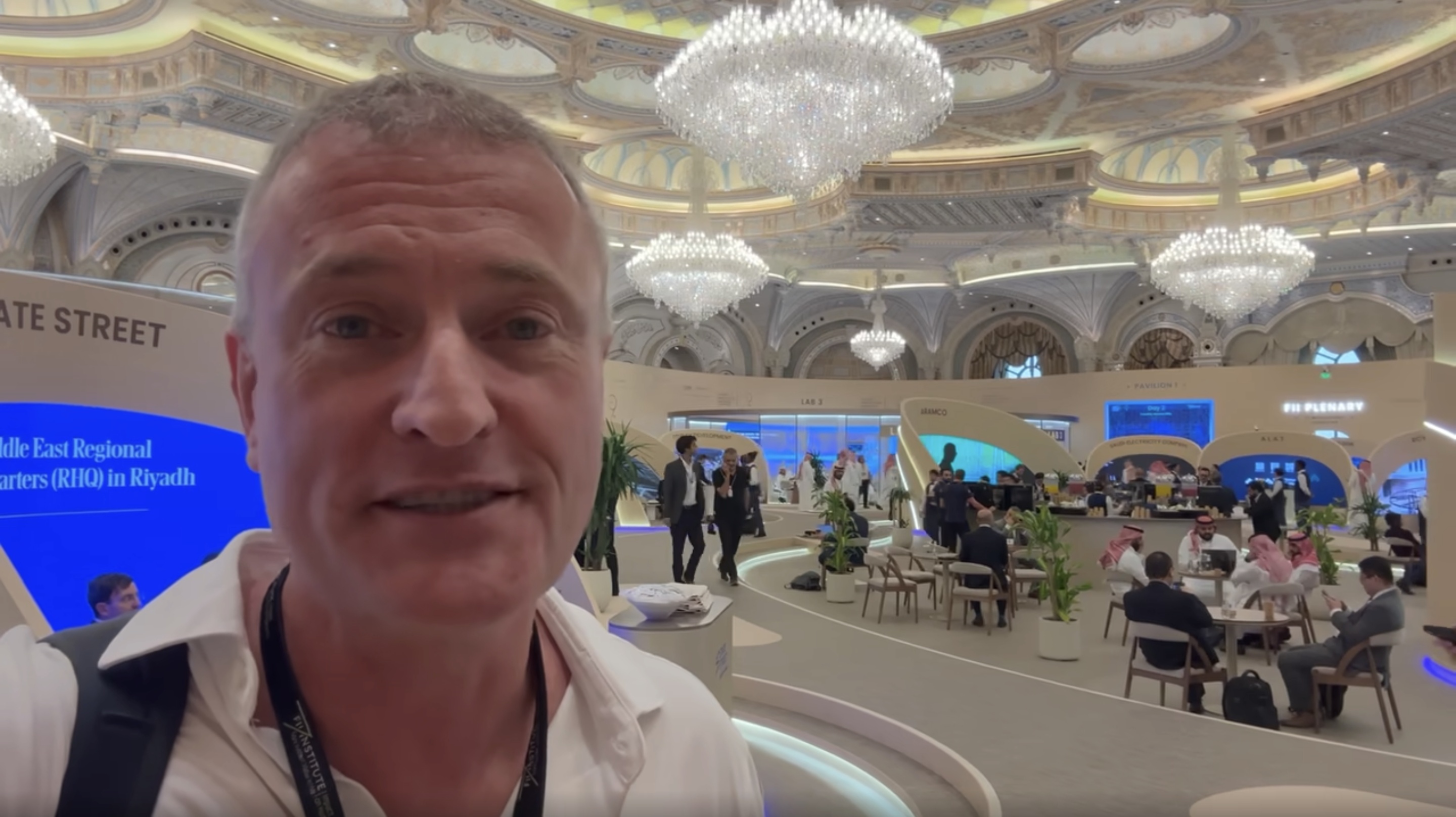
After the Future Investment Initiative in Riyadh in 2025, Lynes published an essay called The Future Is Still Human. He questioned the appeal of the solitary founder building a vast business with little more than code. Global companies still require trust, culture and continuous collaboration, he argued. Remote work changes how people connect; it does not remove their roots or responsibilities.
His preferred skills for that future were creativity, critical thinking and collaboration. He also argued for stronger protection of artists when their work encounters AI. These are positions he advocates, and they fit the questions surrounding Flawless: how to organise people around a technical possibility, and how to keep the resulting business connected to the people who make its material valuable.
The day-to-day product developments are less theatrical. In May 2026, Flawless introduced shared Workspaces in DeepEditor, giving teams control over access to their projects. In June, it launched a course on lip-sync refinement, taught by film editor Rob Hall. Collaboration needs permissions; a convincing mouth needs someone to examine the frames.
These details bring Lynes’s story back to its starting point. A film fan brought a script to a director. The work that followed led through laboratories, business arrangements, editing decisions and arguments over consent. The ambition is expansive. The unit of work can be tiny: a line, a mouth shape, a frame. The picture has to survive every one of them.