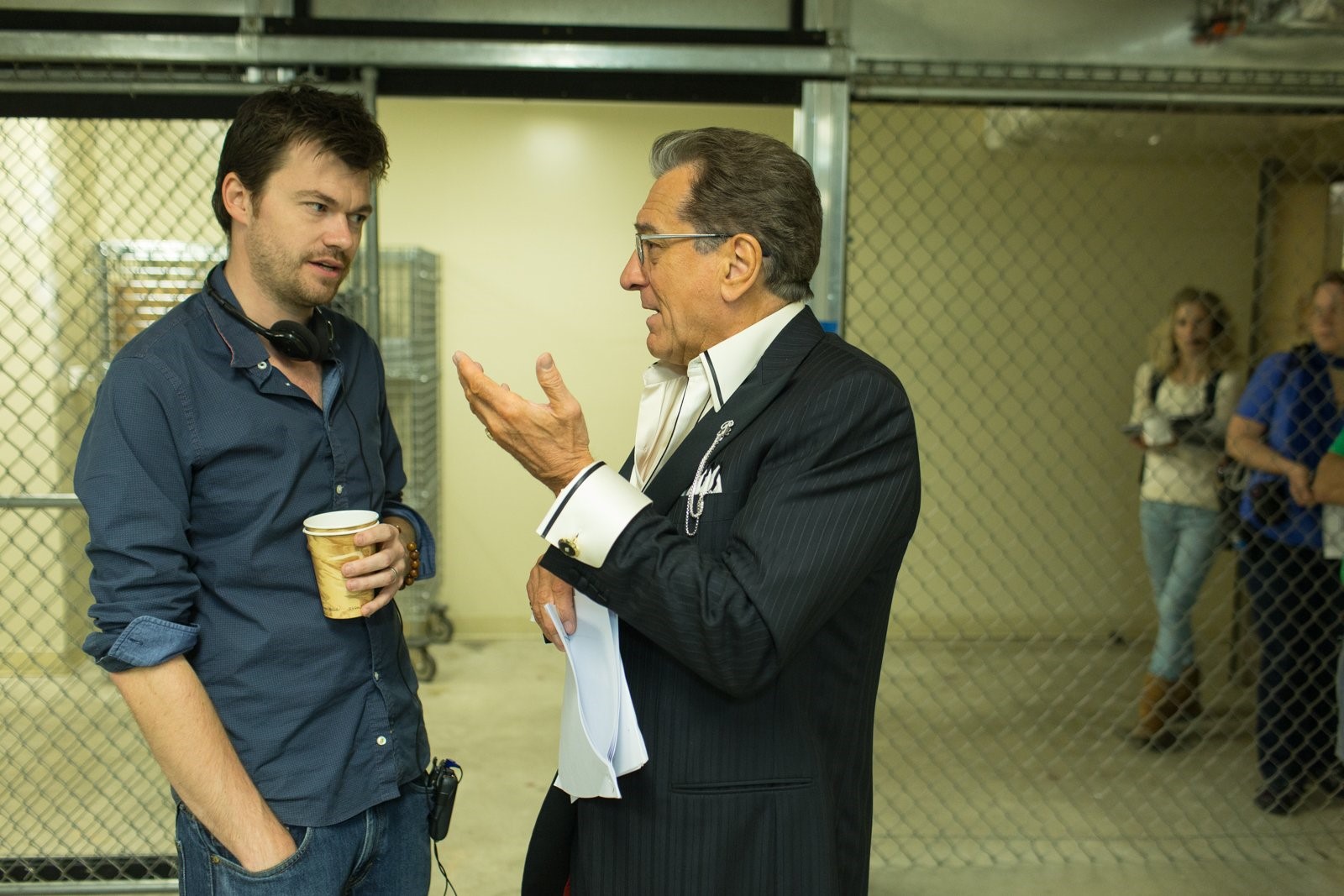
Robert De Niro wanted to discuss cufflinks. During the making of Heist, he called Scott Mann to ask which pair his character should wear. The question was small; the attention behind it was considerable. Here was an actor thinking through the person inside the costume, down to the metal at his wrists. Mann would later watch foreign-language versions of that performance and wonder where some of that care had gone.
Dialogue had been bent to fit the English mouth movements. Delivery had changed with it. For a director who had spent his career finding ways to make an audience believe what it saw, the mismatch was hard to leave alone. A film could cross a border and arrive with its characters subtly rearranged. The cufflinks survived the journey. The performance had a more complicated trip.
Before the camera, a flickbook
Mann grew up in Newton Aycliffe, County Durham, with an appetite for movies and the machinery that made them possible. Before he had a camera, he drew flickbooks. Then came early computer animation. At twelve, access to a video camera gave those experiments a new outlet: short films with family and friends, mixing homemade animation into recorded images.
His mother helped with effects and drove him to film festivals. One early effort, The Sneeze, paid homage to Terminator 2. The combination makes sense. Mann was learning to tell stories while learning how to make something appear on screen that had never stood in front of the lens. The technical trick and the dramatic effect were already sharing a desk.
He studied at the institution now known as The Northern School of Art, formerly Cleveland College of Art and Design. Years later, its prospectus would list him among former students working in film. The distance between classroom and credit sequence looks tidy on an alumni page. Getting across it involved rather more improvisation.
Two minutes to buy a movie
An early feature project consumed three years and collapsed. Mann responded by making a trailer for another: The Tournament, an action film developed with his film-school friends. Credit cards and favours financed the demonstration. At Cannes in 2005, he carried a portable DVD player and headphones, asking buyers for two minutes.
One offered a million dollars on condition that someone else direct. Mann declined. He wanted his first directing opportunity, and eventually pre-sold the film from the trailer and script. There is something wonderfully literal about this sales pitch. Before asking anyone to believe in the movie, he put a small piece of one in their hands.
The Tournament arrived in 2009, with Robert Carlyle, Ving Rhames and Kelly Hu among its cast. Production had taken it to Bulgaria and northern England. Financing difficulties interrupted the work; the film ran out of money twice. Its eventual opening-night slot at Screamfest in Los Angeles was a destination reached through several unplanned stops.
“the magic of the movie making process”
Scott Mann
The cufflink problem
Heist, released in 2015, gave Mann a cast including De Niro, Jeffrey Dean Morgan and Dave Bautista, and a thriller built around a bus. Looking back in 2026, he recalled an early conversation in which De Niro nearly withdrew because of script problems. They worked through the character together in New York. That rewrite became the foundation for the film.
The lesson was about character choices. Twists need to grow out of the people making them, even when the machinery around those people includes robbery, pursuit and a cramped vehicle. Mann’s interest in effects has never removed his need for actors. A convincing face remains a rather useful thing to have in a movie.
So the foreign-language editions of Heist presented a problem he understood personally. Traditional dubbing asks a translated sentence to accommodate movements recorded for another language. A line may need new wording, or a performer may have to force its rhythm. Mann wanted to see whether the image could accommodate the translation instead.
He investigated conventional visual-effects approaches, including head scans, without finding the realism he wanted. Then he encountered the research called Deep Video Portraits, presented in 2018. The work offered a way to reanimate faces from video. Mann contacted the researchers; an early test made De Niro’s character speak German. The problem had acquired a possible solution.
Let the words travel.
Keep the actor in the picture.
- 01 / RecordStart with the filmed performance.
- 02 / TranslatePerform the dialogue in another language.
- 03 / SynchronizeAdjust facial movement to the new audio.
- 04 / ApproveKeep creative review and performer consent in the process.
A simplified illustration of the visual dubbing approach.
A tower with a vocabulary problem
Mann’s 2018 thriller Final Score brought Bautista and Pierce Brosnan into a football-stadium siege. It also supplied the setting for a conversation that helped produce Fall. On a stadium rooftop, Mann and writer Jonathan Frank started discussing the fear of falling. A familiar sensation suggested a film with a very concentrated purpose.
Fall puts two friends, played by Grace Caroline Currey and Virginia Gardner, atop an abandoned 2,000-foot radio tower. Mann wanted the scale to register in a cinema. On a reported $3 million budget, the production built tower sections on a desert mountaintop. The landscape did work that a studio would otherwise have had to manufacture.
He and cinematographer MacGregor shot on large-format Arri equipment. A virtual-reality headset let them check compositions in a simulated IMAX auditorium. Later, with editor Rob Hall thousands of miles away, the same approach helped them judge sequences. The tools were digital; the question remained bodily and immediate: how would this height feel from a cinema seat?
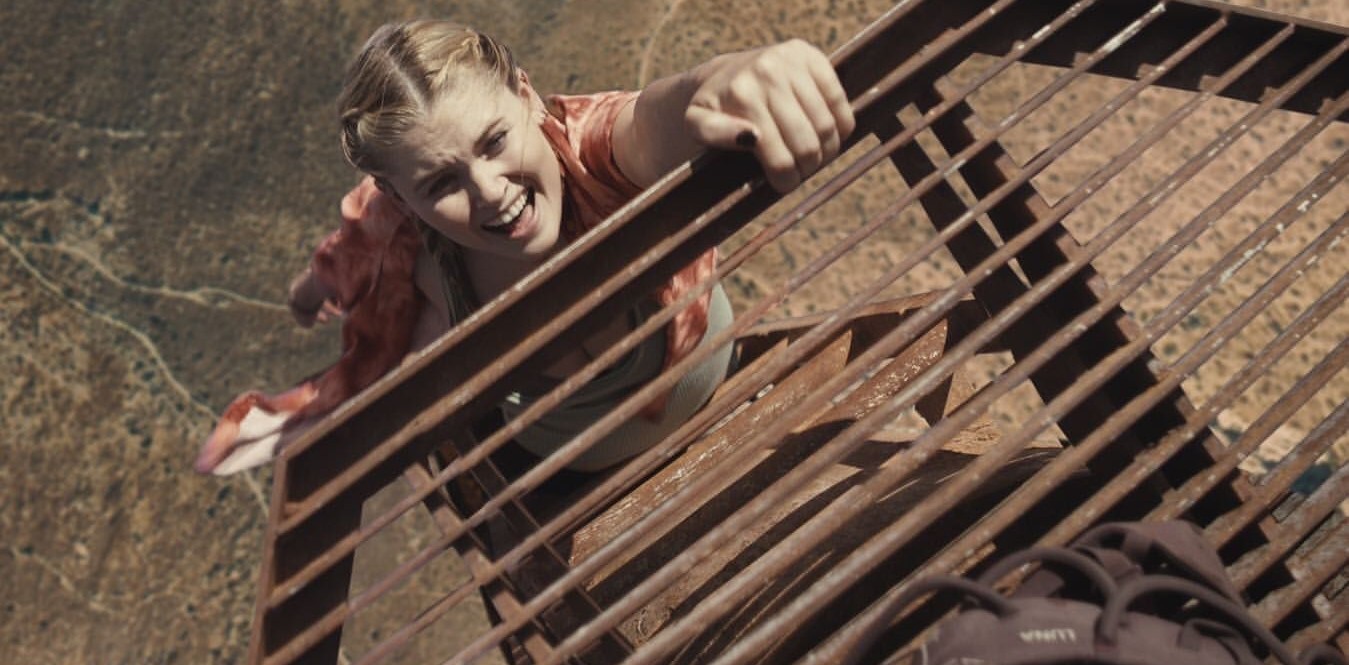
After filming, the language became a distribution obstacle. The finished movie contained enough profanity to complicate a PG-13 release. Flawless technology allowed new dialogue to match the actors’ faces without returning the production to the mountain. Mann later put the count at 36 replaced F-bombs. A thriller about being stranded had found a way out of its own predicament.
F-bombs replaced in Fall, according to Mann’s April 2025 audience Q&A. New audio and adjusted facial imagery helped the film reach a PG-13 theatrical release.
The actor still has to say yes
With Nick Lynes, Mann built Flawless around visual dubbing and performance editing. TrueSync was included in TIME’s Best Inventions of 2021. Flawless later appeared in the magazine’s 2025 list of influential companies. Those recognitions belong to the company and its technology; Mann’s contribution joins experience behind the camera to a persistent interest in what can happen after it stops rolling.
In his own writing, he has tied that work to performer consent and licensed training material. Flawless’s Artistic Rights Treasury, or A.R.T., is intended to record agreements governing changes to creative work. Mann’s argument is practical as well as ethical: a system that can alter a performance needs a way to establish who has agreed to the alteration.
Amit Kapur, now co-CEO alongside Mann, described an expensive, painstaking development process involving scientists, engineers and filmmakers. He had first encountered the business as an adviser. The attraction, in his account, was software built around existing human work and the judgment of people who understand production. An editing tool has to survive an editing room, where deadlines tend to be less impressed by a demonstration than investors are.
Swedish actors, English words
The 2025 American release of Watch the Skies made that approach visible in a feature-length experiment. Originally filmed in Swedish by the Crazy Pictures collective, the science-fiction adventure returned its cast to record English dialogue. Flawless adjusted the facial imagery to fit. Director Victor Danell and producer Albin Pettersson were involved in the process.
For Mann, the attraction was the possibility of reaching people who might otherwise pass over a foreign-language film. His ambition extends beyond translating words: he wants viewers looking at an actor’s face, catching the timing and expression. Whether a viewer prefers that experience to subtitles remains a question of taste, and the film prompted direct disagreement about it.
During an audience Q&A in April 2025, some film fans challenged his position on subtitles and AI. Mann defended the work and urged people to try it. That exchange exposes the difficult part of his project. Viewers can value a performance while disagreeing about whether changing its visible language preserves it. Software can solve synchronization; it cannot settle everyone’s idea of authenticity.
Still watching the ride
By May 2026, Flawless was presenting its platform at Cannes with performer rights central to the pitch. In August, Avid included DeepEditor in the Extensions Spotlight for Media Composer 2026.8, describing dialogue changes, combined takes and timing adjustments within its editing workflow. The idea had moved from a dubbing experiment into tools editors could encounter beside their timelines.
Mann continues to talk about making films himself. In April 2026, he said Fall sequels were progressing and that he planned to direct another instalment. The founder and the filmmaker have reasons to remain in conversation: one builds a tool; the other knows the moment when a line, a shot or a budget refuses to cooperate.
His tastes offer a less corporate closing credit. He loves Terminator 2 and RoboCop. He is also a roller-coaster enthusiast, though his daughter once beat him by insisting on seven consecutive rides at California Adventure. There are limits even to a director’s appetite for suspense. Mann may spend his working life adjusting the illusion. Occasionally, the most sensible creative decision is to get off the ride.