California has occupied two rather different places in Jason Freeland’s working life. In one, it is a promise: a name attached to a service people consult when they want direction. In the other, it is a setting crowded with people discovering how difficult direction can be. He founded California Psychics and wrote and directed Garden Party. The brochure and the movie would have an interesting conversation.
Freeland runs Outlook Amusements, the company behind California Psychics. He also has two feature films to his name, an adaptation of James Ellroy’s Brown’s Requiem and the ensemble drama Garden Party. One career involves arranging conversations about what might happen. The other involves deciding what happens, then persuading actors, producers and a budget to cooperate. Neither offers much protection from surprises.
There is an appealing temptation to make a grand theory out of that combination. His actual route is more particular. It includes a college friendship formed abroad, television production, an early internet transaction, a crime novelist and years between completed films. Follow those details and a working life emerges that is less tidy, and more interesting, than a founder’s job title.
An Oxford introduction, a California business
Freeland earned a bachelor’s degree at the University of Pennsylvania and attended the University of Southern California’s School of Film and Television. During a junior year abroad at Oxford, he met Tim Youd. Their acquaintance became a business partnership; Youd would also produce both of Freeland’s feature films. The same name turns up in the corporate history and the movie credits.
His entry into the psychic-services trade came in 1991, producing the Psychic Friends Network. That beginning matters because the product reached customers through the machinery of entertainment and direct response. Freeland came to the business through production. The work of presenting a service, getting someone’s attention and connecting that person with a conversation was there from the start.
Outlook dates its beginnings to 1994. In 1995, Freeland and Youd started a production company with Western International Media. Two years later they bought out Western’s stake. They subsequently developed an online psychic and astrology network, which they sold to Keen.com in 2000. The transaction sits near the beginning of his career, rather than at its conclusion. He continued running Outlook.
Those dates put him at a particular junction in consumer commerce: television, the telephone and the web were becoming parts of the same purchase. A caller could still want an individual conversation while the means of finding and paying for it changed. Freeland’s early business history belongs to that shift. The medium moved; the desire to speak to somebody remained recognizable.
- 1991Produces Psychic Friends Network
- 1995Production partnership with Tim Youd and Western
- 1998Brown’s Requiem
- 2000Online network sold to Keen.com
- 2008Garden Party
Outlook dates its origins to 1994. Film dates and theatrical release dates can differ.
The sunny name was deliberate
The California in California Psychics was a choice about atmosphere as well as geography. Freeland has described coming from the East Coast and seeing the state as a place to aspire to, associated with an easier, more positive way of living. He wanted that association to travel with the service. A company name can do quite a lot before anybody answers the telephone.
His account of the early strategy is practical. He believed competitors were concentrating their attention and spending on marketing, and wanted his own operation to pay closer attention to customers. Early free trials gave people a chance to try the service. Subsequent conversations, and the consistency of the experience, would have to give them a reason to return.
This is also where his language becomes less celestial. Freeland talks about feedback, support and the process for admitting advisors. He describes written applications, interviews, readings evaluated by two different people and background checks. These are procedures the business says it uses to select its practitioners. They describe how a marketplace is managed, rather than establish the truth of any prediction.
In his explanation of service, a short phrase carries the weight: “every interaction with our customers is important to us.” His stated approach includes reviewing feedback and maintaining live customer support around the clock. For a business selling access to individual people, the experience extends beyond the paid conversation to what happens when a customer has a question or a complaint.
“every interaction with our customers is important to us”
Jason Freeland, on customer service
A detective walks into the filmography
Alongside that commercial career sits Brown’s Requiem. Freeland wrote and directed the independent adaptation of Ellroy’s first novel, with Michael Rooker and Selma Blair in the cast. The film dates to 1998 and appeared at the Melbourne International Film Festival in 1999; the American Film Institute lists its release under 2000. Its chronology has the staggered rhythm familiar to independent cinema.
The choice of material puts another Los Angeles beside the optimistic California brand. Ellroy’s story follows private investigator Fritz Brown through a crime plot. Rooker plays Brown, while a supporting cast includes performers such as Brad Dourif and Brion James. Freeland’s first feature was a work of adaptation, with an existing author’s characters and world to bring into a different medium.
Its reception resists a neat victory lap. The Melbourne festival’s description praised Freeland’s treatment of Brown as an individual character. Time Out’s assessment was less persuaded by the film’s pacing and familiar noir elements. These are different judgments of the same work, useful reminders that finishing a movie and having everybody agree about it are separate ambitions.
Youd’s production credit adds a quieter continuity. A person Freeland had met during college abroad was still there when the work became a feature film. The partnership crossed between business and creative work without requiring either to disappear from the record. In a career with several changes of format, that recurring collaborator is one of its steadier details.
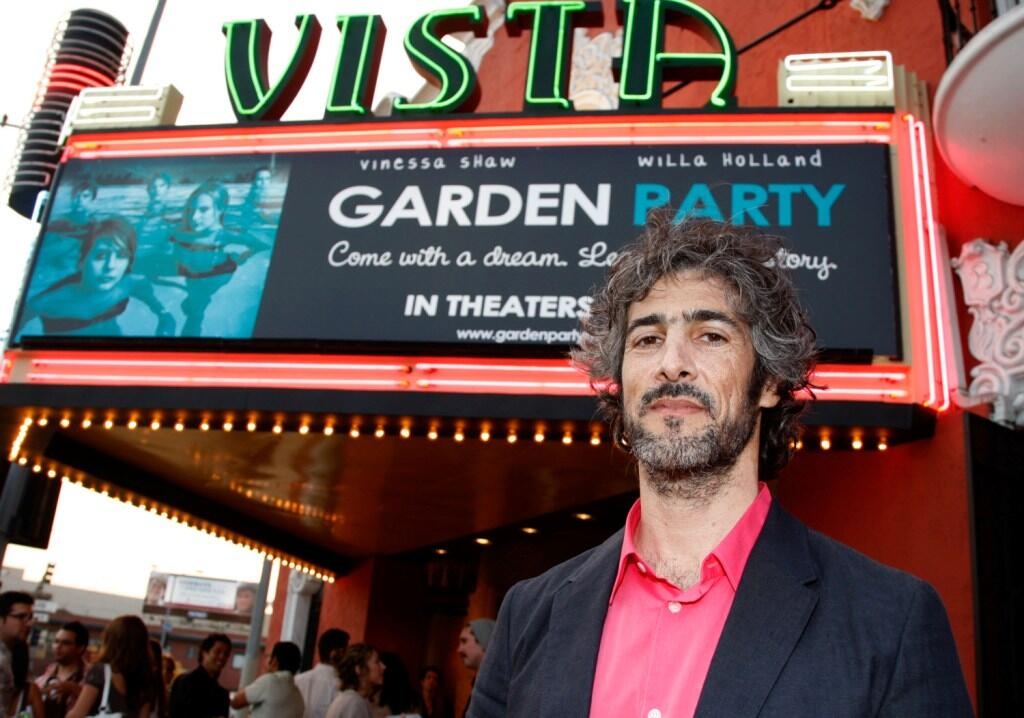
The party took a decade to arrive
Garden Party followed in 2008. Freeland wrote and directed it, and Youd again produced. Roadside Attractions handled its American theatrical release. The cast included Vinessa Shaw, Willa Holland and a young Jennifer Lawrence, credited as Tiff. The film follows intersecting lives and ambitions in Los Angeles, giving the California dream a set of awkward, sometimes unflattering encounters.
The premise makes a revealing companion to his other work without turning the characters into disguised customers. California Psychics presents direction as something people can seek through a conversation. Garden Party follows people whose attempts to move forward draw them into other people’s plans. Put the two beside each other and the shared subject is visible: wanting a future is easier than arranging one.
A film also leaves a particularly public record of collaboration. Actors appear on screen; the director’s choices are there to be watched; the credits preserve the people who helped make the thing. In Freeland’s case, the record includes cinematographer Robert Benavides and composer John Swihart. The finished work belongs to a group, even when the writer and director share a name.
The reviews were far from uniformly welcoming. Time Out disliked its account of Los Angeles, and Slant was sharply critical of its ensemble construction. That belongs in the picture too. Freeland’s filmmaking is an actual body of work with actual detractors, rather than a decorative creative interest added to an executive biography. Cinema is generous with opinions, especially other people’s.
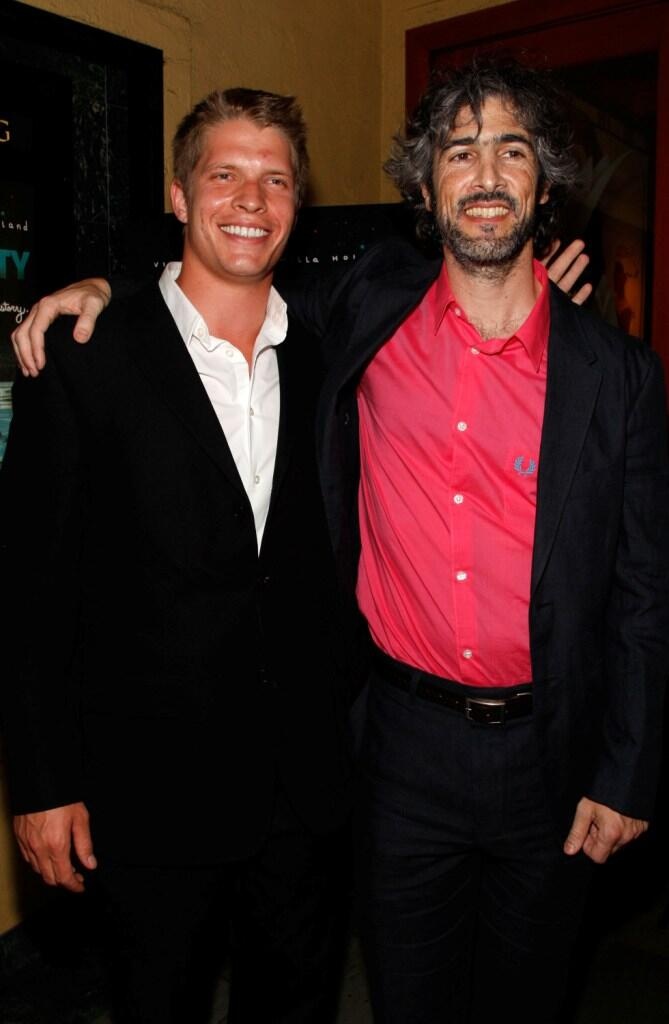
A company with people behind the curtain
Today Outlook’s own account describes a business that grew from a five-person West Hollywood office into a fully remote organization with more than 160 employees across the United States. It also reports partnerships with more than 550 advisors and customers around the world. Those are company-reported figures, and employees and advisors are separate groups. A single headcount would blur how the operation works.
The team roster makes the range of work concrete. Alongside Freeland as chief executive are Michael Perez as chief operating officer and Amit Akhouri as chief technology officer. Other roles cover software engineering, data analysis, advisor operations, creative work, customer service and fraud prevention. The name Outlook Amusements gives little warning of how many ordinary business disciplines sit behind it.
That is an instructive change of scale from the early production-company partnership. A customer encounters an advisor or a support representative. The organization also has to maintain the systems, staffing and processes that make those encounters possible. Its public roster gives those functions names and job titles. The backstage work is substantial even when the purchase is one conversation.
Freeland discussed that commercial setting with Megan Lund and Ryan Marquardt on Clairannoyance in July 2023. The episode addressed practitioner onboarding, complaints, fraud and changing technology, alongside the larger question of commerce and spirituality. It is an apt combination for his career: an unusual subject accompanied by the familiar responsibilities of running a service business.
Company-reported figures from Outlook’s public history. Employees and advisors are separate groups.
The next conversation
One of Freeland’s clearest business admissions appeared in his 2023 discussion of building a trusted brand. Customer feedback, he said, can correct a team’s assumptions about what its community wants. There is room in that observation for a useful kind of uncertainty. Running a company does not give its founder automatic knowledge of the people using it.
The films preserve another way of listening. Their casts put different people into the same city, and their credits show the collaborators needed to get those people onto a screen. The business, meanwhile, has continued organizing encounters between advisors and customers. Across the two careers, people are continually entering the arrangement with wants of their own.
Freeland’s story is held together by those particulars: Youd at Oxford and in the production credits; the early network sold in 2000; an Ellroy adaptation; a second feature; a company still operating years later. California supplies both the sunny name and the complicated setting. Between them, there has been plenty of work, and remarkably little chance of writing everybody’s next line.