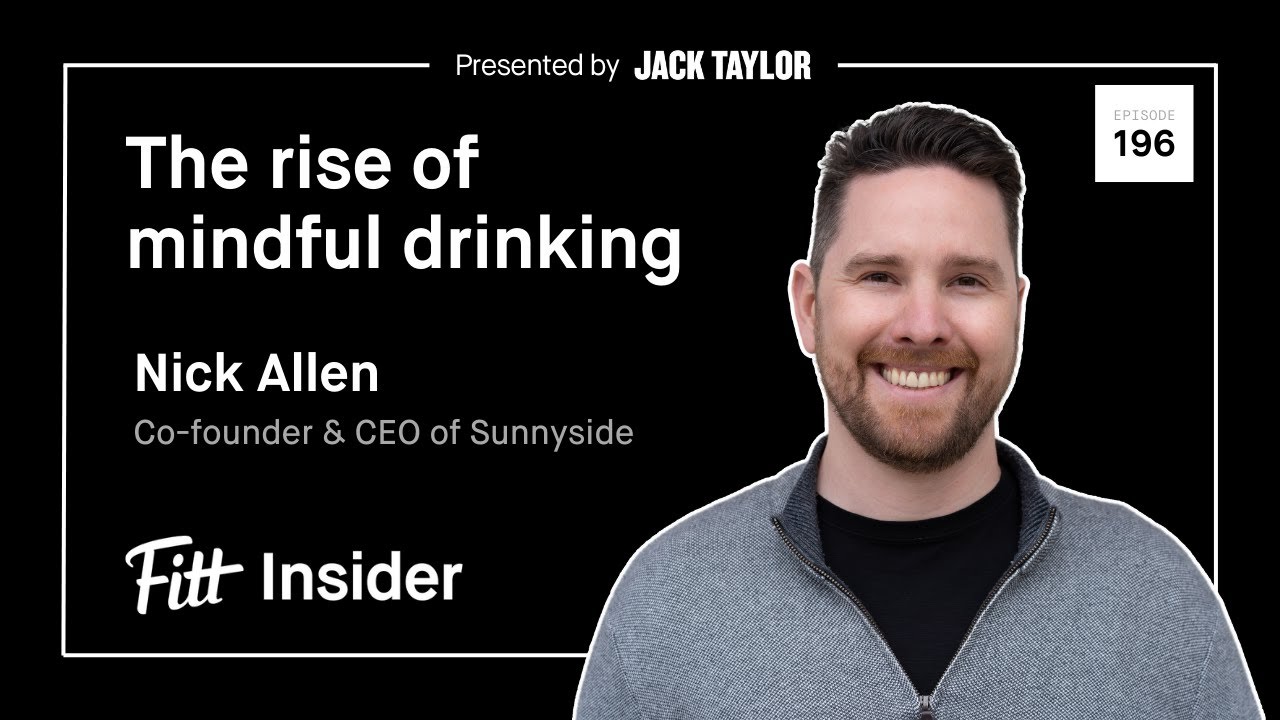
There is a particular species of founder who begins with a grand theory and spends the next three years trying to persuade reality to cooperate. Nick Allen started in the opposite direction. He had an ordinary week, an ordinary calendar and a recurring question: could a decision made on Sunday survive contact with Friday? The first answer was not an app. It was a plan written down with his wife Andrea, followed by reminders and a record of what actually happened.
This was early 2020, when the couple were spending time in Mexico after stepping away from work. Allen had spent his professional life around systems that bring people back: lifecycle messages, notifications, incentives, loyalty and retention. Now he was applying that craft privately. Every Sunday, the pair looked ahead. They chose their intentions for the week and checked their progress as the days passed. The intervention was modest enough to look almost silly. It was also durable enough to become interesting.
He read Nir Eyal's Indistractable and James Clear's Atomic Habits, borrowing the useful mechanics: pre-commitment, obvious cues, visible progress and reflection. The words sound academic; the behavior was domestic. Two people at a table, deciding before the week got noisy. Allen would later describe the product that emerged as a way to place a third-party system beside an intention, so the promise did not have to live only in memory.
01 / Manual before magicalThe spreadsheet-ish beginning
Allen did not immediately call investors. He gave a manual version to friends. One early user was Ian Andersen, who kept talking with Allen about the space, the tone and what a real business might become. The beta test doubled as the beginning of a working relationship. After enough conversations, they made the co-founder arrangement official and released a rough public version in the middle of 2020 under the name Cutback Coach.
Allen also wrote on Reddit about his experiment. That move mattered because public forums are unkind to vague customer discovery. People state their objections, vanish without completing the funnel and describe their lives in language no brand workshop would invent. What Allen found there was demand for structure without absolutism. The company could occupy that middle ground only if its voice remained useful, light and free of scolding.
The early product lived through two-way SMS. Members could reply inside a channel they already checked. That choice reveals Allen's retention instincts more clearly than any slogan. A new product usually asks the customer to create a new habit just to use the thing meant to improve another habit. Text messaging removed one layer of ceremony. There was no special place to remember, no novel gesture to learn. The prompt arrived. The person answered. The loop continued.
02 / Retention schoolThe long apprenticeship in coming back
Sunnyside may have begun at home, but Allen had been rehearsing for it at work for more than a decade. He studied Environmental Studies at UC Santa Barbara, graduated with highest honors and received the program's Outstanding Senior award. His career then bent toward marketing systems and product behavior: Suntech Power, Citrix, the youth environmental nonprofit Sprout Up, and a short-lived venture called Houzilla.
At Lyft, beginning in 2013, Allen worked across notifications, passenger and driver engagement, retention and eventually growth for Lyft Business. Colleagues remember him as collaborative, analytical and unusually busy. One former teammate joked about the wall of meetings on Allen's calendar. Another described him as the first dedicated retention-growth operator at the company, building engagement machinery from the ground up.
There was also the Boston incident. While running passenger promotions, Allen used an internal system capable of distributing ride credit at enormous scale. One human error sent credit across the entire city. He has told the story as a lesson in slowing down, adding review steps and treating powerful tools with proportionate care. Growth folklore often celebrates the audacious click. This one argues for the second set of eyes.
After Lyft came IPSY, where Allen led CRM, loyalty and member retention, plus a period of independent growth consulting. By the time he began Cutback Coach, he knew the machinery of activation and return visits. More important, he knew machinery alone was insufficient. A retention system can deliver a prompt, but tone decides whether the prompt feels like help or surveillance.
A career measured in feedback loops
Approximate duration of Allen's publicly listed chapters, shown to explain sequence rather than seniority.
03 / The co-founder testTrust arrived before titles
The fact that Andersen was a user before he was a co-founder is more than an origin-story flourish. He knew the product from the receiving end. He could feel where a reminder arrived too late, where a sentence sounded officious and where a ritual asked too much. The pair spent time refining the concept before choosing to build together. The title followed the work.
Their division of labor also fit the company they were making. Allen, the retention and product operator, became CEO. Andersen, whose career included go-to-market roles at Microsoft, MileIQ and OneLogin, became chief growth officer. A product built around repeated engagement had one founder steeped in the loop and another thinking about how the invitation travelled.
Former Lyft colleagues became part of the wider circle. Brian Nichols, who had worked with Allen in Lyft's early years, later recommended that he join an On Deck cohort. Nichols has written that more than 20 Lyft alumni invested in multiple Sunnyside rounds. The detail is revealing. Professional reputation is often described as a network, which makes it sound like a collection of contacts. Here it behaved more like accumulated evidence. People who had watched Allen work were willing to watch him build.
04 / Naming the middleA product needs a permission structure
Cutback Coach was descriptive but narrow. The 2021 change to Sunnyside gave the company a name with more emotional room. The system expanded from text messages into an app with planning, tracking, analysis, one-to-one coaching and a member community. Yet the interesting product decision remained the same: make an imperfect week legible, then invite another attempt.
Allen's public vocabulary repeatedly returns to “progress, not perfection.” It works as copy because it also works as interaction design. A product that treats deviation as failure creates its own churn. A product that turns deviation into information can keep the conversation open. Reflection, in Allen's formulation, is how small improvements accumulate. The dashboard is merely where the reflection becomes visible.
There is a broader founder lesson here. Many companies attempt to change behavior by raising the emotional volume. Sunnyside lowers it. The customer is asked to notice, plan and respond. Its interface is not built around a grand conversion scene. It is built around Tuesday, then Wednesday, then the next Sunday. Ordinary time is the product surface.
05 / Capital and consequenceWhat the Series A was buying
In November 2023, Sunnyside announced an $11.5 million Series A led by Motley Fool Ventures with major participation from Will Ventures. Uncork Capital, Offline Ventures, Joyance Partners, Wisdom Ventures and others joined the round, which brought reported funding to $14.6 million. MyFitnessPal founder Michael Lee also invested. The company hired former Strava product and technology chief Steve Lloyd at the same time.
The pairing of money and operator was deliberate. Sunnyside planned deeper community features and an AI coach called Sunny, adding software scale to a product whose appeal had been conversational. That creates a classic tension: automate enough to be available, but preserve the warmth that made the early texts worth answering. Allen's apprenticeship suggests he understands the metrics. The harder question is tonal. Can a system become more capable without becoming more mechanical?
His record offers one useful clue. The company started manually, not because manual work was fashionable, but because it let the founders hear the friction. One of Allen's useful product instincts is the willingness to let a system remain humble long enough to learn what people need from it. Capital increases the blast radius. Boston's free rides remain a mischievous reminder to keep the review step.
06 / What to stealBuild the ritual, then build the company
Founders looking for a transferable playbook can ignore the category and keep the sequence. First, solve the problem at human scale. Second, invite a few people close enough to be candid. Third, enter the places where prospective customers already speak in their own language. Fourth, automate the repeated pieces only after their value is visible. Finally, make reflection part of the loop, for the customer and for the company.
Allen's own quirks fit this pattern. He is a Warriors fan who cites Stephen Curry on success as a choice. Friends connect him with Star Wars and long conversations about growth marketing. His favorite business books emphasize disciplined calendars and small, repeated gains. Even his funny failure is a process parable. There is very little thunder in the Nick Allen method. There are calendars, messages, checklists, data and another attempt next week.
Sunnyside's ambition is cultural, but its mechanism is intimate. Allen wants intentional tracking to feel ordinary, part of the same personal toolkit as any other weekly plan. Whether that ambition produces a lasting category will depend on retention, trust and the company's ability to keep its voice human as its software grows.
For now, the origin remains the clearest expression of the idea. A couple sits down on Sunday. They look at the days ahead. They make a plan visible. The founder does not ask the future to transform all at once. He gives it a place on the calendar and waits for the reply.