Consider the frozen waffle. It requires very little of its customer: a freezer, a toaster, perhaps a small negotiation with a child. When NEXT VENTŪRES announced its investment in Evergreen in January 2026, it was buying into that ordinary transaction. Founder Emily Groden had started making waffles for her daughter. Her company put fruits and vegetables into a breakfast children might actually eat. The fund reported distribution in more than 8,500 retail locations. Better health, in this instance, looked like breakfast arriving on time.
- The bet: health improves when useful products and care become easier to access.
- The method: early-stage capital, consumer expertise and practical operating help.
- The test: people must use the product, and somebody must pay for it.
Then look elsewhere in the portfolio. Oura measures sleep and other physiological signals through a ring. Pair Team helps underserved communities access care. Trial Library connects cancer patients with clinical trials. These businesses occupy different aisles of the economy. NEXT VENTŪRES groups them around a question: what prevents a person from getting healthier before, during and after an appointment?
The useful thing about a Nike veteran
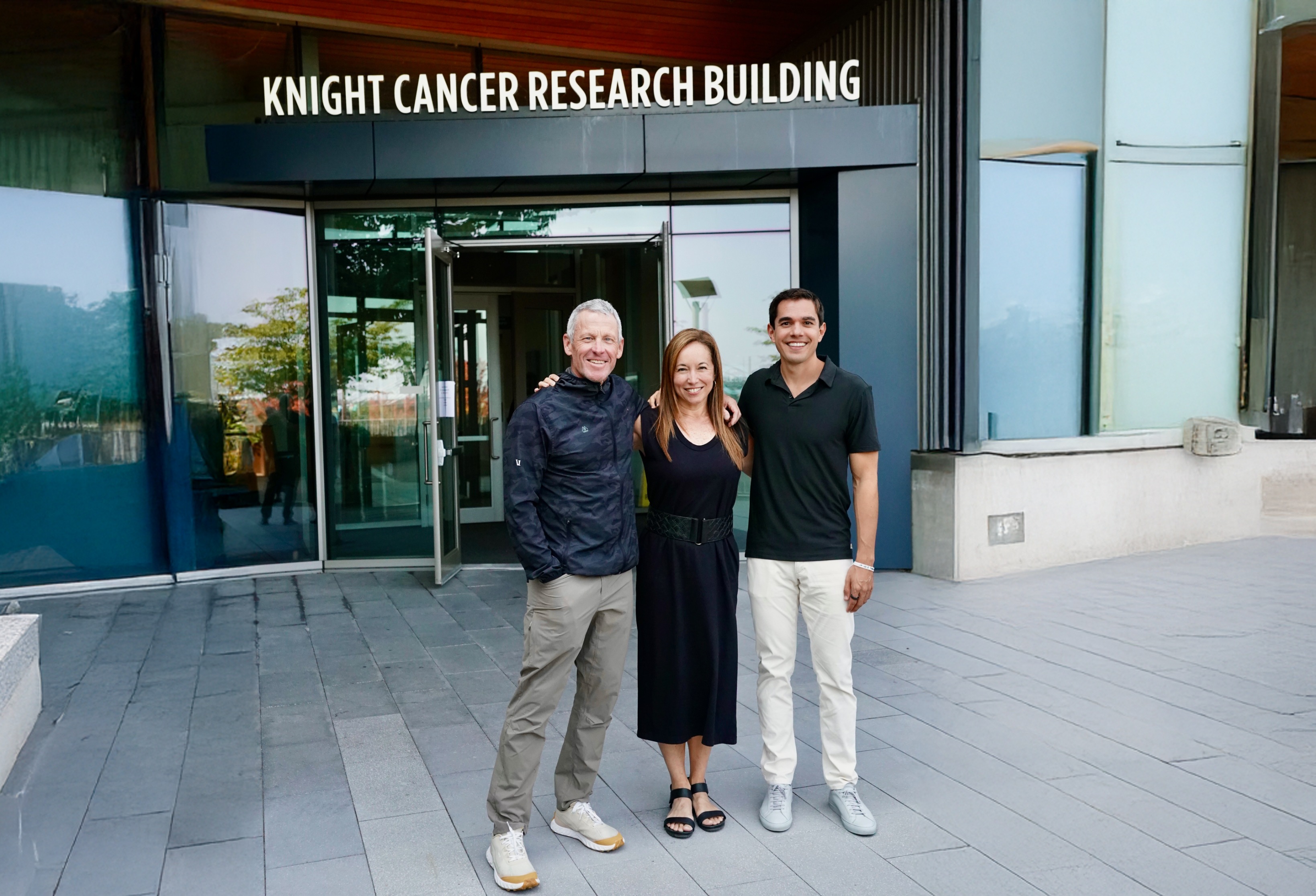
The firm dates its founding to 2019. Its best-known co-founder is Lance Armstrong, whose experience includes professional cycling, cancer survival and investing. But celebrity is an incomplete explanation of what the partnership offers. Mel Strong spent 17 years at Nike, working across businesses and digital products. That experience concerns a stubborn commercial problem: turning something people admire into something they repeatedly use.
At Oura, Strong’s contribution became unusually concrete. She served as interim chief marketing officer, helped launch the Gen 3 ring and recruited the company’s first full-time CMO. An investor was temporarily occupying an operating seat. For a founder, that is a more useful description of support than a promise to open doors.
In a 2023 Terra interview, Strong described a process of identifying opportunities in health and wellness, then seeking founders building in those areas. The expertise travels from consumer behavior to brand positioning and product adoption. It also explains why NEXT can move between wearable hardware and food without treating either as a random excursion.
Trust before the appointment
The October 2023 Pair Team investment memo describes a different kind of homework. NEXT spent roughly a year and a half learning about Medicaid managed care. It began with leaders of community support organizations. Their message: earn trust and address social needs before delivering clinical messages. A technically elegant service cannot assume it has permission to enter someone’s life.
Pair Team’s approach connected clinical care with community organizations and support for social needs. The investment rationale also identified California’s Enhanced Care Management payment framework. That detail matters. A service can be needed, appreciated and still lack a business. A payment mechanism gives the service a way to continue.
The lesson is portable: interview the people who already have the customer’s trust. Ask what happens before the advertised problem appears. In this case, the answer changed the order of operations, putting social support ahead of the clinical pitch.
Sixty million dollars, several kinds of friction
In September 2025, NEXT announced the final close of its second fund at $60 million, with Oregon Growth Board backing and a strategic partnership with Oregon Health & Science University. The money represents investment fund commitments. It is neither the firm’s sales nor the price of running its office.
Fund II final close
September 2025
NEXT supplies equity capital and help to founders. Limited partners supply the fund’s capital. Historical reporting in 2021 put initial investments at $1 million to $3 million, typically around late seed or Series A. Those figures describe an earlier period, rather than a current promise to every applicant.
Cofertility shows how broadly the access question can travel. Its egg-sharing model lets eligible participants freeze eggs without paying the freezing cost in exchange for donating a portion to intended parents. Trial Library addresses another bottleneck: moving patients from possible eligibility into actual cancer-trial participation. NEXT backed it in 2022 and invested again in its 2025 Series A.
The distinction from a narrowly clinical investor is the willingness to work across consumer purchases and healthcare delivery. From a consumer investor, it borrows attention to habits and identity. The resulting portfolio needs both kinds of expertise; attractive packaging cannot repair a broken reimbursement model.
The pin that stopped answering
There is a useful counterexample. In November 2023, NEXT explained its investment in Humane, whose Ai Pin promised a less screen-bound relationship with technology. The firm imagined applications in nutrition and mental health. Its enthusiasm rested partly on the founders’ Apple experience and the possibility of a new computing interface.
The consumer product wound down. Humane told customers that calling, messaging, AI responses and cloud access would cease after February 28, 2025. HP announced a $116 million agreement for Humane’s platform, intellectual property and technical talent. That transaction was distinct from keeping the consumer device alive.
Here, the product’s continuity failed the customer. The episode supplies a limit to the portfolio’s ambition: a persuasive account of future health benefits cannot substitute for a service that keeps working.
A different reason to get healthier
By October 2026, NEXT’s writing offered another adjustment. Its “Healthy Hedonism” essay argued that esteem, identity and status could motivate healthier purchases more effectively than appeals to optimization. This was a change in emphasis, not evidence that every fashionable health product works.
Its April essay on AI-enabled care made a related point about follow-through:
“The visit has been the entire product for too long.”
NEXT VENTŪRES · April 2026
For founders, the practical questions are plain. Who trusts you? Who pays? What makes the next action easy? The waffle is a useful place to finish. It asks less of the customer while fitting into something the household already does. That is a design principle a business can copy without raising a venture fund.
Keep following the bet
Explore the firm and portfolio, read its investment essays, or follow on LinkedIn, X and Instagram.
Watch: Mel Strong on the Terra podcast