A farmer can buy a pump powerful enough to move water across a field and still have a thirsty plant. Between the pump and the root lies a surprisingly demanding delivery problem: pressure changes, soil varies, filters collect debris, and yesterday’s sensible schedule may be wrong after a hot afternoon. Netafim USA has built its business around that last stretch of the journey.
- The job: deliver water and nutrients near plant roots, through precisely selected outlets.
- The offer: irrigation hardware, digital controls, agronomic support, and several ways to manage ownership.
- The catch: good design and regular maintenance remain part of the purchase.
Established in 1981, the Fresno company is the American subsidiary of Netafim, whose origins go back to farming in Israel’s Negev desert in 1965. It belongs to Orbia’s Precision Agriculture business. The appeal is easy to understand: make a scarce input arrive where it can do useful work. Making that happen, repeatedly, is the interesting part.
The outlet is small. The system is not.
Consider the product names. UniRam is a pressure-compensating heavywall dripline intended for surface or buried installations, including uneven terrain. Streamline X EZ is thinwall dripline for single-season applications. FlexNet moves water through flexible distribution pipe with integral welded outlets. These products occupy different positions in the same chain. Buying one does not settle the design of the others.
That chain also contains filters, valves, nutrient-dosing equipment, and controls. Fertigation adds fertilizer to irrigation water, putting nutrient delivery into the same operating plan. GrowSphere connects controllers, sensors, and cloud tools, allowing growers to check field conditions, receive alerts, and operate irrigation remotely. Its useful promise is visibility: did the system execute the plan?
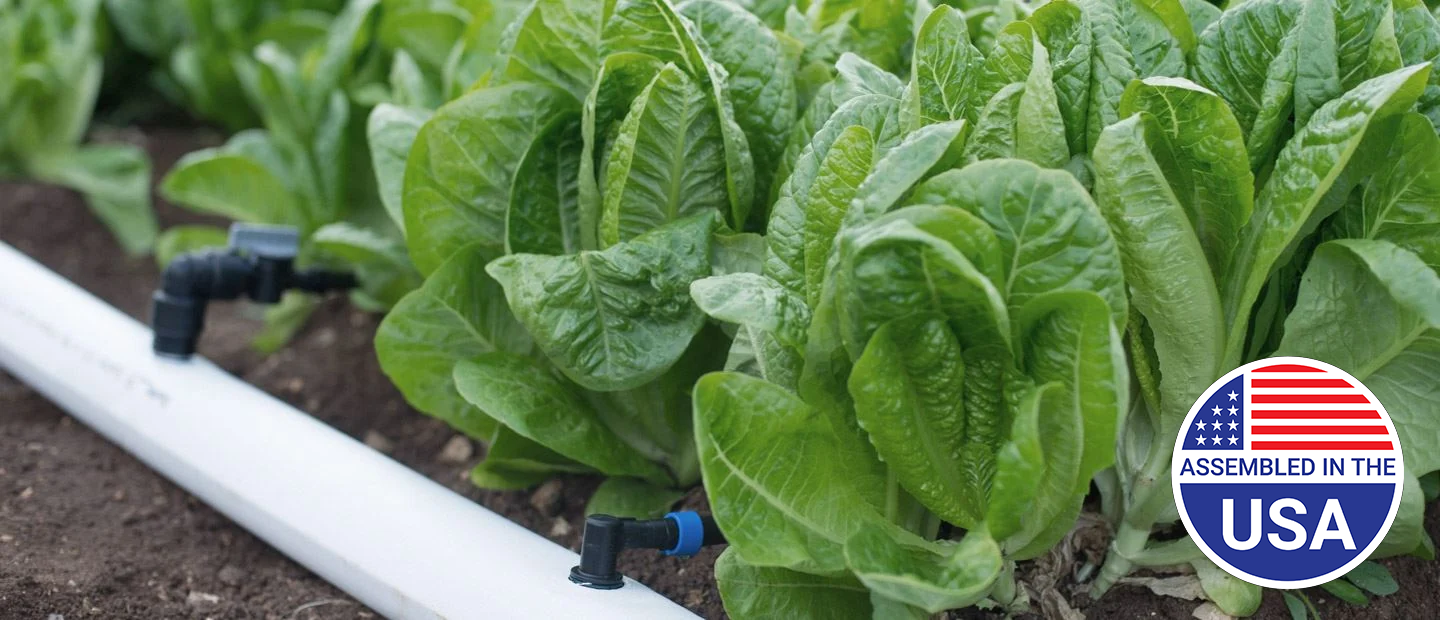
The customer list reaches beyond almond orchards and vegetable rows. Netafim supplies greenhouse and nursery operators, landscape professionals, wastewater applications, and mining operations using drip delivery for heap leaching. Its USA business serves Canada and the Caribbean as well. Across those markets, the shared expertise is controlling liquid distribution, even when the desired result is very different.
The obstacle before the first drop
For a grower, recognizing a useful technology and finding the money to install it are separate events. Netafim’s Precision Irrigation Access Program connects corporate water-stewardship commitments with farmers seeking upgrades. Its public examples include Google’s support for a Dos Palos grower moving from flood-irrigated alfalfa to drip-irrigated almonds, with LimnoTech assessing the project’s water benefits independently.
The Irrigation Association recognized the program in August 2026 with its agriculture Vanguard Award. The award announcement describes a public launch in 2024 and work across thousands of acres. The significance is practical: changing who contributes capital can help a farmer make a change that better equipment alone cannot finance.
Netafim also offers a different ownership arrangement. Under Irrigation as a Service, it owns, operates, and maintains the system while the customer pays monthly over five to ten years. Other plans leave ownership with the grower and outsource operations, or provide annual support. Each arrangement answers a different question about who has cash available and who has time to run the equipment.
For the buyer, the comparison should include the cost of keeping the system useful through its working life. A monthly payment changes the timing of expenditure; it also creates a continuing obligation. A grower who owns equipment outright takes on a different set of duties. Netafim’s service menu makes those choices explicit, which is valuable before a field becomes dependent on the installation.
Plastic gets a return ticket
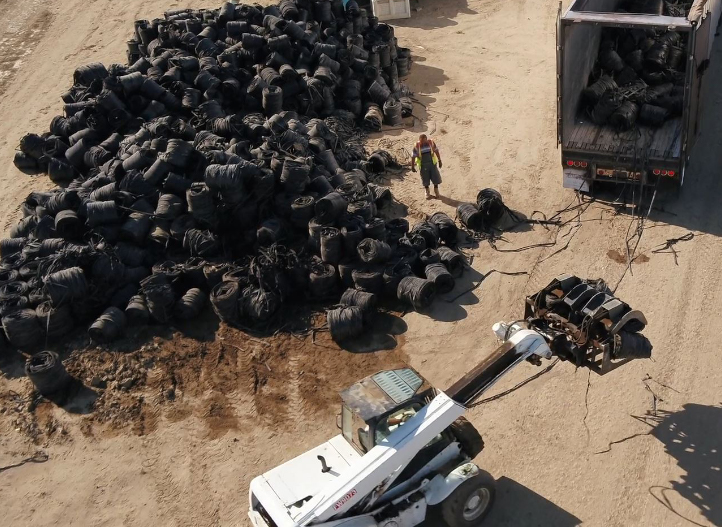
There is an awkward physical consequence to selling irrigation tubing: eventually, somebody has to remove it. Netafim’s ReGen operation collects eligible used material and processes plastic for reuse. A California state project profile records a $2,011,647 recycling grant. That is money for recycling infrastructure, rather than a venture round or a measure of the company’s value.
The details make the environmental claim more useful. Published pickup conditions specify Netafim thinwall material, prepared bales, limited contamination, and access for a 65-foot tractor-trailer. The stated minimum is 20,000 pounds. These rules turn an attractive circular-economy diagram into a logistical proposition. A small grower with a mixed pile of plastics cannot assume the truck will simply come.
The filter gets a vote
What goes wrong? Netafim’s maintenance handbook gives an admirably unglamorous answer. Particles can pass primary filtration and accumulate in piping. Flushing removes them before they reach emitters. In buried systems, roots can enter outlets, particularly when water stress draws them toward available moisture. A controller cannot wish either problem away.
Failure can also be quiet. The maintenance handbook describes filter problems, sensor faults, and flushing cycles that run too often or fail to start. These are reasons to inspect performance in the field alongside the screen. Irrigation automation still has physical components that need attention.
This is where the economics deserve scrutiny. Price the field, including installation, water treatment, energy, labor, replacement material, and support. For a managed contract, examine duration and responsibilities. For a purchased system, decide who will inspect filters and notice pressure changes. A cheaper roll of tubing may be a poor bargain if the surrounding system cannot keep it working.
“We’re irrigating an entire field in a day compared with 10 days.”
Bruce Schmit, Arizona corn farmer
Customer account published by Netafim; results are specific to his farm.
Buy the field plan
There are alternatives. Rivulis supplies driplines, filtration, and automation; Toro sells Aqua-Traxx drip tape. A grower may also evaluate sprinklers or pivots. Netafim’s case rests on the combination of equipment, local dealers, agronomic knowledge, operating options, and material recovery. That combination matters only when it fits the farm’s actual constraints.
One Netafim customer account offers a modest explanation of adoption: Greg Peterson saw drip irrigation at a farm show before installing it on the family’s Kansas operation. The account describes using captured runoff and improving difficult field areas. The useful lesson is to begin with an observed problem, then test a delivery method against it.
Readers can copy that discipline. Identify where water delivery becomes uneven. Check water quality before choosing emitters. Assign maintenance before commissioning. Arrange disposal before the first season ends. Netafim USA offers tools for those decisions. The field still requires someone to make them.
Follow the water
Explore Netafim USA, its field notes and news, GrowSphere, service plans, and ReGen collection rules.
Watch product demonstrations and grower stories on Netafim USA’s YouTube channel, watch how to repair FlexNet pipe and weekly SandStorm filter maintenance, or explore the Irrigation Academy.