Rain was bad for the bike rental business. That small observation sits at the beginning of Climate’s history: David Friedberg and Siraj Khaliq saw a San Francisco business whose takings depended on the sky. They founded WeatherBill in 2006 to sell protection against weather risk. The weather, inconveniently, refused to become more considerate. The customer list became more revealing.
- The job: collect planting, spraying and harvest data, then help farmers compare what worked.
- The buyer: farmers and their advisors, especially operations with compatible precision equipment.
- The price: U.S. Plus starts at $649 a year; Drive 2.0 is listed separately at $499.
- The catch: a tidy dashboard still needs accurate records and someone who understands the crop.
The weather had customers
Early WeatherBill clients included outdoor productions, farmers and food businesses. Agriculture gradually became the largest segment. In the company’s retrospective account, the market supplied the argument for narrowing the business. A bicycle shop loses an afternoon to rain. A farmer has a season’s investment sitting outside.
By 2011, WeatherBill had become The Climate Corporation. Investors financed the weather-data business, including a $42 million round that year. A $50 million Series C followed in 2012, led by Founders Fund. Monsanto announced a roughly $930 million acquisition in 2013. Those figures describe financing and a purchase, respectively; adding them together would produce an impressive number and a rather poor explanation.
The consequential turn came in 2015, when Climate sold its crop-insurance business to AmTrust and concentrated on digital agriculture. FieldView launched that year. Bayer subsequently acquired Monsanto in 2018. Today Climate LLC is Bayer’s digital farming business. Its central question has moved from the financial consequences of bad weather to the decisions a farmer can make with a better record of the field.
The breakthrough was a place to plug in
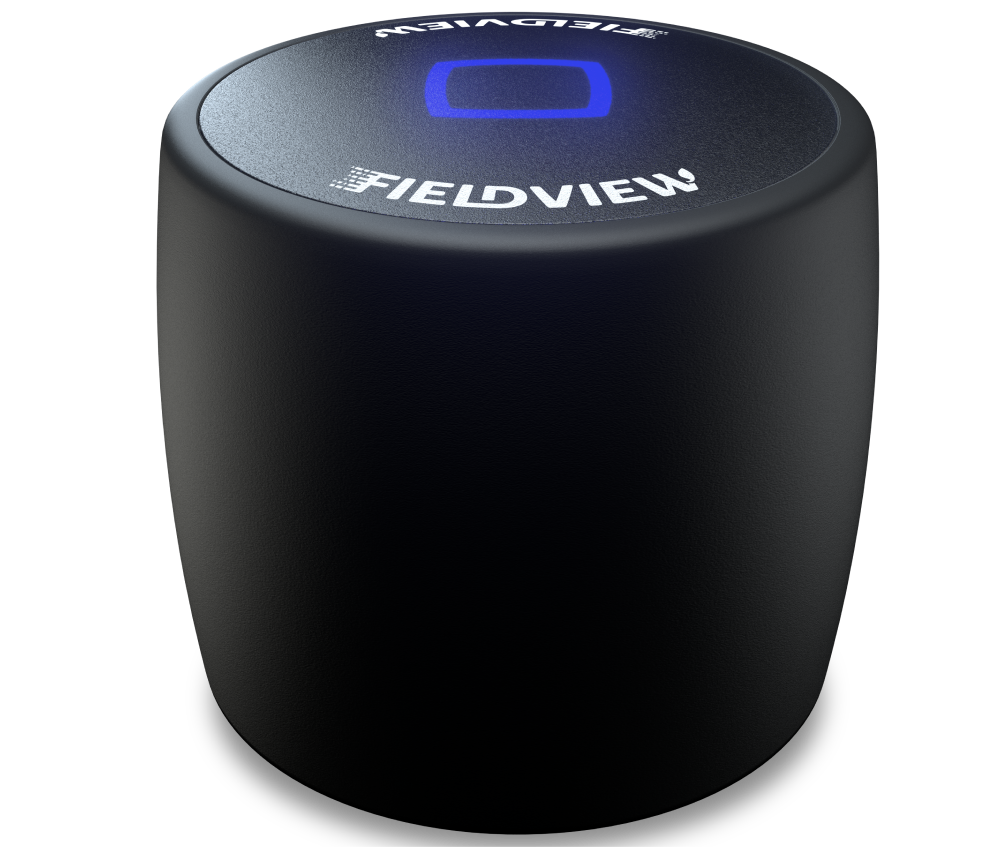
Agriculture had records long before it had apps. The awkward part was getting those records into the same place. FieldView accepts historical uploads and connections from other systems. Its Drive hardware adds a collection point inside compatible equipment, capturing machine and field data rather than asking the operator to reconstruct every pass later.
The device plugs into a CAN diagnostic port. Data travels by Bluetooth to FieldView Cab on an iPad and syncs with the farmer’s account. Remote View lets another person watch field maps build from elsewhere. A farm team can share an operation, a farm or an individual field with an advisor. The useful unit is a piece of work that several people can understand together.
Drive 2.0, unveiled in August 2024, adds storage, connection improvements and prescription delivery to compatible precision equipment. Its practical enemy is the thumb drive: make a script in the office, save it, carry it out, load it into a monitor. A direct transfer removes a small errand from a day already full of consequential errands.
“the upgraded technology significantly improved the connection and reliability to my iPad”
Russ Kavan / Nebraska farmer / 2024 launch announcement
Kavan’s comment matters because it concerns a connection rather than a futuristic promise. A model cannot analyze a record that never arrived. Here is a lesson other software businesses can borrow: the mechanism that supplies the data deserves as much attention as the screen that interprets it.
The average acre is a convenient fiction
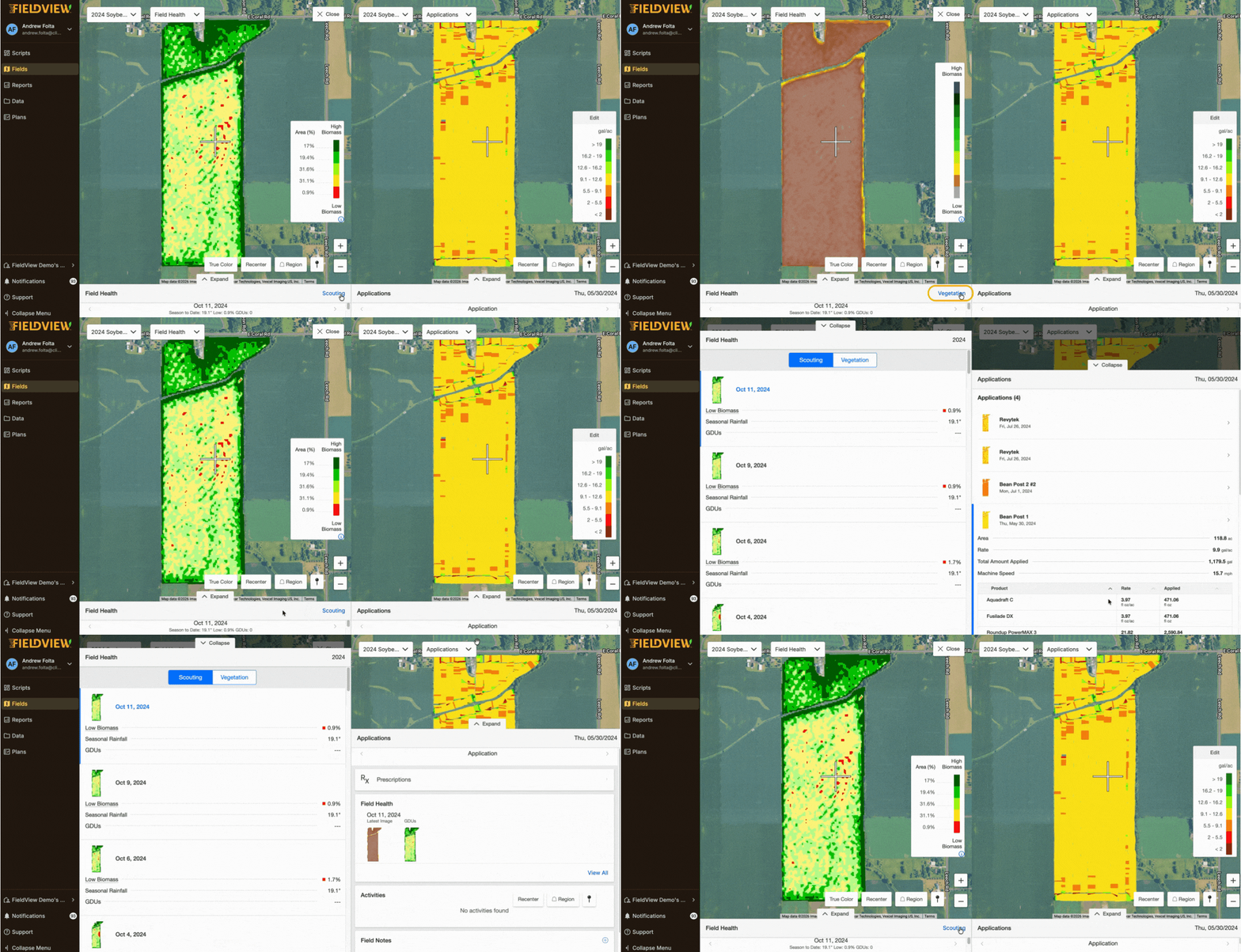
FieldView’s analysis tools compare hybrids, inputs and practices, including through side-by-side maps and field-region reports. Planting records and harvest results become easier to examine together. A farmer can ask whether a seed choice performed differently in a particular region instead of relying entirely on the field’s final average.
Prescriptions take the comparison back into the machinery. FieldView offers tools for seed rates, fertility and crop protection, with adjustable scripts and exports in different equipment formats. This is where analysis earns its place: a recommendation can become an instruction for compatible equipment on the next pass.
- 01 / CollectPlanting, applications, harvest
- 02 / CompareRegions, hybrids, practices
- 03 / ActScout, adjust, prescribe
Imagery supplies another kind of question. Vegetation and scouting views can highlight parts of a field that deserve attention. Scouting pins attach observations to locations. Climate’s June 2026 growing-season guide describes improvements to its Climate Crop Index, designed to reduce soil-background effects and saturation in high-biomass conditions.
A crop image is useful precisely because a person cannot stand everywhere at once. But a colored patch is an invitation to investigate. It does not, by itself, establish whether the cause is disease, moisture, nutrition or something else. The farmer and agronomist still have work to do.
A $649 question, with a $499 attachment
The current U.S. pricing page lists Basic from $0 a year and Plus from $649, billed annually. The hardware page lists Drive 2.0 at $499. That makes $1,148 for one year of Plus and one Drive at the listed prices, before a tablet, accessories, tax or other costs. Regional offers and requirements vary.
For an illustrative 1,000-acre operation, the $649 software charge equals about 65 cents an acre annually. That arithmetic does not prove a return. It gives the buyer a sensible question: can the service save enough work or improve enough decisions to justify its cost? A farmer who already has suitable records in another system may answer differently from one who spends evenings assembling them.
John Deere Operations Center is a relevant alternative. Deere offers a free account and accepts data from compatible non-Deere displays. Mixed equipment brands therefore do not settle the contest. Buyers should compare the actual machinery connection, the advisor’s preferred workflow, the features they need and the effort required to move records.
Bayer has more than a dashboard in mind
Bayer reported FieldView subscriptions on more than 250 million crop acres globally in June 2024. That is a footprint measure, not a customer count or proof that every acre paid the same subscription. It does show why Bayer regards the platform as infrastructure for more than an individual farmer’s winter planning.
FieldView connects with the Preceon Smart Corn System, which combines short-stature corn with tailored agronomic recommendations. It also supports Bayer’s ForGround initiatives around sustainable farming practices. A digital record can help document what happened in a field as well as guide the next operation. Measuring a practice and establishing its environmental result remain different tasks.
Outside partners extend the record’s uses. Rantizo’s February 2025 AcreConnect integration lets spray-drone operators share application maps. Farmers Mutual Hail’s connection reuses planting and harvest data for insurance workflows. The partner directory also includes crop marketing through Combyne and costs and harvest revenue through AgAnalytics’ ProfitLayers.
These connections are a substantial part of FieldView’s proposition. A farmer rarely buys software for the pleasure of owning another isolated account. Reusing a record across agronomy, applications and reporting makes the collection effort easier to defend. It also makes sharing permissions a practical purchasing concern.
Start with the labels, then trust the map
Climate’s planting checklist begins with equipment compatibility, accurate boundaries and preloaded seed names. It asks users to update the app and enable CloudSync. These are modest instructions with large consequences. Mislabel the seed at planting and the harvest comparison can become a beautifully presented answer to the wrong question.
For an interested farmer, that suggests a manageable beginning: check the exact machine and display configuration, map one field correctly, bring in usable historical records and choose one comparison to review with an advisor. Expand the workflow when collecting the record and acting on it have become routine. More layers alone do not produce a better decision.
Hardware has a calendar, too. Climate says that from summer 2026 the original Drive loses engineering support, future compatibility updates and bug fixes. Existing compatible equipment continues to work, and customer service remains available. A system that fits this season’s machine may require another look when the fleet changes.
Climate’s history offers a transferable habit: follow the customer’s repeated problem, make the evidence cheaper to gather, then connect it to an action. FieldView can help a farmer remember precisely what happened. The next decision still belongs to someone who must live with the harvest.