TJ Knecht had two ways to decide when to irrigate. One was the method his family had used for generations: look at the field, feel the soil, set the siphons. The other was a sensor planted where the crop was doing its quietest work, below the surface. On his Colorado farm, the second method first looked suspiciously like a machine asking him to ignore his eyes. He called support repeatedly. He placed manual tensiometers beside the probes. He asked an independent agronomist to check the graphs. Only then did he change the length of his irrigation sets.
- CropX sells field sensors and agronomy software that help growers decide when and how to irrigate, spray and manage nutrients.
- Its customers include farms, irrigation dealers, advisers and large food companies.
- The company’s distinctive move is to join measurements below the soil with weather, satellite, machinery and, now, harvest-quality data.
- The value comes when a reading changes an actual field decision. Installation, calibration and trust still matter.
In a 20-acre side-by-side corn comparison at Knecht’s LoPresti Farms, sensor-managed ground received 3.2 acre-feet of water against 5.0 on the conventional side. The yields were close: 317 and 321 bushels per acre. His calculation put the net gain, after probes, pumping, electricity and labor, at $43 per acre. This is one farm’s reported test, not a universal promise. But it captures the strange bargain behind CropX: pay to learn whether the water you planned to use was needed at all.
sensor-managed plot
comparison plot
per acre
A field is not one number
CropX began in New Zealand in 2013 with soil sensing. The company moved to Israel in 2017, drawing closer to a long tradition of making every drop of irrigation water count. Its original proposition was wonderfully physical: put a device into the earth and let a grower see what roots experience. Founder Isaac Bentwich had identified a problem that cannot be solved from the tractor cab. A field’s surface can look dry while water remains deeper down; it can look generous after rain while nutrients are already moving below the roots.
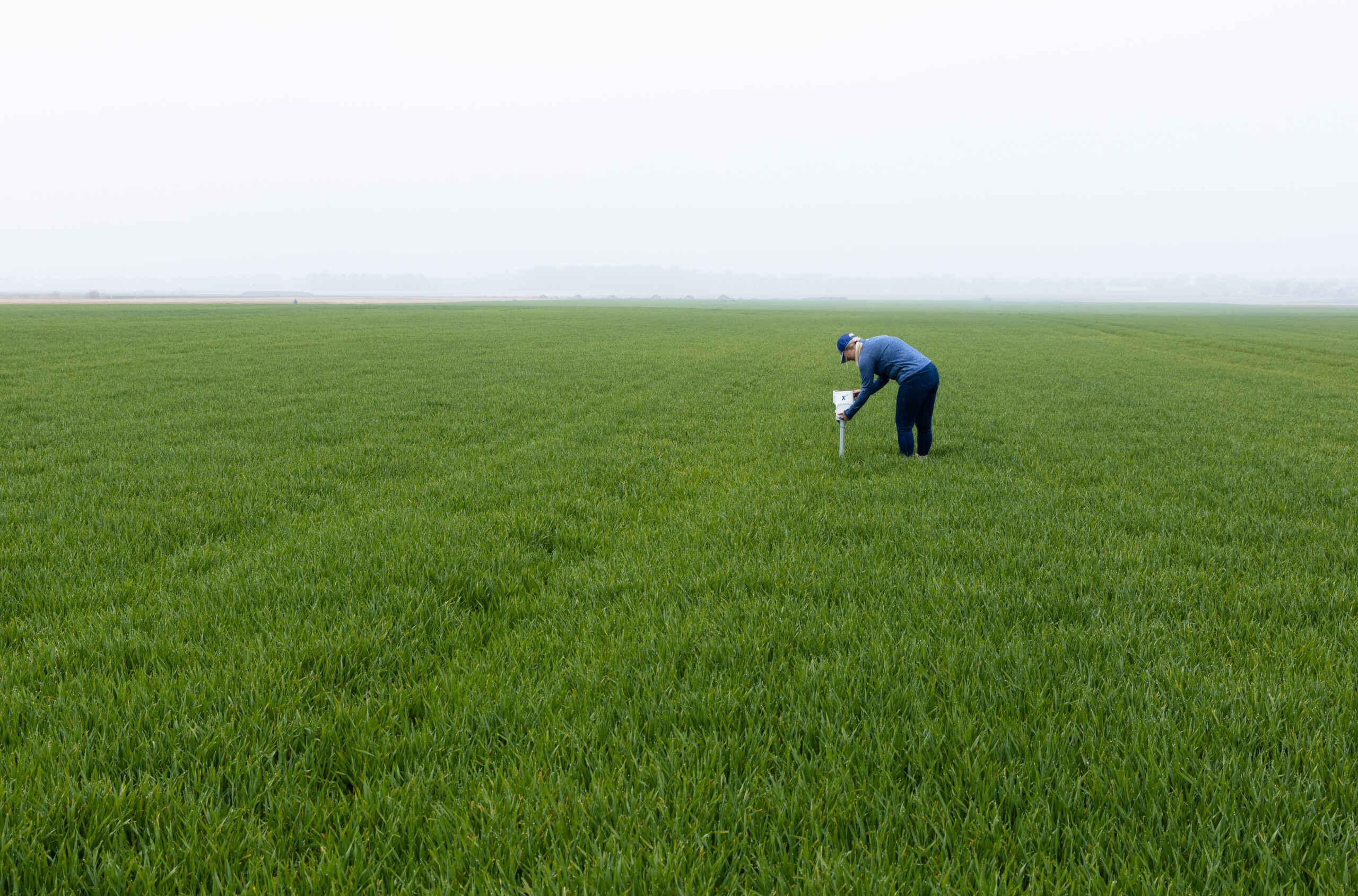
Today its Vertex probe uses a spiral design and built-in telemetry to read soil conditions and transmit them to the CropX platform. The newer Apex model samples moisture, temperature and salinity every four inches down a 12-, 24- or 36-inch profile. A deep-rooted crop and a shallow one should not be asked the same water question. That is the practical reason for multiple depths, not a race to make a longer probe.
The hardware family extends above ground. Evato measures actual evapotranspiration at the crop canopy. Rivo records rain. Strato watches local weather. Telemetry 2 brings other sensors into the system. Satellite imagery and machinery records add wider context. The software turns those inputs into irrigation plans, disease-risk views, nutrition monitoring and effluent-irrigation guidance. A dealer can oversee many fields; an adviser can inspect conditions without driving to each one; a grower can decide whether today’s pump run belongs on the schedule.
MEASURE
soil + canopy
COMBINE
weather + maps
DECIDE
water + inputs
CHECK
crop outcome
The fourth box is the hard one. Data becomes valuable only when a farm can compare the recommendation with what actually happened.
The acquisitions tell the plot
CropX has expanded less like a single invention and more like a collection of field notebooks. CropMetrics in Nebraska added pivot-irrigation expertise. New Zealand’s Regen brought effluent management. Dutch company Dacom brought decades of crop recording and disease-control work. California’s Tule contributed direct measures of plant water use. In 2025, Acclym, formerly Agritask, added enterprise supply-chain software and relationships with food and beverage companies including AB InBev, Nestlé, General Mills and McCain Foods. The 2026 purchase of SCIO brought portable near-infrared sensing of crop composition and quality. CropX describes SCIO as its eighth acquisition since 2020.
This sequence is the clearest explanation of how CropX differs from a stand-alone moisture probe. A sensor company can tell you the ground is dry. CropX wants to connect that fact to a disease model, an irrigation machine, a sustainability report and a harvest result. Each added link also increases the work of making different data systems speak plainly to one another. The ambitious dashboard has to earn its keep in a muddy, time-poor workplace.
“The future of agronomy isn’t just about making recommendations. It’s learning from outcomes.”Tomer Tzach / CEO, on the SCIO acquisition
The business sells hardware and access to a software platform, often through dealers and partners. CropX does not publish a simple price list, so a grower must request a quote for the relevant devices and service. The $30 million Series C in 2023, led by water-infrastructure company Aliaxis, funded product development and further acquisitions. What those acquisitions cost has not been disclosed. The field-level cost question is more immediate: will the savings in water, energy, inputs or time outweigh the probes, subscriptions and support? Knecht’s example says yes for that particular season and plot. It does not settle the arithmetic for another soil, crop or water tariff.
The dashboard meets the machine
Farm software often fails at the moment a user has to open another app. CropX’s partnership with irrigation-maker Reinke addresses that small but expensive irritation. In 2025, the two companies announced that CropX soil, weather and evapotranspiration data would appear inside Reinke’s ReinCloud 3 interface, while applied-irrigation data would return to CropX. The reading and the pivot command could sit beside each other. CropX also connects with machinery systems including CNH and John Deere. For a grower who already lives inside an equipment dashboard, this may matter more than another elegant graph.
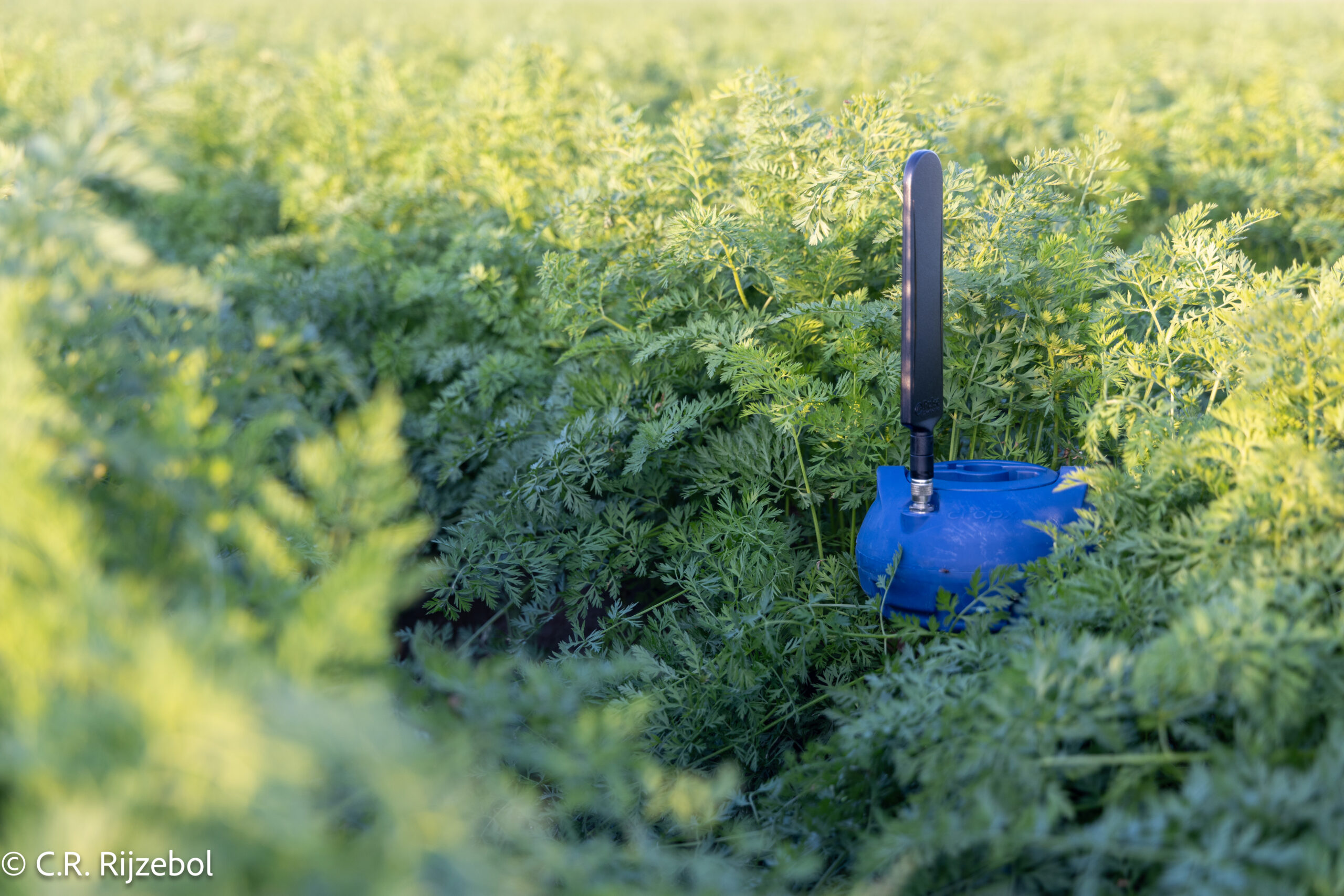
The company’s reach has grown with this model. CropX says more than 20,000 people use the system across more than 70 countries and over 100 crop types. Its customers range from independent farms to agronomic consultancies and food companies trying to measure supply-chain impacts. The recent Cool Farm Platform integration addresses the latter group’s emissions reporting. CropX Vision, launched in 2026, uses a smartphone photograph of vineyard canopy to estimate water stress. It is a neat inversion of the original soil probe: a camera reads the plant above ground, while the platform checks that signal against everything else it knows.
What the skeptic can borrow
Knecht’s method is more transferable than any brand slogan. He installed two probes in strategic places. He checked them against a cheap manual instrument. He enlisted a person who knew the field. He compared one managed area with another and counted both water and yield. That is a useful way to evaluate any agronomy tool: start with a decision, choose a measurement that can change it, and audit the result. A subscription bought before the question is clear is merely a new monthly bill.
The limits follow naturally. A sensor in the wrong soil zone can be precise about the wrong place. Weak connectivity can interrupt a remote view. A disease-risk model needs local conditions and crop context; a farmer still has to judge whether and when to spray. A rainfall-rich season may leave little irrigation to save. Where pumping is cheap and labor abundant, the economics will differ from a water-constrained farm. The platform is most persuasive where data arrives reliably, a user can act on it, and somebody checks the result.
CropX’s grander plan is to make that checking routine, from soil to harvest. The more modest insight is already enough: farming contains consequential things that cannot be seen from the surface. The sensible response is to measure them, argue with the measurement, and change your mind only when the field gives you reason.