A container has arrived. It needs a place to sit. Put it in the wrong stack, and someone will have to move another container to retrieve it. That extra lift has a name, a rehandle, and it consumes equipment time without getting the shipment any closer to its destination. Multiply the decision across a working terminal and a deceptively small problem acquires cranes, fuel bills and queues.
- Navis makes the software that coordinates cargo inside terminals.
- Better placement can reduce repeat handling and release usable space.
- The gains depend on integration, testing and people learning new routines.
At Sweden’s Port of Helsingborg, the difficulty was partly a planning system that made changing the yard layout cumbersome. The port also lacked a complete view of its operating data. Its account of adopting Navis N4 describes a familiar organizational trap: yesterday’s arrangement had become today’s constraint.
The second move is the expensive one
“The static yard planning solution we had been using was limiting our operational effectiveness,” said the port’s CIO, Sanjin Redzepagic. By April 2025, Helsingborg reported a 50% reduction in rehandles for vessel loading and an 8% rise in gross moves per hour. These are the port’s reported results, rather than a promise for every customer.
The mechanism matters. Digitizing berth planning helps the terminal prepare for arriving vessels; changing yard parameters lets it adapt how space is used. Information about the next movement improves the present placement. A container’s address becomes a decision with consequences.
A map that tells the machinery what to do
Navis sells terminal operating systems, or TOS. N4 coordinates container operations across the yard, quay, gate and transport equipment. It connects planning to execution, including through equipment-control integration in automated terminals. The buyer is a terminal operator; the daily users are the people deciding where cargo goes and how machinery gets it there.
Its origins fit the problem. Jon Shields and Erik Tiemroth founded Navis in 1988 around graphical planning technology for maritime operations. Ship stowage and the sequence of loading and discharge were central concerns. Before the current vocabulary of AI and visibility, there was the demanding business of putting boxes in a workable order.
The portfolio recognizes that terminals differ. N4 serves complex container operations. Master Terminal, marketed as Mixed Cargo TOS, handles varied cargo and the associated workflows and billing. Octopi offers a cloud-based subscription option for smaller and medium-sized terminals, with planning, electronic data interchange and invoicing. A terminal handling vehicles and bulk cargo has different requirements from a highly automated container hub.
The vessel side extends the same planning logic offshore. MACS3 supports loading calculations, StowMan addresses stowage, and Bluetracker combines fleet performance data. Customers therefore include ocean carriers, ship owners and technical managers as well as terminal operators. Navis occupies a specific layer of logistics: the operating decisions that make cargo handling happen.
The long rehearsal
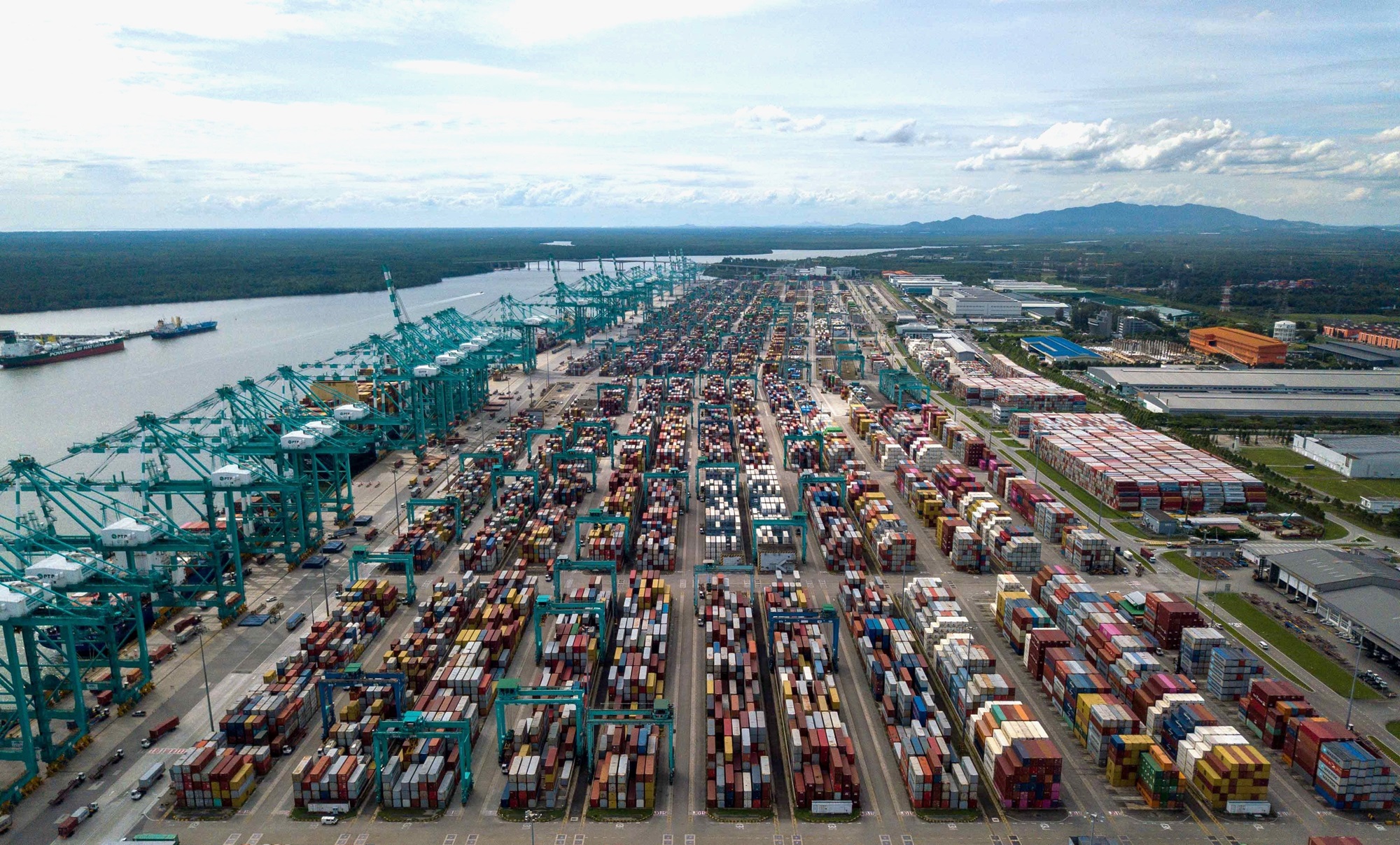
In December 2024, Malaysia’s Port of Tanjung Pelepas announced its N4 4.0 upgrade. It had used N4 since 2019. The port reported uninterrupted customer service through the transition and up to 48 cranes deployed per 12-hour shift over the go-live weekend. The software changed while the terminal kept working.
That is a useful corrective to the idea that buying enterprise software resembles installing an app. Navis’s testing brochure describes a review of 21 N4 go-lives in which testing averaged 62% of the project duration before launch. The test is whether software, procedures, connected systems and actual users can function together.
62%of pre-launch project time went to testing in a Navis review of 21 N4 go-lives.
At Teesport, partner DSP describes roughly a year of upgrade work: rewriting test cases, tuning environments, running test cycles and supporting internal training. Its consultants then supplied five days of on-site, round-the-clock go-live support. That work explains part of the service business surrounding the software: implementation, testing, training and ongoing support.
The work also takes people who understand terminals as well as software. Navis’s professional-services material describes former terminal operators working alongside operations researchers and N4 specialists. Its 2021 workplace survey offers one historical glimpse inside the business: 84% of respondents called it a great place to work.
Integration is equally specific. The Navis Ready program tests selected messages against particular N4 versions in a simulated environment. Buyers can check supported processes in advance. Compatibility has a scope. A terminal with limited IT resources and standardized needs may find Octopi a better fit than a heavily configured N4 project.
The price of a bigger plan
There are alternatives, including Tideworks Mainsail and CyberLogitec OPUS Terminal. Navis’s case rests on its terminal experience, product range and integration ecosystem. Kaleris describes more than 500 terminals using the Navis TOS portfolio. The relevant comparison is how a system fits the operation, including the effort needed to change it.
Ownership widened the proposition. Accel-KKR acquired Navis from Cargotec in July 2021 at an enterprise value of €380 million. In September 2022, Navis merged into Kaleris’s portfolio alongside yard, transportation and maintenance software. The ambition became connecting activity between logistics operations as well as improving each one.
Customer spending has its own scale. In June 2026, APSEZ outlined up to $100 million in two phases for automation and optimization through its Kaleris partnership, expanding across 15 container terminals at nine ports. That figure describes a program, not an N4 license price. It puts the decision in its proper setting: operational investment.
Tomorrow’s stack starts today
Kaleris’s May 2026 Yard Intelligence Suite launch adds AI-assisted yard planning for N4 terminals. Planners can describe priorities in their preferred language, compare scenarios and anticipate congestion while retaining decision control. The premise remains recognizable: place today’s cargo with tomorrow’s retrieval in mind.
There is a practical lesson beyond ports. Count the work people repeat, then trace it to the decision that created it. Test a change against the whole workflow. Navis’s most interesting subject is the relationship between an apparently reasonable first move and the avoidable second one that follows.