The strange thing about an unpaid loan is that it can become someone else’s investment. The borrower sees an obligation. The lender sees a problem consuming time and staff. A buyer sees a price at which uncertain future payments might make sense. National Credit Adjusters lives at that intersection, where the same account changes meaning as it changes hands.
- NCA buys distressed consumer accounts, giving lenders cash today in exchange for uncertain recoveries later.
- Its current pitch centers on owning accounts, evaluating data and controlling how recovery happens.
- A 2018 federal enforcement action makes oversight central to any honest account of the business.
One account. Two very different clocks.
A lender wants a decision: keep pursuing an overdue account, hire a collection agency, or sell it. A consumer wants an explanation: who is this unfamiliar company, and why is it contacting me? NCA’s business has to answer both questions. The sale may simplify the lender’s books while making the borrower’s life briefly more confusing.
Based in Hutchinson, Kansas, and founded in 2002, NCA purchases consumer-finance portfolios. Its stated markets include fintech lenders, installment lenders, credit unions, credit-card lenders and specialty-finance companies. The useful distinction is ownership. A collection agency can work an account for someone else. A debt buyer commits its own purchase money and takes the risk that collections will disappoint.
That is the underlying bargain. The creditor accepts a discounted payment now; the buyer pursues future recoveries. Profit depends on collecting enough to cover the purchase price and the work of recovery. The face value of the loans is therefore a poor substitute for understanding the investment. A large unpaid balance can still be an expensive disappointment.
Cash replaces uncertain recovery.
Purchase money goes at risk.
Records, communication, disputes, payments.
The spreadsheet before the phone call
NCA describes a six-stage acquisition process, beginning with a discussion and secure data transfer, then moving through analysis, follow-up questions, pricing and agreement. Its evaluation uses historical benchmarks, risk segmentation and behavioral analysis. In everyday language: what is in this bundle of accounts, and what is a sensible price for it?
The input matters. NCA requests account-level information such as balances, dates, product types and performance indicators. A portfolio with weak records creates a different problem from one with complete documentation. Our reading of this process is straightforward: buying well requires understanding both the expected payments and the operational burden that comes attached.
NCA occupies a market that also includes Midland Credit Management and PRA Group, both purchasers of nonperforming consumer debt. Ownership itself is therefore familiar territory. NCA’s stated positioning puts consumer installment and online lending experience alongside direct account control. Its argument is about the fit between a portfolio and its recovery operation, rather than an unfamiliar financial invention.
When the handoff became the problem
There is a harder chapter. In July 2018, the Consumer Financial Protection Bureau announced a settlement with NCA and former CEO and part-owner Bradley Hochstein. The Bureau found that outside collectors working for NCA demanded amounts consumers did not legally owe and threatened actions they lacked the intention or authority to take.
The finding reached beyond the vendors. The Bureau said NCA and Hochstein kept placing accounts despite knowledge or reckless disregard of unlawful practices. It imposed $3 million penalty judgments on each, with full payment suspended subject to NCA paying $500,000 and Hochstein $300,000. Hochstein was permanently barred from businesses that collect, buy or sell consumer debt.
Payment required under the conditional suspension of its $3 million civil penalty judgment.
This episode exposes the weakness in treating collection as a task that can simply be handed off. The practical lesson is to examine vendor conduct alongside financial performance. That conclusion follows from the enforcement findings; it does not require guessing what executives privately believed or when they changed their minds.
Control is the current sales pitch
NCA’s September 2025 account of its model emphasizes recovering debt it owns, using internal teams and selected agency and legal partners. The important qualification is that partners remain part of the picture. The company describes retaining oversight. Its current materials also state that it holds the RMAI Certified Receivables Business designation.
Technology adds another test of control. In a July 2025 article, chief information officer John Nokes argued for supervision, validation and privacy safeguards around AI-assisted work. It is a useful statement of operating philosophy, rather than evidence of a measured productivity gain. In this business, faster processing helps only when the information survives the trip intact.
“The ultimate goal is to have as many communication channels as possible available”
Rick Winters / Receivables Roundtable, 2023
A portal has to explain the unfamiliar name
For consumers, NCA offers a self-service payment portal and separate routes for disputes and complaints. Its financial-literacy page points to outside resources, including Know My Debt, Khan Academy and MyMoney.gov. These tools address the information gap created when an account moves away from its original lender.
One concrete policy deserves attention: NCA says it requests deletion of its own credit-report entry 60-90 days after a reported account is satisfied. Bureau processing varies, and the policy does not remove the original creditor’s reporting. The distinction matters because resolving one company’s entry and changing an entire credit history are different outcomes.
The people beyond the portfolios
NCA’s community accounts offer smaller, more tangible numbers. It reported $1,000 in school supplies for Allen STEM Magnet School and $1,000 in gifts for a local teen Christmas program during the 2024 holiday season. In June 2025, it described donations and supply collection following the Plevna tornado, coordinated with local relief organizations.
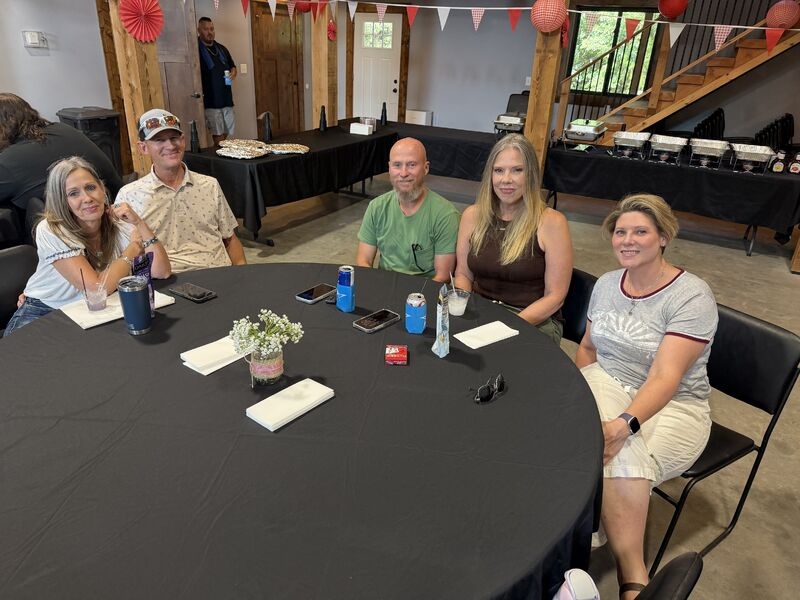
Those details give the company a human scale. They also sit alongside a demanding commercial test. Buying accounts works only if pricing, documentation, lawful collection and consumer communication hold together. For a lender choosing a buyer, the transferable idea is to inspect the full chain. The price closes the sale; what happens afterward determines the quality of the decision.