The pinball machine would light up, which was encouraging. It would not play, which was rather less so. Nathan Thompson had bought it from a customer on his teenage paper route, and now he had an expensive question in front of him. Inside were relays, switches, transformers and stepping mechanisms. He began making drawings, tracing how the pieces were supposed to cooperate. Before he built a storage company, he had to persuade a game to work.
There is a pleasing lack of grandeur in this beginning. No declaration about changing the world. A machine had failed, and a boy wanted to understand it. The repair introduced him to electronics. Decades later, Thompson is still concerned with the distance between owning a piece of equipment and being able to rely on it. At Spectra Logic, that distance can contain years of someone else’s work.
He founded the business in Boulder in October 1979, aged 19, while attending the University of Colorado. It began as Western Automation and eventually took the Spectra Logic name. The product catalog changed considerably along the way. The pinball machines stayed in the picture. Some of his restored collection now sit at company headquarters, giving the business of digital preservation a soundtrack with bells.
The education inside a broken machine
Thompson’s early education had a practical urgency: he expected to pay for college himself. Newspaper delivery was among his teenage jobs, and electronics became another source of work. He repaired pinball machines for other people. His recollection of that enterprise is agreeably free of retrospective polish. The repairs got done; efficiency and pricing still needed attention. A young business can provide an excellent syllabus, though it rarely awards course credit.
His appetite for selling preceded his command of circuitry. In second grade, he made Creepy Crawlers and sold them to classmates for lunch money. The school objected. Asked years later about his entrepreneurial streak, he said, “I’ve always been like that.” It is a compact answer to a question that often produces a much longer speech.
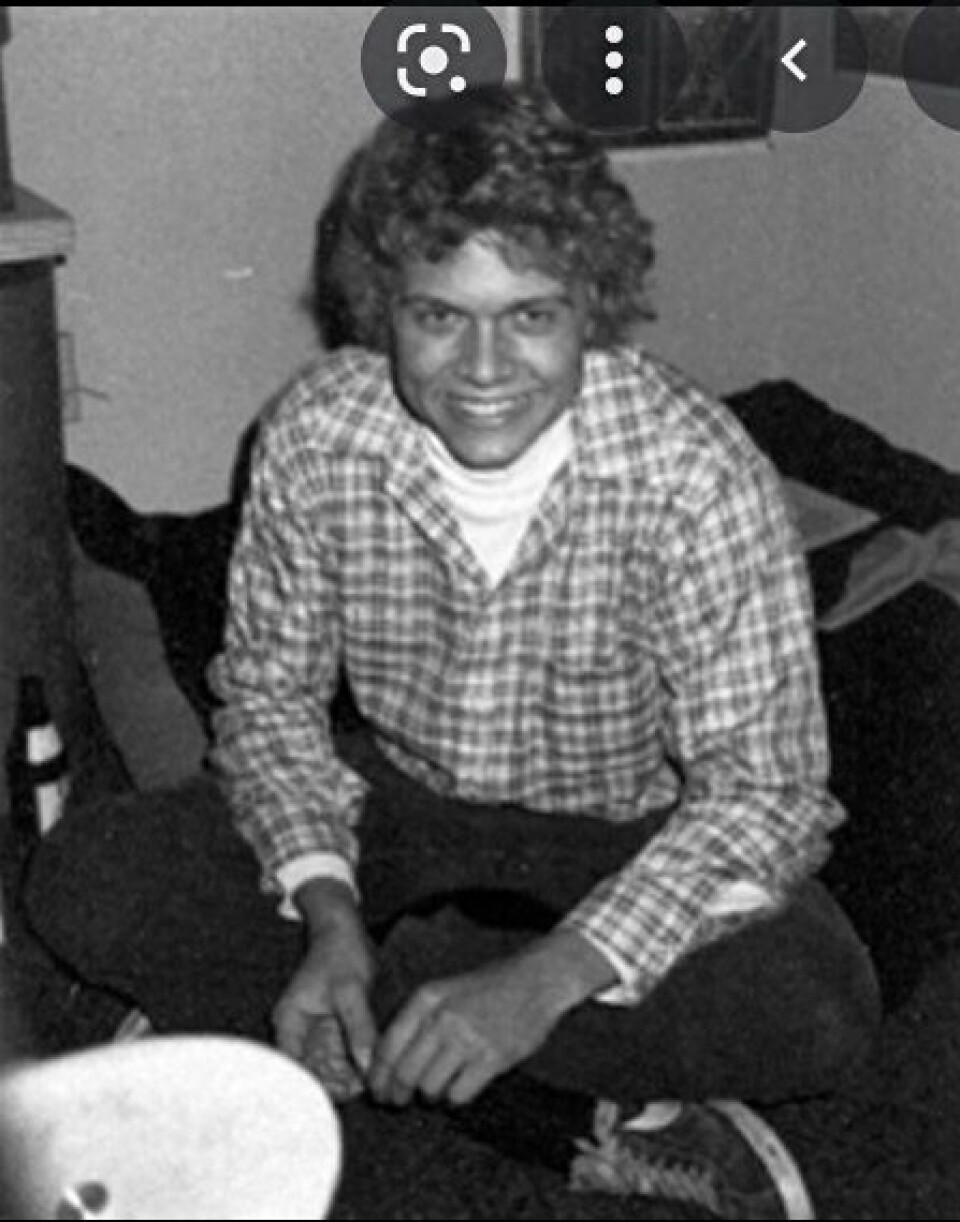
Programming arrived through punched cards and a Univac 1106 at Emily Griffith Opportunity School. He also worked with computer businesses before university. The details belong to an era of eight-inch floppy disks and machines whose components invited close attention. For Thompson, hardware and software were adjacent tasks. Something had to connect, a program had to run, and someone had to work out why it did not.
That combination matters to the later story. Storage looks like hardware when you photograph it: cabinets, cartridges, drives. Its usefulness depends on the instructions and relationships around those objects. Thompson’s early work put him on both sides of that arrangement. It also gave him customers before he had finished becoming an engineer.
A business with a repair bill
He started Western Automation with $500. Early products included memory boards and peripheral test equipment. The amount makes a convenient founding statistic, but the more revealing feature is the overlap: university and business were happening together. This was a company being assembled while its founder was still earning the degree that might conventionally have preceded it.
He also had to learn the part of engineering that begins after delivery. An early caching memory board failed for customers, and Thompson went to help resolve the problems. One Florida reseller was run by Dana, who later became his wife. Technical trouble is a peculiar route into a courtship story, but it gives his account a human complication that no clean corporate timeline could improve.
The young company needed abilities beyond its founder’s. Thompson brought in finance, engineering, sales and manufacturing people. Looking back, he admitted, “I probably did a few more things than I should”. It is a useful admission from someone whose early success depended on doing several jobs. A company grows partly by discovering which tasks its founder should stop collecting.
“I probably did a few more things than I should”
Nathan Thompson, reflecting on early management
The acquisition of the Spectra Logic interface business added another lesson. Asked by a bank what would happen if sales projections failed, Thompson pointed to the installed equipment that would still need repairs. There was value in being able to keep existing systems running. A new product attracts attention; a repair business asks whether the relationship survives the original transaction.
Western Automation acquired that business in 1988. The combined company took the Spectra Logic Corporation name in 1993. Those changes supplied a brand and established reseller relationships as the company moved further into storage. The chronology is less tidy than the familiar image of a founder unveiling a finished idea. Here, the business acquired parts of its identity as it went.
Selling something to build something
In 1999, Thompson made a decision that would shape the company’s next phase. Spectra had backup software, Alexandria, alongside tape library products. It sold the software division to Sterling Software. His later explanation was practical: the company lacked the resources to support both product lines properly. The sale helped fund the tape library business and the subsequent BlackPearl line.
There is an unromantic discipline in that account. Two useful businesses still require two sets of commitments. Keeping both can mean asking the same people, attention and money to do too much. Thompson chose a direction, then used the proceeds to support it. The decision gave the remaining operation room to develop rather than requiring every possibility to remain open.
Software returned to the portfolio as the company’s resources and ambitions changed. That is a useful wrinkle in the story. A decision made under one set of constraints need not become a permanent article of faith. Thompson has described storage products as substantial software undertakings in their own right. The cabinet is simply the part a visitor can point at.
By his February 2026 account, BlackPearl had become a particularly sustained engineering commitment. Its purpose includes making tape usable in a broader range of workflows. That work brings the conversation back to access: having a medium is only part of having a system. Customers need ways to put information there, manage it and bring it back when it becomes useful again.
Who gets to own the years?
Spectra remained privately held. In 2021, Thompson described it as entirely employee owned, with more than 75 percent of approximately 400 employees holding shares or options. Those are figures from that interview, rather than a present-day headcount. They show how he wanted the rewards of the business to be distributed among the people building it.
His public comments about legacy return to fair treatment and participation in equity. That is a more personal ambition than a product specification. A founder can design the terms on which people work together, as well as the things they make. Ownership gives that discussion a concrete form: part of the company can belong to the employees whose working years sustain it.
There is continuity in his language about staff. When Spectra received a Denver workplace recognition in 2012, Thompson credited employees for its success. Years later, the equity discussion adds another dimension to that sentiment. Praise is welcome. A stake in the business gives the sentiment a place in the company’s structure.
His Boulder ties extend beyond the office. He earned his bachelor’s degree in electrical engineering and computer science at the University of Colorado, received its Distinguished Engineering Alumni Award in 2003, and delivered the Leeds School of Business commencement address in 2011. In 2012, the Boulder County Business Hall of Fame inducted him. The student business had become part of the area’s business history.
A memory bigger than the machine
In 2016, Thompson published Society’s Genome with Spectra colleagues Bob Cone and John Kranz. The book considers digital preservation through the analogy of diversity in nature. Information passed between generations becomes part of a society’s accumulated knowledge. Preserving it requires thinking about how it could be lost, and how different approaches might protect it.
That frame stretches well beyond the immediate transaction of buying storage. The data someone keeps today may become useful to people who did not create it. A recorded performance, a research result or an organization’s history can acquire new meaning later. The preservation problem therefore includes future readers, with requirements the original owner may never anticipate.
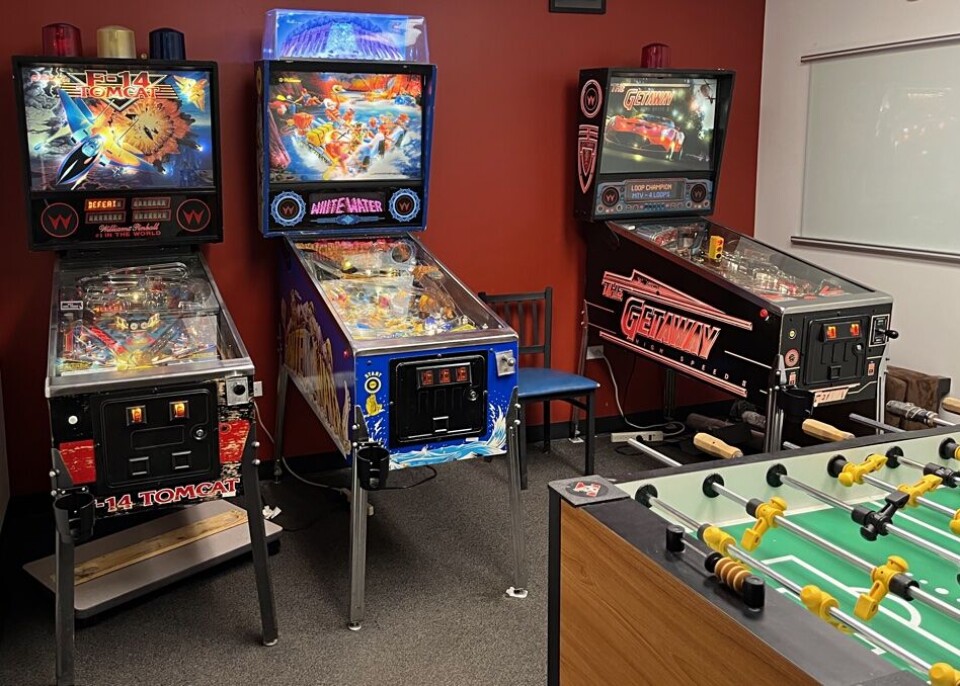
Thompson’s pinball collection gives that idea a modest, tangible companion. A restored game keeps an older piece of engineering available to be understood and enjoyed. The comparison has limits, of course. A tape library is unlikely to improve a lunch break by awarding a free ball. Still, both depend on care continuing after the novelty has worn off.
There is another interest in his biography: flying. He is a licensed commercial instrument pilot. Alongside the machines and the book, it rounds out a portrait of someone comfortable with systems that require attention. His career has left room for activities whose appeal involves understanding how things behave.
At Spectra, the continuing question is how to preserve information while the equipment and the ways people use it change. Thompson began with a machine that would light up but would not play. The larger company carries a more demanding version of that obligation: what has been entrusted to the machinery should remain available when somebody needs it. The pleasure of the original repair was getting something to work. The work now is keeping that promise open.