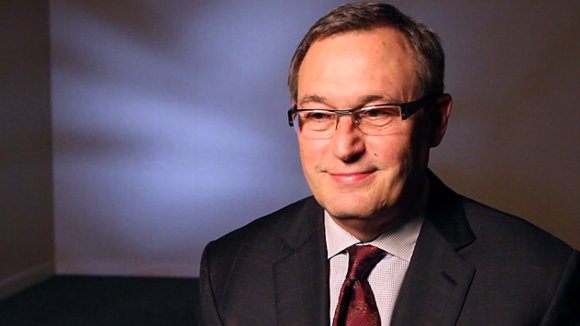
By the summer of 2024, Jonathan Michael had completed the sort of career that usually earns a person permission to decline meetings. He had joined RLI in 1982, risen through its financial and operating ranks, spent two decades as chief executive and stayed on as chairman. His retirement from the board in May closed a relationship stretching across more than forty years. Then Bradley University needed an interim president. Michael agreed to take the job.
The geographical journey was modest. Both institutions belong to Peoria, Illinois, where he had built his working life. The change in constituency was considerable. An insurance executive answers to policyholders, employees, regulators and shareholders. A university president has faculty, students, trustees, staff, alumni and parents to consider. There is no combined ratio for keeping all those people satisfied. A campus can make a quarterly earnings call look positively restful.
Michael already knew Bradley as a trustee, having joined its board in 2016. He was its board chair when President Stephen Standifird announced his resignation in May 2024. While Michael took responsibility for university operations, vice chair Matthew Vonachen assumed the chair’s duties. An established local executive was stepping into an institution that needed a successor, a search and someone willing to keep things moving in between.
First, learn where the numbers come from
Michael’s route to that responsibility began in accounting. He graduated from Ohio Dominican College in 1977 and worked at Coopers & Lybrand before joining RLI. Auditing and consulting for insurers helped turn a professional assignment into a career choice. Insurance interested him enough to move from examining businesses to working inside one.
At RLI, his progression was unusually legible. He became chief financial officer in 1985, executive vice president in 1992 and chief operating officer in 1994. In January 2001 he became chief executive. Those dates describe nineteen years of preparation inside the same organization, with the view widening from financial reporting to insurance operations and then the whole company.
That background matters in a business where collecting money today creates obligations that may be settled much later. Growth has a price, and some of that price takes time to reveal itself. A financial officer’s experience offers a useful vantage point on the promises an insurer makes. Michael reached the top having worked on both the accounts and the operations behind them. He could read the figures with some knowledge of how they had arrived there.
Twenty years, one recurring test
RLI serves specialty property, casualty and surety markets. Its customers bring risks that require particular expertise, and the business depends on deciding which promises to make and what to charge for them. Under Michael, the company expanded its product portfolio while keeping underwriting profitability central to its operation.
The resulting record gives the career its most substantial numerical anchor: twenty consecutive years of underwriting profit during his CEO tenure. Underwriting profit concerns the insurance business itself, before relying on investment income to improve the picture. It is a meaningful distinction when evaluating an insurer. Premium growth alone cannot tell the entire story of the risks accepted to produce it.
By November 2013, Michael was explaining the approach in a filmed interview about RLI’s seventeen-year run of combined ratios below 100. That longer company streak had begun before he became CEO. The conversation addressed both adding products and cutting back. The combination is revealing. Expansion makes an attractive announcement; reducing exposure can be a quieter and equally consequential management decision.
When Markel appointed him to its board in 2025, it offered another measure: RLI’s market capitalization had increased tenfold during his leadership era. That describes the company’s equity market value. It should be read alongside the underwriting record, with each measure doing its own job. Neither requires turning a long operating career into a tale of uninterrupted ease.
Consecutive years of underwriting profit during Michael’s CEO tenure
Give the expert a decision to make
Michael’s explanations of RLI often returned to the people who actually evaluate risks. Specialty insurance requires underwriters with enough knowledge to understand an unusual exposure and enough authority to respond. In an early interview as CEO, he described a preference for leaving a job unfilled rather than hiring someone unsuitable. The practical cost was a vacancy; the potential benefit was avoiding a much more expensive mistake.
He also described a policy-delivery process designed to get documents to customers within fifteen days, against a sixty-to-ninety-day norm he recalled at the time. It is a wonderfully unglamorous example of innovation. Nobody needs fireworks when the policy they have bought still has not arrived.
Employee ownership gave the discussion another dimension. Michael spoke about RLI’s employee stock ownership plan as an important reason people stayed. Employees had a financial stake in the organization whose risks they were helping to assess. Hiring, authority, service and ownership belonged in the same conversation. The customer’s experience emerged from how the company treated decisions inside its own walls.
Leaving was a management task, too
RLI announced Michael’s CEO succession in November 2020, more than a year before the change took effect. Craig Kliethermes would become CEO on January 1, 2022. Michael would first relinquish the presidency, then retire as CEO at the end of 2021 while retaining the chairmanship. The announcement described Kliethermes as only the third CEO in the company’s fifty-five-year history.
That schedule made the transfer visible in advance. Responsibilities changed in stages rather than vanishing into a single retirement notice. Michael remained chairman until May 2024, when David Duclos succeeded him as independent chair. The operating succession and the board succession were separate events, with separate people taking responsibility.
At his departure, Michael thanked the employee owners and acknowledged RLI founder Jerry Stephens. His career there had crossed from working with the founder to preparing the organization for leadership beyond his own tenure. Companies often describe continuity as a value. Here it had dates attached, and colleagues who would be there after he left.
“I’m collaborative. I listen.”
Jonathan Michael · Bradley presidential roundtable, August 2024
A campus asks different questions
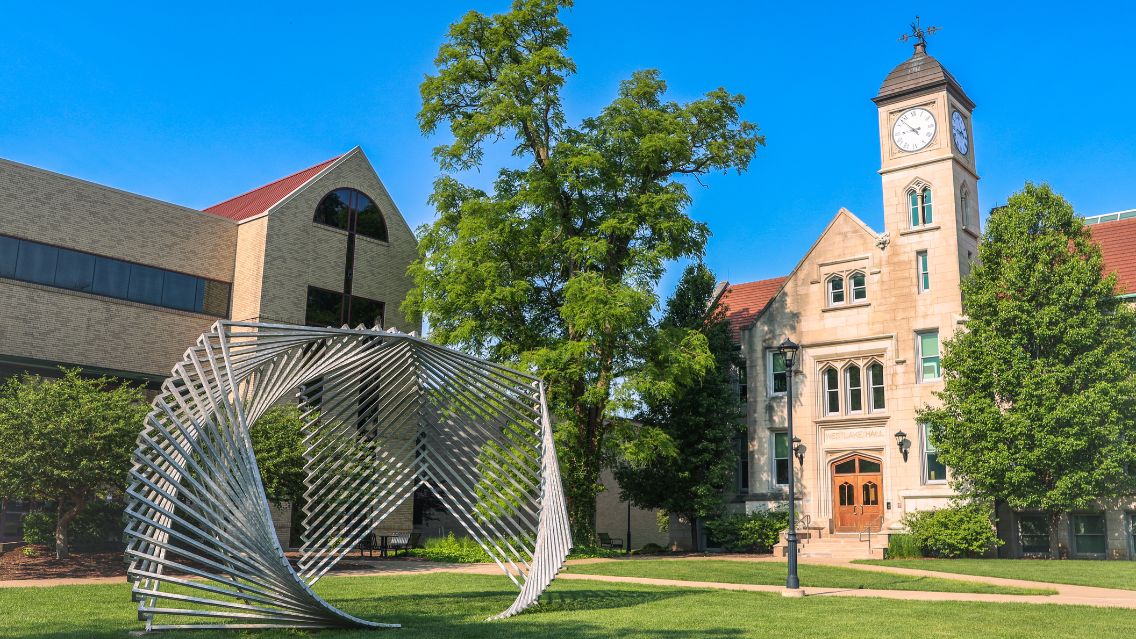
Bradley’s interim presidency put that experience into a less familiar setting. Standifird’s departure followed a difficult period of budget pressure and academic cuts. Faculty and students had protested. Michael inherited an institution where confidence in leadership was part of the work, alongside enrollment and finances.
At an August 2024 presidential roundtable, he offered an economical description of his style: “I’m collaborative. I listen.” The setting suited the claim. Questions had been submitted by the campus community, and he appeared with senior colleagues responsible for finance and enrollment. Listening had an actual agenda and people on the other side of the table.
The search for a permanent president would include faculty, staff and trustees, with Michael participating as a non-voting member. In September he emphasized bringing the wider community and alumni into the process. He also said the next president should choose the permanent provost. An interim appointment gave him authority; he was publicly identifying decisions that belonged to the person who would follow.
Enrollment was an immediate priority. His discussion encompassed incoming undergraduates, transfers, graduate students and online study. Those were different routes into the same institution, each requiring attention. His public comments also stressed improving the campus atmosphere after a contentious period. Financial expertise could help frame the task. It could hardly substitute for relationships with the people expected to carry it out.
The next president gets the keys
During Michael’s interim term, Bradley introduced the Bradley Commitment, a tuition program for qualifying Illinois students. Its grants covered tuition left after other eligible awards. The details matter: a tuition commitment has conditions and a funding structure, and families need to understand both. For an institution working on enrollment, access and affordability were immediate operational questions.
The permanent leadership decision arrived in March 2025. Bradley named James E. Shadid, a federal judge and a 1979 graduate of the university, its thirteenth president. The trustees had voted unanimously at a special meeting on March 12. Shadid would begin on April 1, bringing Michael’s interim assignment to its close.
Michael welcomed the appointment and spoke of a deeper appreciation for Bradley’s faculty, staff and students after working alongside them. He would return to the board. The distinction between serving an institution and occupying its principal office became concrete again: one responsibility ended while another continued. For the second time in a few years, his work included making room for a successor.
CEO succession announcedJanuary 2022
Kliethermes takes over
Interim presidency beginsApril 2025
Shadid takes over
A familiar business, a different seat
Michael’s corporate work continued as well. SS&C Technologies had elected him a director in April 2010. He became its lead independent director in November 2022 and took over as compensation committee chair in June 2024, following years on the audit committee. These assignments draw on different parts of an executive’s experience: oversight, financial scrutiny and judgments about leadership incentives.
In March 2025, Markel Group added him as an independent director. The appointment brought a former RLI executive onto the board of another business with specialty insurance at its core. Markel highlighted his financial and operating experience during its board-led business review. Michael’s response was personal and brief: “Markel Group is a company that feels like home.”
By 2026, Markel’s proxy also listed him as chair of Bradley’s trustees. The combination leaves a recognizable picture of his later career: corporate oversight and a continuing commitment to a Peoria institution. The offices change, and so does the kind of authority attached to them. The recurring task is to help an organization make decisions that other people will have to live with. Michael has spent a long time learning that task from several sides of the table.