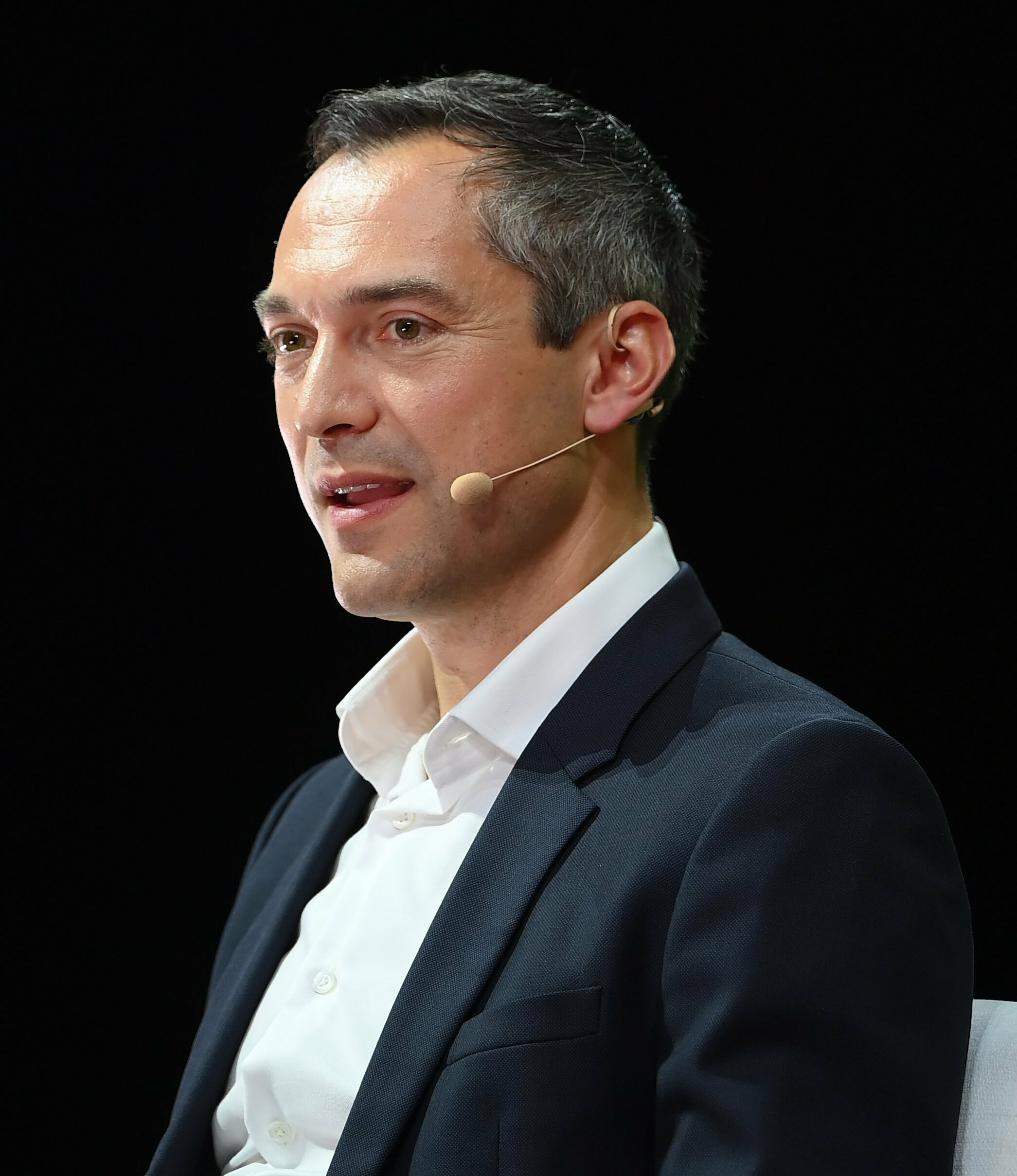
Most people remember the cereal. Obama O's. Cap'n McCain's. Boxes designed by desperate founders, filled with cheap cereal, sealed with a hot glue gun, sold for $40 each during the 2008 Democratic National Convention. The story gets told at startup conferences like scripture. What gets lost is that Nathan Blecharczyk was the one who made sure the website actually worked while his co-founders pitched boxes of breakfast propaganda.
That's the pattern with Blecharczyk. While Brian Chesky becomes the face of Airbnb and Joe Gebbia designs the experience, Nathan builds the thing that makes it possible. He's the technical brain, the strategic thinker, the guy who can code an entire platform in Ruby on Rails and then pivot to running Airbnb China. He doesn't chase the spotlight. The spotlight would slow him down.
The Tinkerer's Apprentice
His father, an electrical engineer, would drag old Xerox machines and soda dispensers into their Boston home. "Take it apart," he'd tell young Nathan. "See how it works." By 12, Nathan was writing computer programs. By 14, those programs were a business. By 19, that business had made him a millionaire - enough to pay his Harvard tuition without loans.
That's not a hustle culture fairy tale. That's a kid who learned early that curiosity plus persistence beats credentials. His mother, a teacher, made sure he valued education. His father made sure he valued understanding things from the ground up. The combination produced someone who could thrive at Harvard while knowing he didn't need Harvard to build things people wanted.
"I don't feel like my life happens to me. I feel like I happen to my life. I feel that I'm in the driver's seat."
- Nathan BlecharczykAt Harvard, he studied computer science not because he needed to learn to code - he'd been doing that for seven years - but because he wanted to "expand my skill set and round me out as an individual by being surrounded by people who are very well-rounded." Translation: smart people learn from other smart people, even when they already know how to do the thing.
The Professional Marriage
Choosing co-founders, Blecharczyk says, is like a professional marriage. "You're going to go through tough times, and you need to remember that ideas can change, but business partners can't." He chose Brian Chesky and Joe Gebbia. They chose air mattresses.
The origin story is famous: Chesky and Gebbia couldn't afford rent in San Francisco. They bought three air mattresses, created a website, and charged people to sleep on their floor during a design conference. Blecharczyk, working remotely, built the site. The idea was absurd. The execution was worse. Nobody cared.
The Cereal Box Gambit
By late 2008, Airbnb was dying. The founders were broke, facing eviction, and running out of options. Then Chesky had an idea that sounded like a joke: sell limited-edition cereal boxes themed around the presidential candidates.
They printed hundreds of boxes, bought the cheapest cereal they could find, and hand-folded each box with a hot glue gun. They sold out. The stunt raised $30,000 and caught the attention of Paul Graham at Y Combinator, who was less interested in the idea than in the founders who would sell cereal to avoid quitting.
That hustle bought them time. Blecharczyk's code gave them a platform. Y Combinator gave them credibility. What happened next was harder: building trust at scale.
Engineering Trust
Airbnb's real innovation wasn't the website or the business model. It was convincing strangers to let other strangers sleep in their homes. That required engineering - not just code, but systems that made trust legible. Blecharczyk led the creation of Airbnb's engineering, data science, payments, and performance marketing teams. Every feature had to answer the same question: does this make people feel safer?
"Our interest isn't in just serving the guests and hosts," Blecharczyk has said. "We need to serve the entire community. If that means we have to take action against the host, we will." He means it. Airbnb's anti-discrimination policy is backed by permanent bans. The platform's review system is designed to surface problems before they become crises. The payment infrastructure ensures that hosts get paid and guests aren't scammed.
"For entrepreneurs, choosing your co-founders is like a professional marriage. You're going to go through tough times, and you need to remember that ideas can change, but business partners can't."
- Nathan Blecharczyk on partnershipsIn 2015, Blecharczyk oversaw Airbnb's expansion into Cuba - a move that required navigating international regulations, building local partnerships, and convincing Cuban hosts that an American tech company could be trusted. It worked because Blecharczyk understands that technology is only as good as the relationships it enables.
From CTO to CSO
In 2017, Blecharczyk transitioned from Chief Technology Officer to Chief Strategy Officer. The move made sense: he'd built the tech stack, hired the teams, and proven he could execute at scale. Strategy was the next frontier. He also became Chairman of Airbnb China, a role that requires balancing global ambitions with local realities.
"We've always thought that it's important to have positive relationships with local government, rather than taking a confrontational kind of stance," he's said. That pragmatism defines his approach. Airbnb doesn't bulldoze into markets; it negotiates, compromises, and builds partnerships. That's slower than disruption. It's also sustainable.
Today, Airbnb operates in more than 220 countries and regions, serving over 4 million hosts. The company went public in 2020 at a valuation exceeding $100 billion. Blecharczyk owns 62 million shares, worth about $9.4 billion. He ranks as the 203rd richest person in the world according to Forbes. He's not slowing down.
The Giving Pledge
Blecharczyk and his wife, Elizabeth Morey Blecharczyk - a neonatologist - joined The Giving Pledge, Warren Buffett and Bill Gates' initiative for billionaires to commit to giving away the majority of their wealth. It's not a stunt. It's a statement about what wealth is for.
The couple has two children. Blecharczyk has been a vocal supporter of parental leave for fathers, arguing that being present for your kids isn't a perk - it's essential. He lives in San Francisco, maintains a low profile, and continues to think about scale, strategy, and systems.
"We're a provider of experiences, not strictly accommodation."
- Nathan Blecharczyk redefining hospitalityWhat's Next
In February 2026, Blecharczyk sold 4,260 Airbnb shares for approximately $533,735. He still holds 62 million shares. He's playing the long game, balancing active management with strategic patience. His focus remains on scaling Airbnb's global impact while maintaining community trust and local government partnerships.
The kid who dismantled Xerox machines in his Boston home is now dismantling assumptions about hospitality, trust, and what technology can enable. He's not done tinkering. He's just working on bigger machines.