The first classroom was a place to put files. In October 2024, Nate Herk opened a free Skool group so viewers of his new YouTube channel could find the templates and resources behind his AI automation tutorials. There was no grand origin myth in that decision. A person made a video; the people watching needed the pieces. The group gave those pieces an address.
Less than two years later, the group had become AI Automation Society, with more than 450,000 members. His YouTube channel passed one million subscribers. The scale invites a neat success story, but the more interesting story begins before the numbers, with a business intelligence analyst trying to make work move more smoothly.
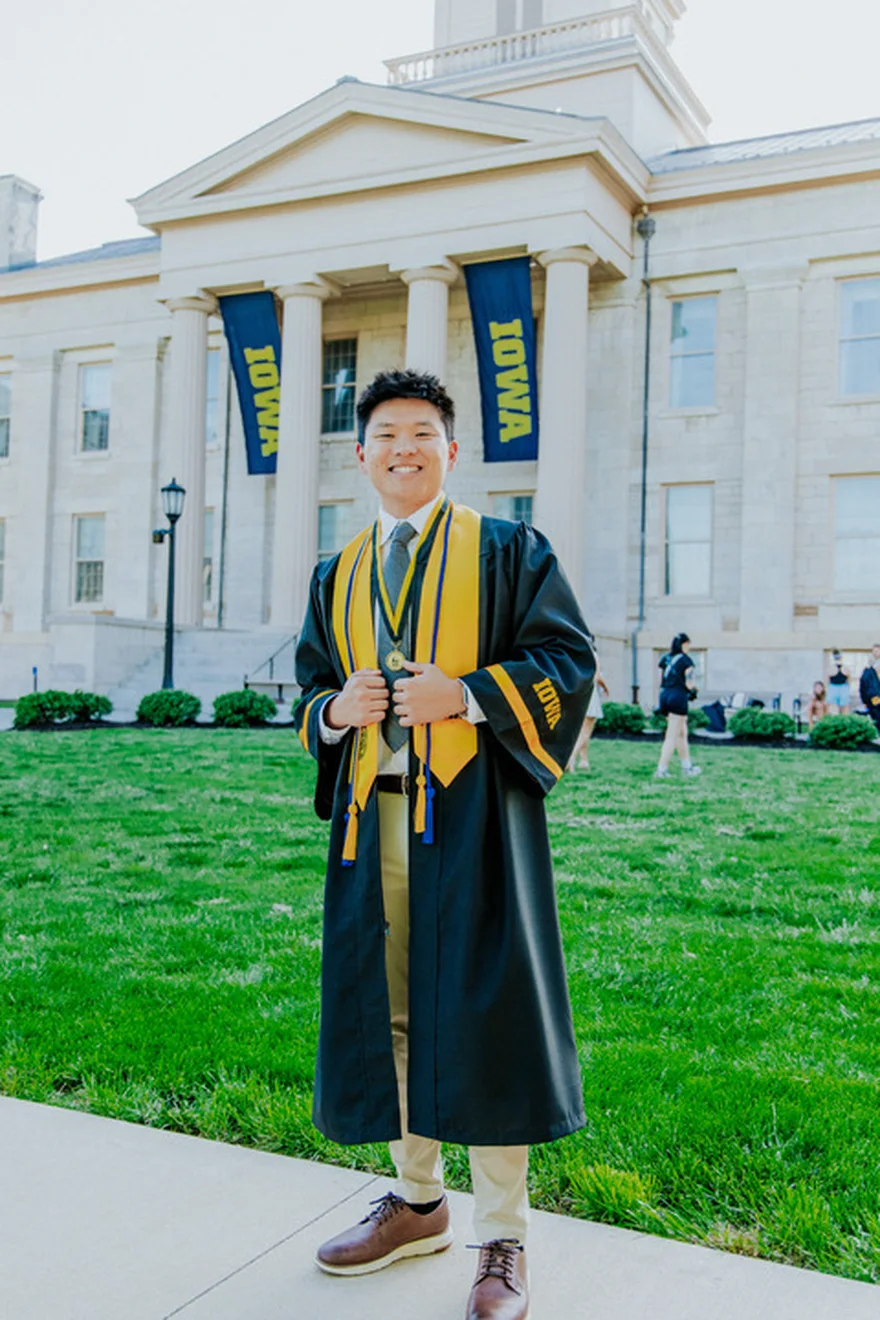
Herk’s full name is Nate Herkelman. He graduated from the University of Iowa in 2024 with majors in Business Analytics and Marketing, then moved to Salt Lake City for a business intelligence role at Goldman Sachs. He built dashboards and internal automations. He enjoyed connecting data and creating systems that could do something useful every day without being nudged along.
The ceiling in the spreadsheet
Traditional automation had a boundary. Rules could move data, sort a form, or update a dashboard. They struggled when a task asked for interpretation. A sales inquiry may be urgent, vague, promising, or all three. The instructions that cover one inquiry can fail on the next. Herk began experimenting with AI agents to handle that messier territory, and he started documenting the experiments in public.
“I loved the puzzle of connecting data and building systems that ran hands-free and delivered daily value.”Nate Herk, reflecting on his business intelligence work
He published his first YouTube video in September 2024. He began with curiosity and a wish to record what he was learning as someone without a coding background. By November he had left Goldman Sachs to work on automation full time. The turn took two months on the calendar. The subject matter itself was less sudden: it grew from the same appetite for useful systems that had made business intelligence satisfying.
The channel taught n8n, APIs and AI agents through live builds and visual workflows. It also created a particular kind of accountability. A video that says an agent can answer an email must eventually show the email. Herk’s audience could inspect the steps, take the template, and report where the build got stuck. His free group, opened on October 15, 2024, gave those viewers somewhere to continue after the video ended.
Graduates with majors in business analytics and marketing; works in business intelligence at Goldman Sachs.
Posts his first YouTube tutorial, opens the free Society, and leaves his analyst role.
Co-founds TrueHorizon AI, builds client systems, and later exits the company.
Publishes Becoming AI Native; his channel passes one million subscribers.
A tutorial meets a client
The audience also became a route to client work. By June 2025, the channel had more than 230,000 subscribers and was sending a stream of inquiries to Herk’s agency. The firm used automation on its own sales process: research on a prospective client, a brief before a call, and monitoring tools for work already delivered. It is an unusually literal business model. Herk taught automation, used it to run the teaching business, and sold it to clients who had watched the lessons.
In January 2025 he co-founded TrueHorizon AI, a consulting and product studio. The company reached more than $100,000 a month in revenue, and he exited in December of that year. Client work gave him examples with consequences beyond a polished screen recording. A system had to survive an inbox full of odd messages, a changing web page, and the person who would inherit it after the demonstration.
One of Herk’s LinkedIn posts lays out a small example. He built an inbox agent in three hours and was paid $1,650. It classified mail, routed messages, updated a log, and let the client ask questions from Slack. Then came the more revealing part of the post: he said that, faced with the same request now, he would first ask about the client’s larger bottlenecks. A successful build had taught him to question whether the build was the best answer.
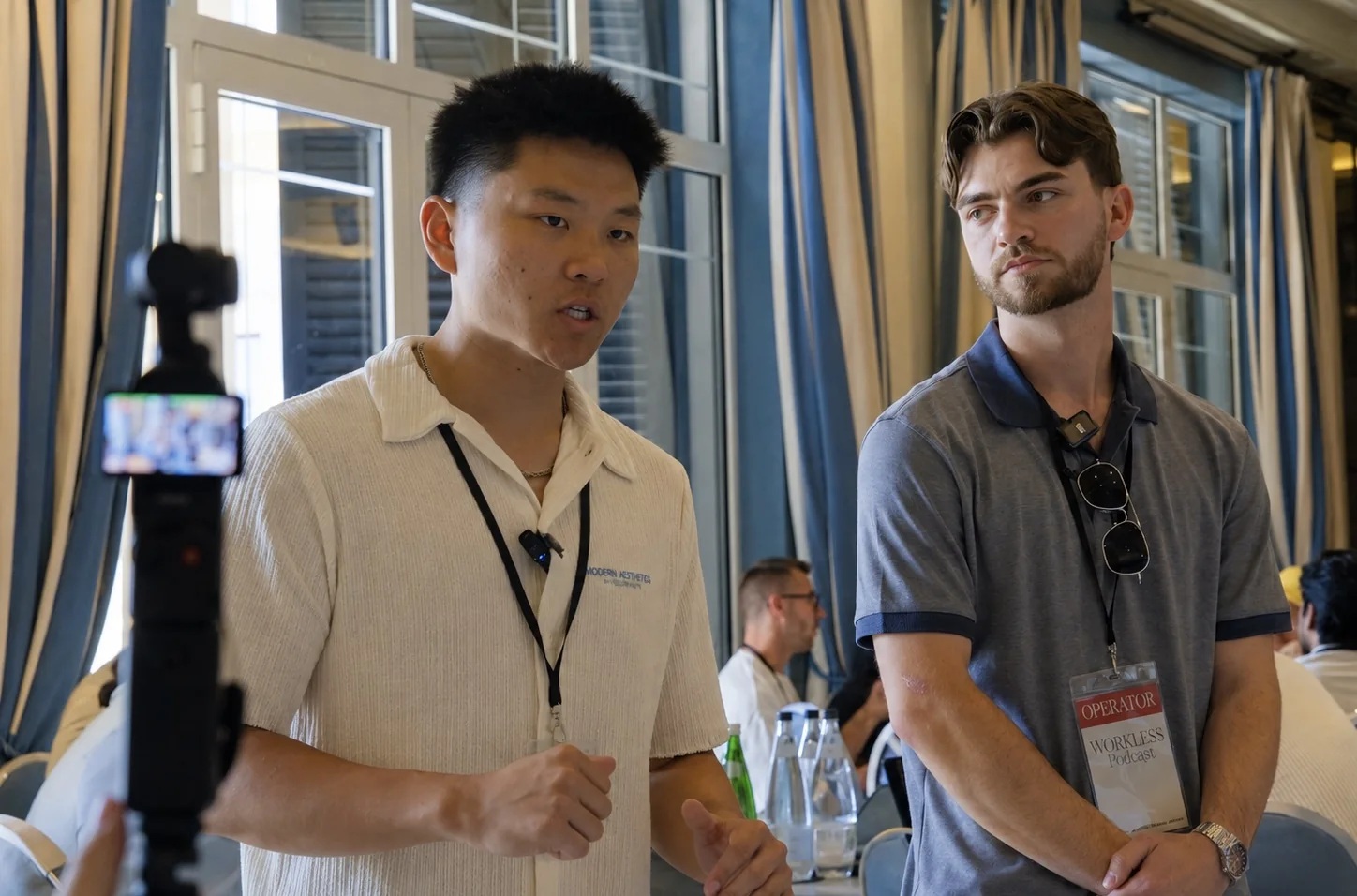
That is a useful distinction for people seduced by a diagram full of nodes. An impressive automation can still solve a small problem elegantly while the expensive one remains. Herk’s teaching increasingly returns to process mapping, reliable outcomes, and the judgment required to choose where an agent belongs. In a LinkedIn lesson he put it bluntly: clients care whether a system saves time, makes money, and keeps working. Complexity earns no bonus points.
A room bigger than the channel
The free Society is now the main stage for that work. Herk says it grew from a YouTube resource folder into a community of more than 450,000. Its paid companion, Society Plus, offers curriculum, templates and weekly support. Members joined from the United States, Germany, India, Brazil and Australia; connections inside the group led to friendships, collaborations and meetings at conferences. A lesson can travel everywhere; a community gives people a chance to answer back.
It has its own small comedy. Herk recalled members joking that he must be one of three triplets, each working an eight-hour shift, to keep up with his publishing and building. The joke flatters productivity but also points to the puzzle his work tries to solve: how much of the repeated labor can a system carry, and how much still needs the person who knows what good work looks like?
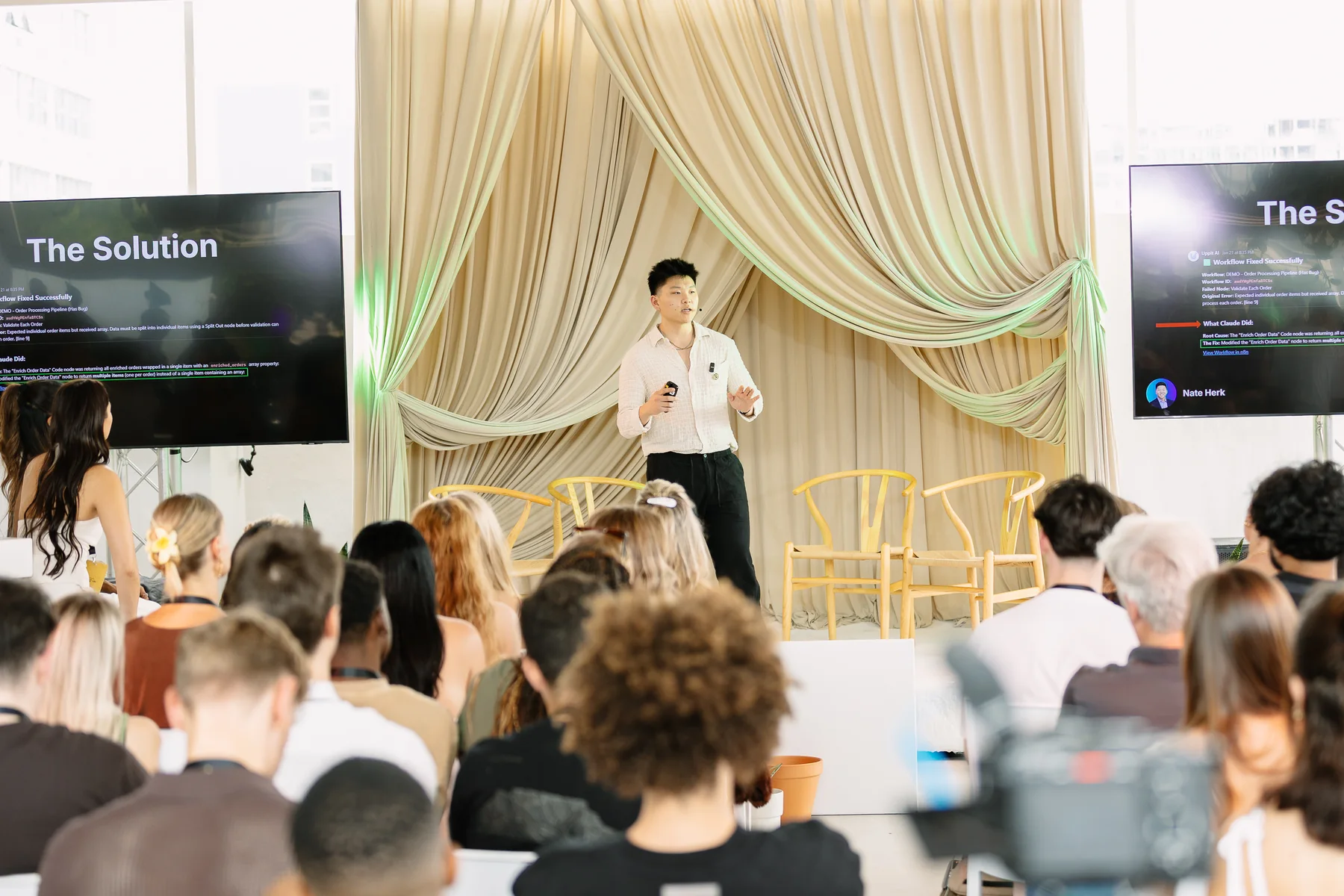
In 2025 he brought that question to a different kind of stage. n8n’s community promoted an Agentic Arena contest in New York pitting Herk against Jack Roberts, with $10,000 at stake. He also won four Skool Games across the year and received n8n community recognition. Microsoft included him in its Learn With creator program, where his description of the work remains plain: helping small businesses save time and cut costs through AI automation without requiring a coding background.
The book arrives after the builds
In 2026, Herk published his first book, Becoming AI Native. Its framework is organized as Mindset, Method, Machine, in that order. It reached the top of four Amazon categories. Its twelve chapters each address a shift in how a person thinks about AI. One line carries the argument particularly well: “You can outsource your thinking. You cannot outsource your understanding.”
There is an apparent tension there, and it is a productive one. Herk makes a living showing people how to delegate tasks to software. Yet his recent public comments keep returning to responsibility for the result. In September 2026, he argued that even if AI completes only the first 30 percent of a task and a person takes it the rest of the way, that is still useful. He also argued that an easier path to publishing makes generic work easier to replace. His answer is lived experience: the details a builder notices because a real system once broke in a real setting.
The current business around that teaching is Uppit AI. It brings education, community, events, coaching and certification into one ecosystem, with the free Society at its center. It is a broad set of ambitions for someone whose first community was a place to leave download links. The connecting idea is steady, though: make practical AI skills visible, testable and useful to people who did not arrive with an engineering degree.
The technology in Herk’s earliest tutorials will keep changing. A viewer may find a new button, a different model, or a tool that did not exist when a lesson was recorded. His career so far suggests a more durable lesson than any particular workflow: begin with the work, find the point where judgment is needed, and build only what helps. The little resource folder grew because people had questions after the video. So far, Herk has kept giving those questions somewhere to go.
There is also a personal reason this approach lands with beginners. Herk did not enter the field as a software engineer. He came through marketing, analytics, dashboards, a corporate job, and the impatience of a process that could be improved. In his videos, the learner sees the intermediate steps rather than only the finished agent. For someone opening n8n for the first time, that choice matters. A workflow with a visible mistake and a visible fix is easier to trust than a flawless demo that ends before the hard part begins.
Keep reading and watching
Herk posts tutorials and public builds across his channel and community. These are useful starting points for seeing the systems behind the story.