Nate Baker’s early education in real estate came with a room in Barry Finegold’s finished basement. The founders of Qualia had a software company to build and an industry to learn. Finegold, a partner at the Massachusetts law firm Dalton & Finegold, supplied unusually convenient access to both. They could stay at his house, then go to the office and watch the people whose work their product was supposed to improve.
There are comfortable ways to misunderstand a customer. A survey allows several. A slide deck can accommodate almost anything. Working beside paralegals as a closing approaches leaves considerably less room for fantasy. Baker and his co-founders, Lucas Hansen and Joel Gottsegen, had chosen a business in which the details would eventually have to agree: names, documents, numbers, people, money.
Finegold became Qualia’s first customer before the software existed. His firm wanted better ways to follow files and automate work. The founders wanted to understand the process firsthand. A finished basement is an unconventional address for a product education, though it has the advantage of making the commute to your teacher rather short.
A market chosen on paper
Baker arrived with a technical background. He studied mechanical engineering at the University of Pennsylvania, graduating in 2014. While still a student, he founded Nebu, a machine learning and data analytics company, in 2013. He also worked as an investor at Formation 8, concentrating on enterprise and energy technology. Before a closing file occupied his attention, he had already spent time on both sides of a young business: building one and evaluating others.
He did not come to title software after a career processing property transactions. In his account of Qualia’s beginnings, the founders researched markets and selected a category with difficult business workflows. They began building before talking to customers. Baker has since been candid about the shortcomings of that sequence. Some early assumptions were wrong; work had to be discarded. The tidy research exercise needed an encounter with an actual working day.
The choice nevertheless gave him a substantial problem. Buying a property requires different businesses to coordinate around one transaction. A title professional’s software has to help those relationships function while the file changes. An engineer can enjoy the shape of that problem. The people waiting to close have less reason to admire its complexity.
The customer became the classroom
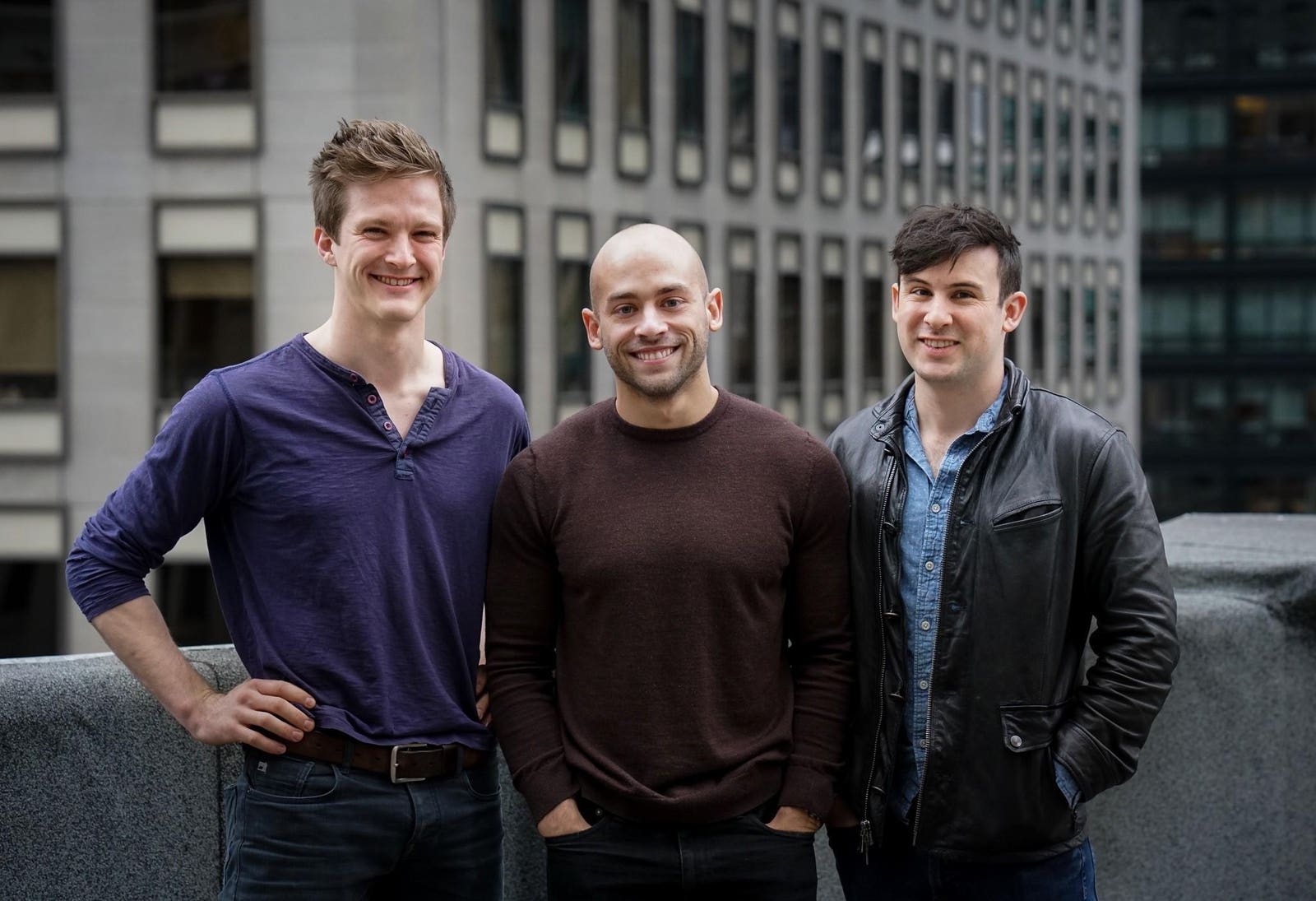
Qualia was founded in 2015. Finegold’s willingness to invite its young team into his business gave Baker an apprenticeship that market research could scarcely reproduce. The founders could watch work pass between attorneys and paralegals. They could see why a delay affected people beyond the person handling the file. A transaction looked different when the people responsible for finishing it were sitting beside you.
Baker later described early colleagues rotating through stays with Finegold. The arrangement included meals with the family and tutoring the children in mathematics. It is a pleasingly literal exchange: help with the homework, receive an education in title. This was customer understanding with domestic arrangements attached.
“You can’t innovate from a distance.”
Nate Baker, reflecting on Qualia’s early years
That reflection on the basement years emphasizes relationships as much as observation. Finegold had entrusted a consequential part of his business to recent graduates learning the industry. Baker’s account gives the customer an active role in the company’s education. The product emerged through contact with people who understood the work and had reasons to be demanding about it.
The early believers
Another relationship began in modest surroundings. In 2015, John Voso of Old Republic Title visited Qualia’s first San Francisco office, located behind a lighting design studio. Baker recalled the visit a decade later, noting that Qualia did not yet have a functioning product. Voso, whom Baker described as a fellow Clevelander, helped establish a connection between the young company and a long-established title insurer.
The setting is worth keeping in view. Much of a founder’s public story eventually gets told through financing rounds. In the beginning, there are rooms borrowed for other purposes and people willing to take a meeting. A lighting studio and a customer’s basement are ordinary spaces carrying rather more ambition than their floor plans suggest.
The business grew beyond those rooms. By December 2017, Qualia had expanded from 15 states to all 50 over the preceding year. Its team grew from 20 to more than 60 people during that period. Asked about his secret to success, Baker answered: “It’s our people.” The answer fits a company whose early progress depended on someone opening an office door and explaining what happened inside.
In 2018, Baker, Hansen and Gottsegen were selected for Inc.’s 30 Under 30. Qualia said at the time that about five percent of the national real estate market transacted through its platform. The three also appeared in Forbes’ 2019 Under 30 recognition for enterprise technology. Awards supplied a public shorthand for progress. The more demanding verdict continued to arrive in the form of customers using the software to close.
Fifty states, many ways to close
Nationwide availability brings a particular difficulty in real estate: local operations do not become identical because a software company has crossed a state line. Baker’s subsequent product decisions show a continuing effort to handle different kinds of title businesses. A system suitable for one office must acquire additional capabilities to serve a large organization with multiple branches and partners.
In December 2020, Qualia acquired Adeptive Software, the developer of ResWare, and announced a Series D financing that valued Qualia above $1 billion. Baker described the acquisition as adding enterprise software used in complex title operations. His explanation also acknowledged the variety of homebuyers’ preferences. Some wanted in-person service; others wanted remote options. The infrastructure had to accommodate the differences.
Then came Qualia Atlas in March 2023, built for enterprise title and escrow organizations. Its capabilities included permissions for operations with multiple branches, order-opening automation and connections to internal business systems. These are the less photogenic parts of software. They matter when the customer’s organization has grown too complicated for an elegant demo to explain it.
The Old Republic relationship reached another stage in January 2025, with a strategic technology partnership and Qualia’s acquisition of RamQuest and E-Closing. Baker welcomed Old Republic Title as Qualia’s largest customer. The visit behind the lighting studio had acquired a long afterlife.
Repeating the experiment
Baker also took his interest in specialized software into Fractal Software, where he is founder and chairman. The venture studio helps start businesses serving particular industries. In a January 2026 conversation, he discussed Fractal’s experience launching roughly 150 companies. Qualia remained his full-time operating job; Fractal offered another setting in which to examine how software businesses get built.
The connection between the two ventures is straightforward. A narrowly described industry can contain extensive, difficult work. Software that becomes useful in one part of that work may find more responsibilities nearby. Baker has argued that early estimates of a market can miss how much additional value a business might eventually provide. The customer’s current software budget describes a starting point.
He has also cautioned against expanding too eagerly into additional products when the core product needs attention. That tension makes his thinking more interesting than a simple invitation to build more things. The discussion returns to structured workflows: software needs a dependable understanding of the work before it can take on a larger share of it.
Teaching the file to move
In September 2025, Qualia introduced Qualia Clear, an agentic AI system for title and escrow. Its proposed duties included preliminary title examination, pre-closing checks and answering business questions. The ambition followed naturally from the company’s earlier work. Once a platform contains the transaction’s information, the next question is how much work it can perform with that information.
Baker’s timetable became more aggressive. In March 2026, as Qualia introduced Clear 2.0, he said: “We think that 80% automation is achievable this year.” The statement was a forecast for 2026. It expresses his expectation, rather than a measured result establishing that the industry had already arrived there. For a customer, the meaningful tests remain specific: what the system does, how its work gets reviewed, and whether a file advances correctly.
- OrganizeKeep documents and transaction details together.
- AssistAnswer questions and compare information.
- ActCarry out tasks within the closing workflow.
In June, Clear Essentials brought a more immediate entry point to Core customers at no additional cost. Its launch tools included an assistant, an order opener that reads contracts, and a processor for closing disclosures. The order-opening process explicitly left people reviewing and approving extracted information. Even a vision of extensive automation has to make room for the next person checking the file.
The money has to arrive, too
By October 2026, the coordination problem had acquired two fresh developments. Qualia announced an expanded Compass International Holdings partnership on October 8, with title operations moving toward a shared platform and additional rollout planned through 2027. Bigger customers bring more handoffs to connect.
On October 22, Qualia announced digital earnest-money and cash-to-close products. EMD became available to Core customers; Cash to Close began in limited release. The products tied incoming payments to the order, including the receipt and ledger entries when funds arrive. After all the documents and messages, the money still has to turn up in the right place.
That is a useful place to leave Baker: still following the transaction into its practical details. His public ambitions now include software capable of doing more of the work itself. The early education was stubbornly physical: stay in the house, go to the office, watch the people, learn why the file is difficult. The basement had finished walls. The assignment has proved rather harder to finish.
Follow the work
Interviews, writing & public profiles
Watch: Nate Baker on Qualia’s first customers ↗ YouTubeListen: Qualia, Fractal and the market-size question ↗ VerticalsRead Baker’s writing ↗ Qualia Insight